

A dull pair of hand pruners can turn a quick Saturday tidy-up into a wrist-straining chore, and worse, ragged cuts leave shrubs vulnerable to disease. Most home gardeners reach for whatever pruner sits in the shed, then wonder why stems crush instead of slicing cleanly. The right pair makes the difference between a satisfying afternoon of shaping and a frustrating wrestling match with woody growth.
Bypass pruners (the scissor-action style) suit live stems and green wood, while anvil pruners work better on dry, dead branches. Cut capacity matters more than people expect: 1/4-inch handles flower trims, 3/4-inch tackles roses and shrubs, and 1-inch models reach into small tree territory. Handle fit is the other sleeper factor, since a narrow grip punishes anyone with larger hands after thirty minutes of deadheading. The picks below cover light detail work, mid-size garden maintenance, and heavier woody growth, so you can match the tool to your actual yard rather than overspending on capacity you’ll never use.
The Leading Options At A Glance

Fondwell 8.5″ Professional Hand Pruners Bypass Pruning Shears

Edward Tools Classic Cut Bypass Pruners Forged Steel 1″ Cut

Corona BP 3214D ComfortGEL Bypass Hand Pruner (Red)
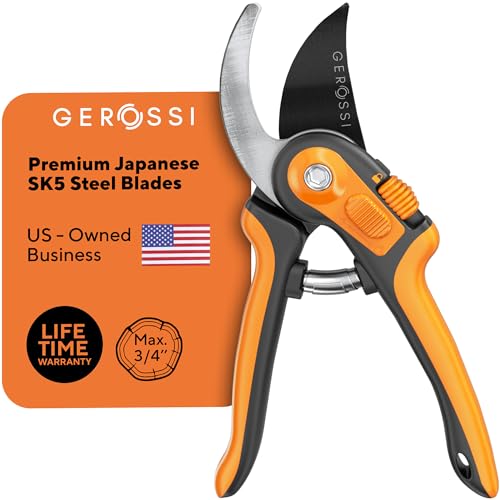
GEROSSI Bypass Pruning Shears and Hand Pruners for Gardening

VOTREK Pruning Shears with Stepless Handle Opening

Lengnoyp 5-Pack Garden Shears with Gloves

Dramm ColorPoint Compact Garden Pruning Shears (Berry)

Corona BP 4250 MAXFORGED Aluminum Bypass Pruner 1″

Hungsual 7.5″ Garden Pruner for Rose Bushes

Hooyman Forged Ratchet Pruner with H-Grip
A Closer Look At Each Pick
The Fondwell 8.5″ sits in that comfortable middle ground between flimsy florist snips and serious arborist gear. At 8.5 inches long, it lands in a usable size range for most hand sizes, and the bypass action (two curved blades passing each other like scissors) gives you clean cuts on live green stems without crushing them. You reach for this kind of tool when you’re deadheading rose canes, trimming back perennial borders, or shaping small ornamental shrubs over a long weekend.
For most home gardeners, the appeal is the push-to-lock safety mechanism that secures the blades between sessions. The bypass design reduces the risk of tearing plant tissue, which matters because ragged cuts invite fungal issues. Compared to the heavier Edward Tools option later on this list, the Fondwell trades raw cutting power for a lighter feel in the hand.
Bright Spots
- Bypass action keeps cuts clean on live wood, which helps plants heal faster
- Push-to-lock safety mechanism is easy to operate one-handed between snips
- Lightweight frame reduces fatigue during long deadheading sessions
- Comfortable grip profile suits a wide range of hand sizes
Things To Consider
- Best suited to thinner stems rather than mature woody growth
- Owners commonly find the blade needs wiping down after sappy cuts to prevent sticking
Made For
Casual gardeners trimming flower beds, herbs, and small shrubs on a regular weekend schedule.
Consider Something Else When
The Edward Tools Classic Cut Bypass Pruners make more sense for anyone regularly tackling 1-inch woody branches.
The Edward Tools Classic Cut is built around forged carbon steel, which is a manufacturing process that compresses the steel under heat to create a denser, tougher edge. That matters because a 1-inch cut capacity means you’re committing to thicker branches, and softer blades deform quickly under that kind of load. You typically see this pruner in the hands of someone restoring an overgrown backyard or maintaining a small orchard.
The non-slip grip and safety lock combo makes it approachable even for newer gardeners, even though the cutting capacity suggests serious work. Where the Fondwell leans light, this one leans into durability, and the blade can be resharpened when it eventually dulls rather than replaced outright.
Points In Its Favor
- Forged steel blade holds its edge through heavy use and can be resharpened
- 1-inch capacity handles branches most home pruners cannot reach
- Non-slip handle helps maintain control during tough cuts
Worth Noting
- Heavier than compact options, so extended sessions may tire smaller hands
- Forged steel benefits from occasional oiling to prevent surface rust if stored outdoors
Right Fit For
Homeowners managing mature shrubs, fruit trees, and overgrown lots who want one pruner that handles serious growth.
Reach For A Different Pick When
The Corona BP 3214D ComfortGEL is friendlier for everyday shaping where 1-inch capacity is overkill.
Corona has been a recognizable name in professional pruning tools for decades, and the BP 3214D reflects that heritage. The ComfortGEL grip is a soft polymer insert that absorbs some of the shock that travels up your wrist when you cut through woody growth, which is the kind of detail you appreciate after forty minutes of rose pruning. At 3/4-inch capacity, it covers the bulk of residential garden work without forcing you into a heavier tool.
You’ll find this pruner useful for regular maintenance on established shrubs, light fruit tree work, and the kind of routine shaping that keeps a yard looking intentional. The bypass blade produces clean cuts on green wood, and the gel grip softens the repetitive impact. Compared to the Edward Tools option, this trades a quarter-inch of cutting reach for a noticeably softer hand feel.
Real Benefits
- ComfortGEL insert reduces wrist impact during long sessions
- 3/4-inch capacity covers most common home pruning tasks
- Corona’s reputation suggests replacement parts are accessible when needed
Trade Offs
- Not designed for the thickest branches where 1-inch capacity helps
Best Suited To
Recreational gardeners who value comfort during weekly maintenance over maximum cutting power.
A Better Fit Elsewhere
The Edward Tools Classic Cut Bypass Pruners serve better when regular 1-inch branch work is on the agenda.
The GEROSSI pruner stands out for its adjustable handle width, which is a feature most bypass pruners skip entirely. A lever lets you widen or narrow the grip to match your hand, which sounds minor until you’ve tried sharing tools between household members with very different hand sizes. The high-carbon steel blade with a corrosion-resistant coating handles branches up to 3/4-inch, making it a generalist option for mixed gardens.
For households where more than one person prunes, the adjustable fit removes the usual compromise of one person struggling with a grip built for someone else. The soft-grip handle and one-hand safety lock keep it approachable for occasional use. The build leans toward the same category as the Corona BP 3214D, but the adjustability is the meaningful difference here.
Useful Touches
- Adjustable handle width accommodates different hand sizes in one tool
- Corrosion-resistant coating helps the blade survive damp storage
- One-handed safety lock is simple to engage and release
- Suitable for bonsai, herbs, shrubs, and fruit trees across the 3/4-inch range
Points To Note
- Adjustment mechanism adds a moving part that may need occasional cleaning
- Less specialized than dedicated ergonomic options for users with arthritis
Key Product Details
Perfect Match For
Multi-user households sharing one pruner among people with different hand sizes.
Skip It When
Anyone with significant hand strength limitations may find the VOTREK stepless design easier on the joints.
The VOTREK pruner was designed around accessibility, using a stepless thumb slider that adjusts both the handle span and blade opening to match the user. That is meaningfully different from the stepped adjustment on the GEROSSI model, because stepless means any position in between, not just a few preset widths. Seniors, gardeners with arthritis, and anyone with reduced grip strength benefit from being able to set the opening exactly where their hand is comfortable.
The SK5 steel blade is a high-carbon Japanese-grade alloy known for edge retention, and the Teflon nonstick coating keeps sap from gumming up the action. You may find this pruner most useful for longer sessions where hand fatigue is the limiting factor rather than cutting power. It occupies a different lane from the heavy-duty Edward Tools and Corona BP 4250 picks later in the list.
Good Reasons To Consider
- Stepless adjustability fine-tunes fit beyond stepped alternatives
- SK5 steel with Teflon coating resists sap buildup and stays sharp
- Designed with arthritis and limited grip strength in mind
- Adapts to different branch sizes through the same slider mechanism
Minor Gripes
- Slider mechanism adds complexity versus a fixed-grip pruner
Whose Shelf It Belongs On
Older gardeners, anyone managing arthritis or hand fatigue, and households sharing one tool across very different users.
Not Your Match When
The Hooyman Ratchet Pruner is a stronger choice for raw branch-clearing power on land management tasks.
The Lengnoyp 5-pack is structured differently from everything else on this list: instead of one serious pruner, you get five smaller shears with three different blade types plus a pair of gardening gloves. That makes sense for very light work, hydroponics, flower arranging, and the kind of detail trimming that does not need a full bypass pruner. The stainless steel construction is rust-friendly, which matters for any tool that might get left in a damp potting shed.
For most gardeners, this works as a backup set, a gift bundle for someone starting out, or a way to keep shears in multiple locations (kitchen windowsill herb garden, greenhouse, back patio). The PP+TPR plastic handle is comfortable but does not offer the same cutting authority as a forged steel bypass like the Edward Tools option. You may find the multi-pack idea clever if you have lost pruners to the compost pile before, which most of us have.
A Few Highlights
- Five shears plus gloves covers multiple workstations or household users
- Stainless steel resists rust in humid environments
- Three blade types handle different trimming tasks around the garden
Practical Considerations
- Not designed for woody branches beyond very light growth
- Plastic handles lack the leverage of full-size forged pruners
Who Should Grab It
Gift-givers, beginners wanting a complete starter set, and households needing shears in several spots.
Another Choice May Suit
Anyone pruning established roses and shrubs should consider the Hungsual pruner for more capable single-tool performance.
The Dramm ColorPoint is built for precision work at a compact scale. With a 1/4-inch cutting capacity, it targets the trim tasks most pruners treat as afterthoughts: deadheading spent flowers, snipping herbs, cutting back perennials, and tidying up small woody stems. The stainless steel blade resists corrosion, which suits gardeners in humid climates or anyone who tends to leave tools outside longer than they should.
The ergonomic handle and blade lock keep storage safe in a kitchen drawer or apron pocket, and the compact size means you are not hauling a full-size pruner around the yard for a few quick snips. Compared to the heavier Corona BP 4250 later on the list, this trades raw power for nimble handling. For flower-focused gardeners, the Dramm is the one that ends up in your hand most often.
Strong Points
- Compact size ideal for detail trimming and frequent pocket carry
- Stainless steel blade holds up to moisture and sap exposure
- Ergonomic handle keeps control during fine cuts
- Blade lock adds safety in storage
Honest Caveats
- 1/4-inch capacity leaves anything thicker than small stems out of reach
- Not a substitute for a full-size bypass on woody shrubs
Feature Snapshot
Who Will Love This
Flower gardeners, herb growers, and anyone wanting a pocketable trimmer for quick garden touch-ups.
Look Elsewhere When
The Corona BP 4250 MAXFORGED serves better for serious shrub and tree work beyond the 1/4-inch range.
The Corona BP 4250 sits at the professional end of the residential range. The MAXFORGED blade and aluminum body combine a tough cutting edge with a frame light enough for all-day work, and the 1-inch capacity puts it in the same reach category as the Edward Tools option above. The replaceable steel blade is a meaningful long-term feature: when the edge dulls, you swap it rather than retire the tool.
For most dedicated gardeners, the upgrade over a budget pruner shows up in the cut quality and the way the tool feels after an hour of work. The angled head positions your wrist more naturally, which matters during repeated cuts on a hedge or fruit tree. The trade-off is price, since this is not an entry-level tool, and the aluminum body, while light, does not feel as solid in the hand as heavier forged alternatives.
Where It Helps
- Replaceable blade extends the tool’s useful life beyond a single sharpening
- 1-inch capacity handles live, woody, and green growth
- Aluminum body keeps weight manageable during long sessions
- Angled cutting head reduces wrist strain
Points To Keep In Mind
- Pricier than entry-level bypass pruners
- Aluminum frame, while light, can show surface wear over years of heavy use
Quick Facts
Built With In Mind
Serious home gardeners and small-property owners maintaining trees, hedges, and large shrubs year after year.
Swap It Out When
The Edward Tools Classic Cut Bypass Pruners offer similar 1-inch capacity at a lower entry cost.
The Hungsual 7.5″ pruner targets rose growers specifically, with a 0.6-inch cut capacity tuned to the diameter range rose canes typically fall into. The stainless steel blades and softgrip handle are designed to make repeated cuts on thorny wood less punishing on your hands. At 7.5 inches, it sits at the compact end of the list, which helps you maneuver between canes without scraping your wrist on thorns.
You may find this pruner most useful during spring and fall rose pruning when the cutting is concentrated and frequent. The one-hand lock keeps things safe when you step away mid-task. Compared to the broader-capacity Corona BP 3214D, this leans more specialized: built for soft-stem shrubs and roses rather than all-purpose yard work.
Key Advantages
- Stainless steel blades hold up to sap and moisture from rose work
- Softgrip handle reduces fatigue during concentrated pruning sessions
- 0.6-inch capacity matches typical rose cane diameters
- Compact 7.5-inch size improves maneuverability in thorny growth
Less Ideal Details
- Not suited to thicker woody branches beyond 0.6 inches
Who Will Love This
Rose gardeners and owners of soft-stem ornamental shrubs who want a tool tuned to their specific plants.
A Better Fit Elsewhere
The Dramm ColorPoint suits gardeners who trim mostly flowers and herbs rather than roses.
The Hooyman ratchet pruner brings a different mechanism to the list. A ratchet cuts in stages, clicking through the branch in small increments rather than demanding full hand strength in one squeeze. That is genuinely useful for thicker growth where standard bypass pruners require significant hand force. The 1-inch cutting capacity and forged steel construction put it in land-management territory, which is reflected in Hooyman’s positioning toward hunters, property owners, and rural gardeners.
The H-Grip handle is a recognizable Hooyman feature: shaped to keep your hand secure even when wet or gloved. At 8 inches overall and under 7 ounces, it stays compact relative to its cutting ability. You may find this pruner most useful for clearing tasks, trail work, and thicker woody growth that would challenge a standard bypass. The trade-off is the ratchet mechanism, which some gardeners find slower than a single-stroke cut.
Standout Benefits
- Ratchet action reduces the hand strength needed for thick cuts
- Forged steel blade handles demanding yard and land work
- H-Grip stays secure when hands are wet or gloved
- Thumb-locking latch protects the blade during transport
Trade-Offs To Consider
- Multi-stage ratchet cuts feel slower than single-stroke bypasses on thin growth
- Less specialized for delicate flower trimming
At A Glance
The Right Fit
Property owners, rural gardeners, and anyone needing to clear woody growth without taxing their hands.
Where Another Pick Suits Better
The Corona BP 4250 MAXFORGED is faster for repeated single-stroke cuts on established shrubs.
What To Weigh Before Choosing Your Next Pruner
Cutting Capacity and the Plants You Actually Grow
Cutting capacity is the single most important spec, because it determines what the tool can and cannot reach. A 1/4-inch pruner like the Dramm ColorPoint handles flowers and herbs but stops at anything woody. A 3/4-inch pruner covers roses, shrubs, and small fruit tree work. A 1-inch pruner reaches into branch territory that approaches lopper territory. Most home gardeners do well with 3/4-inch capacity, since that covers the vast majority of pruning tasks without forcing you to muscle through branches you should be reaching for loppers anyway.
Handle Fit and Comfort Over Time
Handle fit is the spec people underestimate until they feel it. A narrow grip punishes anyone with larger hands after thirty minutes, and a wide one leaves smaller hands reaching. Adjustable options like the GEROSSI lever or the VOTREK stepless slider solve the shared-tool problem in different ways. Comfort-focused options like the Corona BP 3214D with its gel insert target users who already know hand fatigue is the limiting factor in their pruning sessions.
Blade Material and Long-Term Maintenance
Blade material determines how long the tool stays sharp and how you maintain it. Forged carbon steel (Edward Tools) and SK5 steel (VOTREK) hold edges well and can be resharpened, but benefit from occasional oiling. Stainless steel (Dramm, Hungsual) resists rust at the cost of slightly faster edge wear. Replaceable blades (Corona BP 4250) extend the tool’s life but require sourcing the correct replacement part when the time comes. Each approach is reasonable; the choice depends on whether you prefer sharpening, oiling, or swapping.
Safety, Storage, and One-Hand Operation
A blade lock sounds basic, but it matters every time you set the pruner down mid-task. One-hand operation on the safety latch is a real convenience, especially when your other hand is holding a branch or steadying a thorny stem. Compact pruners (Dramm ColorPoint, Hooyman) store easily in an apron or drawer, while full-size options need a holster or a hook in the shed.
Key Considerations Across These Picks
Where Shoppers Go Wrong
The most common mistake is buying on capacity alone. A 1-inch pruner sounds impressive until you realize you mostly trim flowers and herbs, leaving the extra reach unused while lugging a heavier tool. The opposite error is buying a delicate trim pruner and then forcing it through woody branches that destroy the blade. Match the tool to the largest stem you actually cut regularly, not the largest stem you might encounter once a year. Skipping handle fit is the other frequent oversight; it matters more than people expect during longer sessions.
The Upgrade Payoff
Higher-tier pruners earn their cost through blade longevity, replaceable parts, and ergonomic refinements that show up over years of use. The Corona BP 4250’s replaceable blade, the Edward Tools’ forged steel that resharpens cleanly, and the VOTREK’s stepless adjustability are the kinds of features that matter most to frequent pruners. For occasional seasonal work, a mid-range option delivers most of the practical value at a lower entry cost. The honest read is that the upgrade makes sense once you find yourself pruning often enough to notice what your current tool lacks.
Frequently Asked Questions
What is the difference between bypass and anvil pruners?
Bypass pruners use two curved blades that pass each other like scissors, producing clean cuts on live green stems. Anvil pruners have one straight blade that closes onto a flat surface, which works better on dry, dead wood but can crush live stems. Most home gardens benefit from bypass designs like every pick on this list.
How do I keep pruner blades from getting dull quickly?
Wipe the blade clean after each session, especially after cutting sappy wood like pine or rose canes. Dry the blade before storage and apply a light coat of oil occasionally if the tool uses carbon steel. Avoid cutting branches beyond the tool’s rated capacity, since forcing thicker wood damages the edge faster than normal use.
Can pruners handle small tree branches?
Pruners with 1-inch cutting capacity, like the Edward Tools Classic Cut and Corona BP 4250, can manage smaller tree branches and saplings. Anything thicker belongs in lopper or saw territory, since forcing a pruner past its limit risks bending the blade, loosening the pivot, or leaving a ragged cut that invites disease.
How often should I sharpen my pruners?
Most home gardeners benefit from a light sharpening once or twice per season, depending on how often they prune. A sharpening stone or diamond file works well on bypass blades, and the goal is to restore the factory edge rather than reshape the blade. Replaceable-blade designs like the Corona BP 4250 let you skip sharpening entirely by swapping in a fresh edge.
What is ratchet action on a pruner?
A ratchet mechanism cuts in stages, clicking through the branch in small increments rather than requiring full hand strength in a single squeeze. The Hooyman ratchet pruner uses this design to reduce the force needed for thicker cuts, which helps anyone with limited hand strength tackle woody growth they could not manage with a standard bypass.
Closing Remarks
A good pair of pruners is one of the few tools that genuinely changes how much you enjoy time in the garden. The right match between hand size, plant type, and cutting capacity turns pruning from a chore into something that actually feels productive. Browse the options above, think about what you actually cut week to week, and pick the one that fits your real workload rather than the most impressive spec sheet.
