

A small garden patch shouldn’t mean wrestling with extension cords or renting a full-size rototiller for a 4-by-8 bed. Handheld tillers step in where shovels quit, loosening compacted soil, edging flower borders, and prepping raised beds without the backbreaking workout. Cordless models have quietly gotten strong enough to handle real backyard duty, and the lineup below covers everything from one-handed mini cultivators to stretch-reach tools designed for taller gardeners.
A Side-By-Side Look

Saker 22V Cordless Garden Tiller Cultivator

Muylux 20V Cordless Tiller with 2 Batteries

Muylux 20V Cordless Tiller with 1 Battery

BARAYSTUS Twist Garden Claw Cultivator

Seesii Mini Cordless Tiller Cultivator
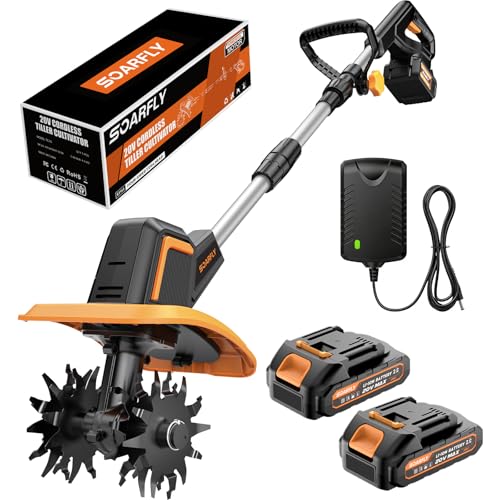
SOARFLY Cordless Tiller 9-Inch Width

GELIDALITE Cordless Tiller for DeWalt 20V MAX

Muylux 20V Tiller with 2 Batteries

Muylux 20V Tiller with 1 Battery

Quini 24V 2-in-1 Cordless Tiller with Extension Rod
The Picks, Examined More Closely
The Saker lands at the front of the cordless tiller conversation for good reason: a 22V platform gives it a slight edge over the 20V crowd, and the body shape feels balanced enough for raised-bed work without wearing out your wrists. For homeowners juggling a few veggie plots and a stubborn flower border, this is the kind of tool that quietly replaces a hand fork in a single afternoon.
You trade the heavier steel-tine bite of a corded model, but in most suburban soil that’s a fair swap for the freedom to walk to the far corner of the yard without a generator. Compared with the budget Muylux 1-Battery pick later in this list, the Saker tends to feel more planted in the hand when the tines catch a root.
Useful Strengths
- 22V battery gives a useful torque bump over typical 20V handheld tillers when breaking up crusted soil.
- Cordless setup means no extension cord to dodge while walking backward through a bed.
- Compact enough to slip between established perennials without slicing roots you meant to keep.
- Solid choice for prepping 4-by-8 raised beds in a single pass without a recharge.
Things To Consider
- Wet clay can bog the motor down, so working in damp conditions tends to overtax the unit.
- Spare batteries and chargers are sold separately from the bare tool in some listings.
Made For
Homeowners with a couple of raised beds and mixed flower borders who want one tool that handles both jobs comfortably.
Consider Something Else When
Anyone who already owns a fleet of 20V MAX batteries should look at the GELIDALITE Cordless Tiller for DeWalt 20V MAX to skip buying yet another battery platform.
Two 2.0Ah batteries ship in the box, which is the real headline here. You can cultivate one bed while the second pack charges, or hand a battery to a partner without stopping the project. The 20V platform runs at up to 240 RPM with two steel tines, loosening soil to roughly 4 inches deep in loamy ground.
For a typical backyard with two or three small beds, the kit is the sweet spot. The Saker 22V model ahead of it offers a bit more power, but if you tend to lose or forget to charge batteries, the spare-pack setup here removes a common point of frustration.
Where It Helps
- Two batteries included means uninterrupted tilling across a longer session.
- 240 RPM tine speed handles routine bed prep in loam and sandy soil with ease.
- Steel tines reach about 4 inches deep, enough for most annual-flower and vegetable beds.
- Cordless operation suits raised beds tucked away from any outdoor outlet.
Honest Caveats
- The 20V motor is more comfortable in softer soils, so rocky lots may slow it down.
- Plastic housing around the tine guard tends to scuff with heavy contact against bed edges.
Right Fit For
Casual gardeners running two or three small beds who value session continuity over maximum digging depth.
Look Elsewhere When
Heavier or clay-heavy plots deserve the wider 9-inch cut of the SOARFLY Cordless Tiller 9-Inch Width for fewer passes.
The single-battery Muylux shares the same motor and tine assembly as its two-pack sibling, so the digging performance is essentially identical. What you give up is the spare pack, and what you save is real money at checkout. For tight quarters, a single raised bed, or a first-time tool investment, that math works.
You may find runtime limiting on a long Saturday, but the included charger refills the 2.0Ah pack reasonably fast, and 20 minutes of tilling covers a lot of ground. If you’ve been on the fence about cordless tools and want to test the waters, this is the most accessible entry point in the roundup.
Well-Handled Touches
- Same 240 RPM tine speed as the dual-battery model, so the work output is identical.
- Lower price makes it a low-risk first cordless gardening tool purchase.
- Steel tines dig to about 4 inches, covering most annual-planting depth needs.
- One-battery design keeps the kit light and easy to store on a shelf.
Points To Note
- One battery limits continuous runtime, so larger plots require planning around charge cycles.
- Lightweight body can bounce on harder, compacted patches during the first pass.
Built With In Mind
First-time tiller owners with a single small bed or herb garden who want a low-commitment way to try cordless cultivation.
Skip It When
Anyone planning to till a full weekend of beds should grab the Muylux 20V Tiller with 2 Batteries instead and skip the recharge wait.
The BARAYSTUS isn’t electric, and that’s its entire pitch. The twisted tine design sinks into loose soil, and a simple twist of the handle breaks up weeds and aerates around plants without any motor, battery, or noise. For spot work between established perennials, it does the job most gardeners would otherwise do with a hand fork.
The catch shows up in hard, compacted ground, where the curve-style tines struggle to bite. For maintenance weeding in a flower bed you already prepped last spring, however, this is a quiet, no-fuss companion to the powered tillers elsewhere on this list.
Practical Advantages
- No motor means no charging, no fuel, and no worry about leaving it in the rain.
- Silent operation makes it friendly to use early in the morning without disturbing neighbors.
- Twist action aerates soil around existing plants without chopping feeder roots.
- Single-piece steel build is simple to rinse and store in any garden shed corner.
Practical Considerations
- Requires upper-body effort, so it isn’t the best match for those with limited grip strength.
- Hard clay or root-bound ground resists the tines, limiting where it works well.
Best Suited To
Gardeners who already maintain loose, healthy soil and just need a quiet tool for weeding and aerating between plants.
A Better Fit Elsewhere
Anyone facing brand-new, unbroken ground should reach for the Seesii Mini Cordless Tiller Cultivator to break the surface without manual twisting.
At roughly 2.6 pounds, the Seesii feels more like a power drill than a garden tool. That weight matters more than it sounds, because handheld tillers earn their fatigue on long sessions, and one-handed operation opens the door for gardeners who otherwise dread dragging heavy equipment out of the shed. The kit includes two 2.0Ah batteries, which is generous for the category.
It runs at a smaller scale than the Saker 22V or the SOARFLY wide-cut model, so the digging window per pass is narrower. For a senior gardener tending window boxes, a small herb bed, or tight borders, though, the comfort is hard to overstate.
A Few Highlights
- Lightweight body reduces wrist and shoulder fatigue during longer cultivation sessions.
- Two batteries in the box let you swap mid-task without a forced break.
- One-handed operation suits gardeners with limited mobility or strength.
- Cordless 20V setup eliminates the need for outdoor outlets or extension cords.
A Few Limitations
- Smaller tine span means more passes to cover a large bed compared to wider units.
- Light body weight can lift off the soil on compacted patches, requiring downward pressure.
Feature Snapshot
Perfect Match For
Older gardeners, apartment balcony growers, and anyone with small raised beds who values comfort over coverage speed.
Reach For A Different Pick When
Homeowners prepping a full-size vegetable garden will cover ground faster with the SOARFLY Cordless Tiller 9-Inch Width.
The SOARFLY earns its spot by going wider and deeper than the typical 4-inch handheld cultivator. A 9-inch tilling width and 6.6-inch depth turns what would be ten passes on a small bed into five, and the 20V platform handles it without bogging in average garden loam. Two 2.0Ah batteries ship with the unit, so you can swap and keep going.
The adjustable handle and auxiliary grip help on longer sessions, though the wider cut does add a little weight to control. Where the Seesii mini prioritizes featherweight comfort, the SOARFLY prioritizes getting the bed done before lunch.
Advantages To Know
- 9-inch width cuts prep time nearly in half compared to standard 4-inch cultivators.
- 6.6-inch depth reaches the root zone where most annual vegetables establish.
- Adjustable handle height accommodates different user heights comfortably.
- Two included batteries support full-bed tilling in one go for most yards.
Trade Offs
- Wider body is harder to maneuver in tight rows between established plants.
- Heavier than compact models, which can tire smaller users during extended work.
Right Fit For
Homeowners with mid-size garden plots who want to turn over a bed quickly and value width over fingertip control.
Swap It Out When
Gardeners working in narrow herb beds or between perennials should pick the Seesii Mini Cordless Tiller Cultivator for tighter maneuverability.
Anyone with a stack of yellow 20V MAX batteries already knows the math: the charger and the packs cost more than a bare tool, and the GELIDALITE slots right in. The unit locks onto standard 20V MAX packs, including DCB200, DCB204, DCB205, and DCB206 cells, so you can grab a battery from your drill, impact driver, or reciprocating saw and start tilling.
A 300W peak motor delivers reasonable bite for raised-bed work in loamy soil. This is a niche play, and outside of the DeWalt ecosystem the value proposition drops sharply.
Useful Highlights
- Compatibility with common 20V MAX batteries removes the need to buy another charger.
- 300W peak motor handles typical raised-bed prep in standard garden loam.
- Bare-tool pricing is sensible for anyone who already owns the battery platform.
Points To Keep In Mind
- No batteries or charger included, so non-DeWalt owners pay a hidden premium.
- Smaller motor capacity than dedicated garden-specific units in heavier soil.
Whose Shelf It Belongs On
Existing DeWalt 20V MAX owners who want to add a tiller without expanding into a second battery platform.
Where A Sibling Pick Shines
Anyone without a yellow-battery collection should look at the Muylux 20V Tiller with 2 Batteries for a complete, ready-to-go kit.
This Muylux sits in the same family as picks 2 and 3, but the two-battery kit positions it as the long-session option. With two packs in rotation, you can realistically till a medium backyard without the project stalling on a recharge. Two steel tines run at up to 240 RPM, the same as its siblings, and the ergonomic grip keeps the wrist comfortable during continuous work.
It’s essentially the dependable workhorse version of the 1-battery model, with the same proven motor and a longer total runtime envelope. The trade-off is higher initial cost and a slightly heavier kit to carry out to the garden.
Features That Help
- Two batteries extend total runtime across a full yard session.
- Ergonomic grip reduces hand fatigue compared to bare-handle designs.
- 240 RPM tine speed is consistent with the rest of the Muylux cordless family.
- Steel tines reach the 4-inch depth that suits most annual vegetable plantings.
Factors To Consider
- Two batteries add weight to the storage tote and the carry to the garden.
- Heavier overall kit is less convenient for quick 5-minute touch-up jobs.
Made For
Gardeners with several mid-size beds who want to complete a full weekend turnover without stopping to recharge.
Consider Something Else When
Anyone with a single small bed may not need the extra battery and should consider the lighter Muylux 20V Cordless Tiller with 1 Battery.
Functionally, the 1-battery Muylux here mirrors its 2-battery sibling with the same 240 RPM tine speed and ergonomic grip. What changes is the kit contents, and for gardeners who only need a tiller for spot work or a single small bed, the leaner package is easier to justify. You can always add a second pack later if the workload grows.
It’s a sensible starter tool for someone dipping a toe into cordless cultivation, particularly if you only cultivate once per season rather than every weekend.
Why It Works Well
- Single-battery kit keeps the overall cost and storage footprint minimal.
- Ergonomic grip design carries over from the heavier-duty Muylux units.
- Steel tines at 240 RPM match the work output of the multi-battery kits.
- Light carry weight suits quick cultivation tasks between other gardening chores.
Softer Spots
- One battery caps continuous work at roughly 20 to 30 minutes per charge.
- Not the most efficient choice for multi-bed seasonal turnovers.
Best Suited To
Gardeners with one small bed or a seasonal cultivation routine who want a simple, uncluttered kit.
Look Elsewhere When
Anyone facing a larger yard should consider the SOARFLY Cordless Tiller 9-Inch Width for fewer passes and faster completion.
The Quini is the only model in this roundup with a detachable extension rod, and that’s its real selling point. The handheld mode handles close-up work around established plants, then a quick swap turns it into a stand-up cultivator that spares your back across a full bed. A 24V motor spins the tines at 235 RPM with a 4-inch tilling width and depth.
At about 1.2 kg for the body, it stays light enough that the extension doesn’t throw off balance. Two 1.5Ah batteries ship with the kit, which is on the smaller side per pack, so swapping mid-session is likely for larger projects.
The Good Stuff
- Detachable extension rod converts the tool from handheld to stand-up use.
- 24V motor offers slightly more torque than typical 20V handheld cultivators.
- Light 1.2 kg body keeps the extended configuration manageable.
- Dual-mode design covers both precision work and full-bed prep with one tool.
Less Ideal Details
- 1.5Ah batteries are smaller than the 2.0Ah packs common elsewhere on this list.
- 4-inch width means more passes than wider units on open ground.
Who Should Grab It
Taller gardeners or anyone with back sensitivity who wants the option of stand-up cultivation without buying a full-size tiller.
Where A Sibling Pick Shines
Users prioritizing maximum tilling width and depth over extension should consider the SOARFLY Cordless Tiller 9-Inch Width for open-bed efficiency.
What To Weigh Before Choosing A Handheld Tiller
Battery voltage sets the ceiling for torque, and 20V platforms cover the bulk of small-garden needs. Higher 22V or 24V systems deliver a modest bump for compacted or clay-heavy soil, though the gain rarely justifies paying more for casual use. Tilling width and depth shape how much ground you cover per pass: 4-inch units suit tight borders and spot work, while 8- to 9-inch widths halve your labor on open beds.
Weight matters more than the spec sheet suggests. Anything over 6 pounds feels heavy in the hand after 15 minutes, and handheld tillers earn their fatigue across seasons. Two batteries versus one is a runtime question, but it’s also a charging-habit question. If you forget to plug in overnight, the spare-pack kits earn their keep quickly. Tine material tells you a lot about longevity: steel tines hold an edge through rocky soil better than softer alloys, and sealed motor housings extend tool life in damp gardens.
For shoppers with a battery platform already in the garage, the bare-tool option from GELIDALITE saves real money. For everyone else, a complete kit with charger and battery keeps the path to first use short.
Pitfalls And Trade-Offs Worth Knowing
Common Shopping Slip Ups
The most common mistake is buying for the largest imagined job rather than the typical one. A wide-cut 9-inch tiller sounds great until you try to fit it between established perennials in a flower border. Match the tool to the bed you’ll touch most often, not the once-a-year project.
Another trap is underestimating weight. Manufacturers list the tool’s mass, but the spec doesn’t capture how 5 pounds feels after 20 minutes of cultivation. The Seesii Mini Cordless Tiller Cultivator and the Quini 24V 2-in-1 with extension rod both address this, the former through low mass, the latter through posture. Which matters more depends on your body and your garden.
Where The Extra Money Goes
Stepping up to a higher-tier handheld tiller typically buys three things: more battery capacity, wider tilling coverage, and a longer warranty window. For most backyard users, the first two are the practical gains, and both translate directly to less time per project.
The upgrade only pays off when you’ll actually use the extra capacity. A wider 9-inch pass on a single 4-by-8 bed saves a couple of minutes, hardly worth the price jump. The same upgrade across a 20-by-30 vegetable plot saves an hour, and that math flips the decision. Premium build also tends to mean better seals against dust and moisture, which extends tool life if you store your gear in an unheated shed.
Frequently Asked Questions
How deep do handheld tillers actually dig?
Most cordless models in this category reach 4 to 6.6 inches, which covers the root zone for most annual vegetables and flowers. Depth varies by soil condition, and compacted ground typically yields less than loose, well-tended beds.
Are cordless tillers strong enough for clay soil?
They work in clay, but expect more passes and shorter battery life. Letting the soil dry slightly before tilling, rather than working it wet, dramatically improves results. For heavy clay lots, a corded or gas model is a more honest match.
How long does a battery typically last per charge?
A 2.0Ah pack usually delivers 20 to 30 minutes of continuous tilling in average soil, though heavy clay or root-bound ground drains batteries faster. Carrying a spare pack, as several kits in this roundup include, removes the recharge wait.
Can handheld tillers remove weeds, or just loosen soil?
The steel tines chop and bury small weeds during cultivation, which is one of the major time savings over hand weeding. Established weeds with deep taproots may survive a pass and need a follow-up.
Is a twist cultivator a real alternative to a powered tiller?
For maintained, loose soil, a twist cultivator like the BARAYSTUS Hand Tiller does the job without any power. It can’t break new ground the way a motorized unit can, so the two tools serve different stages of garden care rather than competing directly.
Closing Remarks
The right handheld tiller comes down to your bed size, your soil, and how often you’ll grab the tool. Lightweight comfort points toward the Seesii or the Quini, wider coverage toward the SOARFLY, and dependable all-rounders toward the Saker or the Muylux kits. Pick the profile that matches the garden you actually have, and the work gets a lot easier next spring.
