

A tidy yard rarely happens by accident. Behind every crisp boxwood line and tidy privet border is a sharp pair of hedge clippers, the kind that glides through green wood without rattling your wrists or chewing the leaves. Manual shears reward the kind of patient, hands-on shaping that defines a real garden, while cordless trimmers make quick work of overgrown perimeter hedges.
This roundup covers eight solid options across both styles, from featherweight aluminum-handled shears to a 22-inch cordless trimmer with two batteries. Each pick solves a different problem, so matching the tool to your hedge, your grip, and your weekend rhythm matters more than chasing the heaviest-duty model on the shelf.
The Picks In Brief

Kimura Pro Heavy Duty Hedge Shears 22″

YRTSH Loppers, Hedge Shears & Pruners Combo Set

Garden Guru 15-Inch Hedge Shears

Fiskars 23″ Power-Lever Hedge Shears

YRTSH 3-Piece Hedge Shears Combo
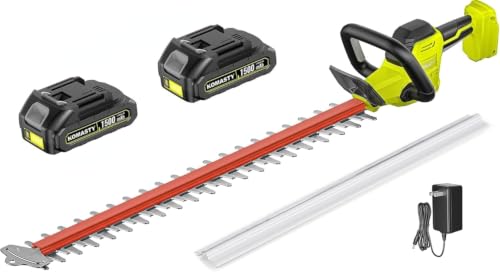
KOMASTY 22-Inch Cordless Hedge Trimmer

GARDENWORK Hedge Clippers with Teflon Coating

TRAMITEC 21-Inch Manual Hedge Shears
Taking A Closer Look At The Options
The Kimura Pro lands at the top of the manual lineup for a reason. Its 22-inch frame pairs Japanese SK5 steel blades with a patented gearing system, which is essentially a small gear train that multiplies your hand force so each cut needs less squeeze. For anyone shaping long boxwood runs or tall privet screens, that mechanical advantage shows up quickly in tired forearms.
Aluminium handles keep the overall weight down, and the soft TPR grip zones sit where most hands naturally land. Weight balance matters more than raw weight, and Kimura distributes the mass evenly between the head and the grip ends, so the shears feel planted rather than blade-heavy during overhead work.
Advantages To Know
- Patented gearing reduces the hand strength needed per cut, which matters on warm afternoons when grip fatigue sets in.
- Japanese SK5 steel holds an edge through repeated use on green wood, so you spend less time at the sharpening stone.
- Aluminium handles trim meaningful weight versus all-steel designs, helping during raised-arm work above shoulder height.
- Soft TPR grip zones stay comfortable whether your hands run small or large.
Things To Consider
- The 22-inch reach helps in open runs but feels unwieldy in tight, topiary-style detail work.
- SK5 steel rewards a quick wipe-down after each session; sap left on the blades can dull the edge faster than you’d expect.
Who It Suits Best
Gardeners with long, straight hedge runs who want manual control without the wrist strain, especially anyone trimming for more than thirty minutes at a stretch.
Where Another Pick Suits Better
The Garden Guru 15-Inch Hedge Shears handle tight boxwood borders and small ornamental shapes more naturally than this 22-inch Kimura.
Buying tools one at a time adds up, and that’s the gap this YRTSH set targets. You get a 26-inch compound-action lopper for thick branches, a 23-inch hedge shear for shaping, and an 8-inch pruning shear for close-up work, all wrapped into a single bundle. The appeal is coverage rather than specialization, and for a new homeowner or freshly rented garden, that combination is hard to beat.
The compound-action design on the loppers uses a multi-pivot linkage that boosts cutting force, so a hand pruner that would balk at a one-inch branch gets through with a clean slice. Alloy steel blades with a low-friction coating glide through green wood and resist sap buildup, which is a quiet upgrade you appreciate on the second or third cleanup of the season.
Where It Delivers
- Three tools cover lopping, hedging, and pruning jobs in a single purchase, which suits anyone starting from an empty shed.
- Compound-action loppers multiply cutting force on thicker branches that would defeat a basic bypass pruner.
- Low-friction coated blades shed sap and debris, which slows the dulling that plagues uncoated steel.
- The 23-inch hedge shear handles medium hedge runs without the unwieldy feel of longer 25-inch-plus designs.
Worth Noting
- The set prioritizes breadth over refinement, so each tool is competent rather than category-leading.
- Storing three full-size tools takes more shed space than a single dedicated shear, an honest tradeoff for full-yard coverage.
Made For
First-time homeowners or gardeners outfitting a shed from scratch who want one purchase to cover branches, hedges, and detail pruning.
Consider Something Else When
The Kimura Pro Heavy Duty Hedge Shears are the stronger pick for someone who already owns pruners and wants the sharpest dedicated hedge shear.
Short shears earn their keep in tight spaces, and Garden Guru built this 15-inch model for exactly that. Boxwood parterres, low border hedges, and ornamental shrubs respond better to a compact blade than a sweeping 23-inch shear, partly because shorter blades give you more control on curves and partly because the wrist angle stays natural close to the body.
High-carbon steel blades are hardened for edge retention, and the soft, non-slip handle covers suit both small and large hands, an honest detail that shows up the moment you pass the shears to a family member. The whole tool feels manageable for gardeners who don’t want a workout every time they tidy the front path.
A Favorable Mix
- The 15-inch length makes curves and topiary edges far easier than longer 22-inch models.
- High-carbon steel blades keep a working edge through regular seasonal trimming.
- Soft non-slip grips accommodate a range of hand sizes, which helps when several people share the tool.
- The compact size stores easily in a small shed or even a deep drawer.
Trade Offs
- Each pass covers less hedge than longer shears, so a 30-foot straight run takes more strokes.
- Hardened steel still benefits from a light oil wipe after use to prevent surface rust in damp climates.
Best Suited To
Gardeners maintaining small ornamental hedges, boxwood borders, and front-of-house shrubs where control matters more than reach.
Skip It When
The KOMASTY 22-Inch Cordless Hedge Trimmer covers long, woody perimeter hedges far faster than any manual short-blade shear.
Fiskars has a long reputation in the manual cutting category, and the 23-inch Power-Lever hedge shear is one of the cleaner executions on the market. Compound-lever technology is a mechanical linkage that multiplies hand force, so each cut delivers more shearing action than a standard single-pivot shear would allow. The result feels easier in the hands without sacrificing the kind of clean bite that gardeners want.
Both blades use fully hardened, precision-ground steel, with one blade carrying a serrated edge that grips the branch mid-cut. The self-sharpening design keeps the working edge honest through regular use, which is the kind of detail that pays off over multiple seasons rather than just the first.
The Helpful Details
- Compound-lever linkage multiplies hand force, which reduces wrist effort on long trimming sessions.
- Serrated gripping blade holds branches steady mid-cut, preventing the slide-out that ruins neat edges.
- Self-sharpening blade geometry maintains a working edge with normal use.
- Fully hardened steel resists nicks when you hit an occasional hidden twig.
Points To Note
- The serrated edge excels on green wood but can feel grabby on softer annual growth.
- A 23-inch reach still falls short of the longest manual models for very tall, wide hedges.
Feature Snapshot
Right Fit For
Most homeowners maintaining medium hedges and decorative shrubs who want a well-balanced, low-effort manual shear with proven engineering.
Look Elsewhere When
The Kimura Pro Heavy Duty Hedge Shears offer stronger gearing for gardeners who want the lightest touch on long shaping sessions.
This second YRTSH set swaps a longer lopper for a tighter 19-inch hedge clipper, which changes the whole personality of the bundle. Where the earlier 26-inch lopper reaches for thick overhead branches, this 19-inch set suits smaller gardens, courtyard plots, and townhouse yards where space matters more than maximum leverage.
The non-stick coating on the hedge clipper blade is a quiet but real benefit: sap and resin slide off rather than building up, and the smoother surface helps the blades glide through wood with less resistance. That translates into cleaner cuts and slower dulling, both of which matter on a tool you’ll pull out every couple of weeks through the growing season.
Standout Benefits
- The 19-inch hedge clipper is well-matched to compact gardens where longer tools feel oversized.
- Non-stick coated blades resist sap buildup and reduce drag during cuts.
- The three-piece format covers lopping, hedging, and pruning without buying tools separately.
- Smaller profile makes the set easier to store in a tight garden shed.
Minor Gripes
- The 19-inch lopper handles medium branches well but won’t reach for the thickest limbs.
- Coating durability depends on avoiding contact with stones and abrasive soil, a common garden hazard.
Perfect Match For
Small-yard gardeners who want a complete, compact tool kit without paying for full-size professional-grade equipment.
A Better Fit Elsewhere
The YRTSH Loppers, Hedge Shears & Pruners Combo Set (26-inch lopper) is the right call when you need to reach higher and thicker branches than this 19-inch version allows.
Manual shears hit a wall on long, woody hedges, and that’s where the KOMASTY cordless trimmer earns its slot. The 22-inch hardened steel dual-action blade runs at a high strokes-per-minute rate, which means the two blades move in opposite directions, cancelling much of the vibration and producing a noticeably cleaner cut than single-action designs. For thicker branches up to about three-quarters of an inch, the powered action saves real time.
Two 20V lithium-ion batteries ship in the box, and the dual-battery approach turns out to be the real convenience story. One battery runs the trimmer while the other charges, so a long perimeter session doesn’t stall when power fades mid-cut. Lightweight handheld balance matters too, because a 22-inch blade gets heavy fast when the motor sits at the wrong end of the housing.
Bright Spots
- Dual-action blade design cuts twice per stroke and reduces the vibration you feel in the handles.
- Two batteries let you swap mid-session and finish longer hedges without waiting for a recharge.
- 20V power handles branches up to roughly three-quarters of an inch, well past what manual shears manage comfortably.
- Handheld balance keeps the trimmer manageable overhead for short-to-medium sessions.
Small Caveats
- Cordless convenience means battery lifespan becomes part of ownership; storing batteries at moderate charge in off-season helps longevity.
- Powered trimmers are louder than manual shears and less suited to noise-sensitive early-morning sessions.
Quick Facts
Built With In Mind
Homeowners with long perimeter hedges, overgrown shrubs, and thicker branches who want powered speed without the cord.
Another Choice May Suit
The Fiskars 23″ Power-Lever Hedge Shears suit gardeners who want quiet, no-battery shaping on smaller decorative shrubs.
Sticky sap is the hidden enemy of hedge clippers, and the GARDENWORK model tackles it head-on. SK5 high-carbon steel forms the core of the blade, then a Teflon coating is layered over the surface to reduce friction and resist sap adhesion. The combination matters most when you’re cutting sappy species like privet, laurel, or cherry laurel, where untreated blades gum up fast.
The forging and quenching process the source describes produces a dense, hard blade that resists bending under load, which is the kind of detail you appreciate the first time you push through a slightly thicker branch than you meant to. Compared to the YRTSH 3-Piece Combo covered earlier, this is a focused single-tool option built around blade quality rather than bundle convenience.
What Makes Sense
- Teflon coating keeps sap from sticking, slowing the buildup that dulls uncoated blades.
- SK5 high-carbon steel resists bending on the occasional branch that exceeds your planned cut.
- Quenched and forged construction produces a dense blade that holds geometry well.
- The single-tool format keeps storage simple for gardeners who already own pruners.
Honest Caveats
- Teflon coatings can wear over years of heavy abrasive contact, so contact with soil and stone shortens the non-stick life.
- The carbon steel core benefits from a light oil film between sessions to prevent surface oxidation.
Whose Shelf It Belongs On
Gardeners tackling sappy hedge species who want a focused single shear rather than a multi-tool bundle.
Reach For A Different Pick When
The TRAMITEC 21-Inch Manual Hedge Shears offer shock-absorbing bumpers that reduce hand sting during long shaping sessions.
The TRAMITEC 21-inch shear focuses on the small details that decide whether a hand tool feels fine or feels punishing. Shock-absorbing bumpers sit where the handles meet at the end of each cut, softening the jarring stop that travels up through your wrists after dozens of repetitive snips. Comfort grips and an angled cutting head round out the package, putting the blades at a wrist-friendly position during standard vertical trimming.
Durable high-carbon steel blades form the cutting edge, holding sharpness through regular shaping work on boxwood, privet, and ornamental shrubs. The 21-inch length sits in the middle ground between compact border shears and the longest 23-inch models, which is why it works well for a wide range of garden sizes.
The Case For It
- Shock-absorbing bumpers reduce hand sting during extended trimming sessions.
- Comfort grips suit gardeners who find standard handles hard on the hands.
- The angled cutting head keeps the wrist in a natural position during vertical cuts.
- High-carbon steel holds a working edge through multiple trimming cycles.
Factors To Consider
- The bumpers add a touch of bulk where the handles meet, which may matter for very small hands.
- A 21-inch length covers medium hedge faces well but won’t span the widest runs in a single pass.
Feature Rundown
Who Should Grab It
Weekend gardeners maintaining medium hedges who care more about hand comfort than maximum reach or specialized blade coatings.
Not Your Match When
The GARDENWORK Hedge Clippers with Teflon Coating are the better fit for sap-heavy species that gum up uncoated blades fast.
Picking The Right Pair For Your Hedge
Blade Length And Hedge Type
Long, straight hedge faces reward longer blades, since each pass covers more ground. Short ornamental borders and curved topiary work favor compact blades under 18 inches, where control beats coverage. Choosing by hedge geometry first and tool length second saves a lot of frustration, because the wrong length turns an easy trim into a slog.
Manual Versus Cordless
Manual shears run quiet, weigh less, and need no batteries, which makes them ideal for shaping and ornamental work where you want tactile feedback. Cordless trimmers win on long perimeter hedges and thicker branches, where powered strokes cut through wood that would tire a hand tool user fast. The honest read is that most gardeners eventually want both, a quality manual shear for shaping and a cordless trimmer for the heavy lifting.
Steel Quality And Coatings
High-carbon steel holds an edge through repeated green-wood cuts and resists nicks when you hit an unexpected twig. A non-stick or Teflon coating reduces sap adhesion and slows the buildup that dulls untreated blades, especially valuable on sappy species. SK5 steel is a specific high-carbon grade favored for cutting tools because of its hardness and edge retention.
Handle Comfort And Weight
Soft TPR or rubber grips ease hand fatigue and improve control on longer sessions. Lightweight aluminum handles trim meaningful weight versus all-steel frames, which matters most during overhead work. Shock-absorbing bumpers between the handles reduce the wrist sting that builds up after dozens of repetitive cuts.
Key Considerations Across These Picks
Common Shopping Slip Ups
The most common mistake is choosing the longest blade available and assuming bigger means better. A 23-inch shear is wonderful on a long, straight privet run and miserable on a tight boxwood parterre. The second slip is buying coated blades and expecting them to stay non-stick forever; coatings wear through abrasive contact with soil and stone, so handle the tool with reasonable care. Finally, gardeners often overlook the wrist position that a given handle geometry creates, and that detail decides whether a 45-minute trim feels fine or feels punishing.
Where The Extra Money Goes
Premium manual shears invest in better gearing, higher-grade steel, and tighter manufacturing tolerances, and each of those shows up in how the tool feels over months of regular use. Cordless trimmers at the higher tier add dual-action blades, better vibration control, and dual-battery systems that keep sessions continuous. Whether the upgrade is worth it depends on how often you trim and how large the hedge footprint is; a one-time seasonal tidy doesn’t justify premium pricing, while a weekly shaping routine earns it back through comfort and durability.
Frequently Asked Questions
How often should hedge clipper blades be sharpened?
Most home gardeners get through a full season on factory edges, then plan a light sharpening once a year before peak growth in late spring. Coated blades may need sharpening sooner once the coating wears through abrasive contact.
Can hedge clippers handle branches thicker than half an inch?
Manual shears struggle past about half an inch of green wood, and the cut quality drops fast. Cordless trimmers with dual-action blades handle roughly three-quarters of an inch cleanly, while anything thicker calls for loppers or a pruning saw.
What’s the difference between hedge shears and pruning shears?
Hedge shears are long-bladed, two-handled tools designed for shaping hedges and shrubs in wide sweeps. Pruning shears are short, single-hand bypass or anvil cutters meant for selective removal of individual branches.
How do you clean sticky sap off hedge clipper blades?
A quick wipe with a cloth dampened with light oil or mild soap works well, and wiping the blades right after each session prevents buildup from hardening. Avoid harsh abrasives that can strip a non-stick coating.
Are cordless hedge trimmers safe for residential use?
Yes, when you keep the cordless body dry, wear basic eye protection, and keep the blade away from stones and wire that can damage teeth. Battery-powered models also remove the cord-cut hazard that comes with electric trimmers.
The Takeaway
The right hedge clippers come down to the shape of your hedge and the way you like to work. Long perimeter runs want powered speed, ornamental shaping wants short manual control, and sappy species want coated blades that resist buildup. Match the tool to the job, keep the blades wiped and lightly oiled, and trimming stays the kind of garden task you look forward to rather than dread.
