

Briars don’t mess around. One season of neglect and a fence row turns into a tangled, thorny wall that laughs at string trimmers and pruners. A targeted herbicide turns that fight into a weekend project, but only when the chemistry matches the job. This guide breaks down eight concentrated options that actually move the needle on woody brush, vines, and tenacious regrowth, so you can pick the right bottle for your lot without wasting mix on plants the formula can’t touch.
The Picks In Brief
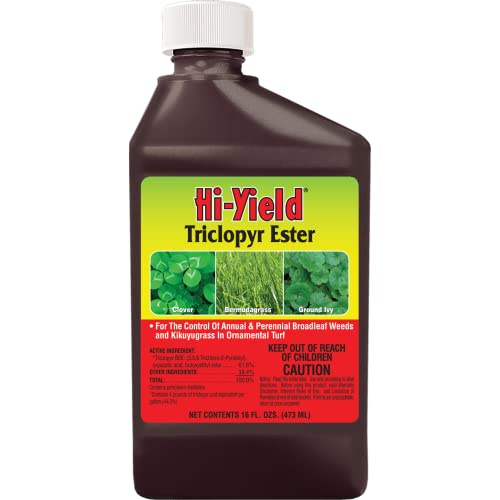
Hi-Yield Triclopyr Ester, 16 oz
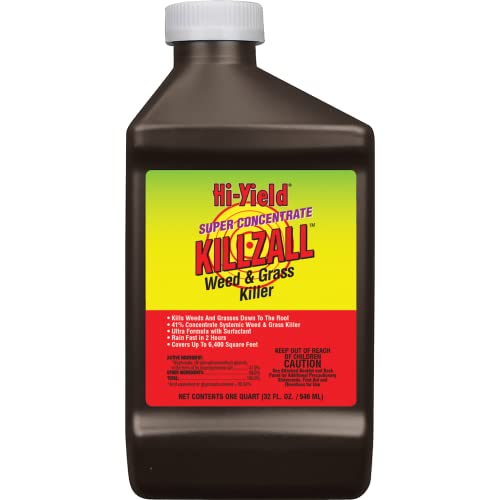
Hi-Yield Super Concentrate Killzall 32 oz
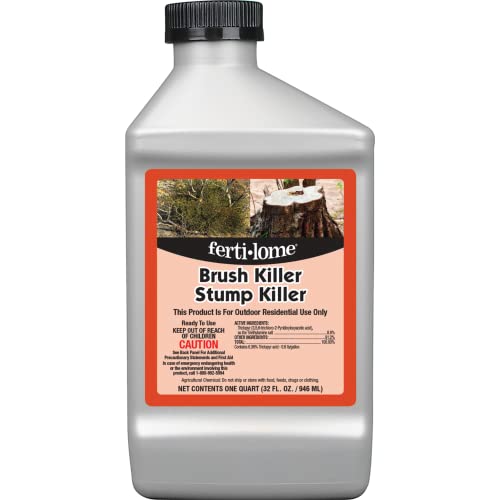
Fertilome Brush & Stump Killer 32 oz

Southern AG 01113 Brush Weed Killer 1 Quart

Roundup Poison Ivy Plus Tough Brush Killer 32 oz
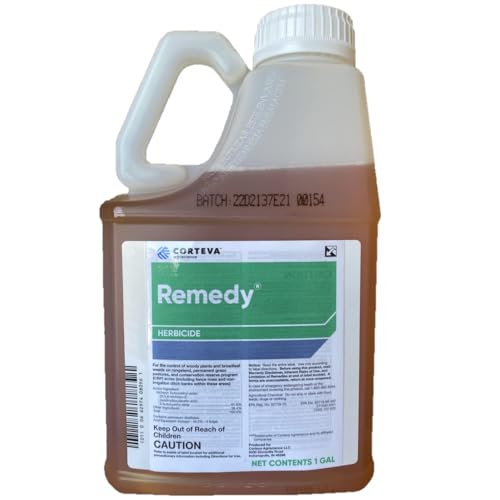
Remedy Specialty Herbicide 1 Gallon
Remedy Specialty Herbicide 1 Gallon
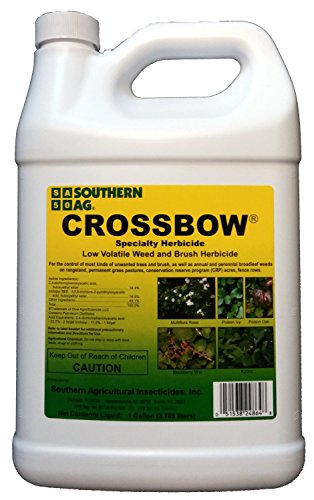
Southern Ag Crossbow Specialty Herbicide 1 Gallon

Airmax Shoreline Defense Emergent Weed Control 1 Gallon
Meet The Standout Selections
This pint-sized concentrate earns its place on small lots where a five-gallon jug would be wasteful overkill. The triclopyr ester formulation (a synthetic auxin herbicide that mimics plant growth hormones and triggers uncontrolled growth in susceptible species) targets actively growing broadleaf weeds like wild violet and oxalis, plus the woody briars creeping across lawn edges.
Homeowners wrestling with fence-line brambles on perennial bluegrass, perennial ryegrass, or tall fescue lawns tend to reach for this bottle first. It’s also labeled for bluegrass suppression when you want to thin out a stand without nuking everything, which adds a layer of flexibility the larger brush killers below don’t offer.
Useful Touches
- Compact 16 oz bottle stores easily on a garage shelf and mixes down without leftover concentrate sitting around.
- Selective action protects listed cool-season turfgrasses while still pushing through woody briars.
- Doubles as a bluegrass suppressor, giving you a second job for the same bottle.
- Liquid concentrate format disperses quickly in tank mixes, so a handheld pump sprayer works fine for spot work.
Things To Consider
- The label explicitly excludes warm-season grasses like St. Augustine, Bermuda, Centipede, and Zoysia, so southern homeowners should confirm grass type before spraying.
- Small bottle means refill trips on multi-acre fence rows, where the larger brush killers below stretch further.
Who It Suits Best
Homeowners with cool-season turf and a modest briar problem along a backyard fenceline or driveway apron.
Consider Something Else When
Southern AG 01113 Brush Weed Killer is a better match for warm-climate acreage owners managing tougher, larger-diameter brush.
Killzall takes a different angle from the rest of this list. It’s a non-selective weed and grass killer with a double-surfactant formulation, meaning it carries two wetting agents that help the active ingredient spread across waxy leaves and dry fast once sprayed.
That fast drying matters when briar patches border desirable plantings and a sudden shower is rolling in. Coverage runs up to roughly 6,400 square feet per 32 oz bottle, so a single container handles most suburban lots without needing a second purchase.
What Stands Out
- Broad-spectrum action kills grasses, broadleaf weeds, and woody brush species in one pass.
- Double-surfactant blend dries quickly on the leaf surface, which speeds uptake and shortens rain concerns.
- Coverage of approximately 6,400 square feet per bottle stretches your dollar across a sizeable property.
Worth Noting
- The label excludes lawns, so accidental drift onto turf will yellow it out along with the briar.
- Owners commonly note the need for thorough coverage of dense foliage; spotty spraying leaves regrowth from missed leaves.
Right Fit For
Property owners clearing overgrown gravel driveways, fence backings, or vacant corners where everything green needs to go.
Look Elsewhere When
Hi-Yield Triclopyr Ester is the smarter choice when you need selective control that protects surrounding cool-season turf.
Fertilome earns its slot by covering two jobs most of the other bottles in this roundup don’t. It both sprays onto brush foliage and paints onto freshly cut stumps, which makes it a one-container solution for someone clearing a thicket and wanting to keep it from coming back.
The brush application calls for mixing the concentrate into water and spraying leaves, while the stump treatment goes on undiluted with a brush right after cutting. Timing on the stump side is strict: the label window for application falls within 45 minutes of cutting, so plan cuts and product accordingly.
Positive Points
- Dual-purpose formula handles both standing brush and freshly cut stumps in the same bottle.
- Mix rate of 8 oz per gallon of water for brush work is straightforward to measure with standard garden measuring cups.
- Targets the woody plants and vines that turn a fence row into an impenetrable wall.
- Concentrate format gives you shelf-stable product you can mix only when conditions are right.
Trade Offs
- The 45-minute stump window is unforgiving; larger cuts require a helper on the brush while another handles the saw.
- Storage in a detached shed is wise since the bottle has a strong chemical odor most owners describe as unpleasant.
Made For
DIYers knocking back thick brush along a rural lot and following up immediately with stump treatments before regrowth starts.
Skip It When
Remedy Specialty Herbicide fits better when you need triclopyr chemistry with lower odor for pasture reclamation work.
Southern AG 01113 is the quart-size workhorse built for non-crop acreage, where briars have been winning the war against pasture grass for years. It carries an 8.8 percent triclopyr formulation, the same active ingredient profile used in the well-known Garlon products that range managers reach for.
The label covers road rights-of-way, rangeland, pastures, and fence rows, so this is the bottle for property owners who think in acres rather than square feet. A foliage spray mix of 4 to 8 ounces per gallon lets you dial concentration up for thick, woody regrowth.
Why It Works Well
- Brush coverage includes Brazilian pepper, trees, vines, and stump treatments from one concentrate.
- Quart size mixes plenty of spray solution for medium pasture sections without a forklift delivery.
- Concentration flexibility lets you push mix rates higher on stubborn resprouts.
- Prevents sprouting on cut stumps, reducing the cycle of repeat cutting every season.
Room For Improvement
- No lawn use, which means hand-painting or shielding desirable turf at the pasture’s edge.
- Spray equipment needs dedicated cleaning afterward since residue can damage sensitive garden plants downstream.
Best Suited To
Rural homeowners and small-acreage owners reclaiming pasture edges and fence rows from entrenched briar infestations.
Not Your Match When
Hi-Yield Triclopyr Ester fits better for cool-season lawn owners who want to spare surrounding turf while killing woody weeds.
This Roundup concentrate focuses on the troublesome trio plus more: poison ivy, poison oak, poison sumac, wild blackberry, and kudzu, along with other woody weeds down to the root. Compared with the triclopyr-heavy options above, this blend leans on a different chemistry profile tuned for vining invasives.
For homeowners whose real headache is a chain-link fence swallowed by wild blackberry canes, this formulation targets exactly that situation. Visible results show up in hours rather than weeks, which helps when you want to confirm the spray hit before the next round.
Standout Benefits
- Targets poison ivy, oak, and sumac alongside wild blackberry and kudzu, covering the common residential brush villains.
- Visible activity within hours gives quick confirmation that the application made contact.
- Kills to the root, so resprouting from established root systems is less likely.
- Rain-proof timing window lets you spray without holding your breath at every cloud.
Points To Keep In Mind
- Replanting restrictions after application mean nearby garden beds may need to wait a window of days before replanting.
- Non-selective action on listed species, so overspray onto ornamentals will damage anything it lands on.
Who Should Grab It
Homeowners whose fence lines are buried under wild blackberry, kudzu, or poison ivy and want results they can see the same afternoon.
A Better Fit Elsewhere
Fertilome Brush & Stump Killer is the stronger match when fresh-cut stumps are part of the same clearing project.
Remedy is the gallon-size option designed for pasture restoration work, where briars and encroaching brush steadily shrink usable grazing. The triclopyr concentrate works through both top growth and roots, and the low-odor formulation makes mixing and application less of a headache than stronger-smelling alternatives.
It’s also flexible enough to tank-mix with GrazonNext or ForeFront HL, so pasture managers can build a broader spectrum cocktail from one base concentrate. For large acreage, the gallon size is more economical per treated acre than the smaller bottles earlier in this list.
Useful Strengths
- Works on the entire plant, both roots and top growth, supporting long-term pasture recovery.
- Low-odor chemistry is easier on the nose during summer mixing compared to harsher ester products.
- Tank-mix compatibility with GrazonNext and ForeFront HL broadens the spectrum of weeds controlled in one pass.
- Targeted at rangeland, pasture, and fence line maintenance where encroaching brush is the primary problem.
Honest Caveats
- A full gallon is overkill for suburban fence lines and tends to sit on a shelf past its useful life.
- Application around children and pets requires following label directions carefully, given the larger treated area.
Who Will Love This
Pasture owners and small ranchers reclaiming grazing land from brush encroachment on multi-acre tracts.
Another Choice May Suit
Southern AG 01113 Brush Weed Killer is the right call for less-than-gallon needs in the same pasture-and-fence-line category.
Crossbow is the broadest-spectrum brush killer in this lineup, combining two active ingredients (triclopyr plus 2,4-D, a widely used broadleaf herbicide that disrupts growth in susceptible plants) to tackle most unwanted trees, brush species, and broadleaf weeds in a single pass. The “low volatile” ester formulation reduces vapor drift on hot days, which matters when desirable trees sit downwind.
One gallon mixes up to roughly 96 gallons of finished spray, which is enough to reclaim a substantial pasture edge or fence row in a single mixing session. That coverage-to-cost ratio is what makes Crossbow the volume pick for acreage owners.
Advantages To Know
- Two-active blend covers a wider weed spectrum than single-ingredient brush killers.
- Makes up to about 96 gallons of spray solution per gallon of concentrate.
- Low-volatile ester formulation reduces vapor drift to sensitive broadleaf trees nearby.
- One container covers multi-acre reclamation projects without a second purchase.
Practical Considerations
- Not for use on lawns or in aquatic sites, so it can’t substitute for the Airmax bottle if water is involved.
- Sprayer cleanup between applications takes more effort since the dual-active formula is stickier in tanks and lines.
Perfect Match For
Acreage owners reclaiming multi-acre fence rows and wood edges where a wide range of brush species grows together.
Reach For A Different Pick When
Airmax Shoreline Defense is the right tool when briars and brush grow right at the waterline of a pond or lake.
Airmax rounds out the list as the only option labeled for use in and around water. It’s a broad-spectrum liquid aquatic herbicide approved for fresh and brackish water, designed to kill emergent aquatic weeds and brush down to the root along shorelines, beaches, and dock areas.
That label specificity makes it invaluable for lakefront owners whose briar problem lives right at the water’s edge, where the other concentrates in this roundup would be off-label. Cattails, phragmites, and shoreline brush are all within its scope.
Bright Spots
- Labeled for direct application to fresh and brackish water, opening up jobs the other picks can’t legally touch.
- Kills roots of persistent emergent weeds, supporting longer shoreline clearance than top-growth-only products.
- Reclaims dock and beach access where brush has choked off usable waterfront.
- Works on the broad mix of grasses, weeds, and brush that typically invade pond edges.
A Few Limitations
- Specialty aquatic use means it’s the wrong bottle for upland fence rows, where standard brush killers are more economical.
- Application near ornamental pond plantings requires careful attention to label directions to avoid off-target effects.
Whose Shelf It Belongs On
Lakefront and pond owners battling briar and brush encroachment right at the waterline.
Swap It Out When
Southern Ag Crossbow is the smarter choice for upland multi-acre brush where aquatic labeling offers nothing useful.
What Matters Most Before Choosing Herbicides For Briars
Match The Chemistry To The Job
Triclopyr-based products like Hi-Yield Triclopyr Ester, Southern AG 01113, and Remedy Specialty Herbicide target woody plants and broadleaf weeds while leaving most grasses alone. Non-selective options like Hi-Yield Killzall kill everything green they touch, which suits driveway and bare-ground projects better than lawn edges. Aquatic-labeled formulas like Airmax Shoreline Defense are the only legal choice when briar roots reach standing water.
Consider Spray Volume And Container Size
A 16 oz bottle suits a single fence section, while a one-gallon jug fits multi-acre reclamation. Coverage per bottle varies from roughly 6,400 square feet for Killzall up to about 96 gallons of mixed spray for Crossbow. Match the container to your actual acreage, since leftover product past its useful window is wasted money.
Think About Timing Windows
Brush killers that target freshly cut stumps, like Fertilome, demand fast application within a tight window after saw work. Foliar sprays need leaves to be present and actively growing, so dormant-season treatments fall flat. Plan projects for late summer into early fall when sap flow pushes chemistry down to roots most effectively.
Account For Equipment And Cleanup
Larger brush projects need a backpack or tank sprayer, plus dedicated cleaning afterward to avoid residue damage in subsequent garden applications. Concentrates that mix at 4 to 8 ounces per gallon are easier to measure than products requiring gram-precise scales. Storage in a detached, ventilated space keeps the chemical smell out of living areas.
Key Considerations Across These Picks
Common Shopping Slip Ups
The biggest mistake is reaching for a non-selective weed killer when selective control would have spared desirable turf. Read grass-type exclusions on warm-season lawns before spraying triclopyr products, since some formulations target bluegrass specifically. Another frequent misstep is underestimating the container size needed, leading to mid-project mixing sessions that interrupt the workflow.
Where The Extra Money Goes
Gallon-size concentrates like Remedy and Crossbow cost more up front but drop the per-acre treatment cost substantially compared to quart bottles. Specialty aquatic labeling, like Airmax Shoreline Defense, carries a premium tied to the extra regulatory testing required for water use. Dual-active formulas that combine triclopyr with 2,4-D justify their price when a property hosts a wider mix of brush species.
Frequently Asked Questions
What Is The Best Time Of Year To Spray Briars?
Late summer through early fall is generally most effective, since plants move carbohydrates and herbicide down toward roots in preparation for dormancy. Leaves need to be present and actively growing for foliar sprays to work, so dormant-winter applications are largely wasted.
Can I Use These Herbicides Near My Vegetable Garden?
Most brush killers in this roundup are off-label for active food gardens, and overspray or root uptake can damage crops. Shield desirable plants with cardboard during application, and observe replanting intervals listed on labels before putting new vegetables in the soil.
How Long Until I See Results On Briars?
Foliar symptoms like leaf curl and browning typically show within one to three weeks, with root kill extending the timeline for complete dieback. Products like the Roundup Poison Ivy Plus formulation show visible activity in hours, but full root kill still takes longer than surface symptoms suggest.
Do I Need A Special Sprayer For These Concentrates?
A standard pump sprayer handles small jobs, while backpack and tank sprayers fit larger fence rows and pasture projects. Dedicated sprayers for brush products prevent cross-contamination with lawn or garden applications that follow.
Are These Herbicides Safe Around Pets And Children?
Most labels allow re-entry once spray has dried, though Remedy’s label notes safety around children and pets when applied according to directions. Keep animals away during application and observe the drying window before allowing access to treated areas.
The Takeaway
Briars give up ground faster when the herbicide matches the plant, the season, and the site. Pick selective triclopyr formulas when cool-season turf needs protecting, non-selective concentrates when everything green must go, and aquatic-labeled bottles only at the water’s edge. The right container size keeps you mixing once instead of three times, and timing the work for active leaf growth pushes the chemistry where it does the most good.
