

Foxtail is one of those weeds that sneaks in along fence lines, creeps into thin turf, and explodes across food plots the moment the weather turns warm. Choosing the right product matters, because foxtail responds differently to selective and non-selective formulas, and your tolerance for collateral damage depends on whether you are protecting a manicured lawn, a clover plot, or open pasture.
This roundup walks through eight herbicides that handle foxtail in different contexts. Each pick is matched to a specific situation, with honest notes on what it does well and where it falls short, so you can match the bottle to your property instead of guessing at the garden center.
A Side-By-Side Look
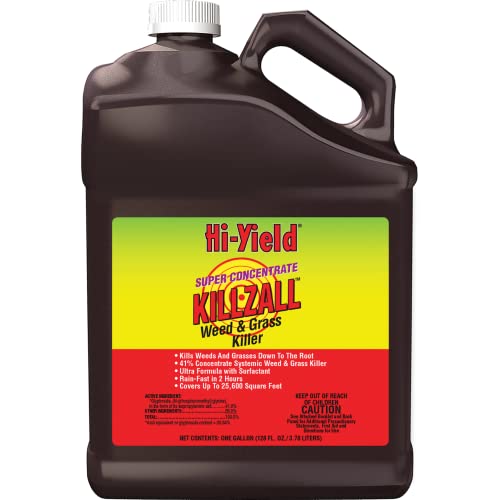
Hi-Yield Killzall Super Concentrate Weed & Grass Killer, 1 gal

Fertilome Weed-Out Nutsedge Control Concentrate, 16 oz

Fertilome Weed-Out with Crabgrass Killer Concentrate, 16 oz
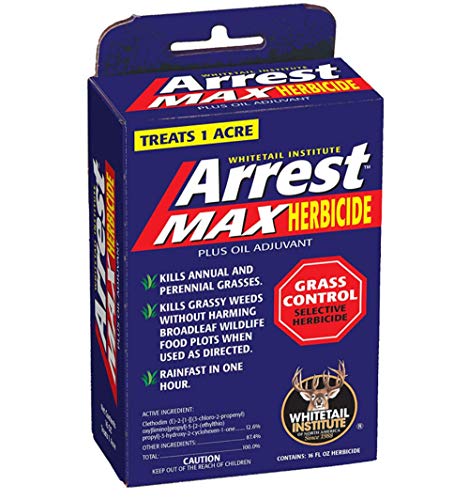
Whitetail Institute Arrest Max Selective Grass Control Herbicide, 8 oz
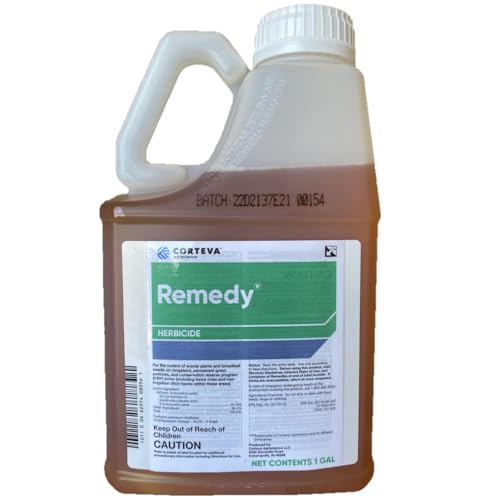
Remedy Specialty Herbicide Weed Killer & Brush Control, Triclopyr Concentrate, 1 Gallon

Airmax Shoreline Defense Emergent Weed Control Herbicide, 1 Quart
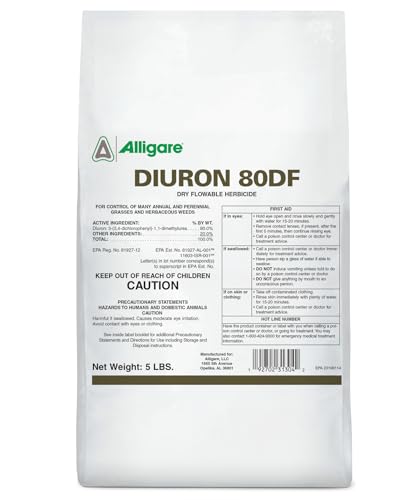
Alligare Diuron 80 DF Herbicide, 5 lb
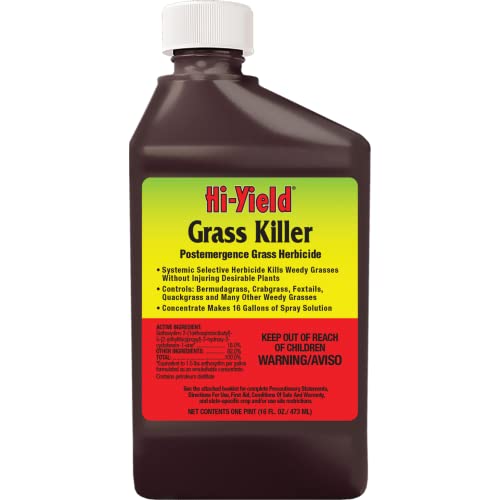
Hi Yield 16 Oz Grass Killer
A Closer Look At Each Pick
Foxtail is a grass, so a non-selective herbicide (one that kills essentially any green plant it touches) is the blunt-instrument choice when you want a clean reset before reseeding. Hi-Yield Killzall is built for exactly that role, and the 1-gallon jug treats a sizable footprint at a per-acre cost that won’t sting.
The double-surfactant formulation helps the active ingredient spread across waxy leaf surfaces and dry down quickly, which matters when you’re spraying in shoulder seasons with fickle weather. You won’t get the precision of a selective lawn product, but for fence rows, gravel drives, and total vegetation prep, it’s a reliable workhorse.
The Practical Payoff
- Large 1-gallon size suits whole-lot treatments without mid-job refills
- Surfactant blend improves coverage on tough, waxy weed leaves
- Dries fast, reducing the window where rain could wash it away
- Budget-friendly per square foot for acreage work
Things To Consider
- Non-selective, so drift or runoff will damage desired turf and ornamentals
- Heavy jug requires careful storage away from kids, pets, and extreme heat
Best Suited To
Homeowners preparing a full yard reset, clearing driveway edges, or reclaiming overgrown fence lines where no desirable plants need protecting.
Look Elsewhere When
Your goal is to keep a healthy lawn and only knock out foxtail, in which case the Fertilome Weed-Out with Crabgrass Killer covers the same grass without sacrificing your turf.
Sedges and nutgrass often show up in the same lawn as foxtail, and Fertilome Weed-Out Nutsedge Control is a selective formula (one that targets specific weeds while leaving desirable grass largely intact) that handles both cool-season bluegrass and fescue alongside warm Bermuda or Bahia. That flexibility matters if your lawn straddles climate zones or you manage mixed turf.
The 16-ounce bottle dilutes to a workable spray volume, which is enough for several treatments of a typical suburban yard rather than a single one-shot pass. For homeowners who want one bottle that handles sedges, spurge, and assorted broadleaf invaders without burning the lawn, the broad weed spectrum here earns its keep.
What Earns Its Place
- Labeled for both warm and cool-season turfgrasses
- Targets sedges and broadleaf weeds that often accompany foxtail outbreaks
- Concentrate format stretches the bottle across multiple applications
Points To Keep In Mind
- Primarily optimized for nutsedge rather than foxtail, so grassy weed suppression may take patience
- Coverage depends on dilution rate, which can confuse first-time users
- Sprayer cleanup matters, since residue can damage sensitive plants next time
Quick Facts
The Right Fit
Homeowners in transition-zone climates managing a mixed weed population where nutsedge and broadleaf problems overshadow pure grassy-weed pressure.
Swap It Out When
Foxtail is your main headache and you want a lawn-safe formula tuned specifically to grassy weeds, which is where Fertilome Weed-Out with Crabgrass Killer pulls ahead.
For a homeowner whose only goal is keeping a thick lawn while clearing out crabgrass and foxtail, this Fertilome concentrate is one of the most direct options in this lineup. It’s labeled for established turf including Bermuda, Buffalo, and Kentucky Bluegrass, so the lawn you’ve worked to build stays put while the grassy weeds go down.
The 16-ounce bottle treats a modest 2,500 square feet at the labeled rate, which is enough for spot treatments across a typical yard rather than full broadcast coverage. Bermuda users should expect some temporary yellowing, and full recovery is the expected outcome, though that brief discoloration can feel alarming if you’re not prepared for it.
What Pays Off
- Targets foxtail alongside crabgrass and over 200 other labeled weeds
- Safe on multiple common turfgrass species when used as directed
- Concentrate form lets you mix only what you need for spot jobs
Honest Caveats
- Bermuda turf may show temporary discoloration after application
- Smaller coverage area per bottle than larger jug options
- Best results require accurate dilution and timing
Whose Shelf It Belongs On
Suburban homeowners with established cool-season or Bermuda lawns who want a single product that handles foxtail and crabgrass without tearing up the good grass.
A Better Fit Elsewhere
You’re working a deer food plot full of clover and alfalfa, where the Whitetail Institute Arrest Max is purpose-built for that exact situation.
Food plots live or die based on whether the forbs (broad-leafed plants like clover and alfalfa) outcompete grasses, and foxtail is one of the grasses that overruns a plot fast. Arrest Max is the bottle built for that exact fight: it suppresses most grass weeds while leaving clover, alfalfa, and chicory standing.
Pairing it with a crop oil surfactant such as Whitetail’s Surefire Crop Oil Plus improves absorption through the leaf cuticle, the waxy outer layer that sheds spray droplets. The 8-ounce bottle is small, but a little goes a long way when you’re spraying individual plots rather than whole fields, and it stays fresh across multiple seasons when stored properly.
Strengths Worth Knowing
- Designed to spare the legumes and forbs hunters plant on purpose
- Compact 8-ounce bottle stores easily between seasons
- Tank-mix compatible with crop oil for stronger uptake
Practical Considerations
- Small bottle means larger plots may need multiple jugs
- Plot performance depends on correct growth stage and surfactant use
- Niche product, less useful if you don’t manage food plots
Feature Snapshot
Who Will Love This
Land managers and hunters who plant perennial food plots and need to clear grass competition without sacrificing their clover investment.
Consider Something Else When
You want to clear brush and grass on open rangeland, which is where the Remedy Specialty Herbicide brings the heavier brush-control chemistry.
Open pasture and rangeland call for a different tool than a lawn sprayer, and Remedy brings triclopyr chemistry, a synthetic auxin herbicide that disrupts growth in broadleaf and woody plants, to the brush-control table. It works on roots and top growth alike, which matters when woody invaders keep resprouting from the base.
The 1-gallon concentrate is sized for acreage work, and the formulation is built to mix with companions like GrazonNext or ForeFront HL for tougher tank-mix programs. Low odor makes it more pleasant to handle during long spraying days, though it still calls for proper protective gear and label-conscious use around livestock.
Practical Pluses
- Triclopyr concentrate handles both brush and grassy weeds
- Low-odor formulation compared to many pasture herbicides
- Tank-mix compatible with popular rangeland partners
- Systemic action moves through the whole plant, including roots
Small Caveats
- Restricted-use style product, so label familiarity matters
- Overkill for small residential lawns
Built With In Mind
Ranchers and landowners reclaiming brushy pasture, maintaining fence rows, or restoring grass productivity across larger acreage.
Reach For A Different Pick When
You’re managing a manicured suburban lawn, where the Fertilome Weed-Out with Crabgrass Killer handles foxtail without the heavy brush-control chemistry.
Pond edges and lake shorelines have their own weed problems, and foxtail-style grasses that creep in from the bank are part of that mix. Airmax Shoreline Defense is labeled for emergent weed control (weeds rooted in shallow water with foliage above the surface) in fresh and brackish water, which is a very specific niche.
The 1-quart bottle is sized for waterfront property owners rather than commercial applicators, and the broad-spectrum formula is built to travel through the plant to the roots. That root kill is the real prize, since cutting top growth on shoreline weeds usually means regrowth within weeks.
Positive Points
- Approved for use in and around ponds and lakes
- Targets roots, reducing regrowth cycles
- Manages multiple shoreline weeds beyond just grasses
Areas To Watch
- Aquatic labels come with extra regulatory considerations
- Limited usefulness on dry-land properties
Feature Rundown
Perfect Match For
Lakefront and pond owners dealing with grassy weeds creeping in from the water’s edge where traditional lawn herbicides can’t legally be applied.
Where A Sibling Pick Shines
Your battle is on dry ground, in which case the Hi-Yield Killzall covers fence lines and driveways without the aquatic-specific labeling.
Industrial sites, highway corridors, and large non-crop areas need season-long weed suppression rather than a quick knock-down, and that’s where Alligare Diuron 80 DF earns its place. The dry-flowable granule format (fine particles designed to dissolve into a sprayable slurry) handles pre-emergent control (stopping weeds before they sprout) and post-emergent cleanup (killing what’s already growing) in one product.
The 5-pound jug suits ground application across sizable acreage, and the chemistry is designed for the rough environments where vegetation management is about infrastructure access, not aesthetics. For residential lawns, it’s the wrong tool, but for the use case it’s built around, the residual control justifies the heavier handling requirements.
Where It Delivers
- Dual-action pre- and post-emergent control in one jug
- Dry granule format stores well and measures cleanly
- Designed for industrial and non-crop sites with persistent weed pressure
Trade-Offs To Consider
- Not appropriate for home lawns or food-producing areas
- Requires careful calibration and protective gear during mixing
- Persistent residual chemistry demands respect for nearby plantings
Made For
Property managers and grounds crews maintaining highways, airports, industrial yards, and other non-crop sites where long-lasting bare-ground control is the priority.
Skip It When
You’re working anywhere near turfgrass or a residential yard, since the Hi Yield 16 Oz Grass Killer offers grass-selective control that protects ornamentals and vegetables.
Garden beds full of vegetables, shrubs, and ornamentals don’t tolerate a non-selective herbicide, but grassy weeds like foxtail still find their way in. Hi Yield Grass Killer is a selective post-emergent (applied after weeds have sprouted) that targets grass growth while leaving the broadleaf plants you actually want alone.
The 16-ounce bottle concentrates down into roughly 16 gallons of finished spray, which is enough for season-long touch-ups across multiple garden beds. Growth stoppage shows up within about two days of application, so you can see whether the spray reached its target without waiting weeks.
Benefits That Matter
- Selective grass control protects vegetables and ornamentals
- Visible growth stoppage within a couple of days
- Concentrate stretches across many gallons of spray solution
Less Ideal Details
- Coverage depends on accurate sprayer calibration per bed size
- Targets grass only, so broadleaf weeds need a separate product
Spec Overview
Who Should Grab It
Vegetable gardeners and landscapers who need to strip grassy weeds out of beds without harming the tomatoes, peppers, shrubs, and flowers growing alongside them.
Not Your Match When
You’re clearing a large, non-crop industrial site where the Alligare Diuron 80 DF provides the residual control those environments require.
What To Match Before You Pick A Foxtail Herbicide
Foxtail is a stubborn summer annual grass, and the right product depends less on brand loyalty and more on where it’s growing and what you’re trying to protect. Start by deciding whether you need a selective formula (one that kills specific weeds while sparing desirable plants) or a non-selective one (anything green it contacts). Lawns, food plots, and garden beds all demand selectivity, while driveway edges and brushy fence lines can handle the broader kill.
Match The Chemistry To The Site
Different active ingredients handle different weed profiles. Products built around crabgrass control often carry foxtail along with them, which is why lawn-safe formulas like Fertilome Weed-Out with Crabgrass Killer pull double duty. For pasture and rangeland, triclopyr-based products like Remedy Specialty Herbicide bring brush control into the same pass as grass suppression. Aquatic labels, dry-granule industrial blends, and selective garden-bed formulas each solve a different problem set.
Think About The Surrounding Plants
Tolerance for collateral damage shapes the decision almost as much as the weed itself. A non-selective jug is fine on a gravel drive but disastrous next to a vegetable row. For mixed plantings, look for selective formulas labeled safe around the specific crops, turf, or ornamentals you intend to keep, and remember that selectivity is rarely absolute, so light discoloration can still happen on sensitive species like Bermuda.
Consider Coverage, Storage, And Timing
Bottle size dictates how many refills you’ll mix mid-job, and concentrates stretch further than ready-to-spray formats for large properties. Storage matters too, since some chemistries have shorter shelf stability and others need cool, dry conditions to stay effective. Finally, application timing (pre-emergent in early spring, post-emergent once green growth is visible, or both for season-long suppression) determines whether a single bottle is enough or you need a multi-pass program.
Weigh Safety And Handling Requirements
Every herbicide in this category calls for gloves, eye protection, and respect for the label, but the stakes scale with the site. Pasture and aquatic products often carry more restrictive handling and re-entry language, while residential lawn and garden formulas tend to have shorter intervals. Plan around kids, pets, and any grazing livestock that might share the property before you commit to a bottle.
Key Considerations Across These Picks
Pitfalls Shoppers Hit
The most common mistake is reaching for a non-selective herbicide on a lawn out of frustration with foxtail pressure, only to kill the good grass alongside it. Selective products exist for a reason. Another trap is ignoring label restrictions on turf species, especially Bermuda, which can yellow temporarily under certain crabgrass-killer chemistries. Finally, mistaking pre-emergent timing means many homeowners apply too late in the season, after foxtail has already germinated and is established.
Where The Extra Money Goes
Higher-tier products typically earn their premium through broader weed spectrums, longer residual control, and tighter selectivity that protects desirable plants. A bigger jug also lowers cost per square foot when acreage is significant, and tank-mix flexibility on pasture products opens the door to customized weed programs. For a small yard, that premium rarely pays back, but on larger properties or in tougher scenarios, the upgrade is often the difference between one season of control and several.
