

Hay fields are stubborn. One missed spray window and a season of clean forage turns into a jungle of thistles, brush, and rogue grass, which is why choosing the right herbicide matters more than the brand on the jug. These eight options cover everything from spot-treating broadleaf invaders to clearing acres of brush along fencelines, and each one fits a specific job in a working hay operation.
A Side-By-Side Look

Hi-Yield (35261) Triclopyr Ester, 8 oz
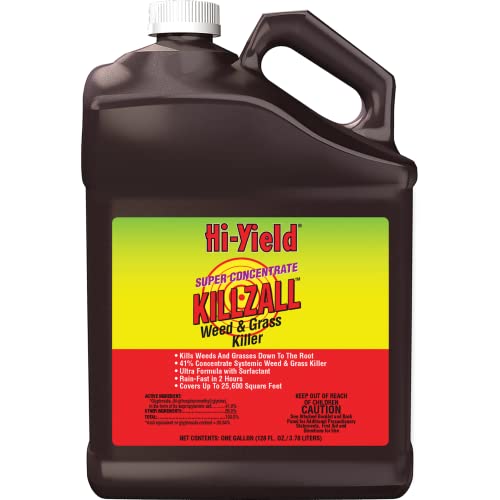
Hi-Yield (33693) Super Concentrate Killzall, 1 gal

Hi-Yield (31134) Grass Killer Postemergence, 8 oz
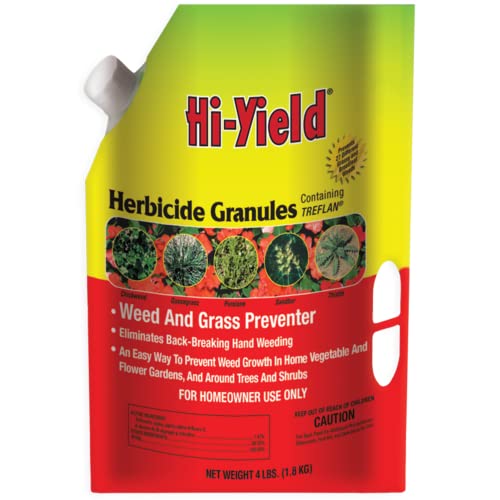
Hi-Yield (22742) Herbicide Granules, 4 lbs

Hi-Yield (21748) Herbicide Granules, 15 lbs

Southern AG 01113 Brush Weed Killer, 1 Quart
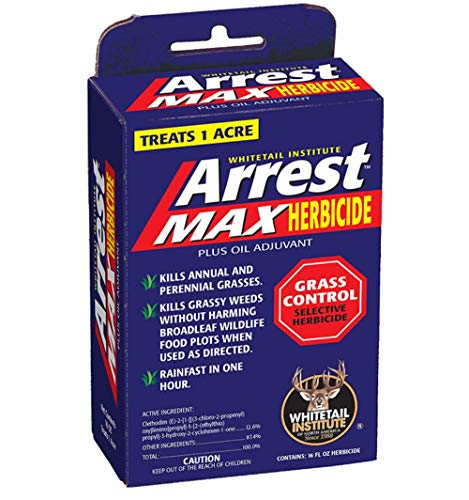
Whitetail Institute Arrest Max Selective Grass Control, 8 oz

Airmax Shoreline Defense Emergent Weed Control, 1 Gallon
Why These Options Stand Out
This little 8 oz bottle of Triclopyr Ester concentrate earns its place on any hay operation dealing with stubborn broadleaf invaders like wild violet and oxalis. Triclopyr is a synthetic auxin herbicide, meaning it mimics a plant growth hormone and causes broadleaf weeds to grow themselves to death, while leaving established cool-season grasses alone. For most cool-season grass pastures, that selectivity is the whole point.
The bottle is small enough to keep on a shelf in the barn, and the liquid concentrate dilutes cleanly into a backpack sprayer. It’s worth double-checking the label against your specific grass type before mixing, since this formula does carry restrictions on certain warm-season varieties.
Positive Takeaways
- Selective control targets tough broadleaf weeds like wild violet and oxalis without harming established perennial ryegrass, tall fescue, or bluegrass stands.
- Compact 8 oz bottle fits easily in a chemical cabinet, so you can keep it on hand for spot treatments throughout the growing season.
- Doubles as a bluegrass growth suppressant, giving hay managers a second use case from a single container.
Points To Keep In Mind
- Carries hard restrictions on Bahiagrass, Centipedegrass, St. Augustine, and Zoysiagrass, so warm-season hay producers should look elsewhere.
- The small bottle size means frequent refills on large acreages, where a jug would be more practical.
Built With In Mind
Cool-season hay producers managing ryegrass, fescue, or bluegrass stands who need precise broadleaf control without sacrificing the forage crop.
Swap It Out When
Operators with warm-season grass pastures get a better fit from the Southern AG 01113 Brush Weed Killer for woody species, or the Killzall jug for total vegetation reset.
Killzall is the non-selective workhorse in this lineup, the one you reach for when the goal is total vegetation cleanup rather than selective trimming. The one-gallon jug is a glyphosate-based (a broad-spectrum systemic herbicide) concentrate built for clearing grasses, broadleaf weeds, and woody brush across big areas. A single gallon covers up to 25,600 square feet, which makes it useful for preparing fencelines, barn lots, or renovation projects before reseeding.
The double-surfactant formulation (surfactants help the spray stick to and penetrate waxy leaf surfaces) helps the mix dry onto plant tissue quickly and start working, which shortens the wash-off window on dewy mornings. Do not treat this as a pasture-friendly option; it’s a reset tool, and the label explicitly steers you away from lawn use.
Key Advantages
- One gallon treats up to 25,600 square feet, which translates to meaningful coverage for hay operation prep work and fenceline maintenance.
- Targets grasses, broadleaf weeds, and woody brush in a single pass, reducing the need for multiple products on rough ground.
- Double-surfactant blend helps the active ingredient stick and absorb, so a missed rain window doesn’t waste the whole spray job.
Where It May Fall Short
- Non-selective chemistry kills everything green it contacts, including desirable forage, so spray drift and overspray become real liabilities near hay stands.
- The one-gallon concentrate is overkill for someone spot-treating a quarter-acre problem, where the Triclopyr Ester bottle is easier to handle.
Feature Snapshot
Who Should Grab It
Hay producers clearing brush along fencelines or prepping acres for renovation who need a high-coverage, non-selective formula and don’t mind keeping it away from established forage.
Reach For A Different Pick When
Selective broadleaf control inside a live hay stand calls for the Hi-Yield Triclopyr Ester 8 oz, which won’t damage the surrounding forage crop.
Where the Triclopyr Ester handles broadleaf weeds and Killzall clears everything, this 8 oz Grass Killer fills the opposite gap: it goes after unwanted grass while leaving broadleaf plants untouched. It is a selective post-emergent (meaning it kills grass that’s already growing rather than preventing new germination), so it works around vegetables, gardens, trees, shrubs, and ornamentals without collateral damage.
Concentrate yields roughly 8 gallons of spray solution, so the small bottle stretches across meaningful ground. Application rate depends on the target grass and method, so reading the label pays off.
Benefits That Matter
- Selectively targets grass without harming broadleaf crops, ornamentals, or garden plants, which is rare in this category.
- Eight ounces of concentrate dilutes into about 8 gallons of spray solution, giving you plenty of mix for spot treatments.
- Works around food-producing plants, making it useful in mixed-use hay operations that also maintain truck gardens.
Practical Considerations
- Grass-only selectivity means it does nothing for broadleaf weeds, so you’ll pair it with another product for full-spectrum control.
- Application rate varies widely depending on the specific grass you’re targeting, so plan on extra label-reading time.
Feature Snapshot
Who Will Love This
Hay operators who also maintain vegetable plots, shelterbelts, or ornamental beds and need to remove invasive grass without harming the broadleaf crops nearby.
Not Your Match When
For total vegetation reset in a hay field, the Hi-Yield Killzall 1 gal is the stronger fit, since selective grass control only handles part of the problem.
Most herbicides on this list are liquids, but this one ships as granules for a different kind of job. It’s a preventative pre-emergent (it stops weed seeds from germinating rather than killing existing plants), which means you spread it at the start of the growing season and let it form a season-long barrier against crabgrass, barnyard grass, bluegrass, and other listed species.
The 4 lb bag is a manageable size for smaller applications, like around sheds, garden borders, or fence approaches where you want a clean zone without constant hand-weeding.
What Helps Most
- Pre-emergent granule form means you broadcast it once at the start of the season and let it block germination for months.
- Targets crabgrass, barnyard grass, and bluegrass, which are common invaders around hay storage areas and outbuildings.
- Small 4 lb bag is easy to handle and store on a shelf, and it suits limited-acre or perimeter applications.
Some Limits To Know
- Pre-emergent only means it won’t touch existing weeds, so timing around germination matters more than spray accuracy.
- The 4 lb size runs out fast on bigger acreages, where the 15 lb version is more economical.
Feature Snapshot
Right Fit For
Hay producers who want clean zones around barns, sheds, or garden plots without committing to a large bag or mixing spray solution.
A Better Fit Elsewhere
Anyone treating multiple acres should reach for the Hi-Yield (21748) 15 lb granule bag, which avoids frequent refills on bigger jobs.
The 15 lb version of the same pre-emergent granule formula is built for bigger jobs, and the formula profile mirrors its 4 lb sibling. Where the smaller bag suits garden borders and shed perimeters, this bag covers substantial acreage with a single purchase, which keeps you from running back to the supplier mid-application.
It’s still a preventative, so timing around the start of the growing season is everything, and existing weeds won’t be affected.
Strengths Worth Knowing
- Bulk 15 lb bag handles multiple acres in a single pass, reducing refill trips mid-application.
- Same season-long pre-emergent barrier as the 4 lb version, which keeps grassy invaders from establishing through the warm months.
- Granular broadcast application means no spray equipment, calibration, or weather-wind concerns to manage.
Things To Weigh
- The 15 lb bag is bulky and heavy, so you’ll want a dry place to store it before and after the season.
- Overkill for small garden or shed applications where the 4 lb version is easier to handle.
Made For
Hay operators managing multi-acre perimeter zones or large storage areas who want pre-emergent protection without constant refilling.
Consider Something Else When
For a smaller garden or shed treatment, the Hi-Yield (22742) 4 lb granule bag is a friendlier size that won’t sit half-used through next season.
The Southern AG brush killer fills the slot left open by the broadleaf herbicides: it goes after woody vines, brush, and hard-to-control species that laugh off broadleaf formulas. The active ingredient profile aligns with triclopyr at 8.8% concentration, and the label steers you toward non-crop areas like rangeland, pasture edges, road rights-of-way, and fence rows.
The 1 quart bottle is a mid-size option that handles moderate brush loads without committing to a gallon jug. Stump treatment and vine suppression are both on the label, which broadens its usefulness around working hay operations.
Positive Points
- Targets woody brush and vines that other herbicides struggle with, including Brazilian pepper and similar tough species.
- Works as a stump treatment to prevent resprouting, which helps when clearing fence-line encroachment.
- Labeled for rangeland, pasture, and right-of-way use, matching real hay-operation scenarios.
Honest Caveats
- The 1 quart bottle is on the small side for extensive brush jobs, where the Killzall gallon would stretch further.
- Brush control chemistry works slowly on woody stems, so you won’t see top-kill overnight.
Feature Snapshot
Best Suited To
Ranchers clearing brush along fence rows, pasture perimeters, and rights-of-way where woody species have taken hold.
Look Elsewhere When
For grassy weed control inside a hay stand, the Hi-Yield Triclopyr Ester 8 oz is the better-targeted option.
Whitetail Institute built Arrest Max specifically for deer food plots, which makes it a different beast from the broad-spectrum hay field products on this list. It’s a selective grass herbicide, meaning it kills competing grass without harming clover, alfalfa, chicory, or other Whitetail Institute perennial food plot species. The chemistry also doubles as a tool for hay managers running mixed forage-and-wildlife plantings.
The 8 oz bottle dilutes into a manageable spray solution for plot-sized areas, and pairing it with a crop oil surfactant (a specialized oil additive that improves leaf penetration) can boost uptake on tougher grass species. The product pages reference pairing with Surefire Crop Oil Plus for that purpose.
Everyday Advantages
- Selectivity protects clover, alfalfa, and chicory, which is exactly the legume-and-forage mix hunters and wildlife managers want preserved.
- Compact 8 oz bottle treats food-plot-scale acreage without the bulk of a gallon jug.
- Pairing with crop oil boosts performance on tougher grass species, giving you a tuning knob for stubborn patches.
Trade Offs
- Formulated for food plot species rather than mainstream hay grasses, so it’s a niche tool outside wildlife management.
- Selective grass-only control means broadleaf weeds still need a separate approach.
Feature Snapshot
Perfect Match For
Land managers running deer food plots alongside hay production who need to control grass without harming clover or chicory stands.
Where Another Pick Suits Better
For pure hay field broadleaf control without the wildlife angle, the Hi-Yield Triclopyr Ester 8 oz is the more focused tool.
The Airmax Shoreline Defense rounds out the list with a narrow but important use case: emergent weeds around stock ponds, shorelines, and ditch banks. It’s labeled for fresh and brackish water (a mix of fresh and saltwater), which gives it flexibility on properties with multiple water sources. Cattails, phragmites, grasses, weeds, and brush all fall inside its spectrum.
The gallon jug covers meaningful shoreline footage, and the chemistry targets the roots of persistent emergent aquatic weeds, which is where regrowth problems usually start.
Features That Help
- Aquatic-labeled formula works on cattails, phragmites, and shoreline brush without contaminating pond water when applied per label.
- Targets the root system of emergent weeds, which is where regrowth typically originates.
- Suitable for both fresh and brackish water sites, broadening its usefulness on coastal or tidal-edge properties.
Factors To Consider
- Specialty aquatic formulation is overkill for dry-land hay weed control, where other picks on this list do the job better.
- Application timing matters: spraying at the wrong growth stage reduces root-kill effectiveness, so plan around label guidance.
Whose Shelf It Belongs On
Hay operations with livestock ponds or shoreline access where cattails and phragmites threaten water access points.
Skip It When
Dry-land broadleaf or grass weed control in established hay stands is better served by the Hi-Yield Triclopyr Ester or Killzall formulas.
What Matters Most Before Choosing Herbicides For Hay Fields
Match the Chemistry to the Target
The first decision is whether you need a selective product that leaves forage alone or a non-selective reset. Triclopyr-based formulas target broadleaf weeds while sparing established grass, while glyphosate-based options like Killzall clear everything green. Grass-selective products like Arrest Max do the opposite, removing grass while sparing broadleaf crops.
Understand Pre-Emergent vs. Post-Emergent Timing
Pre-emergent granules like the Hi-Yield 22742 and 21748 prevent seed germination and must go down before weeds sprout. Post-emergent liquids work on actively growing plants and require the target to be visible and healthy enough to absorb the spray. Choosing the wrong timing window is one of the most common reasons these products underperform.
Read the Grass-Species Restrictions
Warm-season grasses like Bahiagrass, Centipedegrass, and St. Augustine are excluded from several labels on this list. Hay producers running mixed grass stands should cross-reference their forage species against the label before any purchase, since a mismatch can mean crop damage rather than weed control.
Consider Container Size and Coverage
Small 8 oz bottles suit spot treatments and food-plot-scale work, while gallon jugs make sense for fencelines and multi-acre prep. Buying too small means frequent refills; buying too large leaves you storing half-used concentrate through the off-season.
Key Considerations Across These Picks
Pitfalls Shoppers Hit
The most common mistake is grabbing a non-selective herbicide for use inside an established hay stand, since products like Killzall kill the forage along with the weeds. The opposite error is buying a selective product for total vegetation reset, which leaves brush and woody growth untouched. Always match the product’s spectrum to the actual job.
Where The Extra Money Goes
Bigger containers and specialized formulations cost more per unit, but they often save time on multi-acre jobs and reduce refill trips. Specialty products like the Airmax aquatic herbicide command a premium because their labeling covers narrow use cases like pond edges. The honest trade-off is paying more for a tool that precisely fits your situation versus a cheaper jug that forces workarounds.
Frequently Asked Questions
What is the difference between selective and non-selective herbicides?
Selective herbicides target specific plant types while leaving others unharmed, like Triclopyr Ester killing broadleaf weeds in grass. Non-selective herbicides like Killzall kill any green plant they contact, making them suitable for total vegetation reset.
Can I use these herbicides on actively growing hay?
Only selective products labeled for your specific grass species should touch a live hay stand. Non-selective options are reserved for prep work, fencelines, and renovation projects where the forage isn’t being protected.
When is the best time to apply pre-emergent granules?
Pre-emergent granules go down at the start of the growing season, before weed seeds germinate. Application timing varies by region and target species, so check the label for guidance tied to soil temperature and local climate.
Do I need crop oil or surfactant with these products?
Some labels recommend or require a surfactant to improve leaf penetration, especially on grassy or waxy species. Surfactants help spray droplets stick and absorb rather than bead off the leaf surface.
Are these products safe near livestock water sources?
Only aquatic-labeled products like Airmax Shoreline Defense are appropriate for pond and shoreline use. Most agricultural herbicides carry restrictions on water application, so always check the label before spraying near stock tanks or natural water.
Bottom Line
The right herbicide depends entirely on what you’re trying to kill and what you’re trying to keep, whether that’s broadleaf invaders in a cool-season stand, brush along a fence row, or cattails choking a stock pond. Matching chemistry to job, reading the grass-species restrictions, and timing pre-emergent applications correctly will get you further than any single product choice. Your hay field tells you what it needs each season, and these eight options cover the most common problems working operations face.
