

Pastures don’t stay productive on autopilot. Broadleaf weeds like thistle, ragweed, and pigweed push out grass, woody brush creeps into fence lines, and once a single acre tips toward the wrong plant mix, the rest of the property follows. Choosing the right herbicide is the difference between reclaiming ground and watching it slip.
This list breaks down eight selective and brush-control options for rangeland, permanent pastures, and CRP acres. It focuses on labeled uses, livestock grazing considerations, brush versus broadleaf targets, and whether each formula fits a small homestead or a multi-acre operation.
A Quick View Of The Lineup
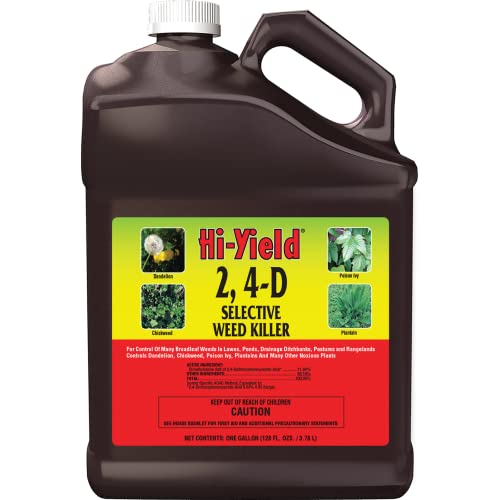
Hi-Yield 2,4-D Selective Weed Killer, 1 gal
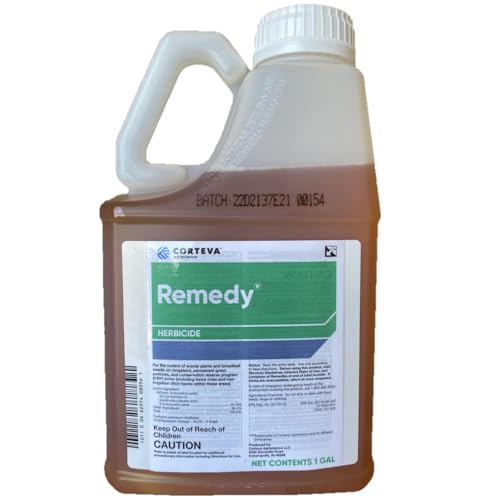
Remedy Specialty Herbicide Brush Control, 1 Gallon
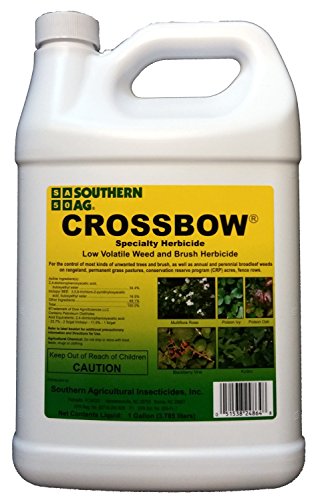
Southern Ag Crossbow Specialty Herbicide, 1 Gallon
Grazon Next HL 2 Gallon Liquid
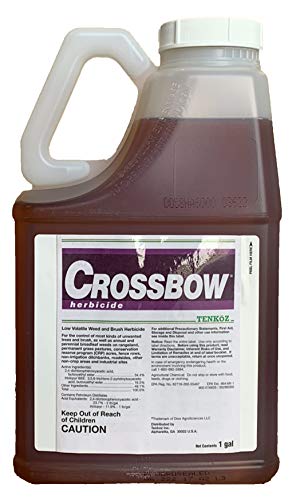
Crossbow Herbicide Brush Killer 1 Gallon
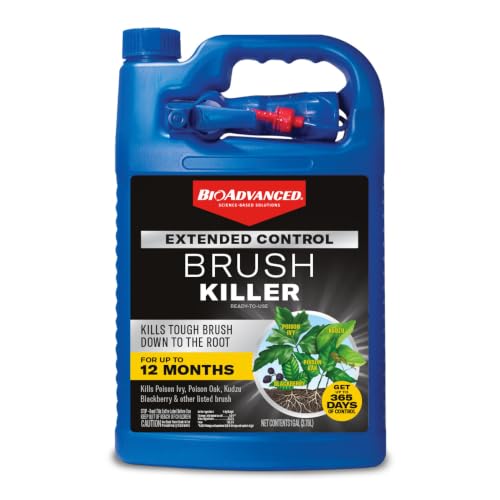
BioAdvanced Extended Control Brush Killer Spray, 1 Gal

Dow AgroSciences Grazon Next HL 2 Gallon

ALLIGARE 2,4-D Amine Weed Killer Concentrate, 2.5 Gallon
A Breakdown Of The Leading Choices
For a homestead managing five to forty acres of mixed-use pasture, Hi-Yield’s 2,4-D selective formula is the kind of jug that earns a permanent spot in the barn. The active ingredient, 2,4-D, is a synthetic auxin herbicide that disrupts growth hormones inside broadleaf plants while leaving grass species largely unaffected, which is exactly what you want when you’re cleaning up a hay field or a fenced paddock without nuking the forage base.
It’s labeled for a long list of sites beyond pasture, including lawns, ponds, drainage ditches, and rangeland, which gives it real versatility for properties where the weed problem doesn’t stay in one category. For most owners, the appeal is straightforward: a single product handles dandelion, arrowhead, buckhorn, aster, goatsbeard, and similar broadleaf offenders without a lot of mix-and-match chemistry.
Points In Its Favor
- Selective mode of action protects established grass while clearing broadleaf competition
- Multi-site label covers pasture, rangeland, drainage ditches, and ponds
- Pairs cleanly with Hi-Yield Spreader Sticker surfactant for tougher leaf surfaces
- One gallon covers meaningful acreage when diluted per label rates
- Familiar chemistry for first-time pasture managers who want a forgiving entry point
Things To Consider
- Broadleaf-only formula means woody brush and encroaching saplings need a different tool
- Mixing accuracy matters; under-strength applications often lead to repeat treatments
- Storage in a sealed, shaded spot away from feed and livestock handling areas is widely recommended
Quick Facts
Made For
Small-acreage owners and first-time pasture managers who need a forgiving broadleaf herbicide with a flexible label.
Look Elsewhere When
Brush encroachment is the real problem, where Remedy Ultra offers stronger woody-plant control for rangeland reclamation.
When the issue is no longer a few scattered broadleaf weeds but mesquite, oak sprouts, or sumac pushing into the fence line, Remedy Ultra steps in with a different chemistry altogether. Its active ingredient, triclopyr, is a selective herbicide that mimics plant growth regulators, traveling from leaves down through the root system and reaching woody tissue that broadcast sprays usually miss.
The gallon format is built for rangeland reclamation, pasture restoration, and ongoing brush maintenance along fence rows. Unlike the broadleaf-only products earlier in this list, this one is aimed squarely at encroaching brush, mid-size trees, and the tough perennial woody plants that slowly take over neglected acreage. It can also be tank-mixed with GrazonNext or ForeFront HL for broader-spectrum programs.
Positive Takeaways
- Root-to-shoot translocation handles woody plants broadcast sprays leave behind
- Low-odor profile makes mixing and spraying less unpleasant than older formulations
- Flexible label supports pasture restoration, fence-line maintenance, and brush reclaiming
- Comes as a concentrate, so the gallon stretches across multiple tank loads
- Safe around children and pets when applied according to the product label
Worth Noting
- Restricted-use status in some states means applicators may need certification
- Slower visible results on tough brush compared to contact herbicides
- Sprayer cleanup between uses tends to require thorough rinsing to avoid residue carryover
Best Suited To
Ranchers and acreage owners dealing with persistent brush encroachment who want a rangeland-targeted tool with staying power.
Swap It Out When
Your focus is strictly broadleaf weed control in established grass, where Hi-Yield 2,4-D covers that need more economically.
Crossbow sits in a useful middle ground between straight 2,4-D products and pure triclopyr brush killers. By combining both active ingredients, it covers broadleaf weeds and woody brush in a single tank, which simplifies life for owners who don’t want to juggle two separate spray programs across the same acreage.
One gallon of concentrate dilutes into up to 96 gallons of spray solution, so a single jug handles meaningful fence-line work plus pasture spot treatments. The low-volatile ester formulation reduces vapor drift concerns during warm-weather spraying, which is a practical advantage for anyone working near sensitive crops or ornamental trees on the property edge.
The Helpful Details
- Dual active ingredients tackle broadleaf weeds and woody brush in one pass
- Concentrate format stretches one gallon into 96 gallons of mixed spray
- Low-volatile ester formulation reduces off-target vapor drift
- Useful for fence rows, pasture edges, and non-cropland transitions
Trade Offs
- Ester formulation can damage desirable broadleaf trees and shrubs if sprayed inadvertently
- Restricted-use classification in several regions means certification may be required
- Concentrate handling demands careful measuring and PPE during mixing
Quick Facts
Right Fit For
Property owners who want a single product to handle both brush and broadleaf weeds across pasture borders and fence rows.
Where Another Pick Suits Better
Multi-species grazing operations with zero livestock restrictions should turn to Grazon Next HL for simpler rotation management.
Grazon Next HL is the formula many cattle, goat, and sheep operations reach for when grazing rotation is non-negotiable. Unlike many pasture herbicides, it carries no grazing restriction for beef cattle, goats, horses, nursing dairy animals, or sheep, which removes a major planning headache from mixed-species operations.
The two-gallon container targets rangeland, permanent grass pastures, Conservation Reserve Program acres, and wildlife management areas, giving it a wide professional footprint. It is designed for broadleaf weed control in established grass, and the concentrated liquid format is meant to be measured carefully into standard spray equipment.
Positive Points
- No livestock grazing restriction across multiple species after application
- Labeled for permanent pasture, CRP acres, rangeland, and wildlife management areas
- Two-gallon format suits larger application programs
- Liquid concentrate mixes readily into standard agricultural sprayers
Honest Caveats
- Not available for sale in Alaska, Arizona, California, Colorado, Connecticut, Delaware, Hawaii, Idaho, Massachusetts, Maryland, Maine, Minnesota, or Montana
- Restricted-use classification in many states means certification may be required before purchase or application
- Application timing depends heavily on weed growth stage for full effect
Spec Overview
Who It Suits Best
Multi-species grazing operations that need broadleaf control without complicating livestock rotation schedules.
Not Your Match When
Heavy brush encroachment is the primary issue, where Remedy Ultra delivers stronger woody-plant performance.
This Crossbow listing is the same dual-active formula as the Southern Ag version above, but it ships through a different channel and often appeals to property owners buying in single-gallon increments. It targets undesirable trees like ash and sumac, woody plants, briars, poison ivy, thistles, and most broadleaf weeds, which makes it a reliable perimeter tool.
For owners running a brush-control program around barn lots, woodlines, and access roads, this is a workhorse concentrate rather than a specialty product. The gallon size fits neatly into a single-season plan, and the chemistry behaves predictably when label rates are followed.
Everyday Perks
- Targets trees, briars, poison ivy, and broadleaf weeds in a single product
- Single-gallon size suits seasonal brush-management programs
- Compatible with standard pump and backpack sprayers
- Trusted dual-active formula used across pasture and rangeland settings
Points To Keep In Mind
- Can injure desirable broadleaf trees and shrubs if sprayed unintentionally
- Mixing and loading require personal protective equipment
- Storage in original container away from feed and heat sources is widely recommended
Perfect Match For
Owners running repeated perimeter brush control around barns, fence lines, and wood edges where woody plants dominate.
A Better Fit Elsewhere
Small residential lots needing a ready-to-spray option should consider BioAdvanced Extended Control Brush Killer Spray.
BioAdvanced’s ready-to-spray formulation is the option for owners who want to skip the concentrate-measuring step entirely. The active ingredient, triclopyr at 0.8 percent, is a familiar brush-control chemistry that targets poison ivy, poison oak, kudzu, blackberry, bamboo, English ivy, and other listed brush at the root.
The trade-off is scale. One gallon covers up to 500 square feet, which suits fence corners, small wood edges, and brushy patches near structures rather than open pasture sweeps. It is a small-lot tool with professional-grade ambition, and for many acreage owners with a few stubborn brush pockets, that scope is exactly right.
What Works In Its Favor
- Ready-to-spray format eliminates measuring and mixing errors
- Triclopyr chemistry provides root-level control on tough brush
- Covers common problem plants including kudzu, blackberry, and English ivy
- Beginner-friendly format suits first-time herbicide users
Possible Compromises
- 500-square-foot coverage per gallon limits use to small brush patches
- Higher per-acre cost makes large pasture programs impractical
- Not designed for broadcast pasture weed control
Who Should Grab It
First-time users and small-property owners tackling isolated brush problems along fence lines and outbuildings.
Skip It When
You need broad pasture coverage, where ALLIGARE 2,4-D Amine offers farm-grade scale at a much lower per-acre cost.
This Dow-branded listing offers the same Grazon Next HL formulation reviewed earlier, distributed through a separate channel. The active ingredients and use profile mirror the Corteva version: a broadleaf herbicide built for rangeland, permanent grass pastures, CRP acres, and wildlife management areas.
For operations that prefer Dow AgroSciences packaging or rely on a specific supplier, the chemistry is consistent with the earlier entry. It carries the same no-grazing-restriction advantage for beef cattle, goats, horses, nursing dairy, and sheep, which is the central reason many producers standardize on this product.
Reasons It Performs
- Same trusted Grazon Next HL active formulation as the Corteva listing
- No livestock grazing restriction across multiple species
- Two-gallon format suits large-scale application plans
- Effective against tough broadleaf weeds in permanent pasture
- Useful across rangeland, CRP acres, and wildlife management areas
Factors To Consider
- Same state-by-state availability limits as the related Corteva listing
- Restricted-use classification in many regions
- Heavy concentrate jugs can be awkward to handle during mixing
Feature Snapshot
Built With In Mind
Large permanent pasture operations that prefer Dow AgroSciences distribution and need predictable broadleaf control.
Reach For A Different Pick When
Brush and woody plants are the dominant problem, where Remedy Ultra delivers stronger performance on saplings and fence-line growth.
ALLIGARE’s 2,4-D amine concentrate is the bulk pick for acreage owners who measure herbicide by the acre, not by the jug. The 47.2 percent active ingredient level delivers farm-grade potency against pigweed, thistle, ragweed, and other stubborn broadleaf competition, and the 2.5-gallon format keeps per-acre cost low across large treatment programs.
It is labeled for lawns, pastures, aquatic sites, and crops, which gives it serious versatility for properties with multiple management zones. The amine formulation is also less volatile than ester alternatives, reducing off-target movement during warm-weather spraying. You may find the larger container a bit unwieldy without a helper during mixing.
Useful Touches
- 47.2 percent active ingredient for serious broadleaf knockdown
- 2.5-gallon format lowers per-acre cost on large properties
- Amine formulation reduces volatility during warm-weather spraying
- Labeled across lawns, pastures, aquatic sites, and crop borders
Practical Considerations
- Non-returnable hazardous-materials item once shipped
- Restricted-use classification in some states may require certification
- Larger container demands careful handling and stable storage
Whose Shelf It Belongs On
Large-acreage owners and farm operators running broadleaf sweeps across multiple pastures who want the lowest cost per acre.
Where A Sibling Pick Shines
Small property owners with spotty brush problems should look at BioAdvanced Extended Control Brush Killer Spray for a simpler ready-to-use option.
What Matters Most Before Choosing Herbicides For Pastures
Match The Chemistry To The Target
The first decision is what you’re actually fighting. Broadleaf weeds in established grass respond to 2,4-D, aminopyralid, or amine-based concentrates like ALLIGARE 2,4-D and Hi-Yield. Brush and woody plants require triclopyr or triclopyr-and-2,4-D blends such as Remedy Ultra, Southern Ag Crossbow, or Tenkoz Crossbow. Using a broadleaf product on brush wastes time and money, and using a brush product on pasture weeds can damage desirable forage legumes.
Read The Livestock Restriction Section
If animals graze the property, the grazing interval matters as much as the kill rate. Products like Grazon Next HL carry no restriction for several livestock categories, while others require withdrawal periods or temporary fencing. Mixed-species operations with cattle, goats, and sheep should verify coverage for every animal on the place, not just the dominant species.
Check State Availability Before Buying
Several formulations in this category are restricted-use products with state-specific availability. Grazon Next HL, for instance, cannot be shipped to a long list of states. Always confirm the listing ships to your address before committing, especially when buying concentrates in 2-gallon or larger formats that are non-returnable hazardous materials.
Size The Container To The Acreage
Small homesteads under 10 acres rarely justify 2.5-gallon concentrate jugs, and large ranches quickly outgrow 1-gallon ready-to-spray bottles. For multi-acre programs, the per-acre cost difference between a 1-gallon and a 2.5-gallon jug adds up across several spray seasons. Choose the smallest format that handles a single season’s program without forcing rushed applications.
Key Considerations Across These Picks
Traps First Timers Fall Into
New pasture managers often reach for the strongest-looking brush killer on the shelf when the actual problem is broadleaf weeds in grass, which then damages forage and wastes product. The opposite mistake is buying a 1-gallon broadleaf concentrate for a 40-acre brush reclamation project and wondering why nothing dies. Identifying whether the issue is broadleaf, brush, or both is the single most useful pre-purchase step.
When Paying More Pays Off
Higher-tier products in this category typically cost more for a reason: dual-active formulations like Crossbow replace two separate products, and restricted-use chemistries like Remedy Ultra reach roots that broadcast sprays cannot touch. Paying more also buys concentrated formats that lower per-acre cost on larger properties. The honest read is that for small lots, ready-to-spray convenience is worth a premium, while for serious acreage, concentrates win on cost-per-acre even before counting performance.
Frequently Asked Questions
What Is The Safest Herbicide For Pastures With Livestock?
There is no universal “safest” choice, but products like Grazon Next HL carry no grazing restriction for several livestock categories once applied per label. Always verify the specific species on the property and check state-level restrictions before application.
How Long After Spraying Can Animals Graze?
It depends on the product. Some herbicides, including Grazon Next HL, impose no grazing interval for listed livestock. Others require waiting periods measured in days or weeks. The product label is the only reliable source for the exact interval on your pasture.
Can I Mix Two Herbicides Together?
Some products, including Remedy Ultra, are designed for tank-mixing with partners like GrazonNext or ForeFront HL. Others should never be combined without label guidance. Mixing without confirmation risks reduced effectiveness, crop injury, or illegal application.
Do I Need A License To Buy These Herbicides?
Several formulations on this list are restricted-use products that require an applicator license in certain states. General-use products, including some 2,4-D concentrates, often sell without certification. Check your state’s department of agriculture for the specific classification.
Will Herbicide Harm My Grass?
Selective broadleaf herbicides like 2,4-D and Grazon Next HL are designed to spare established grass while killing broadleaf weeds. Brush-control products, however, can damage grass if applied at higher rates or outside recommended timing. Reading the label’s grass tolerance section prevents costly mistakes.
Closing Remarks
The right herbicide depends less on brand and more on a clear-eyed read of what’s growing, what’s grazing, and how many acres you’re managing. Match the chemistry to the target, respect livestock restrictions, and size the container to the program. The picks above cover most realistic scenarios a working pasture will throw at you.
