

St. Augustine grass thrives in warm coastal yards, but the moment dollarweed, clover, or chickweed creep in, the whole lawn can start to look patchy and tired. Many common broadleaf herbicides actually damage St. Augustine’s delicate stolons, so the wrong pick quickly turns from a cure into a costly mistake. The list below covers options labeled for St. Augustine and Centipede lawns, plus a couple of tools worth keeping on hand for spot work.
The Essentials At A Glance

Hi-Yield (35261) Triclopyr Ester, 8 oz
Hi-Yield Super Concentrate Killzall Weed & Grass Killer, 1 gal

Hi-Yield Atrazine Weed Killer RTS, 32 oz

Fertilome St. Augustine Weed & Feed 15-0-4, 25.6 lbs
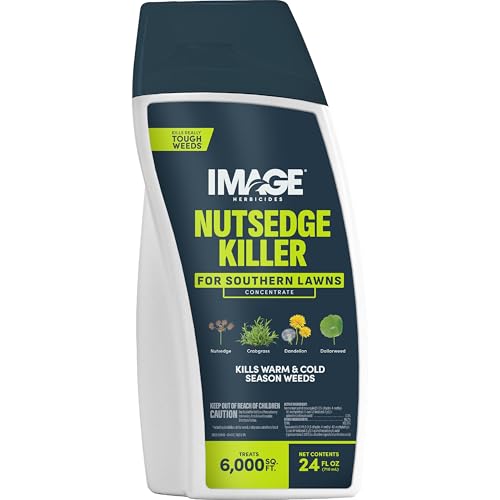
Image Herbicide Nutsedge Killer for Southern Lawns, 24 oz

Southern Ag Atrazine St. Augustine Grass Weed Killer, 1 gal

Ortho WeedClear Lawn Weed Killer with Comfort Wand, 1 gal
Hi-Yield Atrazine Weed Killer
Taking A Closer Look At The Options
Triclopyr is a synthetic auxin herbicide, meaning it mimics a plant growth hormone and overstimulates broadleaf weeds until they collapse. The 8-ounce bottle of liquid concentrate from Hi-Yield targets stubborn broadleaf invaders like Oxalis and Wild Violet that hand-pulling rarely finishes off. Where it really earns its keep is on perennial bluegrass, perennial ryegrass, and tall fescue ornamental turf, especially when paired with a bluegrass suppression program.
Read the label closely before you spray. This formula is explicitly off-limits for St. Augustine, Centipede, Bahia, Bentgrass, Bermuda, and Zoysia, so it earns its place in a shed only if you also maintain cool-season patches or ornamental beds. For pure St. Augustine care, you’ll reach for one of the atrazine picks reviewed below instead.
Positive Takeaways
- Knocks down persistent Oxalis and Wild Violet that survive weaker mixes.
- Doubles as a bluegrass suppressor for cool-season turf renovations.
- Concentrate format stretches a small bottle across many square feet.
- Targets actively growing weeds for cleaner results than pre-emergents.
Things To Consider
- Do not apply to St. Augustine, Centipede, Bahia, Bermuda, Bentgrass, or Zoysiagrass.
- Small 8 oz bottle calls for accurate measuring to avoid over- or under-dosing.
- Works only on broadleaf weeds, so grassy invaders need a separate plan.
Who It Suits Best
Homeowners managing cool-season grass or ornamental turf with stubborn broadleaf weeds will find this bottle useful.
Skip It When
You maintain a St. Augustine lawn and need broadleaf control, in which case the Hi-Yield Atrazine Weed Killer RTS delivers a safer fit.
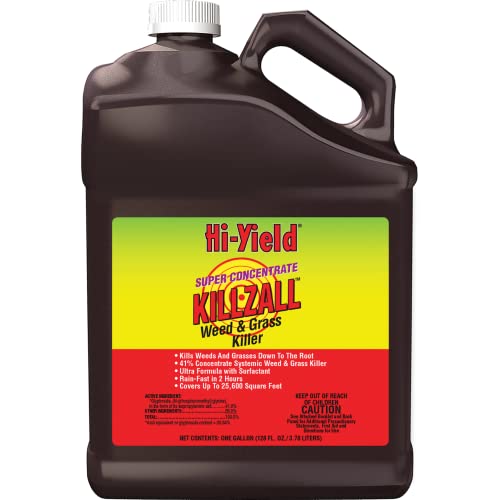
Killzall is a non-selective herbicide built for total vegetation control, hitting grasses, broadleaf weeds, and woody brush in a single pass. The double-surfactant blend, surfactants being additives that help the spray stick to leaves, lets the formula dry quickly so uptake starts almost on contact. A single one-gallon bottle is engineered to cover roughly 25,600 square feet, which clears a substantial patch of driveway edge or fence line in one afternoon.
Reach for it when you want bare ground rather than a living lawn. It will annihilate St. Augustine on contact, so spray drift and overspray are real concerns near your turf. For selective St. Augustine-friendly control, swap to the atrazine options covered further down.
A Few Strong Suits
- Covers up to 25,600 square feet per gallon for big clearing jobs.
- Fast-drying surfactant mix shortens the wait for visible results.
- Handles grasses, broadleaf weeds, and woody brush in one product.
Worth Noting
- Do not use on lawns, including St. Augustine, where it kills desired grass.
- Concentrate demands careful dilution and protective gear during mixing.
- Wind drift can damage nearby ornamental plants if applied carelessly.
Made For
Property owners prepping driveways, fence lines, or renovation zones where total vegetation removal is the goal.
Look Elsewhere When
You want selective broadleaf control inside a living St. Augustine lawn, where the Hi-Yield Atrazine Weed Killer RTS serves the same yard without the kill-everything risk.
Atrazine is a selective herbicide that targets broadleaf weeds and certain grassy invaders while leaving St. Augustine and Centipede lawns largely intact. The “RTS” in the name means ready-to-spray: a 32-ounce bottle you hook straight to a garden hose, with no measuring cups or pump sprayers to clean afterward. The label lists Henbit, Clover, and Chickweed among the weeds it controls, and one bottle covers up to 3,720 square feet of lawn.
Compared to the Killzall above, this bottle lets you actually walk across your lawn afterward without leaving dead stripes. For homeowners new to weed control, the no-mix format removes the most common mistake: mis-measured concentrate. It’s a thoughtful entry point before moving up to a larger atrazine concentrate.
Where It Excels
- Hose-end ready-to-spray format skips measuring and mixing entirely.
- Clears Henbit, Clover, and Chickweed without harming St. Augustine or Centipede.
- Treats up to 3,720 square feet per bottle for smaller suburban yards.
- Post-emergent action handles weeds already up and growing.
Trade Offs
- Coverage tops out at around 3,720 square feet, so larger lots need multiple bottles.
- Application rates vary by grass type and weed pressure, requiring a label read.
- Won’t suppress nutsedge, which needs a targeted product like Image Nutsedge Killer.
Key Specs
Best Suited To
First-time herbicide shoppers with small St. Augustine or Centipede lawns who want a simple hose-end bottle.
Consider Something Else When
You need to cover more than about 3,720 square feet in one session, where the Southern Ag Atrazine concentrate offers better cost-per-foot economics.
A weed-and-feed product combines an herbicide with a fertilizer so you tackle two spring chores in one broadcast pass. This 25.6-pound bag delivers a 15-0-4 nutrient blend (15% nitrogen for green-up, no phosphorus or potassium in the analysis), aimed at Centipede, Zoysia, and St. Augustine grass. It’s positioned as both a pre-emergent and a post-emergent herbicide, meaning it can stop weed seeds from sprouting while knocking back weeds already up.
Compare that to the hose-end atrazine above, and the difference is application style: a granular spreader walk instead of a spray rig. The trade-off is timing. Early spring is the recommended window, and you’ll want a calibrated broadcast spreader to avoid striped over- or under-feeding. Northern and Bermuda lawns are off the menu.
The Value In It
- Combines pre- and post-emergent weed control with fertilizer in one pass.
- Targets Centipede, Zoysia, and St. Augustine without harming them.
- 15-0-4 analysis feeds nitrogen-heavy spring growth.
- 25.6 lb bag covers large warm-season lawns.
Minor Gripes
- Do not use on Bermuda or Northern grasses; off-limits for mixed lawns.
- Spreader calibration matters for even coverage without striping.
- Early spring timing window is narrow for the best pre-emergent effect.
Feature Snapshot
Right Fit For
Southern homeowners planning a spring lawn overhaul who want feeding and weed control in a single spreader pass.
Not Your Match When
You maintain a Bermuda or Northern grass lawn, where the Hi-Yield Atrazine Weed Killer RTS fits better.
Image’s 24-ounce ready-to-spray is positioned as a post-emergent herbicide built for established southern turfgrasses, with a formula aimed at hard-to-kill weeds like dandelion, dollarweed, and crabgrass. Nutsedge is a sedge, not a true grass, and it laughs off most broadleaf herbicides, so this product fills a specific gap in a southern weed-control rotation. Because it ships as a ready-to-spray, it sidesteps the measuring-cup errors that plague first-time users.
The narrow 24-ounce size makes it a smart supplement to a broader atrazine program rather than a whole-lawn replacement. Think of it as the spot-treatment companion to the Hi-Yield RTS or the Southern Ag concentrate. For lawns where nutsedge or dollarweed keep coming back despite routine atrazine, this product earns its place on the shelf.
Good Reasons To Consider
- Targeted action against dollarweed, crabgrass, and similar tough species.
- Safe on established southern turfgrasses when used as directed.
- Ready-to-spray design eliminates mixing guesswork.
- Compact 24 oz size suits spot treatments over whole-lawn coverage.
Honest Caveats
- Small bottle is less economical for broad whole-lawn applications.
- Designed primarily for southern turf, so cool-season lawns are off the table.
- Repeat treatments are commonly needed for stubborn nutsedge stands.
Quick Facts
Perfect Match For
Southern homeowners with persistent dollarweed or nutsedge patches that broader atrazine applications leave behind.
A Better Fit Elsewhere
You face a yard-wide broadleaf invasion without sedges, where the Fertilome Weed & Feed addresses the whole lawn in one spring pass.
Southern Ag’s one-gallon atrazine concentrate is the bulk option for homeowners with bigger lawns or recurring weed seasons. It’s labeled for St. Augustine and Centipede grass and controls broadleaf weeds while suppressing crabgrass, both as a post-emergent on emerged weeds and on the seed stage. For anyone who’s already comfortable with a pump sprayer, the concentrate format drops the per-ounce cost sharply compared to ready-to-spray bottles.
Step up to this jug when the smaller RTS bottle stops covering your yard. The trade-off is preparation: you measure, mix, and load a sprayer, which adds time and a small margin for error. Once dialed in, though, a single gallon can stretch across a much larger lawn than multiple hose-end bottles.
Advantages To Know
- Bulk concentrate format lowers the cost per square foot treated.
- Handles broadleaf weeds and offers crabgrass suppression in one product.
- Safe on St. Augustine and Centipede lawns.
- One-gallon size suits mid-size and larger southern properties.
Room For Improvement
- Concentrate requires accurate mixing and a dedicated pump sprayer.
- Loose storage can lead to slow oxidation, so keep the jug sealed tight.
- Mixing raises the chance of accidental over-application on sensitive turf.
At A Glance
Who Will Love This
Experienced DIYers with larger St. Augustine or Centipede lawns who already own a pump sprayer and want better value per ounce.
Reach For A Different Pick When
You’re new to herbicide mixing and prefer a hose-end format, in which case the Hi-Yield Atrazine Weed Killer RTS keeps things simpler.
Ortho’s WeedClear ships as a ready-to-use formula with a comfort wand attached, so there’s no hose hookup, no measuring, and no mixing. The label lists over 250 broadleaf weeds including dandelion, chickweed, clover, dollarweed, spurge, knotweed, oxalis, and henbit, which covers most of the broadleaf invaders a St. Augustine lawn sees in a typical year. The comfort wand is a real upgrade for anyone who has hand-fatigue from trigger sprayers.
Compared to the smaller Image bottle above, this gallon trades nutsedge specialty for broader broadleaf coverage. The trade-off is selectivity: this product is labeled for southern lawns, but you still need to confirm St. Augustine grass is on the approved list before spraying. Used as directed, it targets weeds down to the root.
Reasons It Performs
- Lists 250+ broadleaf weeds including dollarweed, dandelion, and clover.
- Comfort wand reduces hand strain on longer spot-treatment sessions.
- Ready-to-use formula removes the mixing step entirely.
- Targets weeds to the root for longer-lasting clean-up.
Points To Note
- Listed weeds vary by label, so always confirm St. Augustine is approved before use.
- One-gallon ready-to-use jugs are heavier to carry across a yard than a hose-end bottle.
- Doesn’t target nutsedge, which needs a dedicated product like Image.
Built With In Mind
Homeowners with broadleaf-heavy lawns who want a ready-to-use sprayer with a comfortable grip and a long weed list.
Where Another Pick Suits Better
You battle sedge weeds specifically, where the Image Nutsedge Killer fits the bill more directly.
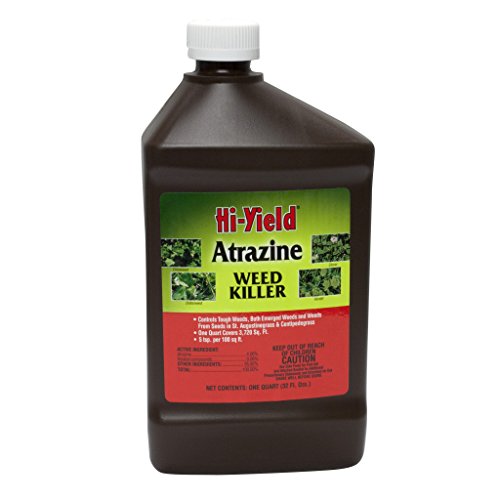
VPG’s Hi-Yield Atrazine Weed Killer is a 4% atrazine formulation intended for St. Augustine and Centipede grass, with a labeled weed list that includes annual bluegrass (Poa annua), common and mouseear chickweed, henbit, moneywort, pennywort (dollarweed), and spurge. As a selective herbicide, it tolerates the warm-season lawn while putting pressure on the broadleaf invaders most homeowners notice first. You mix and spray it with your own pump sprayer, which gives experienced users precise rate control.
Compare this to the Hi-Yield RTS reviewed earlier: same active ingredient family, but this concentrate gives you the flexibility to adjust rates for specific weed pressure rather than relying on a fixed hose-end dilution. For homeowners who want one jug in the shed for routine seasonal use, this is a straightforward pick without extra frills.
A Favorable Mix
- 4% atrazine formula labeled for St. Augustine and Centipede.
- Covers dollarweed, henbit, chickweed, spurge, and annual bluegrass.
- Concentrate format allows rate adjustment for varying weed pressure.
- Straightforward selective herbicide without extra additives.
Small Caveats
- Concentrate demands careful measuring and a calibrated sprayer.
- Doesn’t address nutsedge, which calls for a separate targeted product.
- Application rate varies with grass type, requiring a careful label read.
Feature Card
The Right Fit
DIYers with a pump sprayer who want a flexible concentrate for routine broadleaf control across a typical southern lawn.
Swap It Out When
You’d rather skip the mixing step entirely, where the Hi-Yield Atrazine Weed Killer RTS in ready-to-spray form is the easier call.
What Matters Most Before Choosing Herbicides For St Augustine Grass
Grass Safety Comes First
St. Augustine is a warm-season grass with relatively low herbicide tolerance compared to Bermuda or Zoysia, so the label really is the law. A product that controls the same weeds on a fescue lawn can scorch St. Augustine stolons in a single misapplication. Before anything else, confirm the label specifically lists St. Augustine (or Centipede, which shares similar chemistry) under “approved turf.” The atrazine-based options in this list earn their place precisely because they’re labeled for that grass.
Selective vs. Non-Selective Action
Selective herbicides target certain plant types while leaving turfgrass largely unharmed, while non-selective herbicides kill any green plant they touch. For routine weed control in a living lawn, a selective formula such as atrazine is the right call. Reserve non-selective products like Killzall for spot clearing of driveway cracks, fence lines, or pre-renovation prep where you actually want bare ground.
Coverage, Format, and Mixing Skill
Ready-to-spray bottles attach to a hose and skip the math, ideal for smaller lawns or first-time users. Concentrate jugs demand a pump sprayer and accurate measurement, but they drop the per-square-foot cost substantially across larger yards. Weigh the format against your lawn size and your tolerance for measuring cups before you commit.
Weed Spectrum and Timing
Different products target different weeds. Dollarweed and clover fall to atrazine, while nutsedge usually needs a sedge-specific formula like the Image product above. Spring pre-emergent applications stop weed seeds before they sprout, while post-emergent sprays handle weeds already up. A combined approach often delivers the cleanest result across a full growing season.
Picking The Right Formula For Your Yard
Pitfalls Shoppers Hit
The single biggest misstep is grabbing a broadleaf weed killer off the shelf without checking the grass-compatibility list. Many formulations are off-limits for St. Augustine, Centipede, Bahia, or Zoysia, and the damage shows up within days as yellowing or burnt patches. Another common trap is over-applying “for good measure,” which concentrates the herbicide past what the lawn can tolerate. Always follow the label rate and the recommended timing window, even if the weeds look aggressive.
Why Top Tier Costs More
Larger concentrate jugs and ready-to-spray bottles with comfort wands tend to cost more because they pack in more active ingredient, better surfactant systems, or ergonomic hardware. The upgrade pays off when your lawn is large enough that smaller bottles run out mid-season, or when you’re applying often enough that hand fatigue becomes a real factor. For occasional spot work on a small yard, a basic RTS bottle is plenty.
Frequently Asked Questions
Is atrazine safe on St. Augustine grass?
Atrazine is one of the few selective herbicides labeled for St. Augustine and Centipede lawns, and it controls many broadleaf weeds plus crabgrass when used as directed.
Can I use a general broadleaf killer on St. Augustine?
Most broadleaf weed killers are off-limits for St. Augustine, so always verify the label lists your grass type before spraying any product.
How often can I spray atrazine on my lawn?
Application frequency depends on the product’s specific label instructions, and most atrazine formulations allow repeat treatments on a set schedule with rate limits per season.
Will atrazine kill nutsedge?
Atrazine offers limited suppression of nutsedge at best, and a sedge-targeted product like Image Nutsedge Killer handles stubborn nutsedge more reliably.
When is the best time to apply herbicide to St. Augustine?
Early spring applications target emerging weeds before they establish, with follow-up post-emergent sprays whenever actively growing weeds appear during the season.
Wrap Up
The right herbicide for your St. Augustine lawn depends on grass safety, weed type, and how much mixing you’re willing to do. Atrazine-based options like the Hi-Yield RTS, Hi-Yield concentrate, and Southern Ag gallon cover most broadleaf situations, while the Fertilome Weed & Feed adds fertilizer in the same pass. Keep a sedge-specific product like Image on hand for the stubborn patches, and you’ll have a flexible rotation ready for whatever shows up next season.
