

Apartment cooks with overflowing trash cans and suburban gardeners buried under yard waste face the same core problem: organic matter piles up faster than the local pickup can handle, and a good home composting system turns that daily friction into something genuinely useful. Whether you’re working with a narrow countertop, a small balcony, or a full backyard, the right match depends on your space, your scraps, and how much hands-on work you actually want. This roundup breaks down eight strong options across electric bins, passive countertop buckets, outdoor tumblers, and worm farms, so you can pick a setup that fits how you cook and live.
The Main Contenders

Ouaken 4L Electric Composter Smart Countertop Compost Bin (White)

Ouaken 4L Electric Composter Smart Countertop Compost Bin (Black)

Airthereal R500 Electric Kitchen Composter 2.5L (Gray)

KIBAGA Kitchen Compost Bin with Smell Proof Lid
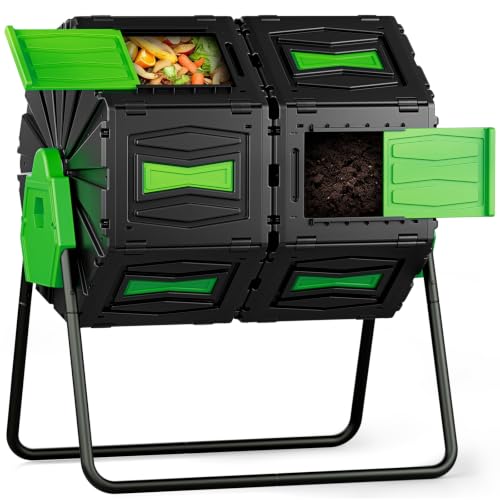
Marcytop 45-Gallon Dual Chamber Compost Tumbler

THE GROW’ING 43-Gal Outdoor Compost Bin Tumbler

Reencle Prime Electric Composter 14L (Silver)

Blütezeit 5-Tray Worm Compost Bin 53QT (Gold)
A Breakdown Of The Leading Choices
The Ouaken 4L electric composter is the kind of white countertop appliance that disappears into the background until you need it. It uses high-temperature drying, grinding, and cooling cycles (a three-stage approach that dehydrates scraps, breaks them down, and finishes them into a dry, soil-like byproduct) to shrink a few days of peels, cores, and grounds into something you can scoop into a planter. The 4-liter capacity fits comfortably under most upper cabinets, which matters in galley kitchens where every square inch competes with the coffee maker.
Compared to the larger, more aggressive Reencle later in this list, the Ouaken trades throughput for a smaller footprint and a quieter daily presence. For one or two cooks generating modest scraps, the cycle speed tends to keep up with normal kitchen output without bottlenecking the bin.
Where It Excels
- Odor-sealed design keeps smells from drifting into the living space during a cycle, a meaningful upgrade from open compost pails.
- Low-noise operation lets you run it overnight or during dinner prep without raising voices over it.
- Auto-cleaning function reduces the scrubbing chore that turns many first-time owners off electric bins within a month.
- Translates food scraps into dry, low-moisture material that stores easily in a small jar until trash day or garden use.
Things To Consider
- 4L fills quickly for households cooking multi-course meals daily, so you may find yourself running cycles back to back.
- Electric dryers need counter outlet access and add a small but real draw to your monthly bill.
Who It Suits Best
Singles, couples, and small households that cook most nights but produce a manageable scrap load, and that value a sealed, low-maintenance countertop solution.
Skip It When
Busy families generating more than a couple pounds of scraps a day should reach for the Reencle Prime Electric Composter, whose 14L chamber handles heavier throughput without constant cycling.
The black Ouaken shares the same drying-grinding-cooling core as its white sibling, but the matte-dark housing reads as a deliberate design object rather than an appliance. It suits kitchens that lean modern or industrial, where a bright white box would interrupt the palette. Functionally, you are getting identical cycle mechanics, footprint, and odor handling, so this is a pick driven by aesthetic alignment.
Where the white Ouaken fades into a bright backsplash, this one anchors darker countertops without competing visually. It also masks minor smudges between cleanings, which is a small but real day-to-day benefit.
Key Advantages
- Same sealed, low-noise operation as the white version, with odor control that holds up across a standard cycle.
- Dark exterior hides fingerprints and dust better than glossy white finishes in open-shelf kitchens.
- Auto-cleaning routine keeps the interior fresh without disassembly, a small convenience that adds up over months of use.
- Compact 4L capacity fits the same tight-counter scenarios as the white model.
Points To Keep In Mind
- Performance and price-tier match the white model, so you’re paying for finish choice more than added function.
- Smudges that do appear may be harder to spot on the dark surface until build-up becomes obvious.
Made For
Homeowners who care how an appliance looks on the counter and want a sealed electric composter that blends with darker or more dramatic kitchen palettes.
A Better Fit Elsewhere
If finish color matters less than raw capacity, the Reencle Prime Electric Composter offers a much larger 14L chamber for households that prioritize volume over aesthetic.
The Airthereal R500 takes a more aggressive approach to food waste. Its SHARKSDEN tri-blade system, a three-arm grinder designed to chew through fibrous scraps that stall single-blade units, paired with a 4-hour cycle, promises roughly 90% reduction in waste volume. The result is a noticeably drier, more compact output than what passive bins produce. The 2.5L chamber is smaller than the Ouaken, but the trade-off is faster processing and a more granular end material.
Where the Ouaken leans gentle and quiet, the R500 feels purposeful, almost kitchen-tool serious. It suits cooks who view composting as a routine chore to finish quickly rather than a slow passive process.
What Stands Out
- Tri-blade design handles tougher scraps like small bones, pits, and fibrous vegetable matter that stall weaker grinders.
- Four-hour cycle clears a full load in roughly half a workday, useful for weeknight cooking rhythms.
- High volume reduction means the by-product bag fills slowly and trips to the garden bin stay infrequent.
- Compact gray housing fits beside coffee makers and toasters without claiming valuable prep space.
Honest Caveats
- Blade-driven units are louder than drying-only composters, so expect a sustained hum during the cycle.
- Smaller 2.5L chamber means more frequent emptying for households that cook in volume.
Who Should Grab It
Home cooks who want faster cycles, don’t mind a bit of grinder noise, and want a small-footprint electric bin that handles tougher scraps.
Consider Something Else When
Those prioritizing quiet operation above speed should look at the Ouaken 4L Electric Composter, which uses drying rather than grinding to keep noise low.
The KIBAGA compost bin goes in the opposite direction from the electric models on this list. It’s a 1.1-gallon passive countertop bucket with a sealed lid, designed to collect scraps until you can transfer them to an outdoor pile, garden, or municipal pickup. There’s no motor, no cycle, and no power draw, just rust-proof metal construction and a charcoal-style filter approach. For renters, off-grid setups, or anyone who doesn’t want another plug-in appliance, that simplicity is the entire selling point.
Where the Airthereal R500 chews scraps into powder in hours, the KIBAGA simply stores them. That makes it best for households that already have a downstream plan for the material, whether that’s a backyard bin or weekly green collection.
Points In Its Favor
- No power or filter replacements required, so running costs stay near zero across years of use.
- Rust-proof metal body wipes clean in seconds and tolerates wet scraps without staining.
- Compact 1.1-gallon size tucks beside a sink or under a cabinet without dominating counter space.
- Sealed lid design helps contain odors between trips to the outdoor bin.
Some Limits To Know
- It’s a holding bin, not a processor, so scraps still need somewhere to go beyond the kitchen.
- Without active drying, you may find the contents need emptying more frequently in warm months.
Best Suited To
Renters, beginners, and minimalists who want a stylish, no-electric collection bin that pairs with an outdoor compost or municipal program.
Look Elsewhere When
Anyone wanting a closed-loop kitchen solution that actually transforms scraps indoors should reach for the Ouaken 4L Electric Composter, which processes material on its own.
The Marcytop tumbler jumps categories entirely, moving outdoors to a 45-gallon dual-chamber bin designed for serious yard and kitchen waste. Two 22.5-gallon chambers let you fill one side while the other finishes, then rotate to aerate. Tumbling replaces hand-turning with a fork, which matters if your compost pile has ever felt like a workout.
Compared to the smaller KIBAGA countertop bin, the Marcytop is a destination, not a transfer point. Material goes in and comes out as finished compost, with no need for a downstream bin.
Features That Help
- Dual-chamber layout lets you run two batches at different stages, so finished compost is always available.
- Rotating drum design aerates the pile without a shovel, speeding decomposition compared to static bins.
- Generous 45-gallon total capacity handles yard waste, leaves, and kitchen scraps without constant emptying.
- Green door access keeps the visual footprint tidy in a backyard or side-yard placement.
Trade-Offs
- Requires outdoor space and a flat surface for stable tumbling, which limits apartment and balcony use.
- Assembly takes time and a second pair of hands for the initial build.
Who Will Love This
Suburban gardeners with backyard space who want batch-style composting without the manual turning a static pile demands.
Reach For A Different Pick When
Urban gardeners without yard access should consider the Blütezeit 5-Tray Worm Compost Bin, which fits on balconies or in basements and produces rich castings in much smaller volumes.
THE GROW’ING’s 43-gallon tumbler focuses on a single thoughtful upgrade over generic backyard bins: a built-in thermometer. Compost quality depends heavily on internal temperature, the warmer the active core, the faster the microbial breakdown, and seeing the reading helps you know when to turn and when to wait. The orange finish also stays visible in dense garden settings, which is more useful than it sounds when you’re juggling trimmings.
Compared to the larger Marcytop, this tumbler trades a few gallons of capacity for that monitoring feature, a worthwhile swap if you treat composting as a measured science rather than just tossing scraps in a heap.
Useful Strengths
- Integrated thermometer takes the guesswork out of knowing when your batch is actively decomposing.
- 43-gallon capacity suits typical family yard waste volumes across a full growing season.
- Bright orange finish improves visibility in leafy garden corners where neutral bins tend to disappear.
- Non-electric, passive design works in any yard with no wiring or power considerations.
A Few Limitations
- Smaller total volume than the Marcytop, which may matter for very active households with big yards.
- Thermometer adds a small part that could need replacement after years of weather exposure.
Right Fit For
Data-curious gardeners who want to track compost progress and adjust turning schedules based on real temperature readings rather than guesswork.
Swap It Out When
Gardeners prioritizing raw volume and batch rotation should look at the Marcytop 45-Gallon Dual Chamber Compost Tumbler, which offers more total capacity in a similar footprint.
The Reencle Prime moves past grinding and drying into something closer to actual composting. It relies on patented microbe technology and aerobic decomposition, a process that uses oxygen-loving microorganisms to break down organic matter into something that looks and smells like soil. The result is real compost, not just dried powder. The 14L chamber handles up to 2.2 pounds of daily food waste, and the silver housing with whisper-quiet operation makes it easier to live with than earlier-generation electric bins.
Compared to the Ouaken, the Reencle outputs usable compost rather than a dry byproduct. That distinction matters if you have houseplants, a small herb garden, or a balcony bed you actually want to feed.
Real Benefits
- Microbe-based aerobic process produces genuine compost suitable for houseplants and small garden beds.
- Generous 14L capacity swallows a day’s scraps from a family of four without mid-cycle emptying.
- Whisper-quiet operation keeps the unit running under living-room-adjacent kitchens without disturbance.
- Closed design virtually eliminates odors, making daily additions hassle-free.
Potential Compromises
- Larger footprint than the Ouaken, so plan counter space accordingly.
- Microbe cartridges are consumables that need periodic replacement to keep decomposition efficient.
- Premium tier pricing reflects the larger chamber and biological process.
Perfect Match For
Larger families and dedicated indoor gardeners who want real compost output, not just volume reduction, and are willing to invest in a higher-capacity unit.
Another Choice May Suit
Singles or couples producing modest scraps will find the Ouaken 4L Electric Composter a better size and value match, since the Reencle’s capacity headroom would go unused.
Feature Snapshot
The Blütezeit worm bin takes composting back to its biological roots. Vermicomposting, the practice of using worms to break down organic waste, runs through five stackable trays that let worms migrate upward as they finish each layer, with finished castings collecting at the bottom. The 53-quart total capacity is generous for a system this compact, and the included starter kit helps first-time worm keepers get going without sourcing worms separately.
Compared to the Reencle’s microbial approach, the Blütezeit trades speed for involvement. Worms take longer than machines, but the castings they produce are exceptionally rich soil amendment.
Positive Points
- Five-tray stackable design lets worms do the work of separating finished from fresh material automatically.
- 53-quart capacity handles steady kitchen scrap input without crowding the worms.
- Starter kit included, so beginners can begin without a separate worm purchase.
- PP construction resists moisture and cleans easily between tray rotations.
What To Weigh
- Slower output than electric composters, so patience matters more than speed.
- Worm care requires basic attention to moisture and feeding balance, a small but real learning curve.
- Outdoor placement is typical; very cold winters may require moving the bin to a sheltered spot.
Built With In Mind
Hobbyist gardeners who enjoy hands-on projects and want premium worm castings for serious soil-building, rather than just volume reduction.
Not Your Match When
Anyone wanting quick, automated processing should consider the Reencle Prime Electric Composter, which produces finished material without worms or manual tray management.
Feature Snapshot
Matching The Right System To Your Space
Before picking a composter, think honestly about where it will live and how often you’ll touch it. Countertop units like the Ouaken or KIBAGA work in apartments but need a free outlet or a sink-adjacent spot, while outdoor tumblers like the Marcytop or THE GROW’ING demand level ground and a few feet of clearance for rotation. Capacity matters more than most shoppers expect: a 4L bin fills faster than you’d guess once you start adding coffee grounds daily, so households cooking nightly often outgrow small electric units within months.
The process style is the second big decision. Drying-based electric bins produce a dry, low-odor byproduct that resembles coarse powder, fine for trimmings but not a substitute for finished compost. Microbe-based units like the Reencle output genuine compost suitable for plants. Worm systems take the longest but yield the richest castings. Tumblers handle the largest volumes with the least manual labor but require outdoor space and a willingness to turn the drum every few days.
Finally, match the system to your scrap profile. Bone-in scraps and fibrous vegetable matter push toward blade-based systems like the Airthereal R500. Mostly fruit peels, coffee grounds, and soft scraps suit drying-based bins. Yard-heavy waste with leaves and prunings belongs in a tumbler. Households that want true compost output rather than just waste reduction will find the most value in biological systems, whether worm or microbe-driven.
Common Shopping Slip Ups
The most frequent mistake is buying on capacity alone. A larger bin that overwhelms your counter rarely gets used, while a smaller unit that fits the space often becomes part of the daily routine. The second trap is ignoring downstream needs: passive bins like the KIBAGA only make sense if you have somewhere to take the scraps. Finally, shoppers often overlook power draw and noise, both of which shape whether an electric unit stays plugged in or ends up in a closet within a season.
When Paying More Pays Off
Higher-tier electric composters earn their cost through real compost output, larger daily throughput, and quieter operation. The Reencle’s microbe process, for instance, produces soil-ready material rather than dried byproduct, which justifies its premium for anyone actively gardening. Outdoor tumblers at the higher end offer dual chambers and monitoring features that translate directly into faster, more reliable composting cycles and less guesswork over months of use.
Frequently Asked Questions
How long do electric kitchen composters take to process food waste?
Most countertop electric units finish a full load in three to six hours, depending on moisture content and cycle mode. Drying-based bins tend toward the longer end, while blade-grinder models like the Airthereal R500 advertise four-hour cycles.
Can I use the output from an electric composter directly on plants?
It depends on the process. Drying-based units produce a dry byproduct that’s better mixed into soil than used as a top dressing. Microbe-based units like the Reencle generate compost closer to finished soil amendment. When in doubt, mix the output with potting soil before applying.
Do worm compost bins smell?
Healthy worm bins with proper airflow and balanced feeding rarely smell stronger than a damp forest floor. Odors usually mean the bin is too wet or overfed, both fixable with bedding adjustments.
How much yard waste can a 45-gallon tumbler handle?
A 45-gallon tumbler comfortably processes the leaves, clippings, and kitchen scraps from a typical family yard across a growing season. For very large properties or heavy autumn leaf loads, expect to empty finished compost mid-season.
Are countertop compost bins noisy?
Drying-based units run quietly enough to ignore, while blade-grinder models emit a sustained hum during operation. The Reencle Prime specifically advertises whisper-quiet performance for open-plan kitchens.
Closing Remarks
The right composter is the one that matches your space, your scrap volume, and your tolerance for hands-on work. Small households with modest output often do best with a sealed electric bin, while active gardeners usually want the throughput of an outdoor tumbler. Pick the system that fits where you actually cook and live, and the daily habit tends to follow.
