

A Saturday spent chasing leaves across a quarter-acre yard with a handheld blower quickly explains why backpack models exist. Weight shifts to your hips instead of your wrists, air volume climbs past what a stick unit can deliver, and stubborn wet debris moves off patios and driveways in a single sweep. The eight homeowner backpack blowers below run the gamut from lightweight cordless to commercial-grade gas, so the right fit depends on yard size, noise tolerance, and how often you fire one up.
A Quick View Of The Lineup
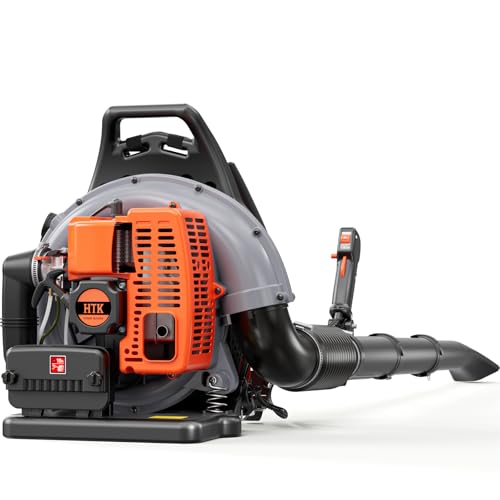
HTK Gas Backpack Leaf Blower, 63CC 2-Stroke, 665 CFM (Orange)
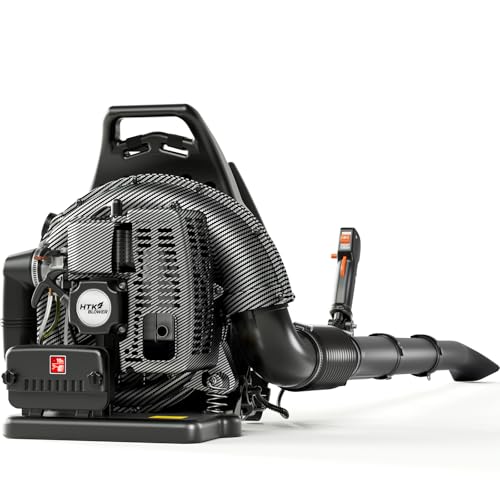
HTK Gas Backpack Leaf Blower, 63CC 2-Stroke, 665 CFM (Black)
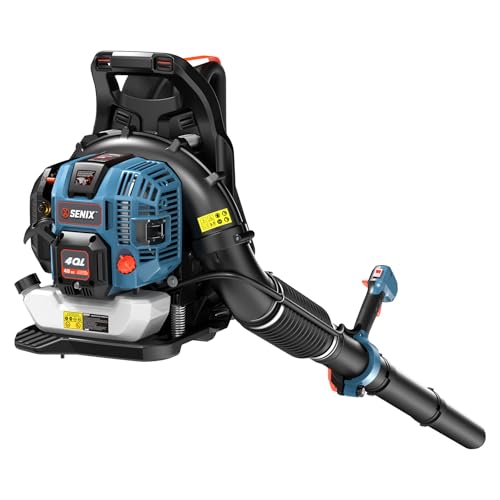
SENIX 49CC 4-Cycle Gas Powered Backpack Leaf Blower

HASANEN 63CC Backpack Gas Powered Leaf Blower 850CFM

Thalorus 52cc Backpack Leaf Blower 550 CFM (Orange)

VEVOR 63CC Backpack Leaf Blower 1110 CFM

PROYAMA 72CC Gas Backpack Leaf Blower

EGO POWER+ LB6003 Cordless Backpack Leaf Blower
A Closer Look At Each Pick
Raw two-stroke power tends to attract homeowners with thick leaf cover or long gravel drives that punish weaker handheld units. The HTK 63CC backpack brings 665 CFM of air volume (CFM, or cubic feet per minute, measures how much air the blower pushes each minute) and a top speed of 205 MPH, which translates into wet leaves and pine needles getting shoved rather than tickled.
The air-purge system is designed to simplify cold starts, and oversized throttle controls sit within easy reach on the harness tube. Compared to the SENIX 4-cycle entry below, this one demands fuel-oil mixing, but it returns that effort with noticeably stronger push on stubborn debris.
Good Reasons To Consider
- 665 CFM air volume handles deep leaf piles that stall smaller units
- 205 MPH air speed clears stuck-on grass clippings from driveways
- Air-purge system simplifies cold pulls in cooler weather
- Oversized throttle controls stay readable through work gloves
- Backpack frame spreads weight across shoulders and lower back
Things To Consider
- Two-stroke engines require pre-mixed fuel, which adds a small step to routine use
- Gas engines are louder than the EGO cordless entry in this lineup
- Routine air filter cleaning tends to matter more on high-output two-stroke units
Feature Snapshot
Right Fit For
Homeowners with quarter-acre or larger lots, mature trees overhead, and patience for fuel mixing benefit most from this HTK’s brute-force output.
Swap It Out When
The EGO POWER+ LB6003 suits suburban lots where neighbors notice engine noise and you would rather swap a battery than mix oil.
Functionally identical to the orange HTK above, this blackout-finished variant leans into a more understated look for gardeners who park tools next to the house rather than in a shed. Same 63CC two-stroke plant, same 665 CFM airflow, same 205 MPH ceiling.
The appeal here is purely cosmetic, but for shoppers who care about a uniform tool collection, that distinction matters. Otherwise, this HTK still asks for fuel mixing and rewards you with the kind of push that handheld units cannot match on a soaked lawn.
Points In Its Favor
- Same high-output 63CC two-stroke platform as the orange sibling
- Black finish hides scuffs and weathering better than bright housings
- Air-purge design softens the cold-start ritual
Worth Noting
- No performance advantage over the orange HTK, so the choice is largely visual
- Two-stroke fuel mixing remains part of ownership
Made For
Tool-conscious homeowners who want commercial-grade thrust without the safety-orange look in their garage.
Look Elsewhere When
Pick the Thalorus 52cc backpack if a lighter harness matters more than top-end thrust and you find 230 MPH air speed plenty for a smaller lot.
Four-cycle engines skip the oil-in-the-fuel routine that turns new gas-power shoppers away. The SENIX 49CC lands at 425 CFM and 195 MPH, modest next to the HTK above, but well-matched to half-acre lots and routine weekly tidying.
Variable-speed throttle and cruise control handle light leaf drift and heavier post-storm cleanups with the same machine, so you rarely need to swap tools. Compared to the cordless EGO at the end of this list, the trade-off is engine noise and pull-starting in exchange for longer runtime.
Bright Spots
- 49CC four-cycle engine runs on straight gasoline, no mixing required
- Cruise control locks throttle position for long sweeps across open lawn
- Variable-speed throttle adapts to everything from dust to wet leaves
- Lower emissions than comparable two-stroke units in this lineup
Trade Offs
- 425 CFM is below the HTK and VEVOR entries, so thick piles take more passes
- Pull-starting still required, unlike the battery-powered EGO option
Key Specs
Best Suited To
First-time backpack owners with half-acre yards who want gas runtime without learning the fuel-mixing habit.
Consider Something Else When
The HTK 63CC orange model fits homeowners who routinely face soaked leaves and need higher CFM to finish in one pass.
On paper, the HASANEN 63CC claims 850 CFM, which outpaces both HTK entries and challenges the VEVOR for air volume bragging rights. Its 2.7kW two-stroke engine (kilowatts measure engine power output) also brings a 1.8L fuel tank sized for extended sessions before refilling.
Real-world airflow in this category can land below rated figures depending on altitude and humidity, so this is a pick for shoppers willing to verify output during the first few uses. The harness setup and visible fuel line are practical touches that show up clearly during ownership.
What Works In Its Favor
- Rated 850 CFM rivals much pricier commercial units
- 1.8L fuel tank stretches sessions without refueling stops
- Visible fuel line makes level checks quick during work
- Air-cooled design helps the engine hold up under sustained load
Honest Caveats
- Two-stroke fuel mixing required, similar to other gas options here
- Brand familiarity lags behind SENIX and HTK for some shoppers
Quick Facts
Who It Suits Best
Cost-conscious homeowners with large yards who want maximum CFM per dollar and do not mind mixing fuel.
Not Your Match When
The SENIX 49CC 4-cycle is a better fit for owners who want straight-gas convenience and lower routine maintenance.
Thalorus pitches the 52cc backpack at owners who care more about finishing a long cleanup without shoulder fatigue than about maximum CFM. At 230 MPH air speed and 550 CFM, the unit sits between the SENIX and HTK in raw output while leaning on a low-vibration harness.
The padded harness setup matters during multi-hour Saturday sessions, where vibrations from cheaper frames tend to numb the hands. Snow removal on fresh powder is in scope, though deep slush is beyond any backpack in this class.
Where It Delivers
- Low-vibration harness reduces hand and shoulder fatigue
- 230 MPH air speed handles light snow alongside leaves and debris
- 52cc engine splits the difference between output and weight
- Padded back panel adds comfort during long work sessions
Points To Note
- 550 CFM trails the HTK and VEVOR for sheer air volume
- Two-stroke operation still demands fuel mixing
Feature Card
Whose Shelf It Belongs On
Homeowners tackling two- to three-hour cleanups who prioritize comfort over the absolute highest CFM in this list.
Reach For A Different Pick When
The VEVOR 63CC 1110 CFM suits shoppers who measure projects in acreage rather than square feet and want raw air volume.
VEVOR pushes the air-volume ceiling with a 1.89L tank, 1110 CFM rating, and 220 MPH top speed. The high-strength nylon backpack shell and shock-absorption setup are designed to keep that much thrust manageable on your back.
At this output level, the unit makes sense for rural properties, long driveways, and jobs where handheld or mid-range backpack blowers mean several passes per strip. The trade-off is engine noise and pull-starts in cold weather.
What Pays Off
- 1110 CFM rating leads the homeowner backpack segment here
- 220 MPH air speed tackles caked-on yard debris
- 1.89L fuel tank supports extended work without refueling
- High-strength nylon shell resists tearing under load
- Shock-absorption harness smooths out engine vibration
Some Limits To Know
- Higher output increases fuel consumption and noise output
- Pull-start takes more effort than smaller-displacement units
- Two-stroke fuel mixing required for routine ownership
Perfect Match For
Owners of multi-acre properties or rural driveways who want maximum airflow and accept the noise and weight that come with it.
A Better Fit Elsewhere
The Thalorus 52cc is a calmer option for suburban lots under one acre where 550 CFM is plenty and lighter harnesses help.
PROYAMA’s 72CC two-stroke is the largest engine in this lineup, paired with a dual-nozzle kit (flat and round) that adapts to narrow fence lines or open lawn. The unit is built for year-round yard work and light snow clearing, leaning into commercial-grade territory.
Compared to the HTK 63CC entry, the extra displacement shows up in stubborn wet debris and longer throw distance. The dual-nozzle approach is a small but useful touch when switching between driveway edges and open grass.
The Case For It
- 72CC engine delivers top-tier thrust in the homeowner category
- Dual-nozzle design adapts to different cleanup scenarios
- Capable of leaf, debris, and light snow removal in one unit
- Comfortable backpack frame supports extended use
Where It May Fall Short
- Larger engine means more noise and vibration than mid-range options
- Two-stroke fuel mixing remains a routine ownership task
Who Should Grab It
Homeowners who want one machine that handles fall leaves, winter dustings of snow, and spring debris without compromise.
Skip It When
The EGO POWER+ LB6003 makes more sense for buyers who would rather swap batteries than deal with pull-starts and engine upkeep.
The EGO POWER+ LB6003 is the only cordless entry here, and it changes the ownership math. With a 56V 7.5Ah battery, the backpack delivers up to 600 CFM at the turbo setting and stays dramatically quieter than any gas model in this list.
Variable-speed control sweeps from gentle 260 CFM breezes up to full turbo, so the same tool handles patio dust and heavy leaf drifts. The trade-off is battery runtime on big jobs and the upfront cost of the 56V platform, which pays off only if you already own or plan to buy into EGO’s broader tool family.
Practical Advantages
- Battery power eliminates fuel mixing, pull-starts, and engine exhaust
- Significantly quieter than any gas backpack in this category
- Variable-speed trigger adjusts from light cleanup to heavy debris
- Turbo button delivers up to 600 CFM on demand
What To Weigh
- Battery runtime is shorter than a tank of gas on large properties
- Less CFM than the VEVOR or PROYAMA entries for the biggest jobs
Built With In Mind
Suburban homeowners with noise-sensitive neighbors, smaller lots, and an interest in battery-powered tool ecosystems.
Where A Sibling Pick Shines
The SENIX 49CC 4-cycle is the right call for shoppers who need longer runtime per session and do not mind occasional engine noise.
What Matters Most Before Choosing Homeowner Backpack Blowers
Engine Type and Power Output
Two-stroke engines deliver strong output per pound but demand fuel-oil mixing before each fill-up. Four-cycle engines run on straight gasoline, which simplifies ownership but adds slight weight. CFM measures raw air volume, while MPH measures how fast that air moves, and the right balance depends on whether you face scattered leaves or packed wet debris.
Comfort and Harness Design
Backpack blowers shift weight to the hips, but the harness padding, back panel shape, and vibration isolation decide whether a 90-minute cleanup feels manageable. Low-vibration frames, like the Thalorus design, protect your hands and shoulders during longer sessions. Trying the harness on before buying, when possible, saves you from sore shoulders mid-project.
Runtime and Refueling
Gas tanks range from roughly 0.5L on smaller units to nearly 2L on high-output models like the VEVOR. Larger tanks mean fewer interruptions but also more weight when full. Battery-powered options trade runtime for convenience, so matching the battery capacity to your yard size matters more than picking the biggest pack on paper.
Noise and Neighborhood Fit
Gas backpack blowers run loud enough that some municipalities regulate operating hours. Battery units like the EGO LB6003 run quieter, which matters in close-set subdivisions or early-morning cleanups. If you live where engine noise draws complaints, cordless or four-stroke options may save you neighborly friction.
Key Considerations Across These Picks
Where Shoppers Go Wrong
Picking the highest CFM number on the spec sheet often backfires for homeowners with small or mid-size lots, where extra thrust translates into noise and weight without changing how fast the work finishes. Another common slip is ignoring harness fit, since a poorly padded frame turns a 30-minute job into an endurance test. Battery shoppers sometimes underestimate how quickly a 56V pack drains at the turbo setting, so runtime claims deserve a real yard in mind.
What The Higher Tier Buys
Stepping up to commercial-grade two-stroke units like the PROYAMA 72CC or VEVOR 63CC brings noticeably stronger debris push and longer runtime per tank, which matters on multi-acre properties. You also get heavier-duty harnesses and wider nozzle kits that survive daily use. For smaller yards, that premium often goes unused, so the upgrade makes most sense when the lot itself demands it.
Frequently Asked Questions
How many CFM do I need for a typical backyard?
Most homeowners with lots up to half an acre find 400 to 600 CFM plenty for routine leaf and grass cleanup. Larger properties with mature trees overhead benefit from 650 CFM and up, where units like the HTK 63CC and VEVOR 63CC pull ahead.
Are gas backpack blowers louder than handheld models?
Yes, gas backpack blowers produce more noise because their engines are larger and unshielded. The EGO POWER+ LB6003 cordless option is the quietest choice in this lineup, while the PROYAMA 72CC and VEVOR 63CC run at the louder end of the spectrum.
Do I need to mix oil into the gas?
Only with two-stroke engines like the HTK, HASANEN, Thalorus, VEVOR, and PROYAMA models here. The SENIX 49CC uses a four-cycle engine that runs on straight gasoline, and the EGO LB6003 skips fuel entirely with a 56V battery.
Can backpack blowers handle light snow?
Several entries in this list, including the Thalorus, VEVOR, and PROYAMA, advertise snow-clearing capability for fresh, light accumulations. Deep or wet snow remains beyond what any backpack blower in this category can reasonably move.
How long does a 56V battery last on the EGO?
Runtime depends on the speed setting and debris load, with lower speeds stretching runtime significantly and turbo draining the pack faster. For typical suburban lots, a single 7.5Ah battery handles most routine sessions, though large properties may benefit from a spare pack.
The Takeaway
The right homeowner backpack blower comes down to your lot size, noise tolerance, and willingness to handle fuel mixing. Gas two-strokes dominate on raw CFM, the SENIX 4-cycle simplifies ownership, and the EGO LB6003 swaps fuel for batteries entirely. Match the machine to your weekend cleanup, not the spec sheet, and the rest of the decision tends to fall into place.
