

A room full of greenery changes how a space feels. The right plants also help filter indoor air, soften edges of shelving, and add quiet motion to a windowsill. You don’t need a green thumb or a sunny loft. Many of the best oxygen-boosting houseplants tolerate dim corners, irregular watering, and the kind of dry air that punishes fussier specimens. This list pulls together eight accessible picks, mixing trailing varieties, sculptural fronds, and palms that thrive on neglect.
An Overview Of The Picks

American Plant Exchange Bird’s Nest Fern 6-Inch Pot

American Plant Exchange Snake Plant 6-Inch Pot

Reverse Variegated Spider Plant 4-Inch Pot
American Plant Exchange Areca Palm 4-Inch 3-Pack

August Breeze Farm Reverse Variegated Spider Plant
Plants for Pets Variegated Philodendron Birkin 6-Inch

Shop Succulents ‘Bonnie’ Curly Spider Plant 4-Inch

Extra-Large Variegated Spider Plant in Potting Soil
The Picks, Examined More Closely
The Bird’s Nest Fern reads as a leafy fountain spilling out of its pot, with wide, spoon-shaped fronds radiating from a central rosette. In a 6-inch container, it lands at the right scale for a bathroom vanity, a bedroom dresser, or a low shelf where its tropical texture can be appreciated up close. Unlike the upright Sansevieria covered later, this one prefers softer, filtered light and rewards consistent moisture.
Pet owners often prioritize this species because ferns avoid the toxicity concerns of many common houseplants. It suits anyone wanting a sculptural, low-light specimen without worrying about curious cats or nibbling dogs. A moderate watering rhythm and a humid corner are usually enough to keep it looking full.
Real Benefits
- Pet-friendly foliage that sidesteps toxicity worries common with other tropicals
- Sculptural rosette shape adds visual weight to empty shelves or bathroom counters
- Adapts to lower-light rooms where many flowering plants struggle
- Wavy fronds bring texture without requiring pruning or training
Things To Consider
- Prefers steady moisture and may crisp up if allowed to dry out fully
- Frond edges can brown in very dry indoor air, so humid rooms suit it best
- Won’t tolerate the dim corners a Snake Plant would, so placement matters
Made For
Pet-friendly households wanting a sculptural tropical that thrives in shaded bathrooms or bedrooms.
Look Elsewhere When
You want a true zero-maintenance option, in which case the American Plant Exchange Snake Plant tolerates far more neglect.
The Snake Plant earns its reputation through sheer indifference to whatever you forget to do for it. Sansevieria zeylanica sends up long, sword-shaped leaves marked with silvery crossbands, growing tall and narrow from a 6-inch pot. Compared with the Bird’s Nest Fern covered earlier, this one is a floor or desk companion that asks for nothing more than occasional water.
It suits offices, hallways, and bedrooms where low light and dry air rule out softer species. The vertical habit also makes it a smart pick when horizontal surface space is limited. Anyone who has killed a plant before will find the Snake Plant quietly forgiving.
Reasons It Performs
- Tolerates weeks of forgotten watering without drama
- Upright, narrow leaves free up valuable surface space
- Handles dim hallways and corners that would weaken other plants
- Sturdy foliage resists the kind of accidental bumps that shred softer leaves
Worth Noting
- Overwatering can rot the rhizome, so a hands-off approach is often safer than fussing
- The vertical silhouette is less lush than trailing spider plants or rosette ferns
- Cold drafts near windows in winter can stress the leaves
Right Fit For
Forgetful plant owners wanting a forgiving vertical accent for low-light rooms and office corners.
A Better Fit Elsewhere
You prefer a softer, rounded silhouette, in which case the Plants for Pets Variegated Philodendron Birkin offers pinstriped leaves with more visual softness.
This reverse-variegated spider plant flips the typical pattern, with white margins wrapping around a green center stripe. Arriving in a 4-inch pot, it tucks easily into a kitchen corner or office desk without dominating the surface. The source notes a tolerance for bright indirect light as well as artificial lighting, which makes it useful in windowless workspaces.
The compact size suits anyone building out a starter shelf of plants without committing to a large specimen. New plant owners tend to do well here because the species forgives irregular watering. As the plant matures, you can expect baby spiderettes that propagate easily into more pots.
The Upside
- Reverse variegation offers a different visual twist than classic spider plant foliage
- Tolerates artificial office lighting when natural light is scarce
- Small starter pot fits desks, kitchen windowsills, and bathroom corners
- Produces spiderettes that propagate freely into new plants
Points To Note
- The 4-inch size means a smaller plant at delivery than the August Breeze Farm option reviewed later
- Brown leaf tips can develop with fluoride in tap water, depending on your local supply
- Variegation may fade if light levels stay too low for extended stretches
Perfect Match For
Beginners and apartment dwellers seeking a compact, low-maintenance air purifier for small desks and shelves.
Swap It Out When
You want a fuller plant right out of the box, in which case the August Breeze Farm Reverse Variegated Spider Plant ships at a larger size.
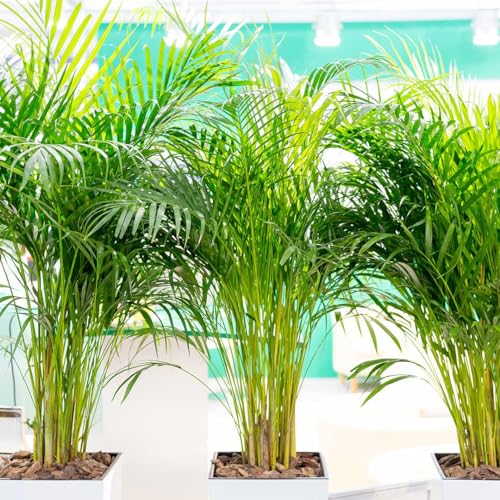
The Areca Palm delivers feathery, arching fronds in a compact 4-inch package, with three plants in the bundle for layering a shelf or grouping in a single larger pot. Where the Snake Plant offers vertical lines and the Bird’s Nest Fern offers rosettes, the palm brings soft, tropical movement. It fits the boho and modern apartment aesthetic without overpowering the room.
Areca Palms prefer bright, indirect light and steady moisture, so a sunlit corner suits them well. The trio format lets you scatter them across a room or cluster them for a fuller statement. Air-purifying claims are commonly associated with this species, and the graceful fronds do brighten a workspace without much fuss.
What Works In Its Favor
- Three-plant pack adds volume without a single oversized purchase
- Feathery fronds create a softer look than upright succulents or snake plants
- Compact 4-inch pots fit apartments, dorms, and small office corners
- Layered grouping reads as a tropical accent rather than a single specimen
Trade Offs
- Palms brown at the leaf tips when humidity drops below their preferred range
- Smaller pots dry out faster and need more frequent attention than larger specimens
- Less ideal for very dim rooms where a Snake Plant would still perform
Built With In Mind
Apartment dwellers and home office workers wanting a soft tropical trio for sunlit corners.
Reach For A Different Pick When
You want a single dramatic statement plant, in which case the Extra-Large Variegated Spider Plant offers more visual impact in one pot.
Where the JM Bamboo spider plant offers a compact starter, this August Breeze Farm version arrives as a larger, more mature plant ready for immediate display. The reverse variegation runs green leaves with crisp white margins, adding a clean contrast that reads well in modern interiors. You can drop it onto a shelf, desk, or plant stand without waiting months for it to fill in.
The species remains famously tolerant of inconsistent care, which makes it a smart pick for busy offices and beginner-friendly households. Bright indirect light is preferred, but it adapts to a range of indoor conditions. For anyone wanting spider plant foliage without the long grow-in, the larger starting size earns its place.
Features That Help
- Larger starter plant reduces the wait time for a fuller shelf display
- Reverse variegation gives a brighter visual contrast than classic spider foliage
- Adapts to varied indoor lighting, including lower-light home offices
- Low-maintenance rhythm suits busy households and forgetful waterers
- Versatile styling works on desks, plant stands, and hanging displays
Honest Caveats
- Larger starter size may not fit a tight windowsill the way a 4-inch pot would
- Variegation can revert toward solid green under very low light
- Fluoride and chlorine in tap water can cause tip browning in some regions
Best Suited To
Busy offices and beginner households wanting a more mature spider plant that fills a shelf right away.
Consider Something Else When
You need a tight cluster of smaller plants to spread across a room, in which case the American Plant Exchange Areca Palm 3-Pack gives you three starting points.
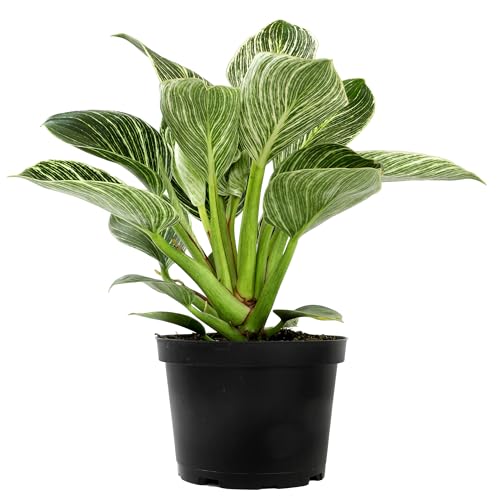
The Birkin earns its place through pure visual drama. Deep green leaves marked with creamy pinstripes make each one a small piece of natural graphic design, and no two leaves carry identical markings. The compact, upright habit keeps the silhouette tidy on a desk or accent table, while the 6-inch grower pot offers more presence than the spider plants reviewed earlier.
It suits minimal and modern interiors where pattern matters more than fluff. Bright indirect light keeps the variegation crisp, and slightly moist soil avoids the leaf curl that comes from drying out. Beginners often do well with this plant because the Birkin takes its time growing rather than sprawling across the room.
What Helps Most
- Creamy pinstripe variegation gives each leaf a one-of-a-kind look
- Compact upright habit suits desks, side tables, and bookshelves
- Slow growth means it won’t quickly outgrow its assigned spot
- Brightens minimalist interiors where a snake plant would feel too sparse
Potential Drawbacks
- More sensitive to overwatering than the Snake Plant covered earlier
- Variegation may fade if light is too dim, so placement requires attention
- Less forgiving of missed waterings than spider plants or snake plants
Who It Suits Best
Design-minded plant parents wanting a patterned statement piece for a bright, modern corner.
Skip It When
You want something nearly impossible to kill, in which case the American Plant Exchange Snake Plant remains the safer bet for neglectful conditions.
The ‘Bonnie’ variety trades straight spider plant foliage for tightly curled leaves that ripple and twist in every direction. Delivered in a 4-inch pot, it brings personality to a small shelf or quirky desktop arrangement where flat-leaf spider plants might read as too conventional. Compared with the August Breeze Farm spider plant, this one leans playful rather than classic.
Curiosity collectors and anyone tired of the same trailing foliage tend to gravitate toward ‘Bonnie’. Bright indirect light keeps the curls tight and the variegation bright. A standard spider plant care rhythm applies, which means anyone already comfortable with the species will find this variety undemanding.
Where It Helps
- Curled leaf texture offers visual interest no flat-leaf spider plant matches
- Compact 4-inch pot fits small desks, plant shelves, and tight corners
- Easy care rhythm mirrors classic spider plants, no special handling required
- Adds playful character to a room without demanding extra space
Points To Keep In Mind
- Curls may relax and straighten if light is too low
- Smaller starter size means waiting longer for a showy display
- Curled leaves can trap dust more than flat foliage, depending on your room
Whose Shelf It Belongs On
Curiosity collectors and design-minded plant parents who want a compact plant with unusual texture.
Where Another Pick Suits Better
You want trailing foliage that cascades from a hanging basket, in which case the Extra-Large Variegated Spider Plant offers more dramatic length.
This extra-large spider plant ships ready to make a statement, with variegated white-and-green foliage and a trailing growth habit that produces cascading spiderettes. The ‘Airplane’ variety referenced in the source brings a distinctive striping pattern that reads as more decorative than the classic reverse-variegated picks earlier in the list. For a plant enthusiast, the larger starting size means immediate visual payoff.
It thrives in standard indoor conditions and rewards basic care with prolific baby plants that can be repotted or shared. Anyone wanting a shelf or pedestal anchor plant will appreciate the instant fullness. It’s also a strong choice for offices, where trailing foliage softens hard desk edges.
Practical Advantages
- Larger plant ships with mature foliage for immediate visual impact
- Trailing spiderettes create a cascading display from shelves and pedestals
- Variegated ‘Airplane’ pattern adds distinction over standard spider plants
- Produces offsets that propagate into giftable starter plants
- Tolerates a wide range of indoor conditions with minimal fuss
Less-Strong Areas
- Larger size commands more shelf or floor space than compact picks earlier in the list
- Trailing foliage needs a clear drop zone to look its best
Who Should Grab It
Plant enthusiasts and office designers wanting a statement-sized trailing specimen ready to display.
Not Your Match When
You have limited shelf space, in which case the Shop Succulents ‘Bonnie’ Curly Spider Plant keeps things compact and tidy.
What To Weigh Before Bringing Plants Home
Light conditions decide more than care routine. Bright indirect light, which means a sunny window filtered through a sheer curtain, suits palms, philodendrons, and spider plants. Low-light corners favor snake plants and bird’s nest ferns, while direct sun bleaches and crisps most foliage in this list. Match the room to the plant, not the other way around.
Humidity shapes long-term health. Bathrooms and kitchens cycle through humidity naturally, which suits ferns and palms. Bedrooms and offices run drier, which leans toward snake plants and philodendrons. Tap water quality also matters, since spider plants in particular show brown leaf tips when fluoride or chlorine levels run high.
Pot size and growth rate influence how often you’ll repot. A 4-inch starter like the JM Bamboo spider plant stays manageable for a year or more, while an extra-large specimen like the Airplane spider plant may need a bigger pot within months. Plan for a slightly larger container with drainage holes regardless of which item you choose.
Maintenance rhythm differs across the list. Snake plants tolerate weeks without water, spider plants want consistent moisture, and Areca palms flag quickly when they dry out. Pick the rhythm that matches the routine you actually keep, not the one you’d like to keep.
Picking Wisely And Spending Smart
Pitfalls Shoppers Hit
Buying a plant the room cannot support is the most common misstep. A sun-loving palm placed in a dim hallway will slowly decline, while a shade-preferring fern parked in a south-facing window will scorch. Read the light tag, then walk your room at the time of day the plant will live there.
Overpotting kills more plants than underwatering. A small plant in a large container sits in soggy soil that the roots cannot absorb, which invites rot. Choose a pot one to two inches wider than the root ball, with drainage holes that let excess water escape.
When Paying More Pays Off
The extra-large spider plant and the philodendron Birkin cost more for a reason: they ship with mature foliage and developed variegation. For a single statement piece in a visible spot, that head start often justifies the upgrade. For filling a wide shelf on a budget, the smaller 4-inch picks deliver more plants per dollar.
Key Considerations Across These Picks
Traps First Timers Fall Into
New plant owners often pick based on looks alone and skip the care profile. A plant that’s beautiful on day one and miserable by month three does not earn its shelf space. Match the plant’s tolerance for missed waterings and dim corners to the conditions you’ll actually provide. The forgiving picks in this list, like the Snake Plant and reverse variegated spider plants, tend to be the wisest first additions.
What The Higher Tier Buys
Larger plants, more dramatic variegation, and curated varieties like the ‘Bonnie’ Curly Spider Plant carry higher price tags because they take longer to grow. Spending up makes sense when you want a single anchor plant that looks finished on day one. Sticking with smaller starters makes sense when you’re building a collection or testing whether you’ll enjoy caring for a species.
Frequently Asked Questions
Do houseplants really add oxygen to a room?
Plants release oxygen during photosynthesis, and the species listed here are commonly associated with indoor air exchange. The honest read is that you’d need many plants to meaningfully change a room’s oxygen level, but they do cycle air and add life to a space.
Which plant is best for a bedroom with low light?
The Bird’s Nest Fern and Snake Plant both tolerate low-light bedrooms well. The fern brings a softer silhouette, while the Snake Plant offers vertical leaves and minimal upkeep.
Are any of these plants safe around pets?
Ferns, including the Bird’s Nest Fern, are widely cited as pet-safe options. Snake plants, philodendrons, and some others can cause irritation if chewed, so placement matters in homes with curious cats or dogs.
How often should I water oxygen-boosting houseplants?
Watering rhythm varies by species. Spider plants and palms like steady moisture, while Snake Plants prefer to dry out between drinks. Always check the top inch of soil before watering rather than watering on a strict schedule.
Can I keep these plants in a windowless office?
The reverse variegated spider plants tolerate artificial lighting well, and Snake Plants manage dim offices with little complaint. Areca Palms and Birkins need brighter conditions to keep their variegation crisp.
Wrap Up
The right oxygen-boosting houseplant comes from matching species to room, routine, and taste. A snake plant forgives forgetful watering. A fern rewards a humid bathroom. A philodendron Birkin earns its place through sheer pattern. Pick the plant that fits the conditions you already have, and the rest takes care of itself.
