

You don’t need a backyard to grow fresh basil, lettuce, or cherry tomatoes anymore. Modern hydroponic gardens let you set up a soil-free growing station on a kitchen counter, a small shelf, or even a windowsill, and pull fresh leaves through every season.
Whether you’re an apartment cook tired of wilted grocery store herbs, a beginner looking for an almost-failproof first garden, or a parent who wants kids to actually see where food comes from, the right indoor garden cuts the learning curve down to almost nothing. Below are eight options that handle the lights, water timing, and pumping for you, so the only real work you do is harvesting.
The Shortlist At A Glance
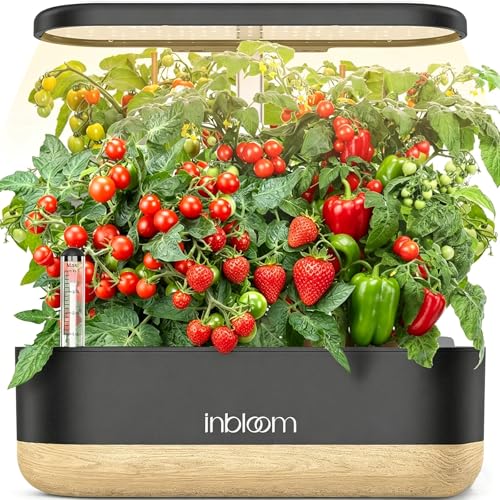
inbloom Hydroponics Growing System 12 Pods Indoor Herb Garden

Ahopegarden Hydroponics Growing System Kit 12 Pods LCD
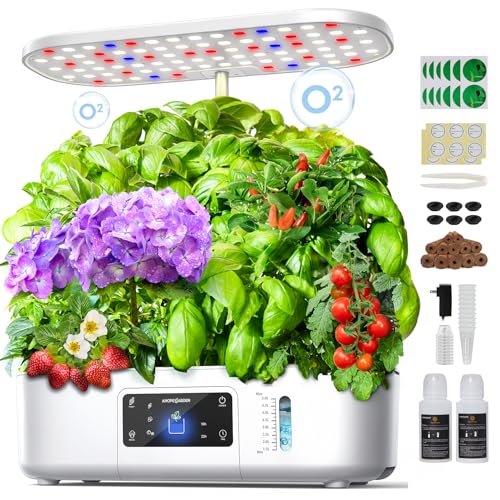
Ahopegarden Hydroponics Growing System 12 Pods Touch

inbloom 12 Pods Hydroponics Growing System Kit Black

URUQ 8 Pods Hydroponics Growing System Black

URUQ 8 Pods Hydroponics Growing System White

Ahopegarden Hydroponics Growing System Kit Temp Humidity Monitor

Ahopegarden Hydroponics Growing System Smart Env.Detection
The Strengths Of Each Pick
The inbloom 12-pod system is the model most first-time growers end up reaching for, and that’s mostly thanks to one small feature: a low-water alarm that triggers when the reservoir drops below 700ml. That single buzzer eliminates the most common beginner mistake, which is forgetting to refill and watching seedlings wilt overnight.
The full-spectrum grow light runs a built-in 16-hour-on, 8-hour-off cycle, so you don’t need to babysit a timer or remember to flip a switch. The 76 LED bulbs sit on a height-adjustable mast, so as your basil or lettuce climbs, the canopy can rise with it. You may find the plastic shell feels lighter than the brushed-metal finishes on Ahopegarden units, but the trade-off shows up in easier repositioning around the kitchen.
Everyday Advantages
- Low-water alarm takes the guesswork out of refilling the reservoir.
- 16-hour lighting cycle is automated, so there’s no manual on/off routine.
- Height-adjustable mast accommodates everything from short lettuce to taller basil.
- Twelve pods let you grow a rotation of herbs instead of committing to one variety.
Points To Keep In Mind
- The plastic body may scratch more easily than ABS alternatives on the Ahopegarden units.
- Pods ship without seeds in most configurations, so first-time growers need to budget for starter kits.
Key Specs
Made For
First-time growers who want a forgiving setup with built-in reminders.
Consider Something Else When
The Ahopegarden Hydroponics Growing System Kit 12 Pods LCD suits renters who prefer a sleeker ABS finish with a touchscreen interface.
The first thing you notice about the Ahopegarden 12-pod LCD model is that it doesn’t look like a typical plastic garden kit. The ABS shell has a cleaner, almost modern-furniture profile, and the integrated LCD touchscreen replaces the small button clusters you usually find on entry-level units. It’s a kit that earns its place on a visible countertop instead of hiding in a corner.
At roughly 17 inches tall, it sits compact enough for most kitchen shelves while still holding twelve pods. The full-spectrum panel handles the lighting cycle, so you can leave town for a few days and trust the system to keep running. The touchscreen is responsive, but you may find that a wet finger or splash from watering registers oddly, so a quick dry before tapping is the move.
Useful Highlights
- ABS body holds up better to kitchen humidity and accidental splashes.
- LCD touchscreen lets you tweak light and pump schedules in seconds.
- 17-inch vertical profile fits under most upper cabinets.
Honest Caveats
- The touchscreen can register water splashes as false inputs during refills.
- The dark finish shows water spots and dust more visibly than the lighter inbloom units.
- No built-in water-level alert, so manual reservoir checks still matter.
Who It Suits Best
Apartment cooks who care as much about countertop aesthetics as they do about harvests.
Look Elsewhere When
The URUQ 8 Pods Hydroponics Growing System Black fits tighter spaces where an 8-pod footprint works better than 12.
This Ahopegarden variant trims a few of the visual flourishes from its LCD sibling and lands on a simpler touch panel. The result is a cleaner control surface that does less, but does it without fuss. For anyone who’s ever stared at a 12-button interface wondering which one runs the pump, this is the version that quietly takes that anxiety off the table.
The 12-pod layout and full-spectrum lighting remain intact, so the growing capacity matches the LCD model step for step. Setup usually takes under fifteen minutes, and the panel labels read clearly without a manual. You may find the reduced button count means fewer customization options, though, so power tinkerers might want the LCD version instead.
Well-Handled Touches
- Simplified touch controls remove the learning curve of denser panels.
- Full 12-pod capacity gives you the same planting real estate as the LCD model.
- Minimalist finish blends into rental kitchens without drawing attention.
Less-Strong Areas
- Fewer customization options than the LCD sibling for advanced users.
- ABS finish can collect fingerprints along the touch surface.
Right Fit For
Renters and minimalists who want straightforward controls without the visual noise.
Swap It Out When
The Ahopegarden Hydroponics Growing System Kit Temp Humidity Monitor suits growers who want climate data without a full LCD.
The black-finish inbloom 12-pod kit shares its bones with the white version earlier on this list but adds a 4.2L water pump reservoir, which means fewer trips to the sink. For households juggling dinner, homework, and a dozen other things, that single detail tends to matter more than a slightly sleeker control panel.
The full-spectrum LED system runs the standard 16-hour cycle, and the height-adjustable mast accepts anything from low lettuce starts to taller herbs as they mature. The black finish hides splashes well, though it tends to show dust more than the lighter URUQ white version. Setup leans toward plug-and-play, with no app required to get growing.
Practical Pluses
- Larger 4.2L pump reservoir stretches time between refills.
- Dark finish masks water spots during regular maintenance.
- Height-adjustable mast supports a wide range of plant sizes.
- Twelve pods let you run several herb varieties side by side.
- Full-spectrum LEDs handle the light cycle without extra timers.
A Few Limitations
- Dust is more visible on the black surface than on lighter alternatives.
- No smartphone app, unlike the Ahopegarden smart-detection unit.
- Bulkier pump adds weight when relocating for cleaning.
At A Glance
Best Suited To
Busy households growing multiple herbs who appreciate fewer refill interruptions.
Reach For A Different Pick When
The inbloom Hydroponics Growing System 12 Pods Indoor Herb Garden fits beginners who want a built-in water alarm.
The URUQ 8-pod unit is the smallest garden on this list, and that compactness is its entire reason for existing. Studio apartments, narrow countertops, and crowded windowsills are exactly where this model earns its keep. The 24-watt LED panel pushes enough light for a focused herb rotation without throwing excess heat into a small room.
The light panel rotates up to 180 degrees and extends to a 21-inch max height, which gives you surprising flexibility for a small-footprint unit. You may find that 8 pods feel limiting once you start branching out from basil into mint, parsley, and chives, but for a tight starter rotation, the layout is genuinely thoughtful.
Notable Upsides
- Compact footprint fits where 12-pod kits simply won’t.
- 180-degree light rotation angles light where shorter plants need it most.
- 21-inch max height accommodates most herbs through full maturity.
Trade-Offs To Consider
- Eight pods may feel limited once you scale beyond a basic herb rotation.
- The black finish shows fingerprints along the adjustable mast.
- Smaller reservoir means more frequent refills than larger inbloom units.
Perfect Match For
Studio dwellers and first-timers working with limited counter space.
Where Another Pick Suits Better
The URUQ 8 Pods Hydroponics Growing System White fits kitchens with bright, light-themed decor where black feels too heavy.
The white URUQ shares its dimensions and lighting hardware with the black sibling reviewed just above, but swaps the finish for a clean, bright-friendly tone. In a kitchen with white cabinets or pale stone counters, this version disappears into the decor in a way the dark finish simply can’t.
The 24-watt full-spectrum panel and 21-inch max height remain unchanged, so growing performance is functionally identical to the black unit. You may find that the lighter shell makes water spray and any algae buildup more visible, which actually works in your favor for spotting tank issues early.
What Pays Off
- White shell blends into light, neutral, and Scandinavian-style kitchens.
- Same 21-inch adjustable height as the black sibling for full growing range.
- Compact 8-pod layout still works under most upper cabinets.
Factors To Consider
- Lighter finish shows mineral spots and algae tinting more visibly than black.
- Same 8-pod ceiling as the black model may cap larger herb ambitions.
Whose Shelf It Belongs On
Apartment cooks with bright or minimal decor who want the garden to fade into the background.
A Better Fit Elsewhere
The Ahopegarden Hydroponics Growing System 12 Pods Smart Env.Detection suits renters who want more pods with automation built in.
This Ahopegarden kit layers a built-in temperature and humidity monitor on top of the standard 12-pod hydroponic platform, and that single addition changes how you approach a grow cycle. Instead of guessing whether your living room is too dry in winter or too warm near a sunny window, the unit surfaces the actual numbers on demand.
The full-spectrum LED panel runs the same 16-hour-on, 8-hour-off rhythm as other Ahopegarden units, so the lighting behavior stays consistent. You may find the sensor adds a small but meaningful habit shift: checking humidity before deciding whether to top off the reservoir. For data-curious growers, that’s exactly the kind of feedback loop they want.
Positive Points
- Built-in temperature and humidity readings remove seasonal guesswork.
- Same reliable 16-hour lighting cycle as the rest of the Ahopegarden line.
- Twelve pods keep the planting capacity competitive with other full-size kits.
Potential Compromises
- The sensor adds slight cost versus the no-monitor Ahopegarden siblings.
- Sensor accuracy can drift if the unit sits in direct sun or near a heat vent.
Quick Facts
Who Should Grab It
Data-driven growers who like seeing real numbers instead of guessing by feel.
Skip It When
The Ahopegarden Hydroponics Growing System 12 Pods Touch fits minimalists who’d rather not read climate data at all.
The Smart Env.Detection unit is the top-tier Ahopegarden build, and the name tells the story: the system reads its own environment and adjusts the light and pump schedule to match. For anyone who wants a real set-and-forget garden, this is the model that gets closest to that promise.
The 12-pod layout, ABS body, and full-spectrum lighting carry over from the rest of the line, so the actual growing capacity matches the LCD and touch siblings. You may find that the auto-detection works best in rooms with stable temperatures, since rapid swings can outpace any sensor’s adjustment cycle. Still, for a hands-off household, this is the most automated pick on the list.
Points In Its Favor
- Smart environment detection adjusts lighting without manual reprogramming.
- ABS shell holds up well against the humidity of regular watering.
- Twelve pods match the planting capacity of every other 12-unit Ahopegarden.
- Full-spectrum LEDs cover the red and blue range plants need.
- Setup is closer to plug-and-grow than to project-mode tinkering.
Things To Weigh
- Auto-detection works best in rooms with stable temperatures, not sun-drenched windowsills.
- Higher-end pricing versus the touch and LCD siblings on tighter budgets.
- Less manual override control than the simpler inbloom kits.
Built With In Mind
Set-and-forget growers and tech fans who want the garden to manage itself.
Not Your Match When
The inbloom Hydroponics Growing System 12 Pods Indoor Herb Garden fits first-timers who want a simpler water alarm instead of full automation.
Choosing a Hydroponic Garden That Actually Fits Your Kitchen
Picking the right indoor garden comes down to three honest questions: how much counter space you can spare, how hands-on you want to be, and what you actually want to grow. A 12-pod unit gives you room to rotate basil, parsley, and lettuce through the season, while an 8-pod kit is plenty for a focused herb shelf. Larger reservoirs cut down on refill trips, which matters more in a busy household than any single lighting spec.
Light, Water, And Pump Cycles
Full-spectrum LEDs cover the red and blue wavelengths plants use most, and the standard 16-hour-on, 8-hour-off rhythm mirrors peak summer daylight. A height-adjustable mast lets the canopy rise as your crops climb, so you’re not constantly transplanting into bigger units. Pumps keep the nutrient solution moving and oxygenated; without that circulation, roots drown and the whole setup stalls.
Sensor Features And Smart Adjustments
Higher-end units add temperature, humidity, or full environment detection that tweak the schedule automatically. Those sensors are genuinely useful in dry winter apartments or warm summer kitchens, but they shine brightest when the unit lives in a room with stable conditions. A simple on-cycle timer is plenty for most beginners, so don’t overpay for sensors you won’t read.
Pod Count And Footprint
Twelve pods sound generous until you actually plant them and realize half your rotation is still empty. Eight pods are easier to keep stocked with fresh seeds and demand less water. Match the count to the variety you cook with most, not to a theoretical “what if I want kale someday” future.
Key Considerations Across These Picks
Where Shoppers Go Wrong
A common slip is buying a 12-pod kit for an apartment counter that fits 8. The extra pods end up empty because there’s no room to spread plants out, and crowded roots stunt growth. Another is ignoring reservoir size. A small tank looks fine in the listing, but in real life it means refilling every other day, which quickly gets old.
What The Higher Tier Buys
The jump from basic to smart units mostly buys automation: sensors, auto-adjusting light cycles, and ABS shells that handle humidity better. For someone who’s already grown herbs successfully in a basic kit, those upgrades remove daily fiddling. For a first-time grower, that automation is often wasted money, since the simpler systems teach you the rhythm that smart units handle for you.
Frequently Asked Questions
Do hydroponic gardens need sunlight?
No. The full-spectrum LED panels on these units replace sunlight entirely, so a corner of the kitchen works just as well as a sunny windowsill. Keep the unit away from direct sun, though, since it can confuse built-in sensors on smart models.
How often do you refill the water reservoir?
Most 12-pod systems need a refill every one to two weeks depending on plant size and room temperature. Smaller 8-pod kits run a bit shorter. A larger 4.2L tank, like the one on the inbloom Black kit, stretches that window closer to two weeks.
Do hydroponic gardens come with seeds?
Most do not. The pods ship empty, so you’ll need to buy seed pods or starter kits separately. Some retailers bundle them, but it’s worth budgeting for seeds up front rather than expecting a complete grow-out-of-the-box experience.
Can you grow vegetables or just herbs?
You can grow leaf lettuce, cherry tomatoes, and small peppers in most 12-pod kits, though fruiting plants demand more light and nutrients than herbs. Heavier vegetables like full-size tomatoes usually outgrow the height limits of countertop units.
How noisy are hydroponic garden pumps?
The pumps are quiet enough for a bedroom or office, producing a low hum rather than a buzz. You may notice the pump cycling on during quiet moments, but it rarely disrupts conversation or sleep in any meaningful way.
Final Verdict
The honest read is that any of these eight kits will grow fresh herbs on your countertop, and the differences come down to fit, finish, and how much you want the system to think for you. Start with your counter space, your cooking habits, and your patience for refilling, and the right pick tends to surface on its own. Once the first basil harvest lands in your kitchen, the rest of the gardening year tends to take care of itself.
