

Indoor gardening moves fast once the right light lands over your plants. A reliable hydroponic grow light turns a dim apartment corner into a productive mini farm, and the wrong choice leaves seedlings leggy and weak. Whether you’re nursing herbs on a kitchen counter or running a full seed-starting operation, the eight picks below cover the spectrum, power, and form factor to match your space and skill level.
An Overview Of The Picks

LBW Grow Light with Stand for Indoor Plants

Ahopegarden Hydroponics Growing System Kit 12 Pods
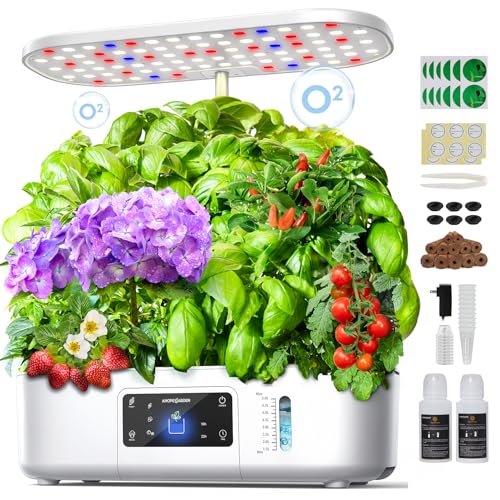
Ahopegarden Hydroponics Growing System 12 Pods

VIPARSPECTRA 150W Full Spectrum Grow Light

Uallhome 2 Pack LED Grow Light Panel
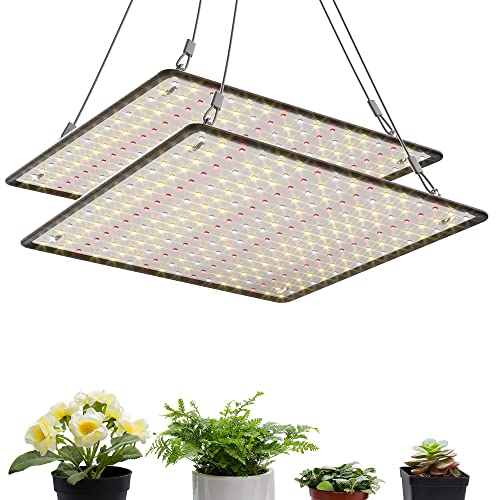
Uallhome 2 Pack 200W LED Grow Light Panel

Beelux 1000W Full Spectrum Grow Light

AGLEX K1000 LED Grow Light
The Details Behind The Selections
Tall indoor trees and oversized floor pots create a real lighting challenge, and most clip-on panels simply can’t reach. The LBW Grow Light with Stand solves that with a freestanding design that stretches from roughly 20 inches up to 68 inches high, putting the diodes right where the canopy needs them. Eighty high-output LEDs spread light across a wider footprint, while a heavy metal base with non-slip pads keeps the whole tower planted firmly, even next to a substantial pot.
For shoppers with fiddle leaf figs, large Monsteras, or any floor-bound greenery that refuses to thrive near a window, this stand-mounted approach removes the guesswork of finding a sturdy shelf or clamp. Three lighting modes and five-level dimming cover everything from a gentle seedling boost to a stronger vegetative push, and the built-in timer offers 6, 8, 12, or 16-hour cycles to automate the daily rhythm. Setup requires no tools beyond sliding the pole sections together.
What Works In Its Favor
- Height range up to 68 inches accommodates tall floor plants that clip lights cannot reach.
- Heavy metal base with non-slip pads prevents tipping on hardwood or tile.
- Auto timer cycles at 6, 8, 12, or 16 hours, useful for consistent vegetative and bloom routines.
- Three spectral modes plus five-step dimming give flexibility across growth stages.
- 80-LED output spreads light wide enough to cover a multi-plant floor arrangement.
Things To Consider
- The stand footprint requires floor space that smaller apartments may not spare.
- Positioning the timer dial takes some trial and error to align with your preferred photoperiod.
- Heavier pots help, but a top-heavy plant on the base can shift if bumped by pets or kids.
Made For
Plant parents with tall floor specimens who want a no-tools setup and don’t mind dedicating a corner of the room to the stand.
Look Elsewhere When
A countertop herb garden is the goal, in which case the Ahopegarden 12-Pod Hydroponics Growing System Kit offers an all-in-one alternative.
Not everyone wants to wire up panels and juggle timers. The Ahopegarden Hydroponics Growing System Kit arrives as a complete countertop unit with 12 planting pods, a built-in full-spectrum light panel, and an LCD touchscreen for one-touch control. Its ABS plastic body holds a 17-inch profile that slides under most kitchen cabinets, making it well-suited to renters who can’t mount anything overhead.
The unit handles water circulation, lighting schedules, and nutrient reminders from a single interface, removing the steepest part of the hydroponic learning curve. Hydroponics, in plain terms, means growing plants in nutrient-rich water instead of soil, and this kit ships with everything needed to start except seeds. Compared to the LBW floor stand in pick 1, this is a closed-loop system for edible crops rather than a supplementary light for ornamentals.
A Few Highlights
- All-in-one kit cuts out the separate light, pump, and reservoir purchases.
- ABS housing wipes clean easily after the inevitable algae splash.
- LCD panel centralizes scheduling so you don’t manage two or three devices separately.
- 17-inch footprint fits narrow counters where tent setups cannot go.
Minor Gripes
- Refilling the reservoir weekly becomes routine, and owners commonly report it as the most hands-on chore.
- Pod count is fixed at 12; succession planting requires harvesting in batches.
- Touch buttons can lag slightly when fingers are wet from watering.
Best Suited To
First-time hydroponic growers who want herbs and leafy greens with minimal assembly and no electrical wiring beyond a single outlet.
Skip It When
You need to illuminate a full tent or flowering room, where the VIPARSPECTRA 150W Grow Light delivers far more coverage.
Sharing most of its DNA with pick 2, this second Ahopegarden system leans harder into the tech-forward aesthetic. The touch control panel takes the place of physical buttons, which keeps the front face smooth and gives the unit a cleaner countertop presence. For shoppers who like their appliances to look the part, that design polish is a genuine selling point rather than a gimmick.
Functionally, you still get 12 pods, a built-in full-spectrum LED panel, and the same all-in-one hydroponic workflow described in pick 2. The integrated panel adapts to vegetative and flowering stages, so you don’t swap bulbs as plants mature. The honest read is that you’re choosing between two near-identical kits based on which interface you prefer, so visual preference and current pricing usually decide it.
A Strong Showing
- Sleek touch interface avoids the button-clutter look on the kitchen counter.
- Full-spectrum panel adjusts to both vegetative and bloom stages.
- ABS construction wipes down quickly after watering sessions.
Honest Caveats
- Touch-only controls mean no tactile feedback when hands are wet or soiled from gardening.
- Identical pod capacity to pick 2, so the upgrade is purely interface-level.
- Reservoir refills follow the same weekly cadence as the sister model.
Who Should Grab It
Style-conscious beginners who want a single countertop unit that doubles as a kitchen accent without sacrificing growing capacity.
Another Choice May Suit
Shoppers prioritizing physical buttons over glass-smooth surfaces often prefer the Ahopegarden 12-Pod Kit in pick 2 for similar capability.
Move past countertop kits and you land in tent territory, where light uniformity matters as much as raw wattage. The VIPARSPECTRA 150W Grow Light uses optical lenses to concentrate output with minimal loss, and PPFD (photosynthetic photon flux density, the measurement of usable light reaching the plant) stays consistent across the corners of the footprint. For a seed-starting rack or a small bloom tent, that uniformity keeps outer plants from stretching toward the center.
The dimming daisy chain function is the standout feature here, letting you link up to 20 fixtures in a row and control brightness from a single dial. Where the Ahopegarden kits above are sealed units, this panel integrates with a tent, an inline fan, and a separate nutrient reservoir to build a true indoor garden. It’s a different philosophy: components instead of convenience.
Why It Works Well
- Optical lens design improves canopy penetration and reduces wasted light spill.
- Daisy chain support scales from a single tent to a multi-light commercial run.
- Full-spectrum output covers seedling through bloom without bulb swaps.
- Dimming knob adjusts intensity without raising or lowering the fixture.
A Few Limitations
- Requires a separate tent, hangers, and ventilation to operate properly.
- No built-in timer, so pairing with an outlet timer is necessary for automated schedules.
- At 150W, coverage drops off sharply outside its rated footprint.
Quick Facts
Perfect Match For
Intermediate growers running a 3×3 or 4×4 tent who already own ventilation and want a focused, scalable light source.
Where Another Pick Suits Better
The Beelux 1000W Grow Light in pick 7 offers dual-switch control for dedicated veg and bloom rooms without daisy chaining.
Two panels in one box change the math for propagation setups. The Uallhome 2 Pack LED Grow Light Panel ships a matched pair of full-spectrum fixtures, which lets you illuminate a wider shelf or two separate propagation trays without buying singles twice. The spectrum covers UV through IR, including the red and blue peaks that drive photosynthesis at different growth stages.
For seed-starting racks, the pair format gives you flexibility: stack them vertically to light multiple shelves, or angle them across a wide table for a single dense flat. Unlike the tent-focused VIPARSPECTRA in pick 4, these panels aim more at the casual indoor gardener maintaining a few trays at a time. They run cool enough to sit close to seedlings without scorching tender new growth.
Noteworthy Benefits
- Two-panel pack halves the per-fixture cost compared to single purchases.
- Full spectrum spans UV to IR for both vegetative and bloom stages.
- Low heat output allows close placement above delicate seedlings.
- Pair format suits two-shelf propagation racks or wide single trays.
Practical Considerations
- No included hangers or stands, so mounting hardware is a separate purchase.
- Lacks the daisy chain control of the VIPARSPECTRA, so each panel runs independently.
- Coverage area is narrower than the 4×4 ft claims of higher-watt fixtures.
Who Will Love This
Home gardeners starting vegetable and flower seeds indoors who want one purchase to cover a multi-shelf rack.
Reach For A Different Pick When
You need a single high-output fixture for a flowering tent, where the Uallhome 200W 2 Pack in pick 6 fits better.
Step up in wattage and the Uallhome 2 Pack 200W panels target the 4×4 ft footprint that most hobbyist tents use. Sunlike white, blue, red, UV, and IR LEDs blend into a warm-white output that won’t tint your grow room an unflattering magenta. That matters if the tent sits in a visible corner of the home rather than a basement.
The two-panel format again pays off here, distributing light from above to reduce hot spots in the center of a square footprint. The trade-off compared to a single 400W fixture is slightly less canopy penetration per watt, but you gain redundancy. If one panel fails, the other keeps photosynthesis going while you swap a replacement.
Where It Excels
- Sunlike spectrum reads as pleasant ambient light in visible living spaces.
- Two panels spread light evenly across a 4×4 ft footprint without a hot center spot.
- UV and IR inclusion supports the flowering and fruiting stages most single-spectrum panels skip.
- Red-dominant output boosts yields during bloom without spectrum swaps.
Trade Offs
- Doubles as two separate fixtures to manage and power, which complicates scheduling.
- No daisy chain or unified dimming like the VIPARSPECTRA in pick 4.
- Higher wattage demands attention to tent ventilation and ambient room temperature.
Spec Overview
Right Fit For
Tent growers running 4×4 ft flower rooms who prefer warm-white ambient light over the harsh purple of blurple panels.
Swap It Out When
You want unified dimming across multiple lights, which the AGLEX K1000 in pick 8 handles through daisy chain control.
The Beelux 1000W Grow Light earns its dual-switch design from the actual biology of plant growth. One switch powers the vegetative LEDs, primarily blues and whites, while the other drives the bloom channels heavy in red light. Running both switches together delivers full-spectrum coverage during the flowering stage, which is when growers see the biggest payoff from targeted wavelengths.
Wattage gets a reality check here. The unit draws about 110W from the wall while delivering light output equivalent to a 1000W HPS (high-pressure sodium) fixture, an older HID technology that runs hot and inefficient. That efficiency translates to a quieter electrical bill and far less heat dumped into the room, though you still want a small fan moving air across the heatsink. It’s a strong middle ground between the tent-grade panels earlier and commercial-scale lighting.
A Favorable Mix
- Dual switches let you tailor output to vegetative or bloom stages independently.
- Lower actual draw reduces heat and electrical load compared to legacy HPS setups.
- Dual-chip LEDs improve canopy penetration under dense flower canopies.
- Full-spectrum mode supports sensitive tropicals through their full life cycle.
Where It Is Less Suited
- Single fixture covers about a 4×4 ft area, so larger rooms need multiples.
- No built-in timer or dimmer, requiring outlet accessories for full automation.
- Heatsink runs warm under continuous use, so passive cooling alone is rarely enough.
Feature Rundown
Built With In Mind
Mid-level growers running dedicated veg and flower rooms who want stage-specific control without buying separate fixtures.
Not Your Match When
You need an all-in-one countertop kit, where the Ahopegarden 12-Pod Hydroponics System in pick 2 handles herbs and seedlings directly.
The AGLEX K1000 wraps a 100W draw into a dimmable, daisy-chainable package aimed squarely at hydroponic seed starts. The spectrum covers 3000K warm white, 5000K cool white, 460nm blue, 660nm red, 730nm IR, and 405nm UV, approximating natural sunlight more closely than panels that lean heavily on red and blue alone. For growers starting delicate seedlings that don’t tolerate harsh spectrums, that balance matters.
Daisy chain capability links multiple K1000 units in series, dimming them all from a single master fixture. That single-fixture control cuts down on outlet strips and timer clutter, especially compared to the Uallhome 2 Pack in pick 6, where each panel runs independently. Coverage lands at roughly 2×2 to 2×3 ft, which fits a small cloning dome or a single nursery tray rather than a full bloom tent.
Everyday Advantages
- Daisy chain control simplifies multi-light setups to one dimmer knob.
- Broad spectrum including UV and IR supports sensitive seedling development.
- 100W draw keeps electrical load light on standard household circuits.
- Dimmable output adjusts without physically moving the fixture.
Soft Spots
- Coverage tops out around 2×3 ft, so larger grows need several units.
- No hangers included in the typical package, adding to setup cost.
- Lacks the dual-switch staging of the Beelux in pick 7 for dedicated bloom rooms.
Product Snapshot
Whose Shelf It Belongs On
Hydroponic gardeners starting seeds in compact cloning trays who plan to scale into multiple linked fixtures over time.
A Better Fit Elsewhere
Large tent growers wanting stronger single-fixture output may prefer the Uallhome 200W 2 Pack in pick 6 for fuller coverage.
Picking The Right Light For Your Grow Style
Choosing hydroponic grow lights comes down to matching output, form factor, and control to your actual growing setup. The wrong light wastes electricity and stunts plants, while the right one fades into the background of a productive routine.
Match Coverage To Your Space
Square footage matters more than raw wattage. A 2×2 ft cloning dome only needs around 100W, while a 4×4 ft flowering tent wants 200W or more spread evenly across the canopy. Undersized lights stretch seedlings toward the center; oversized lights scorch leaves and spike cooling costs.
Spectrum Beats Wattage For Plant Health
Full-spectrum LEDs, which combine warm white, cool white, blue, red, and sometimes UV or IR, support plants from seedling through flower under one fixture. Lights that lean heavily on red and blue alone drive photosynthesis cheaply, but they often produce harsh purple rooms and skip wavelengths that influence flowering and fruiting quality.
Decide Between Kits And Panels
All-in-one hydroponic kits handle watering, lighting, and scheduling in a sealed countertop unit. Panel systems pair with tents, reservoirs, and ventilation you source separately. Beginners usually want kits; growers scaling up want panels.
Built-In Controls Save Daily Hassle
Timers, dimmers, and daisy chain ports remove the small daily frictions that compound over a grow cycle. A fixture that auto-schedules the photoperiod (the daily duration of light exposure) frees you to focus on nutrients and pruning instead of running to the outlet every morning.
Smart Choices Across This Category
Where Shoppers Go Wrong
The most common slip is buying the highest wattage available and assuming more is always better. Plants only use a fraction of the photons delivered, and excess light burns leaves and inflates cooling costs without raising yields. A second frequent trap is ignoring spectrum, picking a bargain blurple panel that produces harsh purple light and skips the wavelengths flowers need most. Match the fixture to your footprint and your crop before chasing wattage.
What The Higher Tier Buys
Stepping up in price typically buys better diodes, more uniform light distribution, and refined control features like daisy chaining and dual-stage switches. Premium panels also tend to run cooler, which lets you mount them closer to the canopy without scorching. The upgrade pays off for growers running multiple tents or those who want to automate scheduling, while casual herb gardeners rarely need that level of capability.
