

Growing fresh herbs and leafy greens at home no longer requires a yard, a sunny windowsill, or a green thumb. Modern hydroponic setups let you skip the soil entirely, pumping nutrient-rich water directly to roots while LED panels do the work the sun would normally handle. The catch is that not every system handles the same goals, and a kitchen counter hobby setup looks nothing like a serious leafy-greens operation. This roundup walks through eight options worth your attention, from compact countertop units for casual cooks to deep-water-culture buckets built for bigger harvests.
The Leading Options At A Glance

inbloom Hydroponics Growing System 12 Pods Indoor Herb Garden

Ahopegarden Hydroponics Growing System Kit 12 Pods LCD
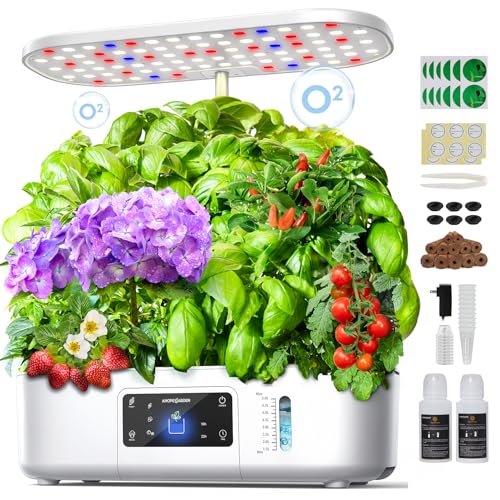
Ahopegarden Hydroponics Growing System 12 Pods Touch Panel

VEVOR DWC Hydroponic System 5 Gallon 8 Buckets

VIVOSUN DWC Hydroponics Grow System 4 Buckets

URUQ 8 Pods Hydroponics Growing System Black

URUQ 8 Pods Hydroponics Growing System White

Ahopegarden Hydroponics Growing System Kit Temp Monitor
Inside Each Recommended Option
The inbloom countertop unit leans hard into the “set it and forget it” mindset. A 24-watt full-spectrum LED panel sits above a 12-pod reservoir, and the system cycles the light on a 16-hour-on, 8-hour-off loop that mimics a long summer day.
For anyone dipping a toe into indoor gardening for the first time, that automation matters more than raw power. The 76-LED lamp array is tuned with a blend of red and blue wavelengths, which is where chlorophyll responds most aggressively. Compared with the Ahopegarden units coming up later, this one skips the touchscreen in favor of a simpler one-button interface, which is easier if you do not want to fiddle with apps or menus.
What Works In Its Favor
- Low-water alarm triggers when the reservoir drops below 700ml, so you catch problems before roots dry out.
- One-button lamp shutoff plus a 10-hour auto-restart keeps a consistent dark cycle without nightly fuss.
- Height-adjustable light post lets you keep the panel close to seedlings and raise it as plants stretch upward.
- The full-spectrum output with strong red wavelengths supports leafy growth in a kitchen corner where natural light is unreliable.
Worth Noting
- Reservoir capacity is modest, so larger herb loads may demand top-offs every few days.
- The mostly-plastic construction is fine for indoor use, but worth keeping away from splash-prone zones near sinks.
Feature Snapshot
Built With In Mind
First-time indoor gardeners who want a forgiving, low-fuss setup on a kitchen counter or windowsill.
Consider Something Else When
Pick the Ahopegarden 12-Pod LCD Control Panel instead if you prefer touchscreen control and a more modern aesthetic.
The Ahopegarden LCD unit trades the inbloom’s button-only controls for a full touchscreen panel, and the ABS-plastic housing is shaped to read more like a piece of modern furniture than a science project. Its 17-inch profile keeps the footprint small enough for tight apartment counters.
Where the inbloom relies on a low-water alarm, this system pushes more of the monitoring onto the LCD itself. You tap through menus to adjust the light timer rather than memorizing button sequences. For tech-oriented growers who like seeing exactly what their system is doing, the screen becomes the main draw, and the integrated full-spectrum panel handles the photosynthetic heavy lifting in the background.
The Helpful Details
- LCD touchscreen gives one-tap control over the light cycle and pump, which feels closer to a smart device than a gardening tool.
- The ABS housing is durable enough to handle the occasional splash and wipe-down during routine cleaning.
- A 17-inch vertical profile preserves counter space while still leaving room underneath for taller herbs like basil or dill.
- The minimalist styling blends into kitchens where a clunky plastic tub would clash with everything else on the counter.
Trade Offs
- Touchscreen controls may feel overcomplicated if you only want a basic on-and-off grow setup.
- At 12 pods, you are still working with a smaller reservoir, so you will be topping off water more often than with bucket-style systems.
- ABS plastic is sturdy but can show smudges and water spots on darker finishes without regular wiping.
Whose Shelf It Belongs On
Apartment dwellers and design-conscious cooks who want an indoor garden that earns its place beside the espresso machine.
Skip It When
The VIVOSUN DWC 4-Bucket System is a smarter pick if your goal is leafy vegetable output rather than countertop aesthetics.
The sibling to the LCD model, this Ahopegarden unit keeps the touch interface but trims any visual excess, leaning into a clean 17-inch tower that tucks into corners. It uses the same ABS housing language, so it feels familiar if you have seen the previous pick.
The big difference shows up in how the panel is laid out. Where the LCD version reads more like a piece of consumer electronics, this one favors a pared-back touch interface that responds with fewer menu layers. For renters and small-space dwellers, that 17-inch footprint is the headline feature, because it preserves enough counter real estate for daily food prep while still running a dozen pods.
Useful Strengths
- Touch panel simplifies light and pump adjustments without the clutter of buttons or hidden menus.
- The slim tower shape slots into corners, narrow counters, or beside a fridge without dominating the room.
- ABS build shrugs off typical kitchen humidity and wipes clean after routine maintenance.
- Full-spectrum grow panel runs quietly in the background, which matters in open-plan living spaces.
Less Ideal Details
- The touch controls look sleek, but the screen can be harder to read under bright overhead kitchen lights.
- Twelve pods is plenty for herbs, yet you will outgrow the reservoir faster than a bucket-based DWC system.
Best Suited To
Cooks in studio apartments or compact kitchens who want a slim tower profile over a sprawling countertop footprint.
A Better Fit Elsewhere
Step up to the Ahopegarden 12-Pod Temp and Humidity Monitor if you want climate readouts on top of the basic touch interface.
The VEVOR DWC kit is a sharp left turn from the countertop pod systems above. Instead of a single reservoir feeding 12 small pods, you get eight individual 5-gallon buckets, each one running its own deep water culture cycle with its own air stone and pump feed.
Deep water culture, by the way, means plant roots sit directly in oxygenated nutrient solution rather than a soil substitute, which is why the air pump matters so much. Compared with the inbloom or Ahopegarden units, this setup demands a real grow space: a garage corner, a basement shelf, or a small greenhouse. The payoff is scale, because each bucket can host a full head of lettuce or a cluster of herbs rather than a few sprigs.
Reasons It Performs
- Eight independent 5-gallon buckets let you stagger crops, replace a single harvest, and isolate problems without losing the whole run.
- The included air stone and pump keep dissolved oxygen levels high, which is what roots need to avoid rot in a DWC setup.
- A water level device on each bucket takes the guesswork out of refills.
- Modular layout scales naturally if you start with four buckets and add more as your confidence grows.
Practical Considerations
- The kit does not include a built-in light, so you will need to pair it with a suitable grow light for indoor use.
- Eight buckets take up serious floor space compared with any of the pod-style units earlier in this list.
- Each bucket requires its own pH and nutrient monitoring, which adds routine maintenance compared with a single-reservoir countertop unit.
Quick Facts
Made For
Intermediate to advanced growers with dedicated floor space who want leafy vegetable output rather than countertop herbs.
Look Elsewhere When
Pick the URUQ 8-Pod White unit instead if you want a smaller, lighter footprint and do not need bucket-scale harvests.
VIVOSUN’s 4-bucket kit narrows the DWC concept down to a more manageable size. It pairs the standard air-driven root zone with a top drip kit that circulates nutrient solution across the top of the grow media before it trickles down through the root mass.
The smart controller takes over the pump timing so you are not babysitting cycles by hand. Compared with the VEVOR’s eight-bucket layout, this setup trades raw scale for a smaller workshop footprint, which suits hobbyists who want real leafy output without dedicating half a garage to it. The included 25 L/min air pump runs quietly enough for a basement or enclosed patio.
What It Does Well
- Top drip design keeps nutrient solution circulating, which reduces stagnation in the reservoir.
- Smart controller automates pump cycles so the system runs consistently without manual intervention.
- Four buckets are easier to manage in a tight workshop than a full eight-bucket array.
- 25 L/min air output from the included pump supports vigorous root oxygenation across all four buckets.
Points To Keep In Mind
- No grow light included, so indoor growers need to budget for a separate lighting setup.
- The four-bucket layout is expandable in concept, but the included controller is sized for the kit as shipped.
- DWC setups require consistent pH management, which is an extra step beyond what a pod system handles internally.
Key Specs
Who Should Grab It
Hobbyists stepping up from a countertop unit who want real DWC output without committing to a full eight-bucket setup.
Another Choice May Suit
The VEVOR DWC 5-Gallon 8 Buckets fits better if you want maximum output and have space for the larger array.
The URUQ 8-pod in black targets a specific corner of the market: people who care how their indoor garden looks on the counter. The matte black housing pairs with a 24-watt LED panel that adjusts up to 180 degrees and extends to roughly 21 inches of clearance.
Compared with the Ahopegarden models reviewed earlier, the pod count drops to eight but the adjustable arm gives taller herbs room to grow upward without burning tips against the LED. For most kitchens with limited counter space, you may find this finish blends better than white plastic when the surrounding decor skews dark or industrial.
Where It Delivers
- 180-degree adjustable light post lets you angle the panel toward plants that lean toward a window.
- Up to 21 inches of vertical clearance accommodates basil, cilantro, and dill without topping out too early.
- The matte black finish reads as a deliberate design choice rather than a generic appliance.
- Eight pods are enough for a working herb lineup without the footprint of a 12-pod unit.
Some Limits To Know
- Black housing shows dust, water spots, and fingerprints more than lighter finishes.
- Eight pods is fewer than the 12-pod Ahopegarden units, so anyone wanting maximum variety in one run may feel limited.
Right Fit For
Style-conscious growers who want an indoor garden that looks intentional on a dark counter or open shelving.
Where A Sibling Pick Shines
The URUQ 8-Pod White version is a smarter choice if dust visibility or fingerprints are a concern in your kitchen.
The white version of the URUQ 8-pod system runs the same 24-watt LED, same 180-degree adjustable arm, and same 21-inch height clearance as its black sibling. The only meaningful difference is the finish, which carries real practical weight depending on your kitchen.
White plastic hides water spots far better than matte black, and it tends to brighten up a darker counter rather than absorbing light. Compared with the 12-pod Ahopegarden units, this is a smaller starter footprint, which matters if you are not sure how much indoor gardening you actually want to commit to long-term.
Key Advantages
- White finish stays looking clean between wipe-downs, which is helpful in busy kitchens.
- Adjustable LED arm reaches up to 21 inches, supporting taller herbs through their full growth cycle.
- Eight pods keep nutrient and seed costs manageable while you learn the system.
- Compact footprint fits on a windowsill, narrow counter, or kitchen cart.
Possible Compromises
- White plastic can yellow slightly over time under heavy LED exposure, depending on use.
- Only eight pods, so anyone wanting a fuller herb lineup will outgrow this faster than a 12-pod unit.
- No built-in climate monitoring, unlike the Ahopegarden Temp and Humidity unit covered next.
Spec Overview
Perfect Match For
Beginners and budget-conscious shoppers who want a low-fuss eight-pod starter before scaling up to a larger system.
Swap It Out When
The Ahopegarden 12-Pod Temp and Humidity Monitor is worth the step up if you want climate data alongside a larger pod count.
The Temp and Humidity Monitor rounds out Ahopegarden’s 12-pod lineup by adding a built-in climate readout to the same slim 17-inch tower profile. The 16-hour-on, 8-hour-off LED cycle remains the workhorse, but the onboard sensors give you visibility into the environment around the roots.
Compared with the earlier Ahopegarden LCD unit, this one folds environmental data into the same interface, so you can watch how room temperature shifts affect your plants. For data-driven indoor growers who like seeing numbers before making adjustments, the monitor becomes the headline feature. Herbs run a tighter metabolic range than people expect, so the readout actually informs watering and light decisions rather than being decorative.
Where It Helps
- Built-in temperature and humidity readouts support more informed watering and light decisions.
- Twelve pods give you more variety than the 8-pod URUQ models covered earlier.
- Standard 16-hour-on, 8-hour-off LED cycle maintains a stable vegetative rhythm out of the box.
- Slim tower profile keeps the counter footprint manageable in tight kitchens.
Details To Watch
- The climate monitor adds another component to keep clean and dry during routine reservoir refills.
- Twelve pods running at full capacity will draw the reservoir down faster than an 8-pod starter, depending on plant size.
Who Will Love This
Data-oriented growers who want visible environmental feedback without bolting on third-party sensors.
Reach For A Different Pick When
The inbloom 12-Pod Indoor Herb Garden is the better match if you prioritize a low-water alarm over a humidity readout.
What Matters Most Before Choosing a Hydroponic Growing System
Matching System Type to Your Growing Goals
The first fork in the road is between countertop units and bucket-style DWC systems. Countertop pod systems like the inbloom and Ahopegarden models handle herbs, lettuce starts, and small leafy crops with minimal setup, and they fit into spaces where a bucket array would feel out of place. DWC bucket kits like the VEVOR and VIVOSUN handle fuller vegetable output but demand floor space, external lighting, and routine pH management. Picking the wrong category usually means outgrowing the system within a season or wrestling with hardware you do not actually need.
Light Coverage and Adjustability
A full-spectrum LED panel covers the wavelengths plants use most, but the panel’s adjustability determines whether taller herbs thrive or burn their tips. Look for height-adjustable posts that reach at least 18 to 21 inches, and a tilting head if you plan to angle the light toward plants that lean toward a window. Fixed-height panels work for short microgreens but become limiting the moment basil enters the lineup.
Maintenance and Routine Care
Every hydroponic system asks for some level of ongoing attention. Pod systems mostly need water top-offs and occasional nutrient refills, while DWC buckets add pH balancing, air pump checks, and reservoir cleaning between cycles. If a low-fuss routine matters more than maximum output, lean toward countertop units with built-in alarms or smart controllers. Higher-yield bucket setups reward the extra attention, but only if you actually plan to give it.
Build, Footprint, and Finish
Material choices like ABS plastic influence how the system handles splashes and wipe-downs, while color and finish determine how it looks sitting next to your coffee maker. Black finishes blend into modern kitchens but show dust; white plastic hides water spots but can yellow over time. Measure your counter space before committing, because 17-inch tower profiles and five-gallon buckets occupy very different real estate.
Key Considerations Across These Picks
Where Shoppers Go Wrong
The most common slip is buying a countertop unit and expecting garden-scale harvests, or grabbing a bucket system for a one-bedroom apartment with no spare floor space. Match the system to the actual growing area you have, not the harvest you wish you had room for. Another trap is ignoring the lighting question: DWC kits do not include grow lights, so budget for one if you are moving beyond the countertop. Finally, do not skip pH management supplies for DWC setups, since unmanaged pH is the fastest path to stalled growth.
When Paying More Pays Off
Higher-tier pod systems justify their cost with touchscreens, climate monitoring, and quieter pumps that suit open living spaces. Bucket kits at the higher end add smart controllers and top drip circulation, which reduce hands-on maintenance over time. The honest read is that the upgrade pays off when you actually use the extra features, but a basic unit delivers most of the value for casual cooks growing a handful of herbs. Pay more for the sensors and automation you will check, not the ones that look good in marketing photos.
Frequently Asked Questions
How often do hydroponic systems need water refills?
Most 12-pod countertop systems need refills every one to two weeks under typical use, though hot rooms or mature plants can shorten that window. Bucket-style DWC systems hold more water per reservoir, so refills stretch out, but you also need to monitor pH and nutrient levels on a similar cadence.
Do I need a separate grow light for these systems?
Countertop units with built-in full-spectrum LEDs do not need supplemental lighting for normal indoor use. Bucket-style DWC kits do not typically include a grow light, so plan to purchase one separately if you are growing indoors without reliable natural light.
Can beginners set these up without prior experience?
Pod systems are designed for first-time growers, with most steps limited to filling the reservoir, dropping in seed pods, and plugging in the unit. DWC kits take more setup because of the air pump plumbing and pH balancing, but a careful first-timer can get through it with the included instructions.
What can I realistically grow in an 8 or 12-pod system?
Herbs like basil, parsley, mint, and cilantro are the strongest match for pod systems, with leaf lettuce and arugula also performing well. Larger fruiting plants such as tomatoes and peppers generally need bigger reservoirs and stronger lighting than a countertop pod system provides.
How loud are the pumps and fans on these units?
Most countertop pod systems run nearly silent, with only a gentle trickle from the circulation pump audible in a quiet room. DWC air pumps produce a low hum similar to a small aquarium, so placement matters if you are putting the system in a living area rather than a workshop or basement.
The Takeaway
A good hydroponic setup pulls fresh herbs and leafy greens out of the soil and onto your counter, but the right choice depends entirely on your space and ambition. Countertop pod systems like the inbloom and Ahopegarden models reward casual cooks with minimal fuss, while DWC bucket kits from VEVOR and VIVOSUN make sense for growers with dedicated floor space. Pick the system that fits where you actually live, and the rest of the growing season tends to take care of itself.
