

Growing your own vegetables without a backyard or a green thumb has never felt more approachable. Today’s countertop hydroponic systems handle the lighting, watering, and timing so you can focus on harvesting basil for tonight’s dinner. This list rounds up eight solid options across different sizes, pod counts, and feature levels, so you can match one to your kitchen, your routine, and the vegetables you actually want to eat.
The Essentials At A Glance

Ahopegarden 12-Pod Hydroponics Kit with LCD Panel
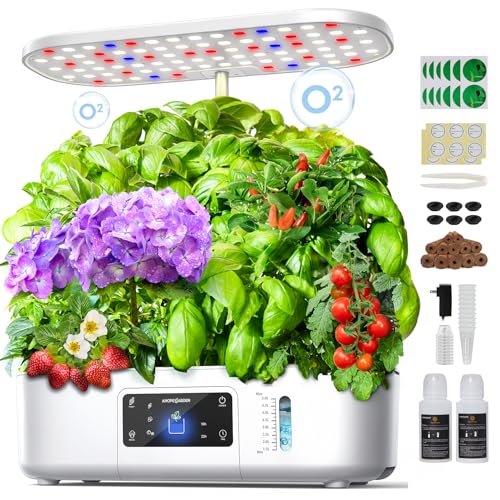
Ahopegarden 12-Pod Hydroponics with Touch Panel

URUQ 8-Pod Hydroponics with LED Grow Light (Black)

URUQ 8-Pod Hydroponics with LED Grow Light (White)

Ahopegarden 12-Pod Hydroponics with Temp & Humidity Monitor

Ahopegarden 12-Pod Hydroponics with Smart Env. Detection
inbloom 12-Pod Fruit Seed Pod Kit for AeroGarden / Ahopegarden
Growell 16-Pod Hydroponics Kit with 28W Full-Spectrum LED
Inside Each Recommended Option
The first Ahopegarden entry on this list leans hard into a modern, tech-forward feel. Its 17-inch profile uses durable ABS plastic, and the LCD touchscreen lets you adjust lighting cycles and pump intervals without digging through menus. In a small apartment kitchen or a home office, the matte finish and low footprint tend to disappear into the background, which is exactly what most people want from a countertop garden.
Compared with the URUQ 8-pod units later in the list, this one gives you more growing slots and a more interactive control surface. For anyone stepping into hydroponics for the first time, that added room to experiment, four extra pods and a clear readout, makes a meaningful difference.
Bright Spots
- Full-spectrum grow panel supports leafy greens and herbs through every growth stage
- LCD touchscreen makes light and pump scheduling genuinely simple
- 12-pod layout means you can run a rotating harvest instead of one big batch
- ABS body wipes clean, helpful when nutrient water occasionally splashes
Worth Noting
- You will need to buy seeds or compatible pods separately, as none ship in the box
- Water level checks become routine, since the tank sits below the root zone out of sight
Feature Snapshot
Who It Suits Best
First-time hydroponic gardeners who want a clean, app-free control panel and enough pods for genuine variety.
Consider Something Else When
Vegetable growers planning to raise larger fruiting crops should look at the Growell 16-Pod Kit, which offers more slots and a more powerful 28W lighting panel.
This Ahopegarden sibling swaps the LCD readout for a stripped-back touch interface, and the design language shifts slightly cleaner. The same 17-inch ABS frame carries the brand’s minimalist look, which is the kind of detail that matters in a visible spot like a kitchen island. The full-spectrum panel keeps the lighting side identical to its LCD-equipped cousin.
You trade away the at-a-glance data display in exchange for a more seamless surface. For minimalists who would rather set a schedule once and forget it, the touch panel is honestly the better fit. Against the 8-pod URUQ models, you still get a 50% bump in growing capacity in a similar footprint.
Useful Strengths
- Touch panel keeps the front face uncluttered, with no raised buttons to clean around
- 12 growing slots comfortably handle a household’s weekly herb rotation
- ABS housing stays cool to the touch around the light panel
- Slim 17-inch profile slides next to a coffee maker without crowding it out
Trade Offs
- Less numeric feedback on screen, so you confirm settings by indicator light rather than exact values
- Like most 12-pod units, taller greens may need trimming to keep the canopy even
Feature Rundown
Made For
Apartment dwellers who want a low-fuss, good-looking herb garden that they can essentially set and forget.
Look Elsewhere When
Anyone wanting on-screen environmental data should pick the Ahopegarden 12-Pod Temp & Humidity Monitor unit instead.
URUQ’s 8-pod system is the most compact pick on this list, and the black housing gives it a stealthy, almost appliance-like look. The 24-watt LED panel tilts up to 180 degrees and rises to 21 inches, which matters more than it sounds once your lettuce or basil starts bolting upward. On a kitchen windowsill or a small desk, that adjustability is the difference between a thriving garden and one that gets leggy.
Versus the 12-pod Ahopegarden units, you are giving up growing slots, but you are also getting a smaller body that disappears on tight counters. For solo cooks or couples, 8 pods is often plenty.
The Helpful Details
- 21-inch maximum light height handles taller herbs and small lettuces without scalding the leaves
- 180-degree panel rotation lets you angle light sideways into awkward spots
- Compact footprint fits a windowsill where a 12-pod unit would feel crowded
Small Caveats
- Only 8 pods, so heavy salad eaters may run out of harvest between cycles
- Owners commonly report needing to wipe down the matte black finish to keep fingerprints in check
Right Fit For
Solo home cooks or anyone working with very limited counter space who still wants a real harvest.
Reach For A Different Pick When
Households wanting more variety at once should consider the Growell 16-Pod Kit, which doubles the capacity.
The white-finish twin to the URUQ black unit uses the same 24W grow panel and the same 21-inch max height. In a kitchen with warm wood tones or pastel walls, the lighter housing tends to blend in more naturally, and any algae or mineral residue on the exterior shows up faster, which is honestly a feature. You catch buildup before it becomes a problem.
Mechanically, this and the black URUQ are interchangeable. The decision between them is purely aesthetic and how it sits in your space. If you already run a 12-pod Ahopegarden nearby, the 8-pod URUQ makes a useful overflow station.
The Good Stuff
- White finish makes spills and mineral streaks visible right away
- Same adjustable 180° panel and 21-inch reach as its black sibling
- Smaller reservoir means shorter, more frequent water top-offs, easier for beginners
Points To Note
- White ABS tends to yellow slightly over years of UV exposure from the grow panel, depending on placement
- Pod count still caps how many different crops you can run at once
Best Suited To
Anyone who wants the URUQ growing experience in a lighter visual package for a bright kitchen.
Not Your Match When
You want a single system that handles both herbs and fruiting crops; the inbloom 12-Pod Fruit Seed Kit is more focused on that goal.
The defining feature here sits right in the name: a built-in temperature and humidity readout, which is unusual at this tier. For growers in dry winter apartments or humid coastal climates, that data turns vague plant stress into a concrete number you can act on. The 16-hour-on, 8-hour-off light cycle mimics a long summer day for vegetative growth, and the 12-pod layout matches the rest of the Ahopegarden range.
You give up the touchscreen of the LCD model for a more basic control surface, but you gain real-time climate feedback. That trade is worth it for anyone who has watched seedlings wilt and not known why.
A Few Strong Suits
- Onboard humidity sensor removes guesswork in dry or overly damp rooms
- Full-spectrum LED with a 16-on/8-off cycle, fine-tuned for vegetative leafy growth
- 12-pod capacity supports a meaningful weekly harvest
Possible Compromises
- Sensor accuracy can drift in direct sunlight, so placement matters
- Seeds, sponges, and nutrients are typically sold separately
Key Product Details
Whose Shelf It Belongs On
Growers in variable climates who want measurable feedback rather than visual guesswork.
Skip It When
Your kitchen is already climate-controlled, and the Ahopegarden LCD model would cover your needs at a more basic level.
This is the most sensor-forward unit in the Ahopegarden family, leaning on environmental detection to automate more of the grow cycle. The full-spectrum LED and 12-pod layout carry over from the LCD and touch-panel models, so the learning curve stays low for anyone already familiar with the brand. Where this one separates itself is the data layer.
For data-driven growers who like to correlate room conditions with plant performance, the smart detection adds real value. Against the Temp & Humidity Monitor unit, you trade away a simple display for a more automated system. If you tend to forget check-ins entirely, that automation is a meaningful upgrade.
What It Does Well
- Environmental detection reduces the need for daily visual check-ins
- 12-pod capacity fits a small household’s rotating herb and lettuce needs
- Full-spectrum lighting covers germination through harvest on one panel
- Soilless setup means no soil mess on the counter or windowsill
A Few Limitations
- Sensors require occasional recalibration, depending on dust and humidity levels in the room
- You still need to add liquid nutrients manually on a regular schedule
Perfect Match For
Tinkerers who like a system that adjusts itself and are happy to learn the controls.
Swap It Out When
You prefer a simpler one-touch experience, in which case the Ahopegarden Touch Panel model is the more relaxed choice.
The inbloom kit breaks the pattern of this list: it is not a hydroponic system itself, but a 12-pod seed bundle designed to drop into compatible AeroGarden, iDOO, and Ahopegarden units. Inside the box you get over 400 heirloom seeds spanning strawberry, cucumber, green pepper, golden tomato, radish, dwarf pea, and ruby queen beet, along with 12 grow sponges, domes, baskets, foil stickers, and A&B plant food.
It is a smart add-on for anyone who already owns a 12-pod system and wants to try fruiting crops without sourcing seeds piecemeal. Compared with the leafy-green focus of the LCD and touch-panel Ahopegarden units, this kit nudges you toward peppers and tomatoes, which are more demanding but also more rewarding at harvest.
Useful Highlights
- Heirloom seed variety, including fruiting crops that are hard to find as pre-made pods
- Compatible with multiple popular 12-pod systems already on the market
- Includes A&B nutrients and growing domes so you can plant right away
Things To Weigh
- Fruiting crops like tomatoes and peppers need a taller light panel than many 12-pod units ship with
- Germination rates depend on conditions; users in dry homes may need to dome longer
Quick Facts
Who Should Grab It
Existing 12-pod owners who want to move past herbs into strawberries, peppers, and tomatoes.
A Better Fit Elsewhere
First-time buyers who do not yet own a system should start with the Ahopegarden LCD or Growell 16-Pod Kit instead.
Growell closes out the list with the most ambitious countertop unit here: 16 pods, a 28-watt full-spectrum LED that includes red, blue, white, and far-red channels, and an 8-liter reservoir that runs longer between refills. The 28W panel is meaningfully stronger than the 24W units from URUQ, and that headroom shows up in faster growth once plants leave the seedling stage.
Three smart light modes and an auto timer take most of the daily decision-making off your plate. For a household that eats salads several nights a week, 16 pods is finally enough to keep the rotation going without gaps. Against the 12-pod Ahopegarden models, you trade compactness for genuine harvest volume.
Notable Upsides
- 28W full-spectrum panel supports everything from leafy greens to fruiting crops
- 16-pod layout suits households that want fresh produce several times a week
- 8-liter reservoir reduces the number of refill stops during a grow cycle
- Three light modes let you shift toward vegetative or fruiting stages without swapping bulbs
Honest Caveats
- Larger footprint than 8- or 12-pod units, so a deep counter or sturdy shelf helps
- Higher wattage means the panel runs warmer, which can dry the reservoir faster in low-humidity rooms
Feature Overview
Built With In Mind
Frequent home cooks and bigger households that need a steady, multi-pod harvest rather than a small herb patch.
Where Another Pick Suits Better
Tight-counter apartments will find the URUQ 8-Pod unit a more practical fit, since it delivers the same core experience in a smaller box.
What To Weigh Before Picking A Hydroponic Setup
Pod Count And What It Means In Practice
A pod is a single slot where one plant, or in some cases a small cluster, grows. Eight pods comfortably cover a few culinary herbs and a salad bowl’s worth of greens for one or two people. Twelve pods, the most common tier on this list, add room for a true rotation, so something is always ready to harvest while the next round germinates. Sixteen pods, like the Growell, push into “real household supply” territory, and you may need to think about where the system physically lives. In tight galley kitchens, fewer pods in a smaller body often beats more pods in a cramped footprint.
Light Strength And Spectrum
The wattage of the LED panel is the single most important spec after pod count. Lower-wattage units, around 24W, handle herbs and lettuces well but struggle with anything fruiting. A 28W full-spectrum panel that includes red, blue, white, and far-red channels covers germination through fruiting without compromise. If you plan to grow tomatoes or peppers, weight that 4W difference heavily. Full-spectrum simply means the panel covers the wavelengths plants use across their full life cycle, not just leafy growth.
Reservoir, Refills, And Daily Routine
Reservoir size controls how often you top off the system. A smaller tank means lighter, more frequent refills, which can actually be easier for beginners because you are paying closer attention. Larger reservoirs, like the Growell’s 8-liter tank, run longer unattended, which is great for busy weeks but easy to neglect. A weekly refill habit tends to fit most kitchen routines, so pick a tank size that matches how often you want to think about the garden.
Smart Features And Sensors
Onboard temperature and humidity sensors, like the one in the Ahopegarden climate-aware model, turn vague plant stress into a number. Smart environmental detection, the kind in the Ahopegarden Env. Detection unit, goes further by adjusting output automatically. These features help in dry winters, humid summers, and anywhere the room climate swings day to day. For a stable kitchen, they are a nice extra rather than a must-have.
Key Considerations Across These Picks
Pitfalls Shoppers Hit
One common mistake is choosing the largest pod count without thinking about light height, since fruiting crops can outgrow a fixed panel in weeks. Another is buying a kit without checking whether seeds, sponges, and nutrients are included, because some systems ship with everything and others expect you to source consumables separately. Always confirm the full system height, not just the footprint, and look for clear refill reminders on the control panel.
Where The Extra Money Goes
Higher-tier models tend to add stronger LEDs, larger reservoirs, and environmental sensors, all of which reduce how much attention the system needs once it is running. The upgrade is most worthwhile for households that want year-round leafy harvests or plan to try fruiting crops, since both demand more light and steadier conditions. For a casual herb gardener who just wants fresh basil on the counter, a mid-range 8- or 12-pod unit delivers the same end result with fewer features to learn.
Frequently Asked Questions
How often do you need to refill the water in a hydroponic system?
Most countertop systems need a top-off every 5 to 14 days, depending on the reservoir size, the room temperature, and how mature the plants are. Larger tanks like the 8-liter Growell stretch further between refills, while 8-pod units may need water twice a week in the middle of summer.
Can you grow vegetables other than herbs in these systems?
Yes, especially in the higher-wattage units with adjustable light height. Leafy greens are the easiest start, and fruiting crops like tomatoes, peppers, cucumbers, and strawberries are realistic in 16-pod systems with strong full-spectrum panels. The inbloom seed kit is a good way to try several fruiting varieties in one 12-pod run.
Do hydroponic vegetables taste different from soil-grown ones?
Hydroponic vegetables tend to be milder and more consistent because the nutrient mix is controlled, and growers often report crisper leaves and faster harvests. Flavor is heavily influenced by light exposure and nutrients, so adjusting the spectrum and feeding schedule matters as much as the growing method itself.
Is the LED light safe to leave on around the kitchen?
Yes, the panels are designed for continuous indoor use, and most systems automate a 16-on, 8-off cycle to mimic daylight. The light is bright, so placing the unit where it will not shine into your eyes at counter level is worth thinking about during setup.
How long do hydroponic systems typically last?
A well-maintained countertop system can run for several years, since the main wear points are the LED panel, the pump, and the reservoir. Owners commonly replace grow sponges and nutrients every cycle, while the pump and panel tend to last the longest with basic cleaning and fresh water between plantings.
Closing Remarks
A good hydroponic system quietly turns a small corner of the kitchen into a reliable source of fresh greens, and the eight picks here cover everything from a compact 8-pod starter to a full 16-pod growing station. Match the pod count and light strength to the vegetables you actually want to eat, and the rest of the experience tends to take care of itself. Start with herbs you already use weekly, and let the system teach you what it, and your kitchen, can handle.
