

Crane flies look harmless on the wing, but their leatherjacket larvae chew through grass roots and leave behind patchy, spongy lawns by late spring. Homeowners across the Pacific Northwest, the UK, and the northern US see this damage every year, and a targeted spray program timed to the larval stage is what actually saves the turf. This lineup covers the sprays, concentrates, and biological tools that fit a typical residential treatment plan, so you can match the right product to your lawn size, soil type, and tolerance for chemical use.
A Quick View Of The Lineup
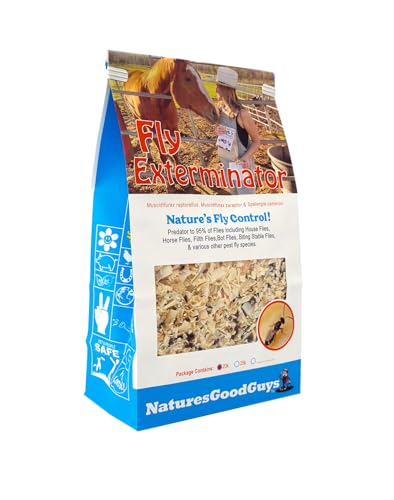
NaturesGoodGuys Fly Exterminators (20000)

REVENGE Horse & Stable Fly Spray 128 oz

Suspend SC Insecticide 16 oz Deltamethrin Concentrate

Demand CS Insecticide 1-qt. Lambda-cyhalothrin Concentrate

Stram QuikStrike Fly Bait Spray 1lb

Talstar One Insecticide 1 Gallon Bifenthrin Concentrate
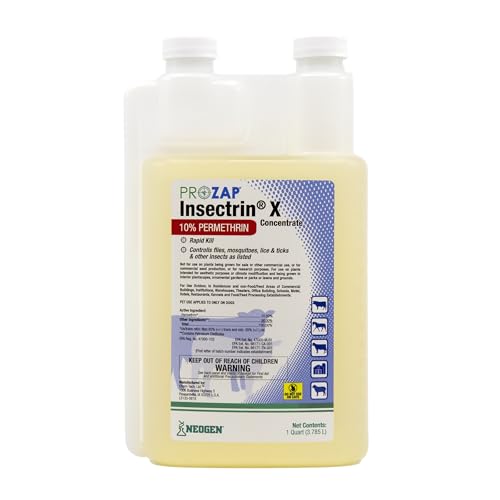
Neogen Insectrin X 32 oz Permethrin Concentrate

Primesource Imidacloprid 75WSP Turf Treatment
Meet The Standout Selections
If you garden with kids, pets, or pollinator beds nearby, the NaturesGoodGuys Fly Exterminators shift crane fly management away from synthetic chemistry entirely. The 20,000-count pouch releases tiny parasitic predators that target fly pupae in the soil, where leatherjackets do their real damage. For an organic lawn care program, this biological route sidesteppes the re-entry intervals and PPE concerns that come with the concentrates on this list.
Unlike the spray concentrates reviewed below, timing here depends on warm soil rather than calendar dates. You place the release pouches where crane fly activity is heaviest, and the predators do the rest. In most mild-climate lawns, a monthly release through the warm season keeps pressure from building up.
The Practical Payoff
- No re-entry interval after release, so kids and pets can use the lawn the same day.
- Targeted larval control that spares earthworms and other beneficial insects already working your soil.
- Harmless to birds that feed on adult crane flies, keeping the wider food web intact.
- Works in beds, borders, and turf without the spray drift that comes with hose-end applicators.
Things To Consider
- Slower visible results than a contact spray, since predators need days to establish.
- Cool springs below 70°F can delay hatching and stretch the program across more months.
- Pupae do not change in appearance after hatching, so you need to watch for movement before release.
Who Will Love This
Organic lawn care enthusiasts with small to mid-size yards who want crane fly control without synthetic sprays.
Where Another Pick Suits Better
Homeowners facing a severe leatherjacket outbreak on a large lawn will see faster knockdown from Primesource Imidacloprid 75WSP Turf Treatment.
For a small property where you want to skip the measuring jug, the REVENGE Horse & Stable Fly Spray arrives ready to deploy with its own power sprayer. The 128-ounce jug covers a fair stretch of lawn edge or stable perimeter without any mixing, which suits homeowners who treat their yard once and move on. The water-based formula is gentle enough for direct application on livestock, dogs, and poultry, the same surfaces where adult crane flies tend to rest.
Compared to the biological route in pick one, this is a knock-down product. It works on contact rather than through the soil food web, so the timing matters more and the residual window is shorter. For most backyards, that tradeoff is fine because the goal is fast relief from adult flies buzzing over the lawn in early fall.
Points In Its Favor
- No mixing required, so you skip the measuring step that catches first-time users on concentrates.
- Built-in power sprayer cuts fatigue on larger spray jobs around paddocks and lawn edges.
- Multi-animal label covers horses, cattle, goats, sheep, swine, poultry, and dogs in one jug.
Worth Noting
- Primarily targets adult flies, not leatherjacket larvae in the soil.
- Shorter residual window than microencapsulated concentrates like Demand CS.
- Sprayer nozzle may clog if not flushed after each use, so a quick rinse habit helps longevity.
Right Fit For
Small-acreage homeowners with horses, goats, or poultry who want a no-mix adult fly knockdown around stables.
A Better Fit Elsewhere
Lawn-only properties targeting leatherjackets underground should look at Neogen Insectrin X 32 oz Permethrin Concentrate instead.
For homeowners who treat crane flies as part of a broader pest-barrier program, Suspend SC brings the active ingredient deltamethrin to the foundation line, door frames, and window casings. The suspension concentrate (a liquid formula where fine solid particles stay suspended in water) is built for perimeter work, where adult crane flies cluster on exterior walls before moving into lawn edges. You mix it into a pump sprayer and walk the property line once, then again in a few weeks.
Where this differs from a turf drench like Talstar One is its narrow focus on vertical surfaces. The residual sits on siding and brick, not in the soil column, so it does not replace a larval treatment. For most homes with chronic fall crane fly pressure, though, treating the perimeter keeps adults from laying the next generation of eggs in your turf.
Key Advantages
- Deltamethrin holds residual activity on exterior surfaces, cutting down repeat applications.
- Also controls ants, spiders, and cockroaches, so one jug covers several perimeter pests.
- Compact 16-ounce bottle stores easily on a garage shelf between treatment windows.
Trade Offs
- Not labeled for broadcast lawn application, so it complements rather than replaces a turf drench.
- Mixing accuracy matters, and a dedicated measuring cup helps avoid over- or under-dosing.
- Some ornamental plants near foundation walls may be sensitive, so check the label before spraying close to beds.
Quick Facts
Made For
Homeowners running a perimeter pest program who want crane fly adults handled alongside spiders and ants.
Skip It When
You need a soil-applied leatherjacket treatment, in which case Primesource Imidacloprid 75WSP Turf Treatment is the better match.
The headline feature on Demand CS is iCAP technology, a controlled-release microcap (tiny polymer-encapsulated droplets that break down gradually) system that holds the active ingredient lambda-cyhalothrin inside microscopic capsules. Once sprayed on a surface, those capsules stick to insects as they cross the treated zone and keep releasing the active for up to 90 days. For a lawn program where you spray once and want coverage through the fall crane fly window, that kind of staying power matters.
The smooth outer shell on each microcap protects the active ingredient from sunlight, rain, and pH swings that would normally break down a spray within weeks. In most climates, a single late-summer application outlasts two or three passes of a conventional concentrate. The 1-quart bottle mixes down into a sizable volume, so a backpack sprayer is the practical tool here.
Well-Handled Touches
- Targets over 30 pests including mosquitoes, spiders, ants, flies, fleas, and ticks in one jug.
- Microcapsules cling to insect bodies, so the active moves with the pest rather than washing away.
- Holds up under heat, UV, and rainfall that degrade standard pyrethroid sprays.
- Works both indoors and outdoors, useful for homeowners with crawl spaces or attached garages.
- Up to 90 days of residual control reduces repeat applications during peak season.
Some Limits To Know
- Requires thorough agitation in the tank, since the microcapsules can settle if the sprayer sits idle.
- Concentrate format demands careful measuring; a kitchen measuring cup is not the right tool.
- Higher price per quart than ready-to-use options, which matters on a tight lawn care budget.
Feature Snapshot
Best Suited To
Homeowners with large lawns who want a single fall application to carry through the crane fly season.
Another Choice May Suit
Organic gardeners uncomfortable with synthetic pyrethroids will prefer NaturesGoodGuys Fly Exterminators (20000) for biological control.
Stram QuikStrike takes a different angle from the concentrates above. Rather than spraying a residual film, this 1-pound bait formula attracts adult flies to a treated surface where they feed and die. For homeowners who see crane flies cluster on sunny fence lines, patio edges, or barn walls, the bait approach targets where the adults actually feed instead of where they happen to land.
The trade-off is focus. Unlike Demand CS or Talstar One, this does not leave a residual film across your entire lawn. For most homeowners, that matters less than the simplicity: paint or spray the bait onto spots where flies gather, and the population drops over the next several days. In heavy adult pressure years, this fills a gap that broadcast sprays alone do not cover.
A Few Strong Suits
- Attract-and-kill formula works on flies that ignore residual spray films.
- Paints or sprays onto fence posts, walls, and bin lids for targeted placement.
- Lightweight 1-pound canister stores easily between applications.
- Reduces reliance on broadcast sprays across the whole lawn surface.
Room For Improvement
- Targets adults only, with no impact on leatherjacket larvae underground.
- Reapplication is needed after rain or heavy dew washes the bait off treated surfaces.
- Works best when flies have an active feeding pattern, so timing in early fall matters.
Perfect Match For
Homeowners with a visible adult crane fly problem on fences, patios, or outbuildings who want targeted knockdown.
Look Elsewhere When
You need a soil-drench larval treatment for leatherjackets, in which case Primesource Imidacloprid 75WSP Turf Treatment is purpose-built.
Talstar One earns its place on a crane fly shortlist because it controls over 75 pests with one active ingredient, bifenthrin. The 1-gallon jug is built for serious coverage, and for homeowners managing multi-acre lots where perimeter, lawn, and foundation all need treatment in the same weekend, that scale is the point. You mix it once and treat the whole property without rationing.
Where it differs from Demand CS is formulation philosophy. Talstar One is a standard emulsifiable concentrate (an oil-based liquid that suspends in water for spraying), not a microcap system, so residual is solid but shorter than the 90-day window on the iCAP product. In most mild climates, a Talstar application gives you 60 to 90 days of perimeter activity, which covers the adult crane fly window from late summer through first frost.
Strong Points
- Bifenthrin label covers over 75 pests, including spiders, ants, mosquitoes, fleas, and ticks.
- 1-gallon size suits multi-acre properties where smaller bottles run out mid-job.
- Effective on perimeter spray applications around foundations, doors, and exterior walls.
- Mixes cleanly with water for both pump and backpack sprayers.
Honest Caveats
- Requires a dedicated sprayer, since leftover residue can damage ornamental plants on the next use.
- Concentrate handling calls for gloves and eye protection during mixing.
- Residual window is shorter than microencapsulated options like Demand CS.
Feature Rundown
Who Should Grab It
Property owners managing multi-acre lots with severe crane fly and general pest pressure who need one jug to do the whole job.
Swap It Out When
Small-lot homeowners will find the 1-gallon size more than they need, in which case Suspend SC Insecticide 16 oz Deltamethrin Concentrate is a more measured option.
Neogen Insectrin X is the flexible member of this lineup. The 10% permethrin concentrate mixes with water for spray applications, with oil for surface treatments, or as a spot treatment straight from the bottle. For homeowners managing a barn, kennel, or rural property where crane flies share space with flies, ticks, lice, mites, and gnats, that versatility simplifies the chemical cabinet.
Permethrin has been a working insecticide for decades, so the behavior profile is well understood: fast knock-down on contact plus a residual window in the weeks following application. Compared to bifenthrin in Talstar One, permethrin breaks down a bit faster under UV but is gentler on most surfaces and handles direct animal application with proper dilution.
Where It Excels
- Mixes with water for spray, with oil for surface treatment, or applies as a spot treatment straight.
- 10% permethrin concentrate hits mosquitoes, flies, ticks, lice, mites, spiders, cockroaches, and gnats.
- Direct animal application is supported on the label for livestock and outdoor pets when diluted properly.
- 32-ounce bottle suits small properties and barn programs without the bulk of a 1-gallon jug.
Points To Keep In Mind
- Faster UV breakdown than bifenthrin or lambda-cyhalothrin in full sun.
- Concentrate format means accurate dilution matters to avoid waste or under-dosing.
- Strong permethrin scent lingers briefly after indoor applications.
Feature Card
Built With In Mind
Small-acreage homeowners with barns, kennels, or livestock who need one concentrate for lawn edges and animal areas.
Reach For A Different Pick When
You want a longer residual window on the perimeter, in which case Demand CS Insecticide 1-qt. Lambda-cyhalothrin Concentrate holds longer.
Primesource Imidacloprid 75WSP is the only product on this list that takes aim at crane flies by name on its label, specifically at the leatherjacket larvae chewing through turf roots. The active ingredient imidacloprid is a systemic, meaning the plant takes it up through the root zone and the pest dies as it feeds. The water-soluble packet (WSP) format dissolves in a sprayer tank, which keeps measuring simple.
Where this differs from the contact sprays above is that the active moves through the soil and into grass plants rather than sitting on a surface. That means watering-in after application matters, and rain or irrigation within 24 hours helps the chemistry reach the root zone where leatherjackets feed. In most lawns, a single late-summer application targets the next generation before fall damage shows up.
Advantages To Know
- Labeled for crane flies (leatherjackets) along with white grubs, leafminers, and mealybugs.
- Curative and preventative action in one product, depending on timing.
- Water-soluble packet format removes the measuring-jug step from mixing.
- Works on turf, landscape ornamentals, fruit and nut trees, and interior plantscapes.
Practical Considerations
- Restricted for sale in several states, so check local regulations before ordering.
- Requires watering-in after application to reach the root zone.
- Soil temperature and thatch depth affect uptake, so timing matters more than calendar date.
The Right Fit
Homeowners with a confirmed leatherjacket problem who want a soil-applied systemic labeled specifically for crane fly larvae.
Where A Sibling Pick Shines
Property owners in restricted states or those wanting biological control should look at NaturesGoodGuys Fly Exterminators (20000) for a non-chemical route.
What Matters Most Before Choosing Insecticides For Crane Flies
Match the Product to the Life Stage
Crane fly damage comes from the larval stage, not the long-legged adult that gets all the attention. Identifying whether you are dealing with leatherjackets under the turf or adults clustering on walls changes which product on this list earns its keep. Soil-applied systemics like Primesource Imidacloprid 75WSP Turf Treatment target larvae, while perimeter sprays like Suspend SC Insecticide and bait formulas like Stram QuikStrike hit adults. Getting the life stage right is the single biggest decision factor.
Think About Re-Entry Windows and Surface Use
Pyrethroid concentrates (Suspend SC, Demand CS, Talstar One, Neogen Insectrin X) leave a residual film that requires drying time before kids or pets return to the lawn. For organic lawn care or homes with curious dogs, the biological route through NaturesGoodGuys Fly Exterminators skips the re-entry concern entirely. In most backyards, that tradeoff matters more than the active ingredient itself.
Consider Sprayer Setup and Mixing Tolerance
Ready-to-use options like REVENGE Horse & Stable Fly Spray need no measuring, which suits first-time users. Concentrates demand a pump or backpack sprayer, accurate dilution, and PPE during mixing. The honest read is that concentrates deliver more product per dollar but require more setup, so factor in your tolerance for the prep work.
Account for Local Restrictions and Lawn Size
Primesource Imidacloprid 75WSP is restricted in several states, and large 1-gallon jugs of Talstar One overwhelm small yards. Checking the label against your lawn square footage and your state’s pesticide rules saves money and avoids the frustration of receiving a product you cannot legally apply.
Key Considerations Across These Picks
Mistakes Worth Dodging
Spot-treating only the spots you see crane flies misses the larvae already in the soil. Skipping the watering-in step after a systemic application leaves the active ingredient sitting on top of the thatch, where it never reaches root-feeding leatherjackets. Treating at the wrong soil temperature (below 50°F) delays uptake and stretches your control window. The best results come from a program that targets both the adult knockdown and the larval drench in sequence, not one spray and done.
What The Higher Tier Buys
The step from a basic concentrate to a microencapsulated formula like Demand CS buys you a longer residual window, often up to 90 days on treated surfaces. For large properties where repeat applications are impractical, that staying power pays for itself in labor savings. The upgrade is also worth it if your fall weather is unpredictable, since microcaps hold up under rain and UV better than standard emulsifiable concentrates. For a single-season small-lot homeowner, the basic concentrate still does the job, but for repeat users, the premium tier earns its place.
