

Few garden pests are as relentless as Japanese beetles. One day your roses look fine, the next they’re skeletonized, with shiny copper-green insects clustered on every leaf. Choosing the right control method early matters, because the larvae feeding on roots right now will become next year’s swarm.
The seven picks below span spray-on contact killers, hose-end systemic options, long-term milky spore treatments, and pheromone trap systems. Each one tackles a different part of the problem, and layering two approaches together often works better than any single product on its own.
The Choices Worth Comparing

Hi-Yield (30206) Systemic Insect Spray RTS, 32 oz

Catchmaster Japanese Beetle Trap Bags 6 Pack

Milky Spore 80010-9 Japanese Beetle Killer

RESCUE! Japanese Beetle Trap – Reusable Bag (3)
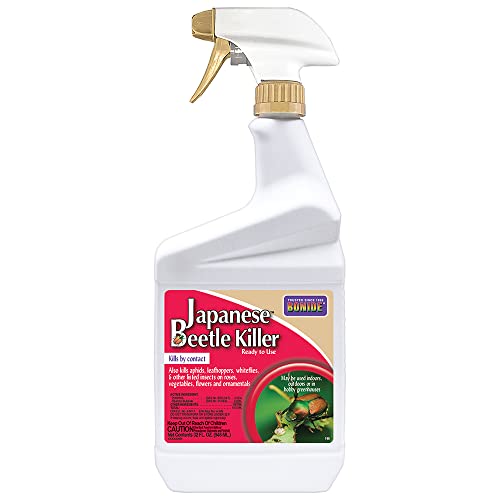
Bonide Japanese Beetle Killer RTU Spray, 32 oz

St. Gabriel Organics Milky Spore Granular Grub Control, 15 lb

Spectracide Bag-A-Bug Japanese Beetle Trap (4 Pack)
A Deeper Look At The Lineup
The Hi-Yield (30206) Systemic Insect Spray is built for homeowners who’d rather skip the measuring cup. You attach a garden hose, flip the dial, and walk the perimeter while the bottle does the mixing for you. That kind of hands-off setup earns real points when you’re facing a wide rose bed or a long hedgerow on a hot afternoon.
What separates a systemic (a treatment the plant absorbs so insects die as they feed) from a contact spray is duration. Coverage from one bottle stretches across a meaningful patch of lawn, and protection is expected to hold for a few weeks at a stretch. Gardeners managing multiple ornamental beds will appreciate that kind of reach.
Why It Works Well
- Hose-end design eliminates measuring and pre-mixing steps.
- Broad-spectrum label covers several chewing and sucking insects at once.
- One bottle covers a substantial lawn area, useful on bigger lots.
- Systemic uptake means beetles are exposed as they feed, not just on contact.
Worth Noting
- Re-application timing depends on rainfall and plant growth, so light, frequent checks help.
- It is not selective, so avoid spraying open blooms where pollinators are actively foraging.
Feature Snapshot
Who It Suits Best
Homeowners with broad lawn areas or mixed shrub borders who want a single bottle to treat a wide space without juggling concentrate.
Consider Something Else When
Gardeners with tiny patio beds and a tight preference for non-spray solutions will find the Bonide Japanese Beetle Killer Ready-to-Use Spray easier to control on a few plants.
Catchmaster’s six-pack leans into scale. Where the typical trap kit covers a single corner of the yard, this format gives you six stations to position around the property, which matters because beetles travel in from neighboring lots. Placement strategy is the real lesson here: traps belong on the perimeter, not inside the garden you want to protect.
The dual-lure design pulls in more beetles than single-attractant traps. For gardeners with established infestations and plenty of space to work with, that expanded draw can move the needle noticeably.
Bright Spots
- Six bags let you build a true perimeter ring rather than one focal point.
- Dual-lure combination targets a broader beetle population than single-lure setups.
- Bulk format suits properties under heavy summer pressure.
Things To Consider
- Trap positioning matters a lot, and crowding them near ornamental beds can backfire by drawing beetles onto prized plants.
- Bags fill quickly during peak flight weeks, so routine replacement is part of the deal.
Right Fit For
Owners of larger suburban lots or rural properties with room to set a wide trap perimeter well away from ornamentals.
Look Elsewhere When
Tight urban yards where multiple hanging stations feel obtrusive, and you’d rather a single compact system, are better served by the Spectracide Bag-A-Bug Japanese Beetle Trap.
The Milky Spore 80010-9 takes a fundamentally different approach from the sprays and traps earlier in this list. It targets the grub stage of the beetle’s life cycle, applied to soil where larvae feed on grass roots. That means the payoff is not instant. It’s a season-over-season investment in reducing the next generation of adults.
For homeowners willing to think one or two summers ahead, the slow-build payoff is appealing. Treatment is generally considered safe around people, pets, and beneficial insects, since the bacterium (a naturally occurring soil organism that infects grubs) specifically targets Japanese beetle larvae.
Real-World Strengths
- Targets the grub stage, so you’re reducing next year’s adult population rather than chasing current ones.
- Soil-targeted approach keeps beneficial insects and pollinators out of the equation.
- Single application can persist in soil for years, depending on conditions.
- Safe to use on lawns where kids and pets play.
Honest Caveats
- Population reduction takes multiple seasons to build, so don’t expect a dramatic first-year drop.
- Effectiveness is strongest in warmer soils, and cool-season zones may see slower ramp-up.
Quick Facts
Made For
Homeowners with patience for a multi-season strategy who want to reduce beetle pressure at the source rather than spray adults every summer.
Skip It When
You need immediate relief this season, in which case the Bonide Japanese Beetle Killer Ready-to-Use Spray delivers fast knockdown on visible foliage damage.
RESCUE! designed its trap system around reuse rather than disposal. Once the season is over, you empty the bag, swap in a fresh attractant cartridge the next year, and the trap is ready to work again. That makes the three-pack a reasonable option for gardeners who think of beetle control as a recurring summer ritual.
The trap’s green panels are engineered to intercept beetles in flight, with the pheromone (a species-specific chemical signal beetles release to find mates) drawing them in. Once inside the bag, escape is limited. Homeowners who’ve used disposable bag traps before will appreciate not adding to landfill each fall.
The Practical Payoff
- Reusable bag and frame design cuts down on seasonal waste.
- Three traps cover a small-to-medium property reasonably well.
- Locking bottom release makes emptying straightforward.
- Attractant cartridges are designed to last a full season.
Trade-Offs
- Replacement attractants are a separate ongoing purchase each season.
- Trap placement matters just as much as with any lure system, and misplacement can worsen plant damage.
Best Suited To
Gardeners who already plan a multi-year beetle control program and prefer a sturdier, reusable trap body over disposable bags.
A Better Fit Elsewhere
First-timers who want the simplest possible setup may prefer the Spectracide Bag-A-Bug Japanese Beetle Trap, which requires no assembly decisions.
The Bonide Japanese Beetle Killer spray is the simplest entry point on this list. Twist off the cap, point, and squeeze the trigger. There’s no concentrate to dilute, no hose to attach, and no measuring cup to wash afterward. For gardeners dealing with a few affected plants, that simplicity has real value.
The label covers a useful range of chewing insects beyond Japanese beetles, so the same bottle handles a handful of common garden pests. Coverage on a 32 oz bottle is appropriate for spot treatment rather than whole-property spraying.
Useful Touches
- Trigger-spray bottle needs no mixing or special equipment.
- Versatile label addresses several common garden pests, not just beetles.
- Compact enough to store in a small gardening tote between uses.
- Suitable for residential outdoor and greenhouse applications.
Softer Spots
- Contact-killer formula means you need to spray beetles directly, and repeat visits are likely.
- Not the right tool for treating entire lawns at scale.
Quick Technical Notes
Who Should Grab It
Beginner gardeners with a handful of prized plants who want a low-fuss spray that works right out of the bottle.
Reach For A Different Pick When
You want to suppress the next generation rather than react to this one, in which case the Milky Spore 80010-9 is the longer-term play.
St. Gabriel Organics delivers the milky spore strategy in granular form, which spreads easily with a standard broadcast spreader (a walk-behind tool that flings granules evenly across a lawn). For expansive lawns where spot treatment makes no sense, the 15 lb bag covers ground efficiently.
The season-long effectiveness claim is worth treating as guidance rather than guarantee, since results depend on soil temperature and grub activity. Once established in your soil, the bacterium persists across multiple seasons, which is the real upside versus one-and-done sprays.
Well-Handled Touches
- Granular format plays well with standard lawn spreaders.
- 15 lb bag covers large lawn areas without frequent refills.
- Targets the grub stage, reducing next year’s adult emergence.
- Soil-friendly application keeps pollinators and beneficial insects unaffected.
A Few Limitations
- Spreader calibration is needed for even distribution across the lawn.
- Visible results on adult beetle counts typically lag by a full season or more.
The Numbers That Matter
Whose Shelf It Belongs On
Homeowners with quarter-acre or larger lawns who want a long-term grub control program built into their fall routine.
Where Another Pick Suits Better
Small urban lots where a 15 lb bag is overkill benefit more from the smaller Milky Spore 80010-9 package.
The Spectracide Bag-A-Bug lands at number seven because it earns its place as a low-commitment entry point. The four-pack gives you flexibility on placement, the dual-lure combination (a sex pheromone plus a food-based attractant) widens the catch range, and setup requires no special tools or expertise. First-time trap users tend to find this format approachable.
Compared with the Catchmaster six-pack earlier in this list, the trade-off is fewer stations for a comparable per-bag effort. Where Spectracide wins is on familiar branding and a setup that feels intuitive out of the box.
A Favorable Mix
- Four-trap format suits small-to-medium yards without overkill.
- Dual-lure design pulls in both sexes for stronger attraction.
- Straightforward assembly is friendly for first-time trap users.
Room For Improvement
- Bags are single-use and need replacement once full.
- Placement sensitivity means research on ideal trap distance from valued plants is worth doing.
Perfect Match For
New gardeners testing the trap approach for the first time, who want a known brand and a manageable four-trap starter set.
Swap It Out When
You want a reusable trap body rather than seasonal bag replacements, in which case the RESCUE! Japanese Beetle Trap is a more sustainable pick.
Picking The Right Approach For Your Lawn
Start by matching the tool to the timeline you’re working with. Sprays and traps handle beetles you can see right now, while milky spore treatments suppress the larvae feeding on roots so fewer adults emerge next year. Most gardeners get the best results by pairing one fast-acting option with one longer-term strategy, rather than committing fully to either end of the spectrum.
Consider the size and layout of your property. A small patio bed rewards a ready-to-use trigger spray. A half-acre lawn with visible grub damage calls for a granular treatment plus a few perimeter traps. Larger rural properties often need the bulk format and the patience to place multiple stations strategically.
Finally, think about the broader garden. Spray products should be kept away from open blooms where pollinators forage. Soil-targeted treatments, by contrast, leave those pollinators entirely out of the equation. Choosing based on what else lives in your yard, alongside the beetles, tends to produce a healthier ecosystem overall.
Key Considerations Across These Picks
Where Shoppers Go Wrong
The most common slip-up is placing pheromone traps too close to the plants you’re trying to protect. Traps lure beetles in from a wide radius, so a station near your prize roses can actually increase damage there. A better move is putting traps on the property perimeter, well away from valued ornamentals, so the catch happens before beetles reach the garden.
Another trap is expecting milky spore treatments to deliver instant results. Because they target the underground grub stage, the population effect builds over seasons. Going in with that expectation avoids disappointment.
The Case For Spending Up
Higher-tier trap kits tend to bring dual-lure systems or sturdier reusable bodies, both of which translate to more beetles per season and less annual waste. Granular milky spore products in larger bags cost more up front but cover significantly more lawn, lowering the per-treatment effort over time. For gardeners managing bigger spaces or planning multi-year control programs, that investment usually pays back in reduced repeat purchases and better long-term suppression.
Frequently Asked Questions
How long do milky spore treatments take to work?
Milky spore populations build gradually in the soil, so noticeable reductions in adult beetle counts typically take one to two full seasons. The trade-off is that, once established, the bacterium can persist for years.
Where should pheromone traps be placed for best results?
Set traps on the property perimeter, ideally 30 to 50 feet away from valuable plants you want to protect. Placing them inside the garden can attract more beetles onto prized foliage.
Are these products safe around pets and children?
Soil-targeted milky spore treatments are widely used on residential lawns. Sprays should be allowed to dry before pets or kids re-enter the area, and labels should always be reviewed for specific re-entry guidance.
Can sprays and traps be used together?
Yes, layering a contact spray on visible beetles with a perimeter trap system is a common combination. The spray reduces current pressure while the trap pulls more in from surrounding areas.
When is the best time to apply milky spore?
Late summer through early fall, when grubs are actively feeding near the soil surface, gives the bacterium the best opportunity to establish. Soil temperature matters, so timing varies by region.
Bottom Line
Japanese beetles rarely respond to a single silver-bullet solution, so the smartest play is matching your timeline, property size, and tolerance for chemicals to the right combination. Sprays handle today’s damage, traps thin the local population, and milky spore treatments work quietly below the surface for seasons to come. Pick the layer that fits your situation, and the garden gets noticeably easier to manage next summer.
