

Growing a Japanese maple in a container opens up a lot of possibilities for patios, balconies, and small courtyards where in-ground planting isn’t practical. The trick is matching the cultivar to the pot: a tree that wants to reach 20 feet will fight you for years, while a true dwarf stays content in a 15-gallon planter for a decade. This lineup covers eight solid options across seeds, young grafted trees, and established nursery stock, so you can pick a starting point that fits your patience level and your space.
A Closer Look At The Lineup

CZ Grain Japanese Red Maple Bonsai Seeds (Acer palmatum, 20+ Seeds)

Red Japanese Maple Live Plant 2-3 ft. (Deep Red Leaves)

Floating Cloud Japanese Maple ‘Ukigumo’ 2-Year Tree

Pixie Dwarf Japanese Maple 3-Year Live Tree

Japanese Red Maple 3 gal. Nursery Pot (Compact)

Mikawa Yatsubusa Dwarf Japanese Maple (2.5 QT)

Brighter Blooms Red Dragon Japanese Maple 2-3 ft.
Brighter Blooms Tamukeyama Japanese Maple 2-3 ft.
Taking A Closer Look At The Options
Starting from seed changes the whole feel of growing Japanese maples, because you’re controlling the trunk movement and root flare from day one. This CZ Grain packet of 20+ Acer palmatum seeds targets bonsai hobbyists who enjoy the multi-year shaping process rather than instant gratification. You’ll need a cold stratification period (a cold-moist rest that breaks dormancy), a fine seed-starting mix, and patience, since seedlings typically spend a year or two in training pots before they develop the woody character you’d want on a patio.
Compare that to the grafted live plants later in this list, which arrive as recognizable miniature trees. The trade-off is time versus money: seeds cost far less than a 3-gallon specimen, but you’ll wait several seasons for a trunk thick enough to anchor a container display. In our view, this works best for someone with a windowsill or grow light setup and a genuine interest in the craft, not just a quick decorative fix.
Strengths Worth Knowing
- Twenty-plus seeds give you room to experiment and keep backup seedlings after culling weak starts.
- Seed-grown trees develop natural taproots that some grafted stock can’t match, helpful for tall container shapes.
- Low entry cost for hobbyists testing whether bonsai is a long-term interest before committing to pricier stock.
- Non-GMO seed with documented high-germination selection, per the brand’s product claims.
Things To Consider
- Acer palmatum seeds need cold stratification for several weeks, a step many beginners overlook.
- Seedlings won’t show their true leaf color reliably, so a portion may turn out green rather than red.
- Three to five years of training pass before the tree reads as a finished patio specimen.
Who It Suits Best
Patient bonsai hobbyists with indoor seed-starting space who want full creative control from the earliest stage.
Where Another Pick Suits Better
Shoppers wanting an immediate container-ready tree should look at the Pixie Dwarf Japanese Maple 3-Year Live Tree instead.
This Red Japanese Maple ships as a 2-3 foot young tree in a nursery container with soil, which removes the guesswork from starting a container maple. The leaves come out deep red in spring, shift through bronze midsummer tones in many climates, and finish gold, orange, or red in autumn depending on your weather. Rated for USDA zones 5 through 8, it tolerates part-sun to full-shade placements, so a north-facing patio or covered entryway works just as well as a sunnier courtyard.
The honest read is that this is more of a patio or small-yard tree than a long-term container specimen: mature height lands around 10 to 15 feet, so you’ll need to upgrade pots every few years or root-prune annually. Beginners who want the iconic red-leaf look without propagation fuss will find it a sensible starting point, and experienced planters can use it as a fast-filler while slower dwarf cultivars establish.
Why It Works Well
- Arrives already 2-3 feet tall, so the container reads as a real plant rather than a starter.
- Wide light tolerance from part sun to full shade, fitting tricky patio exposures.
- Three-season color interest with documented spring red and autumn gold-to-red shifts.
- Adapts to a broad range of well-drained soils, simplifying container mix choices.
Honest Caveats
- Mature height of 10-15 feet means you’ll outgrow mid-sized pots within several seasons.
- Deep red leaf color can fade toward green in heavy summer heat, depending on placement.
- Moderate growth rate means it takes longer to develop a thick, sculpted trunk than dwarf cultivars.
Key Product Details
Right Fit For
First-time planters and renters who want a recognizable red-leaf maple without propagation or grafting know-how.
Look Elsewhere When
Someone committed to a small patio pot for a decade will get better long-term value from the Mikawa Yatsubusa Dwarf Japanese Maple.
Ukigumo, the Floating Cloud maple, is the showpiece pick in this lineup, and it earns that label through variegation (leaves splashed with mixed colors rather than one solid tone) that shifts with the seasons. A 2-year grafted tree arrives already past the slow establishment phase, so you skip the awkward green-juvenile stage that frustrates first-time buyers of this cultivar. The foliage reads as cloud-like patches of cream, pink, and green against darker veining, making it a true specimen plant for a featured container.
It’s worth knowing that young Ukigumos often look like ordinary green maples for the first couple of years while the variegation stabilizes. Depending on your climate and sunlight, variegation intensity varies, with brighter light often bringing out more pronounced pink tones. You may find this less forgiving than the deep-red picks earlier in the list, since variegated foliage can scorch in harsh afternoon sun.
Advantages To Know
- Variegated foliage pattern that no solid-color cultivar in this list can match.
- Compact mature size of 5-6 feet tall and 2-3 feet wide suits mid-sized patio pots.
- Two-year grafting means you skip the slowest establishment phase.
- Part-shade to full-shade tolerance matches covered patio conditions.
Points To Keep In Mind
- Variegation can look sparse or revert to green in the early years.
- Light-colored leaf sections are more prone to sun scorch than solid red cultivars.
- Slow growth means it stays small for a long time, which some planters find underwhelming at first.
Feature Snapshot
Best Suited To
Design-focused gardeners who want a conversation-piece specimen for a shaded patio or courtyard focal point.
Swap It Out When
If you’d rather have a low-care solid-red container tree with no variegation gamble, the Red Japanese Maple Live Plant 2-3 ft. is the simpler path.
Pixie is essentially a miniature version of the classic Bloodgood, holding the deepest red leaf color of the standard palmatum cultivars in a small, columnar package. The 3-year grafted tree arrives with established branching and short internodes (the stem segments between leaves), which is what gives Pixie its famously dense, layered look. At maturity it tops out around 4-5 feet tall and wide, so it stays manageable in a 10-15 gallon container for many years without aggressive root work.
Compared to the Floating Cloud maple just reviewed, Pixie trades variegation for color consistency and better sun tolerance. Full sun to part shade placement is fine, which opens up south- and west-facing patios where Ukigumo would scorch. The catch is that “dwarf” still means a real tree that needs proper watering discipline in a pot, so plan on checking soil moisture more often than you would for in-ground plantings.
Where It Delivers
- Deep purple-red foliage holds color through summer heat better than many red cultivars.
- Dense, columnar habit suits narrow side yards and slim patio planters.
- Professional grafting at the source nursery means a true-to-type cultivar.
- Brilliant scarlet-red fall color adds a strong seasonal payoff.
Softer Spots
- Slow growth means new branches take a season or two to fill in after pruning.
- Container specimens dry out faster than ground plantings, so consistent watering matters.
- Smaller starter size at shipping can read as sparse compared to the Brighter Blooms 2-3 ft. options below.
Feature Snapshot
Perfect Match For
Narrow-patio gardeners who want a dense, columnar red maple that holds color reliably through summer.
Skip It When
You prefer a cascading, weeping silhouette and don’t mind a larger container footprint; the Tamukeyama Japanese Maple fits that profile better.
This listing offers a more substantial container tree than the smaller starters earlier in the list, with a 3-gallon nursery pot and roughly 2-3 feet of tree height at shipping. The compact, spreading growth habit suits smaller gardens and focal-point landscaping, which translates well to a statement container on a patio corner. Bright red foliage is the headline, and the species is widely recognized for holding that color through the growing season.
One practical heads-up worth knowing before you order: agricultural restrictions prevent shipping to California, Arizona, Alaska, and Hawaii, and orders to those states get refunded. If you live in a shipping-eligible zone, the 7-gallon upgrade option is also available for shoppers wanting an even larger starting tree. For most backyards, the 3-gallon size hits a sweet spot between visual impact and manageable transplant shock.
What Earns Its Place
- 3-gallon root mass means a stronger established plant on arrival than smaller starters.
- Compact, spreading habit naturally suits a wide patio planter rather than a tall narrow one.
- Bright red leaf color is documented to persist through summer in most climates.
- Available size tiers (3 gal and 7 gal) let you match tree size to container ambition.
Worth Bearing In Mind
- Cannot ship to CA, AZ, AK, or HI, so West Coast and tropical shoppers are out of luck.
- Larger root mass needs a bigger container from day one, typically 10 gallons or larger.
- Spreading form takes more patio footprint than columnar picks like Pixie.
Whose Shelf It Belongs On
Patio gardeners in eligible shipping zones who want a beefier starter tree and have room for a wider container.
Not Your Match When
You live in California, Arizona, Alaska, or Hawaii, or you need a narrow columnar form, in which case the Pixie Dwarf Japanese Maple is the better fit.
Mikawa Yatsubusa is the connoisseur’s pick in this group, prized for its layered, almost shingled foliage arrangement that gives the canopy real texture rather than a flat silhouette. New leaves open in soft yellow-gold, mature to medium green, and finish golden-orange in fall with bright red leaf tips along the outer edges. The 2.5-quart nursery pot is smaller at shipping than the 3-gallon option above, so plan on potting up into a 3-5 gallon container for the first full season.
Mature size lands at 6-8 feet tall and wide under typical garden conditions, which is larger than the true dwarfs like Pixie but smaller than upright landscape cultivars. The plant ships in a fabric grow bag rather than a rigid pot, a practical touch that reduces plastic waste and air-prunes roots during transit. It’s hardy in zones 5 through 9, which is a slightly wider range than most of the other picks in this list.
Where It Excels
- Layered foliage texture creates visual interest beyond simple leaf color.
- Three-season color shift from spring gold through green to autumn orange.
- Hardiness range of zones 5-9 covers more of the U.S. than most picks in this list.
- Fabric grow bag shipping reduces transplant stress on arrival.
Points To Note
- Smaller 2.5-quart starter size means it takes longer to fill out a container visually.
- Spring yellow-gold foliage is less dramatic than the deep-red options in this lineup.
- Owners commonly repot every 2-3 years to keep the layered canopy from becoming root-bound.
Feature Card
Built With In Mind
Texture-focused gardeners who appreciate layered foliage and want a wider hardiness range for borderline climates.
Consider Something Else When
If you want deeper red color as the main visual draw, the Brighter Blooms Red Dragon Japanese Maple is a stronger color statement.
Red Dragon is a lace-leaf cultivar (one with finely cut, dissected foliage) known for holding its crimson-to-plum color through summer better than many red Japanese maples, which often fade to green in heat. The 2-3 foot starter arrives ready for a 7-10 gallon container, and the laceleaf texture gives it a different visual identity than the broader-leaf picks earlier in the list. It’s positioned as a beginner-friendly tree by the seller, which lines up with its general hardiness and adaptability.
Compared to Tamukeyama, the other Brighter Blooms option reviewed next, Red Dragon tends to be more upright and slightly more sun-tolerant, though both share the dissected foliage look. In most climates, Red Dragon keeps richer red tones into late summer, which is the main reason gardeners choose it over Tamukeyama in hotter regions. Worth noting that lace-leaf types dry out faster in containers than upright maples, so a regular watering routine matters.
What Stands Out
- Laceleaf texture adds a fine, feathery element that broadleaf maples can’t replicate.
- Color-holding performance in summer heat is a documented advantage over many red cultivars.
- Suitable for beginners with no grafting or propagation requirements.
- 2-3 foot shipping size gives the container immediate visual weight on arrival.
Trade Offs To Consider
- Laceleaf canopy dries out faster in containers, demanding more frequent watering.
- Fine leaf structure is more vulnerable to leaf scorch in strong afternoon sun.
- Color shifts through plum and bronze tones, which some shoppers find less pure-red than expected.
Who Should Grab It
Beginner container gardeners in warmer climates who want reliable red color that doesn’t fade to green by midsummer.
Reach For A Different Pick When
If you’d rather have a strongly weeping, cascading habit rather than a more upright laceleaf form, the Tamukeyama Japanese Maple is the natural sibling pick.
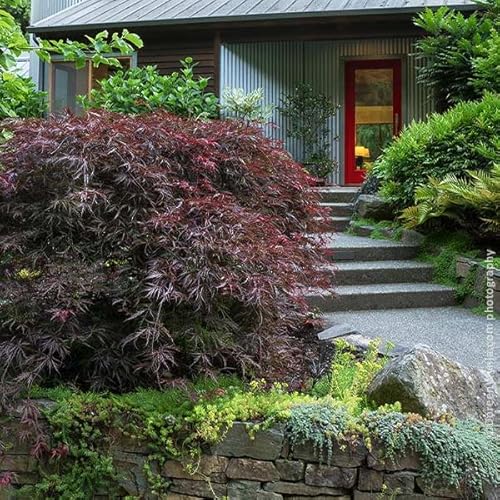
Tamukeyama is the classic weeping lace-leaf Japanese maple, and it’s the shape most people picture when they imagine a container-grown specimen on a stone patio. This 2-3 foot starter from Brighter Blooms arrives already branched, so the cascading habit starts showing in its first full season rather than after years of training. Red foliage holds well across the season, and the cold-hardy reputation makes it a dependable choice for northern patios in zones 5 and 6.
One practical detail: this listing, like the larger 3-gallon option earlier, can’t ship to Alaska, Arizona, or Hawaii due to state agricultural rules. Compared to Red Dragon reviewed just above, Tamukeyama has a more pronounced weeping silhouette, while Red Dragon stays slightly more upright. Assuming you can give it consistent water, Tamukeyama rewards you with that quintessential Japanese garden look in a single season.
Standout Benefits
- Cascading, mounded form is the iconic Japanese maple silhouette for patio display.
- Cold-hardy reputation makes it a reliable choice for zones 5-6 winters.
- 2-3 foot shipping size puts real visual weight in the container from day one.
- Beginner-friendly cultivation, no grafting or training required.
Practical Considerations
- Cannot ship to AK, AZ, or HI, which rules out several shoppers.
- Weeping canopy catches wind and can dry out faster than upright cultivars.
- Eventual spread needs a wide, stable container to keep the mounded shape from flopping.
Made For
Patio gardeners in eligible shipping zones who want the textbook cascading Japanese maple silhouette without years of shaping work.
A Better Fit Elsewhere
Shoppers who want a tighter, more upright red-leaf container tree should consider the Pixie Dwarf Japanese Maple instead.
What Matters Most Before Choosing Japanese Maples For Containers
Mature Size vs. Container Lifespan
The single biggest decision is matching the cultivar’s mature size to how long you want to keep it in the same pot. True dwarfs like Pixie and Mikawa Yatsubusa can live in 10-15 gallon containers for a decade with annual root pruning, while larger upright types like the standard Red Japanese Maple will demand bigger pots every few seasons or aggressive root work. Container gardeners keeping trees for the long haul get the best results from cultivars documented to stay under 6 feet at maturity.
Root Space and Pot Material
Container maples need pots with reliable drainage holes, since waterlogged roots kill maples faster than cold or heat. Fabric grow bags, unglazed terracotta, and wooden barrels all breathe better than plastic, though they dry out faster in summer. A common rule is one gallon of pot volume per foot of mature tree height, so a 5-foot dwarf wants at least a 5-gallon container with room to grow.
Light Exposure on Your Patio
Most Japanese maples prefer morning sun and afternoon shade, especially variegated and lace-leaf types. The Red Dragon and Tamukeyama listings are positioned as more sun-tolerant than the Floating Cloud pick, which scorch easily in strong afternoon light. In our view, matching the cultivar to your patio’s actual sun hours matters more than chasing a specific variety, so observe the space before you order.
Hardiness Zone and Shipping Restrictions
Hardiness zones 5-8 cover most temperate U.S. regions, and Mikawa Yatsubusa extends into zone 9 for warmer climates. Several listings carry shipping restrictions to CA, AZ, AK, or HI due to agricultural regulations, so check the listing carefully if you live in those states. Choosing a tree that’s marginally hardy in your zone is one of the most common ways container maples fail in their first winter.
Smart Choices Before You Buy
Common Slip-Ups Worth Dodging
The most common mistake is picking a cultivar by leaf color alone, without checking mature size against the container you actually have. A 15-foot upright red maple in a 7-gallon pot looks fine the first summer and becomes a root-bound struggle by year three. Equally common is underestimating watering discipline: container maples, especially lace-leaf types like Red Dragon and Tamukeyama, dry out much faster than in-ground plantings, and a single missed week in July can scorch a canopy beyond recovery. For most home setups, choosing a true dwarf documented to stay under 6 feet and budgeting for consistent summer watering solves most of these issues.
Where The Extra Money Goes
Higher-tier container maples cost more for a few specific reasons that justify the spend for serious gardeners. Older grafted trees (3-year and above) arrive with established branching and short internodes, which is what gives Pixie and Tamukeyama their dense layered look in year one instead of year five. Proven nursery grafting also means the cultivar is true-to-type, since seed-grown red maples can turn out green. The upgrade is worth it for shoppers who want an immediate container specimen rather than a multi-year shaping project.
