

If your current pruners crush stems instead of slicing them, you’re fighting the plant instead of guiding it. Sharper, harder Japanese steel changes that equation in a single snip. This roundup pairs you with eight Japanese-style shears and shears-inspired tools that match how you actually trim, from heavy orchard work to delicate flower arranging.
A Quick View Of The Lineup

TABOR TOOLS K18A Straight Pruning Shears, Florist Scissors, Multi-Tasking Garden Snips

Chikamasa Stainless Bud Shears T-550S

TONMA 8.1″ Pruning Shears Made in Japan TP-1

TONMA 8.2″ Garden Shears Made in Japan TP-2

Saboten Japanese Pruning Shears 7.9″ Bypass Garden Clippers
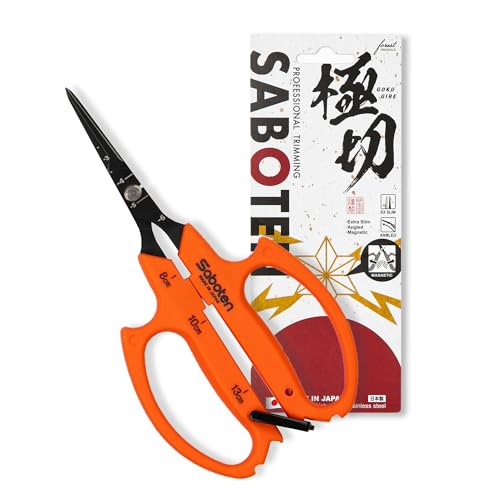
Saboten Japanese Harvesting Shears Magnetic Springless Orange

SUIZAN Hedge Shears 22.6″ Japanese Garden Clippers

SUIZAN Bypass Pruning Shears 8″ Japanese Hand Pruners
A Breakdown Of The Leading Choices
The TABOR TOOLS K18A lands in the middle of the Japanese-style snip conversation, borrowing the blade geometry of higher-end imports in a friendlier package. Its straight-edge design handles flower arranging, herb harvests, and light stem cleanup with a clean slice that won’t bruise tender growth. The straight blades feel natural for folks coming from kitchen shears rather than traditional pruners.
Handles use a textured, non-slip coating over a steel frame, which keeps grip steady when your hands are wet from watering. You get one tool that flexes across cutting tasks without swapping between scissors and bypass pruners.
What Pays Off
- Versatile across flower arranging, herb trimming, and soft-stem pruning
- Coated handles stay grippy through wet garden sessions
- Straight blade geometry gives precise, visible cuts for floral work
- Lightweight build reduces wrist fatigue during long bouquet sessions
- Acts as a reliable secondary tool alongside dedicated pruners
Things To Consider
- Not built for thick woody branches, as the jaw opening is modest
- Coated handles can feel sticky in cold weather
- Blade edge retention falls short of premium forged models
Feature Snapshot
Right Fit For
Casual gardeners and flower arrangers who want one multi-purpose snip that handles both floral work and light pruning without juggling two tools.
Skip It When
You cut woody stems thicker than a pencil on a regular basis; the TONMA TP-1 is built for that heavier work.
The Chikamasa T-550S comes from a Japanese maker known for lightweight harvesting scissors used in commercial floriculture. At a total length of 185mm, it slips into a back pocket or a harvest apron without weighing you down. The stainless construction holds up to repeated washing, which matters when sap and soil hit the blades daily.
These are working tools, not display pieces, so the finish leans functional rather than ornate. Compared to the TABOR K18A above, the T-550S offers a tighter, more focused cut for thin stems and bud work rather than general garden cleanup.
Everyday Perks
- Pocketable 185mm length for fast one-hand retrieval
- Stainless body resists rust under heavy wash cycles
- Precision tips for snipping buds and thin flower stems
Worth Noting
- Not suited for woody branches beyond soft green growth
- Imported availability can affect replacement parts if a spring fails
Who It Suits Best
Florists, market gardeners, and anyone harvesting herbs or cut flowers in volume where speed and clean cuts matter more than raw power.
A Better Fit Elsewhere
You mostly prune backyard roses and shrubs; the Saboten Japanese Pruning Shears handle woody stems with more authority.
The TONMA TP-1 steps into heavier garden territory with SK5 stainless steel blades rated for branches up to roughly one inch in diameter. SK5 is a high-carbon tool steel commonly found in Japanese woodworking and gardening tools, prized for holding an edge under repeated cuts. You feel the difference on thick rose canes and small fruit tree limbs where lighter snips fold under pressure.
The improved safety lock sits flush against the handle and stays put during use, so you won’t accidentally release it mid-cut. Compared to the Chikamasa above, the TP-1 trades compactness for raw cutting authority.
What Stands Out
- SK5 steel blades handle one-inch woody cuts without bowing
- Tight-clipped safety lock won’t drift open in your tool bag
- Made-in-Japan build signals tighter manufacturing tolerances
- Solid grip for orchard work and rose pruning
Trade Offs
- Heavier than bud shears, which adds fatigue during long sessions
- SK5 steel needs wiping and occasional oiling to prevent surface oxidation
Key Specs
Made For
Backyard orchardists and serious rose growers dealing with woody stems that crush lighter snips.
Consider Something Else When
You mostly trim tender annuals and herbs; the Saboten Harvesting Shears offer a lighter, finer touch.
The TP-2 sits one step above the TP-1 in TONMA’s lineup, keeping the same SK5 stainless blade foundation with a slightly longer 8.2-inch body for better leverage. That extra reach matters when you’re reaching into dense shrubs or trimming at shoulder height without straining your wrist. The upgraded blade geometry is tuned for cleaner cuts on green wood rather than maximum thickness.
The lock design repeats the tight-clip improvement from the TP-1, so it behaves predictably in storage. Side by side with the TP-1, you’re choosing finesse over brute force.
Bright Spots
- Longer handle delivers better leverage for overhead cuts
- SK5 stainless steel retains sharpness across sessions
- Tight-clip lock resists accidental release in a busy tool bag
- Made-in-Japan assembly for consistent finish
Points To Note
- Similar one-inch capacity to the TP-1, so it isn’t a leap in raw power
- Longer body can feel unwieldy for tight flower bed work
- Carbon-leaning steel benefits from a light oil wipe after wet use
Best Suited To
Home gardeners managing mixed shrubs and small trees who want leverage without stepping up to loppers.
Look Elsewhere When
You trim mostly low ground cover and hedges; the SUIZAN Hedge Shears reach across wider spans in a single sweep.
Saboten has built a quiet reputation among orchard keepers and rosarians, and the 7.9-inch bypass model is where that reputation becomes tangible. The blade uses heat-treated carbon steel (a process that hardens the metal through controlled heating and cooling) ground to a fine edge for clean cuts on live wood. A fluorine coating on the blade reduces sap buildup, so pine resin and fruit tree gum wipe off instead of gumming the action.
The bypass design (where one curved blade passes by a hook-shaped anvil) handles branches up to roughly 3/4 inch (20mm), which covers most home orchard work without forcing you toward loppers. Versus the TONMA TP-1, you trade raw capacity for cleaner wound surfaces on the plant.
Benefits That Matter
- Heat-treated carbon steel delivers precise, healing-friendly cuts
- Fluorine coating reduces sap stick during extended pruning
- Bypass geometry suited for live wood up to 3/4 inch
- Saboten’s reputation for orchard-grade tools
Honest Caveats
- Carbon steel requires drying after wet use to prevent surface rust
- Smaller cutting capacity than the TONMA SK5 models above
Quick Facts
Who Should Grab It
Orchard owners and rosarians pruning live wood where clean wound surfaces matter more than maximum diameter.
Swap It Out When
You cut dry, dead wood thicker than 3/4 inch regularly; the TONMA TP-1’s SK5 build handles that workload more easily.
The harvesting sibling to the Saboten bypass pruner takes a different angle, literally. Built-in magnetic repulsion replaces the conventional metal spring, so the blades reopen smoothly after every cut without the spring-fatigue you get from worn coil springs. That magnetic mechanism stays consistent through thousands of cycles, which matters during long harvest runs.
The angled, fine-tip blade slips between leaves and stems to reach buds the Saboten bypass above can’t easily access. A fluorine-coated steel body and non-slip grip round out a tool aimed at repetitive, precise work.
A Strong Showing
- Magnetic springless action removes spring fatigue over time
- Angled fine tip reaches tight spaces between leaves
- Fluorine coating handles sticky harvests without buildup
- Non-slip grip stays secure during wet harvest sessions
- Safety lock adds storage confidence in a tool belt
Less Ideal Details
- Not designed for woody branches beyond soft green growth
- Magnetic mechanism adds slight weight compared to spring-only models
Perfect Match For
Market gardeners and herb growers making hundreds of repetitive snips during a single harvest window.
Reach For A Different Pick When
You need to cut through rose canes or small limbs; the Saboten 7.9″ bypass has the muscle for woody stems.
SUIZAN’s hedge shears stretch the Japanese steel tradition into long-reach territory, with a 22.6-inch body for clean, level tops on hedges and shrubs. Hand-forged by Japanese artisans, the blades carry the kind of precision sharpening you usually see on woodworking tools. The long handles give you both reach and mechanical advantage, so each pass requires less hand pressure.
This is a different category from the hand pruners earlier in the list. Where the Saboten bypass handles individual stems, the SUIZAN hedge shears shape whole surfaces in a single stroke.
Standout Benefits
- 22.6-inch reach trims wide hedge faces without repositioning
- Hand-forged Japanese blades sharpen to a fine, clean edge
- Long handles multiply cutting force for thicker twigs
- Heritage craftsmanship backed by the SUIZAN name
Small Caveats
- Too long for tight floral pruning around individual stems
- Requires two hands and storage space
- Blade oiling needed to prevent oxidation on the exposed steel
Whose Shelf It Belongs On
Hedge and topiary owners maintaining boxwood, privet, or ornamental shrubs where straight lines and clean faces matter.
Where A Sibling Pick Shines
You mostly do spot pruning on individual branches; SUIZAN’s own 8″ bypass pruners handle that scale better.
SUIZAN’s 8-inch bypass pruner closes out the lineup with a blade heritage tied to over 250 years of blade-making in the maker’s hometown. The hardened, finely honed blade cuts branches up to roughly 5/8 inch (15mm), which lands in the everyday pruning zone for roses, small ornamentals, and fruit bushes. The bypass action means live wood stays relatively uncrushed.
Compared to the Saboten bypass model, this SUIZAN trades some blade coating technology for a more traditional forged feel. Both handle similar workloads, but the SUIZAN leans toward heritage character while the Saboten leans toward sap-resistance.
Everyday Wins
- Heritage craftsmanship from a region with multi-century blade history
- Hardened high-grade blade steel holds its edge across seasons
- Bypass geometry suits live wood up to 5/8 inch
- Familiar 8-inch size fits most hands comfortably
A Few Limitations
- Smaller 5/8-inch capacity than the TONMA SK5 models for thick woody cuts
- No fluorine coating, so sap wipes are part of routine cleaning
Built With In Mind
Traditional gardeners who value forged craftsmanship and want a reliable bypass pruner for routine shrub and rose maintenance.
Where Another Pick Suits Better
You cut a lot of sappy pine or fruit wood in one session; the Saboten’s fluorine coating reduces cleanup time noticeably.
Choosing Japanese Pruning Shears That Actually Match Your Garden
Blade steel sets the tone for any Japanese-style shear. High-carbon options like the SK5 used in the TONMA models or the carbon steel in the Saboten bypass hold a sharper edge but want a quick wipe and occasional oil. Stainless and fluorine-coated blades trade a touch of edge retention for easier cleaning, which matters during sticky harvests or pine work. Think about your typical cutting session: ten snips versus a hundred changes what you actually need.
Bypass versus straight is the next fork. Bypass designs (where one blade passes the other like scissors) make cleaner cuts on live green wood and are gentler on plant tissue. Straight Japanese-style snips like the TABOR K18A excel at floral and herb work where visibility and precision matter more than raw branch thickness. If you mostly trim flowers and kitchen herbs, straight wins. If you prune shrubs and small branches, bypass is the safer call.
Capacity and ergonomics round out the decision. Look at the listed cutting diameter and match it to the thickest stem you actually cut, not the rare exception. Handles with non-slip coatings help in damp conditions, and lock mechanisms matter if your shears ride in a tool bag. For repetitive harvests, lighter springless or magnetic-action designs reduce hand fatigue across long sessions.
Practical Pointers Before You Buy
Where Shoppers Go Wrong
The most common mistake is choosing a shear based on maximum branch diameter without considering how often you’ll hit that limit. A one-inch capacity pruner feels reassuring on paper, but if most of your cuts are on soft green stems, you’ll fight a heavier blade all day. Match the tool to your typical cut, not your worst-case branch.
Another trap is ignoring maintenance. Carbon and SK5 steels rust if stored damp, and fluorine coatings only help if you actually wipe the blade. Skipping the quick post-use dry means corrosion shows up within a season, and a rusty edge never cuts as cleanly as a maintained one. Build the drying habit before you buy, or pick a stainless option.
Where The Extra Money Goes
Higher-tier Japanese models earn their cost in three places: blade steel quality, hardening and grinding precision, and handle ergonomics. A heat-treated, precision-ground carbon blade holds an edge longer between sharpenings and leaves cleaner wound surfaces on plants, which helps healing. Forged handles with refined grip shapes reduce fatigue during long sessions. You feel these differences most during heavy use, so casual trimmers may not need to pay for them, while frequent gardeners quickly notice the upgrade.
