

Rock beds and gravel borders look sharp only when the edge between stone and lawn actually holds. Without a real boundary, river rock migrates into the grass, mulch drifts onto pathways, and a tidy yard turns sloppy within a season. The right landscape edging for rock work keeps stones contained while also framing beds and walkways in a way that reads deliberate rather than improvised.
Whether you’re laying fresh river rock around a new tree ring, defining a xeriscape strip along a driveway, or finishing off a raised alpine bed, the picks below cover the main approaches: coiled bender board, recycled rubber segments, plastic interlocking kits, flexible rolls, natural wood, and even pre-assembled stone stepping-stone pavers. Each review calls out where it shines, where it falls short, and who it’s truly built for.
A Closer Look At The Lineup
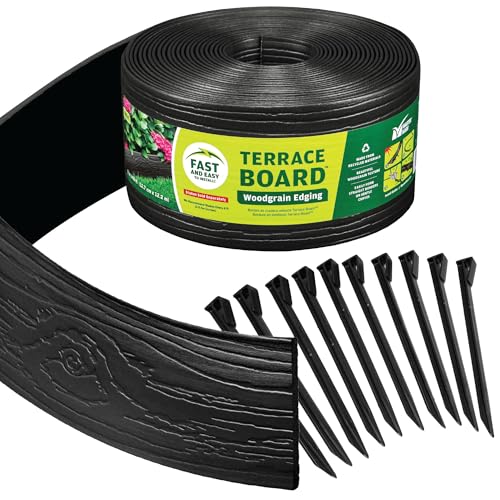
MASTER MARK Terrace Board Landscape Edging 5 in. x 40 ft. (Black)
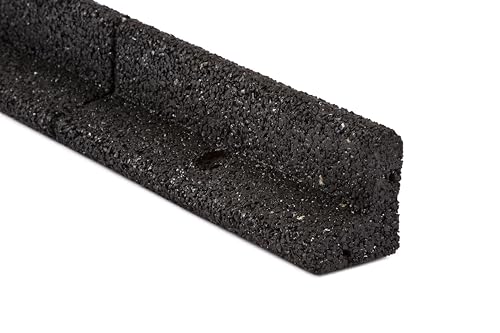
EcoBorder Black Recycled Rubber 4ft Lawn Edging (6pc Box)

Orgrimmar Garden Edging Kit 40PCS Pound-in Interlocking (20”x5.3”)

Flexible Brown Natural Lawn & Landscape Border Edging (8-Pack)

Xindian River Rock Stepping Stones 6-Pack (16″ x 5.5″ Rectangles)
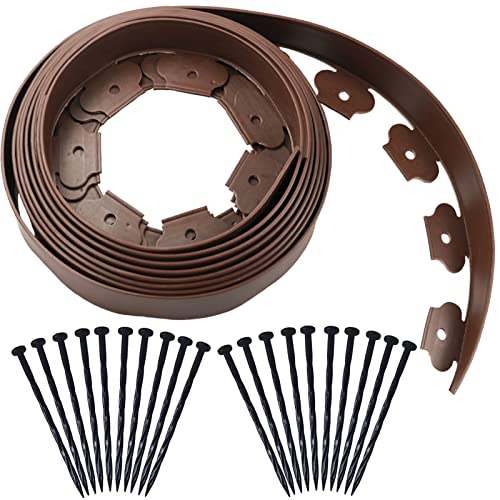
Yowlieu 20 Ft Brown Landscape Edging Kit with 20 Plastic Stakes

Sasylvia 2 Inch x 200 FT Landscape Edging (Black Plastic)

ESOHOT 4 Inch x 60 FT No-Dig Landscape Edging with 60 Metal Stakes
What Each Pick Brings To The Table
The MASTER MARK Terrace Board comes as a 40-foot coiled plastic strip at 5 inches tall, with 10 included stakes for pinning it in place. The textured, wood-grained finish mimics a thin bender board, which gives a more natural look than glossy plastic edging while still being easy to cut with snips. For raised planting beds, it builds a small wall you can mound soil or rock behind, and the coil flattens out cleanly along straight runs.
Where it really earns its keep is in softer, layered beds rather than aggressive rock containment. Against sharp river rock or pea gravel, owners commonly report the relatively thin profile flexes if not staked every foot or so. For most DIYers building terraced vegetable plots or mounded flower beds, it lays down quickly with nothing more than a mallet.
Good Reasons To Consider
- 40-foot coil gives generous coverage for most small-to-medium yards.
- Textured wood-grain surface reads warmer than bare plastic in the landscape.
- Flexible enough to shape gentle curves, yet rigid enough for straight runs.
- Easy to cut to length with household snips, so no specialty tools required.
Things To Consider
- Thin wall can bow under heavy rock loads without frequent staking.
- Only 10 stakes included, so larger jobs need extras on hand.
- UV exposure over multiple seasons may fade the textured finish.
Who It Suits Best
DIY gardeners building terraced beds, raised borders, or mounded planting areas where soil and lightweight mulch are the main fill.
Consider Something Else When
Homeowners edging a river-rock perimeter should look at the EcoBorder Black Recycled Rubber 4ft Lawn Edging instead, since its heavier rubber profile resists stone pressure more confidently.
EcoBorder’s 4-foot rubber sections arrive in a six-pack with all the hardware you need to seat them into the ground. Made from recycled tires, each piece has an L-shaped profile that anchors itself without trench digging. The recycled rubber takes abuse that would crack thin plastic, so it sits comfortably along driveways, mowing strips, and the bases of stone retaining walls.
For anyone planning a perimeter of river rock or lava rock, the weight and flexibility of this edging is the main draw. It bends around curves as easily as it runs straight, and the rubber forgives freeze-thaw cycles that snap rigid plastic. In our view, it suits beds with real heft behind them rather than delicate annual borders.
What Stands Out
- L-shaped rubber profile stays put without trenching or digging.
- Recycled tire build is forgiving around temperature swings and impacts.
- Six 4-foot pieces give you 24 feet of edge in one box.
- All mounting hardware comes included.
Points To Note
- Heavier than plastic kits, so longer runs take more effort to position.
- Matte black rubber can show dust and chalky water spots until rinsed.
- Not the most decorative option for formal planting beds.
Right Fit For
Homeowners edging driveways, walkways, and rock-heavy beds where flexibility plus durability matter more than ornamental detail.
Skip It When
Anyone wanting a wood-tone aesthetic should consider the Flexible Brown Natural Lawn & Landscape Border Edging, which trades rubber toughness for warmer curb appeal.
Orgrimmar’s kit ships as 40 individual PP plastic segments, each 20 inches long and 5.3 inches tall, designed to snap together and then be hammered straight into the soil with a rubber mallet. You can bend the run to form curves, or lay them straight for crisp bed edges. Because each piece is its own unit, installation is genuinely approachable even for first-time landscapers.
Compared to the long roll edging, this kit trades length per dollar for layout flexibility. For a curved island bed or a kidney-shaped tree ring, the interlocking joints hug the contour without the kinking you’d get forcing a straight strip. It pairs especially well with light river rock and decorative gravel where the edging just needs to look tidy, not hold back a wall of stone.
Points In Its Favor
- Modular segments make custom shapes much easier than coiled edging.
- No trench digging; a mallet is the only tool required.
- 40 pieces allow substantial perimeters or several smaller beds from one box.
- PP plastic resists moisture and most garden chemicals.
Trade Offs
- 5.3-inch height is on the shorter side for deep rock beds.
- Individual segments can pop loose at joints under heavy foot traffic.
- Not as suited for very straight, long runs where a continuous strip looks cleaner.
Feature Snapshot
Best Suited To
First-time landscapers laying curved beds with light gravel, mulch, or decorative stone around shrubs and ornamentals.
Reach For A Different Pick When
Anyone building a very long, straight stone border will find the Sasylvia 2 Inch x 200 FT Landscape Edging easier to roll out in a continuous line.
From Eco-Green Wood Products, this 8-pack gives you real wood edging that has been treated for ground contact. Each strip carries a non-toxic brown stain and is processed to resist fungal decay and termite damage. The strips flex into gentle curves, so laying them around a cottage-style planting bed reads as authentic rather than as plastic impostor.
Natural wood edging isn’t going to hold back a river-rock slope, but it frames a perennial bed or vegetable plot with a warmth that synthetic strips can’t match. For most homeowners focused on the visible edge of a flower bed rather than brute stone containment, the appeal is the look itself.
Reasons It Performs
- Actual wood construction gives an organic, traditional appearance.
- Ground-contact treatment helps resist rot and termite activity.
- Flexible strips curve naturally for sweeping bed shapes.
- Non-toxic staining is safe around edible garden plants.
Honest Caveats
- Wood will eventually weather and grey, so maintenance refreshes are part of ownership.
- Not strong enough to retain heavy rock or aggressive root spread.
- Requires more careful placement to keep straight lines crisp.
Whose Shelf It Belongs On
Cottage-garden owners and edible-plot growers who want a warm, natural border where synthetic strips would clash.
Look Elsewhere When
Landscapers containing river rock around trees or pathways should consider the ESOHOT 4 Inch x 60 FT No-Dig Landscape Edging, which offers a much taller, sturdier retention profile.
These Xindian stepping stones flip the typical edging conversation: instead of containing rock, each 16-by-5.5-inch mat is the rock. Pre-assembled rectangles of polished river pebbles arrive ready to lay directly on grass, gravel, mulch, or soil. No digging, no cement mixing, no hauling individual stones from the garden center.
For defining a pathway through a rock garden or bridging lawn and gravel areas, they double as a functional stepping surface and as decorative edging. The polished pebbles give a tidy, intentional look that loose rock can’t replicate. Depending on your soil, some users find the mats can shift slightly on softer ground and benefit from a few hidden landscape pins.
What Helps Most
- Pre-assembled design eliminates the slow work of laying individual stones.
- Natural polished river pebbles deliver an authentic look instantly.
- Works on grass, gravel, mulch, or bare soil.
- Six mats build a meaningful path or accent row in one go.
Less Ideal Details
- Rectangular shape limits curve-friendly pathway layouts.
- Mats may shift on soft soil without anchoring pins.
- Polished pebbles can be slick when wet.
Quick Facts
Perfect Match For
DIYers who want a fast pathway upgrade through an existing rock garden without the labor of traditional stone laying.
A Better Fit Elsewhere
Homeowners who need to retain loose rock around a bed perimeter should pick the ESOHOT 4 Inch x 60 FT No-Dig Landscape Edging, which is built for containment rather than traversal.
Yowlieu ships a 20-foot no-dig roll in brown, paired with 20 spiral plastic stakes. The edging stands roughly 2 inches tall, so it works as a tidy separator between lawn and flower bed or driveway and gravel strip. The brown tone blends more naturally with soil and mulch than stark black plastic, which matters when the edging is visible from a patio.
For first-time DIYers, the no-dig approach is the real win: lay the strip, drop a stake every foot, and the job is done. The lighter profile does limit how much weight it can hold back, so it’s a smarter choice for finished flower beds than for aggressive rock slopes. In most yards, that trade-off is well worth the easier install.
Positive Takeaways
- Brown color blends into soil and mulch much more naturally than black.
- Spiral stakes grip soil better than straight pins in soft ground.
- No-dig install keeps the project accessible to beginners.
- 20-foot roll is a manageable size for single-bed jobs.
Small Caveats
- 2-inch profile is too low for deep rock or aggressive root barriers.
- Plastic stakes can bend when driven into hard, dry clay.
- Single 20-foot roll may not be enough for larger properties.
Who Should Grab It
New homeowners finishing a small flower bed or driveway strip where brown coloring and easy installation matter more than height.
Swap It Out When
Landscapers containing a thick layer of river rock should consider the Sasylvia 2 Inch x 200 FT Landscape Edging, which offers much more length for whole-property projects.
Sasylvia’s kit splits into two 100-foot rolls of 2-inch black plastic edging, joined by connectors and supported by 120 included spikes. That kind of total length makes it the right pick when you’re outlining a whole property rather than a single bed. The black profile stays discreet against dark soil or under plant foliage, so it doesn’t draw the eye away from your landscape.
For most homeowners, 200 feet is a generous quantity that supports multiple separate beds or one very long border without piecing together incompatible brands. You may find the thin 2-inch height limiting under heavy rock, but for mulch, topsoil, and lighter gravel, it’s a workhorse at a sensible scale.
Advantages To Know
- 200 total feet covers whole-yard edging in one purchase.
- 120 spikes included, so very little extra hardware shopping required.
- Connectors let you join runs or branch off cleanly.
- Black plastic reads as an unobtrusive background line.
Potential Drawbacks
- Plastic can become brittle after several seasons of UV exposure.
- 2-inch height is too short to retain deep rock beds.
- Large total length means more storage space if you don’t use it all at once.
Feature Card
Made For
Whole-yard installers and landscapers outlining long perimeters or multiple beds in a single coordinated kit.
Where A Sibling Pick Shines
Anyone who needs a much taller retention edge should pick the ESOHOT 4 Inch x 60 FT No-Dig Landscape Edging, which doubles the profile height for aggressive rock containment.
ESOHOT’s kit is the tallest pick on this list at 4 inches, paired with 60 U-shaped metal stakes that drive deep for serious anchoring. The dual-point design on the stakes resists loosening from frost heave and foot traffic, so the edging stays where it’s placed across multiple seasons. For rock-heavy borders, that height alone changes the equation compared to a 2-inch strip.
It’s a no-dig system, which keeps installation accessible, but the added height and metal hardware do add weight and effort. For most properties with a serious river-rock border or a sloped gravel bed, that extra labor pays back in containment that doesn’t migrate over time.
Features That Help
- 4-inch profile gives meaningful containment for river rock and lava rock.
- U-shaped metal stakes resist shifting better than plastic pins.
- Dual-point stake design penetrates harder ground more reliably.
- No-dig install still avoids the labor of full trenching.
A Few Limitations
- Metal stakes can bend on rocky or heavily rooted soil.
- Heavier kit requires more transport and handling than plastic-only options.
Spec Overview
Who Will Love This
Homeowners with serious rock beds, gravel driveways, or sloped borders that have out-thinned shorter plastic edging in past seasons.
Not Your Match When
Beginners laying a small, low-profile flower bed will find the Orgrimmar Garden Edging Kit easier to handle, since its modular segments need no heavy hammering.
Factors To Consider When Choosing Landscape Edgings For Rock
Material Strength Against Stone Weight
River rock and pea gravel are heavier than they look. A 2-inch plastic strip can bow outward once you backfill a few inches of stone against it, especially along curved sections where the edging has less inherent rigidity. Rubber and thicker polypropylene hold up better under sustained rock pressure, while wood edging looks beautiful but eventually softens where stone stays wet against it.
For most properties with a serious rock perimeter, choose an edging at least 3 to 4 inches tall, anchored with stakes every foot, to keep stones where you placed them.
Height Profile and Containment Depth
The taller the edging, the deeper the rock bed you can build without spillover. A 2-inch strip is fine for decorative gravel or a thin river-rock mulch layer, but falls short for rock that’s piled 3 or 4 inches deep. Heavier stone beds demand edging in the 4-inch-plus range, which is where options like the ESOHOT kit earn their place.
Match the edging height to the depth of rock you actually plan to install, rather than to what looks tidy on day one.
Layout Flexibility: Curves vs. Straight Runs
Long coiled strips lay beautifully along straight driveways and wide bed fronts but can kink when forced into tight curves. Modular interlocking kits, like the Orgrimmar set, shine on kidney-shaped beds and curved tree rings where you need the edging to follow a deliberate arc. For mixed layouts, you may end up using two different products in different zones of the same yard.
Installation Effort and Tooling
No-dig kits save hours of trenching and are accessible to anyone with a mallet. Pound-in modular kits fall in the same bucket. Coiled bender board often asks for a straight trench to sit cleanly, while heavy rubber sections may need a helper just to position each piece. Pick the install method that matches your time, your tools, and the size of the project.
Key Considerations Across These Picks
Wrong Turns To Avoid
A common trap is buying edging based on appearance alone, then discovering the height is too short for the rock bed you actually want to build. Measure your planned rock depth first and choose an edging that exceeds it by at least half an inch. Another frequent miss is under-staking: kits often include enough stakes for the labeled length, but spacing them every 12 inches rather than every 18 inches makes a real difference in how the edging holds up over time.
Where The Extra Money Goes
Higher-tier edging earns its price through material density, taller profiles, and better anchoring hardware. Metal stakes, recycled rubber bodies, and 4-inch walls all add cost but pay back in years of straight lines rather than bowed edges. For small decorative beds, a budget roll is plenty. For rock-heavy borders or whole-property installs, the upgrade is usually worth it within a single season of ownership.
Frequently Asked Questions
How deep should landscape edging be for river rock?
A 4-inch edging profile is the safer choice for river rock beds, since the stones typically sit 2 to 3 inches deep and need room to migrate without spilling onto the lawn. Shorter 2-inch edging works for thin decorative gravel but tends to bow under heavier stone loads.
Can you install landscape edging without digging?
Yes, no-dig and pound-in kits rely on stakes or integrated L-shaped bases to anchor themselves. They install faster and disturb less existing planting, though very hard or rocky soil may still need light prep to get the first stake started.
How long does plastic landscape edging last?
Plastic edging commonly lasts several seasons in moderate climates, though prolonged UV exposure can make it brittle over time. Rubber and treated wood edging tend to outlast thin plastic, especially in full-sun beds where UV breakdown is most aggressive.
Will edging stop grass from creeping into rock beds?
Edging creates a physical barrier that significantly slows grass rhizome spread, but no edging is a perfect seal. Periodic hand-edging along the inside of the strip keeps creeping grasses from bridging over the top, especially with aggressive warm-season varieties.
Is rubber edging better than plastic for rock beds?
Rubber edging typically outperforms plastic where rock weight, freeze-thaw cycles, or impact from mowers and foot traffic are concerns. Plastic remains the more affordable, more decorative option for beds where those stresses are minimal.
Closing Thoughts
The right landscape edging for rock work is the one that matches your stone depth, your bed layout, and your tolerance for installation effort. For most homeowners, a tall no-dig kit like ESOHOT or a heavy rubber section like EcoBorder handles real river-rock containment, while a brown roll like Yowlieu fits small flower-bed jobs where appearance matters more than brute retention. Pick the profile that suits your rock depth, stake it generously, and the line between stone and lawn will stay crisp for years.
