

A bed of fresh mulch looks great for about three weeks, then the weeds punch through and the whole weekend is gone. The right landscape fabric, laid before mulch or gravel, suppresses that cycle so most of your gardening time goes back to the plants you actually chose. After digging into specs, build, and use-case fit across eight options, these are the landscape fabrics to prevent weeds that fit a range of yards, driveways, and budgets.
The Main Contenders

VIVOSUN Premium Weed Barrier Landscape Fabric 3ftx50ft
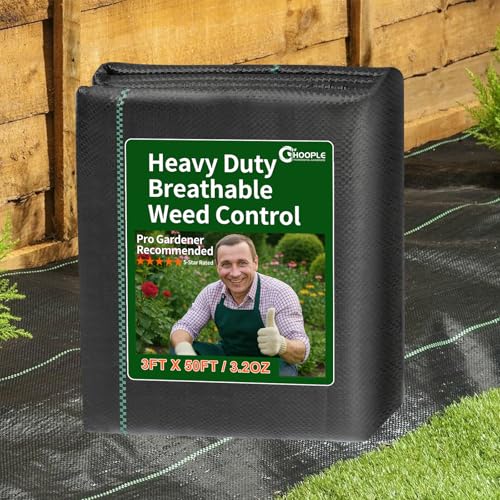
HOOPLE 3FT x 50FT Heavy-Duty Weed Barrier Fabric

Land Guard 4ft x 300ft Weed Barrier Landscape Fabric

Vanver 1.4FT x 100FT Weed Barrier Fabric

Jevrench 5 oz Weed Barrier Landscape Fabric 1.3x50ft

Super Geotextile Woven Geotextile Fabric 4×100

Kijamilee 4FT x 100FT Weed Barrier Fabric with Pegs

GEIGUIWA 3ftx100ft Weed Barrier Landscape Fabric 3.2OZ
Inside Each Recommended Option
VIVOSUN built this 5 oz fabric with a needle-punched combo of woven and non-woven layers, and that dual construction does double duty for most home gardens. The woven face blocks sunlight from reaching weed seeds, while the non-woven underside pulls moisture through with a kind of molecular attraction that keeps soil from going bone dry under the mulch.
At 3 by 50 feet, the roll suits small vegetable plots, foundation plantings, or a freshly built raised bed. Compared with single-layer rolls, the layered build feels heavier in hand, which usually means fewer tears around drip lines and stakes.
What Pays Off
- Dual-layer build blocks weeds while letting water and air reach roots.
- 5 oz weight holds up under mulch and gravel without shredding.
- 3 by 50 foot roll fits typical raised beds without awkward offcuts.
- Good permeability reduces pooling after heavy rain.
- Tolerates drip irrigation lines and garden staples without splitting.
Trade Offs
- Narrower 3 foot width means more seams in larger beds.
- Heavier fabric can bunch up on windy days during install.
Key Specs
Whose Garden It Belongs In
Home gardeners with mixed beds who want one fabric that handles mulch, drip lines, and seasonal replanting.
Look Elsewhere When
The Land Guard 4×300 ft roll makes more sense for anyone laying fabric across a wide lawn or a long driveway in one continuous run.
HOOPLE’s 3 by 50 foot roll is a straightforward woven polypropylene ground cover, the kind you unfurl, staple down, and forget about for a season. The brand leans into utility rather than flash, which suits tidy flower beds and border work where you want the plants to be the visual story.
It also pulls double duty as a light geotextile for pathways and under pavers in low-traffic spots. Where the VIVOSUN adds a second non-woven layer, HOOPLE stays single-layer woven, so it tends to be lighter and easier to cut with household scissors.
Advantages To Know
- Woven polypropylene blocks most annual weeds at the soil surface.
- Lightweight construction is easier to handle on a hot afternoon.
- Cuts cleanly with scissors or a utility knife for custom shapes.
- Works as a weed block or a light pathway underlayment.
Honest Caveats
- Single-layer build can fray at cut edges over a season.
- Less water permeability than dual-layer options, depending on soil.
- You may find it shifts under heavy mulch if not anchored well.
The Right Fit
Casual gardeners refreshing a border or two who want a low-fuss woven fabric without paying for extra layers.
Swap It Out When
The Kijamilee 4×100 ft bundle is a better match if you’d rather skip buying staples separately.
Land Guard goes big: 4 feet wide and a full 300 feet long, the largest roll in this lineup. That length matters once you start covering anything bigger than a single bed. Long, uninterrupted runs mean fewer overlaps where weeds can sneak through, and that often translates to less weeding a year later.
The brand markets the fabric as both weed barrier and erosion control, which fits slopes and large garden borders. The dusty tone blends into bare soil, and the 4 foot width works well under the wheels of a wheelbarrow during installation.
What Helps Most
- 300 foot length covers full property edges with minimal splicing.
- 4 foot width suits garden rows and fence-line runs.
- Functions as both weed block and slope stabilizer.
- Reduces overlap seams where weeds commonly find a path.
Points To Note
- Large roll is heavy to maneuver solo.
- Excess material needs a clean storage spot out of direct sun.
- You may want a second person for unrolling across slopes.
Built With In Mind
Homeowners tackling whole-yard landscaping or long fence-line borders in a single weekend project.
Reach For A Different Pick When
The Vanver 1.4×100 ft roll makes more sense for narrow vegetable rows where a 4 foot swath is overkill.
Vanver ships a slender 1.4 foot by 100 foot strip, the narrowest profile here. That unusual width is genuinely useful in tight vegetable rows, between berry bushes, or along a stone walkway where a wider roll would waste material under folded edges.
At 3.2 oz, it sits in the middle of the weight range, light enough to handle but heavier than bargain-bin sheeting. For small kitchen gardens, the size often beats a wider roll simply because there is less trimming and almost no waste.
Strong Points
- 1.4 foot width fits vegetable rows without leftover scraps.
- 3.2 oz weight balances handling ease with tear resistance.
- Long 100 foot run covers several narrow beds.
- Woven weed cloth holds up under seasonal mulch refreshes.
Small Caveats
- Too narrow for foundation plantings or wide borders.
- Lighter weight may show wear under gravel pathways.
Best Suited To
Kitchen gardeners and anyone maintaining narrow berry rows or herb strips along a fence.
Consider Something Else When
The HOOPLE 3×50 ft roll covers more ground per cut if you’re laying fabric along a wider front border.
Jevrench keeps things simple with a 5 oz woven landscape fabric at 1.3 by 50 feet, sized for small flower beds and starter gardens. The brand positions this as a no-fuss setup, and that lines up with the roll’s lightweight feel and the multiple size options in the listing.
It blocks light at the soil line, which slows the annual weeds that germinate in spring. Compared to the dual-layer VIVOSUN, this stays a single woven sheet, so it lays flatter and cuts faster on a small project.
What Works In Its Favor
- Lightweight 5 oz woven build is easy to unroll alone.
- Compact 1.3 foot width fits starter beds and herb gardens.
- Available in multiple sizes for different bed layouts.
- Cuts and staples quickly for a weekend install.
Things To Consider
- Single-layer build may need replacement sooner than dual-layer options.
- Not the roll for heavy gravel or foot traffic zones.
Who It Suits Best
First-time gardeners and renters who want a low-effort barrier for a small bed or container garden setup.
A Better Fit Elsewhere
The Super Geotextile 4×100 handles a driveway rebuild far better, since it’s built for weight and abrasion.
Super Geotextile steps out of the garden bed category and into construction-grade territory. Listed at a true 4 oz woven polypropylene, this roll is built for driveway stabilization, gravel road base, and erosion control on slopes. Geotextile, in plain terms, is a tough fabric used to separate soil from aggregate so the gravel doesn’t sink into the dirt over time.
At 4 by 100 feet, it covers a single-car driveway apron with room to spare. The brand also lists it for paver underlayment and retaining wall backfill, so a homeowner redoing a path can use the same roll for several projects.
Reasons It Performs
- True 4 oz woven build handles gravel and vehicle weight.
- Dimensionally stable under heavy aggregate loads.
- Works as driveway fabric, paver base, or slope stabilizer.
- Stocks multiple sizes to cut down on scrap.
Practical Considerations
- Overkill for a small flower bed or shrub border.
- Requires careful overlapping at seams to keep gravel from migrating.
- Storage of leftover rolls calls for a dry, shaded spot to preserve integrity.
Key Specs
Perfect Match For
DIYers redoing a gravel driveway, paver path, or erosion-prone slope who want construction-grade material.
Not Your Match When
The VIVOSUN dual-layer fabric suits a vegetable bed better, where root-friendly permeability matters more than raw load strength.
Kijamilee bundles the fabric with 30 U-shaped securing pegs in the box, which removes one of the most common trip-to-the-store moments during a landscape project. The 4 by 100 foot area ships as two 4 by 50 foot rolls, which is easier to carry than a single wide roll.
The 3.2 oz woven polypropylene is rated to handle UV, water, and standard outdoor wear. For raised beds and farming rows, the included pegs save you from improvising with bent wire hangers.
Benefits That Matter
- Includes 30 anchoring pegs for a complete install kit.
- UV-resistant woven build handles sun exposure.
- Two-pack format is easier to carry than one giant roll.
- 4 foot width suits raised beds and garden rows.
Some Limits To Know
- 3.2 oz weight is lighter than 4 to 5 oz heavy-duty rolls.
- Thirty pegs may run short for very large installations.
Who Should Grab It
DIYers starting a raised bed build who want fabric, pegs, and instructions handled in a single delivery.
Where A Sibling Pick Shines
The Land Guard 4×300 ft roll fits the bill for very large properties, since it cuts down on seams across long runs.
GEIGUIWA rounds out the list with a 3 by 100 foot woven fabric at 3.2 oz, a middle-ground size and weight that covers flower beds, light driveway work, and the area under a small shed. The weave is built for permeability, meaning water moves through to the soil rather than pooling on top.
The roll splits the difference between narrow kitchen-garden strips and massive property-wide installations. It is a sensible choice when the project is bigger than a starter bed but smaller than a full yard overhaul.
The Good Stuff
- 3 foot width fits most flower beds without trimming.
- 3.2 oz weight handles light foot traffic and gravel.
- Permeable weave reduces puddling after rain.
- 100 foot length covers long borders in one run.
Where It May Fall Short
- Not as tough as 4 oz geotextile options for vehicle loads.
- May need landscape staples on windy install days.
Made For
Homeowners refreshing a flower bed, lining a gravel path, or doing light driveway maintenance on a budget.
Skip It When
The Super Geotextile 4×100 handles a real driveway rebuild better, especially with vehicle traffic on top.
What To Weigh Before Choosing Landscape Fabrics To Prevent Weeds
Match The Fabric To The Job, Not Just The Bed
Most home projects fall into three categories: planting beds, pathways, and driveways. Planting beds do well with breathable woven or dual-layer fabric at 3 to 5 oz, where roots need air and water. Pathways need a tougher woven sheet that resists tearing underfoot and holds mulch or pea gravel in place. Driveways and gravel roads call for true geotextile, the construction-grade material rated for vehicle weight. Picking the wrong weight class is the most common reason fabric fails a season after install.
Think About Permeability Versus Strength
A heavier fabric is not always a better fabric. Permeability means water moves through to the soil, and dual-layer builds like the VIVOSUN handle that by combining a blocking woven face with a water-friendly non-woven back. Lighter 3 oz sheets can let water through faster, but they tear more easily around drip lines. For most home gardeners, a 3.2 to 5 oz woven fabric balances the two needs. You may find that very light fabrics need extra anchoring to stay put.
Width, Length, And Seams Matter More Than You’d Think
A roll that fits the project saves hours. Narrow 1.3 to 1.4 foot widths work for vegetable rows, while 4 foot widths suit foundation beds and fence lines. Long rolls, like the 300 foot Land Guard, cut down on overlapping seams, and seams are the most common spot for weeds to find a gap. Measure the project, add ten percent for overlap and waste, and pick a roll that gets close without forcing heavy seams.
Key Considerations Across These Picks
Pitfalls Shoppers Hit
One common trap is treating all landscape fabric as interchangeable. Lightweight weed barrier cloth meant for flower beds will shred under a gravel driveway in a season, while heavy geotextile can choke roots in a vegetable plot by blocking too much airflow. Another slip is skipping overlap at seams. Most manufacturers recommend a 4 to 6 inch overlap, and skipping that step leaves a perfect lane for weeds to push through. Forgetting staples or pegs is also a recurring mistake, since fabric shifts under mulch and exposes gaps within weeks.
Where The Extra Money Goes
Higher-tier fabrics earn their keep through weight, weave tightness, and longevity. A 5 oz dual-layer roll uses more material per square yard and adds a manufacturing step, which is why it costs more than a 3 oz single-layer sheet. Geotextile at 4 oz, the kind built for driveways, includes stabilizers that resist stretching under load. For a single raised bed, the upgrade rarely matters. For a driveway, slope, or large property edge, the heavier fabric is the difference between redoing the project in two years and not thinking about it for a decade.
