

Gravel that creeps into the lawn, pea stone that scatters every time the leaf blower fires up, pine straw that drifts after the first hard rain. Anyone who has built a tidy rock border knows how quickly it unravels. Landscape rock glues are designed to lock those loose pieces into a stable, walkable surface without turning your yard into a paved patio. The eight formulas below cover ready-to-spray convenience, concentrated bulk value, pet-safe picks, and a bundled sprayer setup for first-timers.
A Closer Look At The Lineup

Mulch Bond 1-Gallon Rock Glue for Landscaping

Teexpert 1-Gallon Rock Glue for Landscaping

Shabebe Rock Glue 1-Gallon Gravel Binder
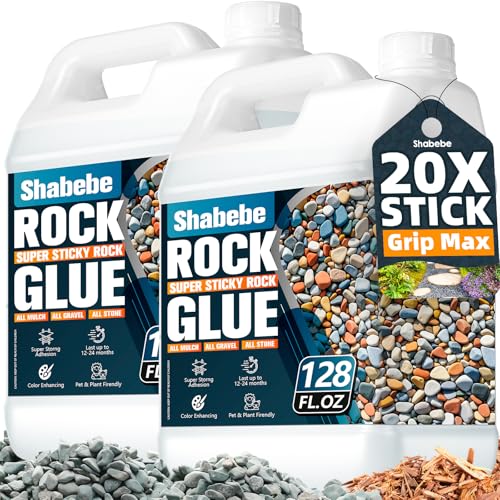
Shabebe 2-Gallon Rock Glue Concentrate (Makes 4)

PetraMax Lockscape Ready-to-Use Rock Glue 1-Gallon

Dominator Rock Anchor 64oz Landscape Glue

PetraTools Rock Glue Max 32oz & Pump Sprayer Bundle

Shabebe 27oz Rock Glue with Built-In Sprayer
Inside Each Recommended Option
This is the formula most folks reach for first, and for good reason. A one-gallon jug covers a respectable footprint, and the binder works across gravel, pine straw, and decorative mulch without forcing a separate product for each. The water-based chemistry dries fast, which matters on a sloped walkway where a slower-curing glue would track downhill before setting.
Compared with the concentrate-based picks later on, the trade-off is that you pay per ready-to-use gallon rather than diluting yourself. For a typical suburban front-yard bed, that’s a fair swap: less measuring, fewer steps, fewer chances to over-thin the mix and weaken the bond.
The Helpful Details
- One-gallon ready mix simplifies weekend projects for first-time users.
- Works across rock, mulch, and pine straw without switching formulas.
- Fast dry time keeps sloped walkways from sliding before the cure.
- Weather-resistant finish holds up through seasonal rain cycles.
Things To Consider
- Per-gallon cost runs higher than the concentrate options.
- Coverage specs vary widely by stone size and substrate.
Right Fit For
Homeowners tackling a single walkway, modest slope, or front-yard border who want a no-calculation pour-and-spray experience.
Look Elsewhere When
If you’re covering multiple beds or a long driveway run, the Shabebe 2-Gallon Rock Glue Concentrate stretches the same dollar further.
Teexpert leans into viscosity, marketing the formula as honey-thick and packed with binding particles. The upshot, in our view, is a heavier, sticker film that grips pea gravel and river rock more aggressively than thinner water-based competitors. For a driveway edge that sees tire spray or a yard where the leaf blower is a weekly visitor, that extra tack translates into fewer scatter events.
Where it differs from the Mulch Bond jug above is the application feel. The thicker body means slower spread rates, so you’ll refill the sprayer more often and work in smaller sections. That’s a real-world trade-off worth flagging before you buy.
What It Does Well
- High-viscosity body grips loose pea gravel and decorative pebbles.
- Heavy particle count strengthens the cured bond under foot traffic.
- Water-based chemistry keeps cleanup to soap and water.
- Single-gallon format suits a medium patio or full driveway border.
Worth Noting
- Thick formula drains sprayer nozzles faster than thinner mixes.
- Slower coverage per gallon means longer working sessions.
- Not labeled as pet-safe, unlike the Shabebe eco formula below.
Made For
DIYers with pea gravel driveways or patio borders who want maximum grip and don’t mind a slower, more methodical spray pass.
Where Another Pick Suits Better
Pet households and play-yard spaces are better served by the Shabebe Rock Glue 1-Gallon Gravel Binder, which is marketed for kid and pet safety.
Quick Facts
The angle here is reassurance. Shabebe positions this gallon as a non-toxic, odorless formula tested by Intertek, with the explicit promise that it’s safe for kids, pets, and plants once cured. For households where the dog treats the rock bed like a water bowl or toddlers crawl across the pathway, that label alone can make the buying decision. The cured film is also permeable, so rain drains through instead of pooling on the surface.
Versus the heavier Teexpert option above, you give up some of that high-viscosity tack. In exchange, you get a formula designed for spaces where the binder is in closer contact with living things, which is the trade-off that matters most in this category.
Well-Handled Touches
- Non-toxic, odorless cure for households with pets and small children.
- Permeable finish lets rainwater drain through the gravel bed.
- Single-gallon jug fits a typical walkway or two modest borders.
- Targets pea gravel, pebbles, and stone where shifting is worst.
Trade Offs
- Lower viscosity means weaker grip on larger river rock.
- Per-gallon price runs higher than the concentrate picks below.
Who It Suits Best
Families with dogs, cats, or small kids who use the yard daily and want a binder that doesn’t introduce harsh chemicals into play zones.
Swap It Out When
If your project is a steep slope where heavier viscosity matters more than eco credentials, the Teexpert 1-Gallon Rock Glue is the stronger grip choice.
Where the Mulch Bond gallon trades convenience for cost, this 2-gallon concentrate flips the script. Diluted to spec, the bottle yields up to four ready-to-use gallons, which is the obvious pitch for anyone covering a long driveway apron or multiple landscape beds in a single weekend. The marketed “Grip Max” formula also aims to extend coverage per pass.
The honest read: concentrates reward careful measuring and reward you for it. Pour ratios are easy to get wrong on a first attempt, and over-dilution will absolutely weaken the bond. For a first-timer, the ready-to-use gallon above removes that risk entirely, but for repeat use or larger properties, the math here works out cleaner.
The Case For It
- Concentrate yields up to four gallons of finished binder.
- Marketed coverage extends up to three times a standard jug.
- Fast-drying, weather-resistant cure handles seasonal swings.
- Works across rock, gravel, mulch, and pine straw.
Points To Keep In Mind
- Requires accurate dilution to hit advertised bond strength.
- You supply your own sprayer, adding to the project cost.
- Storage of leftover concentrate needs a cool, sealed spot.
Best Suited To
Homeowners with sprawling front yards, long driveways, or multiple beds who want to spread a single purchase across the whole property.
Consider Something Else When
If you’d rather skip the measuring step on a smaller project, the PetraMax Lockscape Ready-to-Use Rock Glue pours straight into the sprayer.
Feature Snapshot
PetraMax built the Lockscape jug around a simple promise: shake, pour, spray. No dilution cup, no ratio math, no second trip to the garage for a mixing bucket. That’s a meaningful difference if you’re standing in the yard with a pump sprayer in one hand and a bottle in the other. The other half of the pitch is permeability; cured film is designed to let water drain through rather than sealing the surface.
Compared with the concentrate pick above, you trade coverage efficiency for ease. For a one-and-done weekend project, that swap usually favors the no-mix route, especially if you’ve never worked with a binder before and want to eliminate one variable from the day.
Strong Points
- Ready-to-use formula skips the dilution step entirely.
- Permeable cured film supports natural water drainage.
- USA-made manufacturing for shoppers who track sourcing.
- Marketed coverage around 200 square feet per gallon.
Honest Caveats
- Per-gallon cost runs higher than the concentrate option.
- Coverage estimates assume a thin, even pass on clean stone.
Perfect Match For
First-time DIYers who want a foolproof pour-and-spray setup without reading dilution charts or buying extra measuring tools.
Another Choice May Suit
Larger properties with multiple beds benefit from the Shabebe 2-Gallon Rock Glue Concentrate, which stretches the same spend across more ground.
Dominator named the product after its target problem: rock that migrates downhill after a storm. The brand calls out a specific use case, holding river rock, pea gravel, and decorative stone against washouts on a slope, and the water-based chemistry is designed to bond those larger pieces into a stable, walkable surface. At 64 ounces, the bottle is sized for medium projects rather than full-property coverage.
Versus the broader all-purpose picks above, this one narrows its focus. That focus pays off if your problem is erosion specifically, but means less flexibility if you’re switching between mulch beds and gravel borders in the same yard.
Why It Works Well
- Engineered specifically for rock and stone, not generic mulch glue.
- Targets washout resistance on slopes and drainage zones.
- Ready-to-spray format simplifies weekend application.
- Water-based formula keeps cleanup straightforward.
Soft Spots
- Smaller 64oz bottle means more refills on larger beds.
- Slope-specific focus limits versatility across other materials.
Whose Shelf It Belongs On
Homeowners with hillside beds, sloped driveways, or drainage swales where rain routinely displaces loose stone.
Skip It When
For flat yard borders or mulch-heavy beds, the Mulch Bond 1-Gallon Rock Glue handles the wider range of materials without overkill.
Key Specs
This bundle solves a problem the other picks assume away: not everyone owns a pump sprayer. The kit pairs a 32oz bottle of Rock Glue Max with a one-gallon pump sprayer, so a first-time user can go from unboxing to spraying without buying a separate tool. The smaller bottle volume also makes it a sensible trial size if you’re not ready to commit a full gallon to a single project.
The flip side is the smaller coverage footprint. At 32oz, you’re looking at modest beds and short pathway runs, not a full driveway. That’s fine for what the bundle is built for, but worth knowing before checkout.
Everyday Wins
- Includes a pump sprayer, eliminating a separate tool purchase.
- Smaller 32oz bottle suits trial runs or modest projects.
- Strong bonding formula targets rock, gravel, and pebbles.
- Even sprayer distribution reduces patchy coverage on stone.
Possible Compromises
- Smaller volume means more refills on bigger beds.
- Bundle price can exceed a single gallon alone.
Who Should Grab It
First-time DIYers without a sprayer in the garage who want everything needed for a small pathway or border in one delivery.
Not Your Match When
If you already own a pump sprayer and need full-gallon coverage, the PetraMax Lockscape Ready-to-Use Rock Glue is a more cost-efficient path.
For tight beds and quick fixes, this bottle goes a different direction. The 27oz size slots into the small-job niche, and the integrated sprayer head means there’s no pump to prime, no parts to assemble, no extra equipment to drag from the shed. For a planter ring around a mailbox or a thin strip along a garden edge, that’s a more practical tool than a one-gallon jug and a full-size pump.
The catch shows up the moment you scale up. At 27 ounces, this is firmly a maintenance bottle, not a project bottle. Reaching for it on a long driveway is a frustration waiting to happen.
The Good Stuff
- Built-in sprayer eliminates pump assembly and priming.
- Fast-dry formula shortens the wait before foot traffic resumes.
- Weather-resistant finish handles seasonal rain cycles.
- Compact 27oz bottle stores easily in a garage or shed.
Less-Strong Areas
- Small bottle volume limits usefulness on large beds.
- Hand sprayer arm fatigue on extended passes.
The Right Fit
Homeowners with small garden beds, mailbox planters, or narrow pathway strips who want grab-and-spray convenience without a full pump setup.
Reach For A Different Pick When
For larger beds or long walkway runs, the Mulch Bond 1-Gallon Rock Glue covers more ground per fill-up and pairs with any standard pump sprayer.
At A Glance
Matching The Right Formula To Your Yard
Picking a rock glue starts with the surface you already have, not the brand on the jug. Stone size is the first filter: pea gravel, river rock, and decorative pebbles behave differently underfoot, and the binder that locks one may barely dent another. Most formulas are tuned for smaller aggregate, so larger river rock often needs a thicker viscosity to grip properly.
Climate is the next filter worth weighing. In wet regions or shaded beds where the surface rarely dries out, a permeable cured film matters more than a heavy tack. In sunny, dry climates, fast cure times and UV resistance keep the bond from breaking down across a long summer. Always match the formula to your weather, not just your stone.
Application method is the practical filter. Ready-to-spray jugs cost more per gallon but skip measuring entirely, a real win for first-timers. Concentrates reward careful dilution with significantly better coverage on big jobs, but punish sloppy ratios with early re-dos. Bundled kits pair the binder with the sprayer, which simplifies the tool side of the project for first-time users who don’t own a pump sprayer.
Safety context closes the filter list. Households with pets or small kids who use the yard as a play space benefit from non-toxic, odorless formulas marketed as pet-safe after cure. Labels matter here: a formula that dries into a permeable, plant-friendly film reduces long-term worry about runoff and root zones.
Key Considerations Across These Picks
Where Shoppers Go Wrong
The most common slip is grabbing a ready-to-spray jug for a project large enough to justify a concentrate, then overspending on per-gallon cost. The opposite mistake is buying a concentrate for a small border and getting tangled in dilution ratios that don’t match what the bottle actually needs. Match the format to the square footage you’re covering, not to the deal on the shelf.
What Separates Premium From Basic
Premium picks in this category usually add higher particle counts, faster cure times, or specific engineering for slope and washout resistance. The upgrade is most worth it on hillside beds, drainage zones, or any surface that takes direct rain runoff. For flat borders and small pathways, a basic ready-to-use gallon delivers enough performance without paying for engineering you won’t use.
Frequently Asked Questions
How long does landscape rock glue take to fully cure?
Most water-based formulas cure to a walkable surface within hours, though full bond strength typically develops over a day or two depending on humidity and stone size.
Can I use these glues over existing gravel beds?
Yes, in most cases. The gravel bed should be clean, dry, and free of loose debris so the binder can penetrate between the stones instead of sitting on top of dirt.
Are these glues safe around edible gardens?
Permeable, water-based formulas are typically marketed as plant-safe once cured. Avoid direct application to edible plant leaves and keep the spray on stone and mulch, not on food crops.
Do rock glues change the look of the stone?
A wet-look sheen appears during application and usually fades as the formula cures. Some formulas leave a slight glossy finish on dark stones in direct sun, which is worth testing on a small patch first.
How often will I need to reapply?
Expect to refresh a heavily trafficked pathway every couple of seasons. Beds and borders that see less foot traffic typically hold their bond longer before a touch-up is needed.
Closing Remarks
The right landscape rock glue turns a frustrating weekend of raking scattered gravel into a one-time fix that holds through the next storm. Start by sizing the project honestly, then match the format to your tolerance for measuring, and check that the formula aligns with your stone type and climate. A small test patch on a corner of the bed will tell you more about the bond than any spec sheet before you commit to the full pour.
