

Hummingbird nectar drips onto patio furniture. Ants colonize a poorly sealed reservoir. Bees swarm a feeder with oversized ports. Anyone who has hung a budget feeder for a season knows these frustrations well, and they all trace back to a single design flaw: a base that doesn’t actually seal.
This lineup focuses on feeders engineered to stay sealed, easy to refill, and accessible to the birds you actually want to attract. Glass bodies, twist-lock bases, and integrated ant moats show up across the eight picks below.
The Lineup, Simplified

Dreamdrawer 2 Pack Hummingbird Feeder with Ant Moat
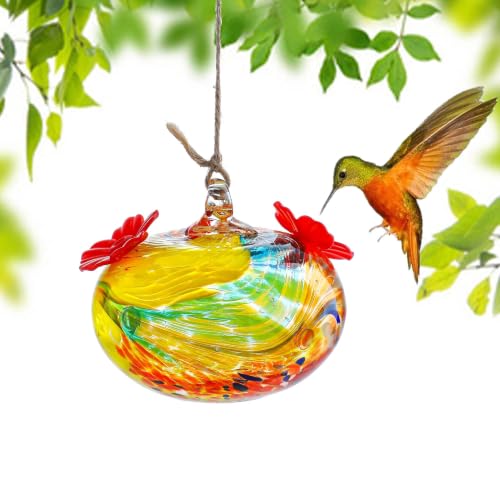
KRISININE 3inch Hand Blown Glass Hummingbird Feeder

iBorn Window Hummingbird Feeder with Strong Suction Cup 3-Pack

Grete Gotye 20 Oz Leak Proof Glass Hummingbird Feeder

Kingsyard Window Hummingbird Feeder with 3 Suction Cups

Kingsyard 2 Pack Patterned Glass Hummingbird Feeders

iBorn 8-Port Heavy Duty Glass Hummingbird Feeder

Aubingmotor 23Oz Leak Proof Glass Hummingbird Feeder
The Picks, Examined More Closely
The Dreamdrawer two-pack solves a problem most gardeners hit by mid-summer: one feeder rarely covers a property. Placing the second unit on a different porch or tree creates two independent feeding zones, which spreads territorial hummingbird pressure and keeps dominant birds from monopolizing a single perch.
A wide-mouth top makes the weekly nectar swap far less messy than narrow-bottle designs, and the integrated ant moat (a small water-filled cup that blocks ants from descending the hanging wire) means fewer crawlers in the reservoir. The pink metal frame reads decorative rather than utilitarian, fitting cottage-style gardens without looking out of place beside a fence.
The Case For It
- Wide-mouth opening simplifies refill and reduces spill risk during the pour
- Built-in ant moat keeps crawling insects out of the nectar reservoir
- Two-pack pricing lowers per-unit cost for multi-zone yards
- Pink metal frame doubles as a garden ornament between feedings
Trade Offs To Consider
- Glass body needs careful handling during seasonal cleaning, as the metal base adds weight when full
Who It Suits Best
Anyone managing a mid-to-large yard who wants two feeding stations without ordering separately.
Swap It Out When
Choose the iBorn Window Hummingbird Feeder with Strong Suction Cup if your interest runs toward close-up window views rather than open garden placement.
At roughly three inches across, this KRISININE feeder reads more like a hanging ornament than a piece of birding equipment. The glass is hand blown, so each unit carries subtle variation in shape and color distribution, which suits gardeners who want their feeder to look intentional rather than mass-produced.
The small footprint and included twine make it easy to hang from a low branch or shepherd’s hook. Decorative rubber flower ports are sized for hummingbird beaks and tend to discourage bees and wasps. For tight patios or kitchen-window herb gardens, the compact scale fits where larger bottle feeders feel oversized.
Notable Gains
- Hand-blown glass brings artisan character that molded plastic cannot replicate
- Compact 3-inch body suits balconies, small patios, and herb gardens
- Rubber flower ports help limit bee and wasp access
Points To Keep In Mind
- Small reservoir means more frequent refills in hot weather
- Hand-blown glass is more fragile during winter storage than molded plastic
Made For
Small-space gardeners who want a decorative feeder as much as a functional one.
A Better Fit Elsewhere
The Grete Gotye 20 Oz Leak Proof Glass Hummingbird Feeder suits anyone who prefers fewer refills over compact size.
Window feeders trade yard placement for intimacy. The iBorn three-pack mounts directly to glass via suction cups, putting hummingbirds within arm’s reach of a kitchen chair or home-office desk. Each unit holds roughly 3.4 oz, which is enough for two to three days of light use between refills.
The BPA-free (free of bisphenol A, a chemical commonly found in hard plastics) plastic body keeps the weight low enough that suction cups hold reliably on standard window glass. A red top attracts birds visually, and the small perch lets you watch feeding behavior up close, which appeals to children, photographers, and anyone documenting first arrivals each spring.
The Practical Payoff
- Triple-pack lets you stage feeders at different heights or windows
- BPA-free plastic body keeps total weight low for suction-cup stability
- Direct glass mounting brings birds within feet of indoor seating
Softer Spots
- Plastic body is less durable than glass in prolonged sun exposure
- Suction cups require occasional reapplication, especially on textured or dirty glass
Core Details
Best Suited To
Apartment dwellers and home-office workers who want close-window viewing without hanging hardware.
Skip It When
The Kingsyard Window Hummingbird Feeder with 3 Suction Cups is the stronger choice if metal bracket stability matters more than multi-pack quantity.
Twenty ounces sits in the sweet spot for most backyard setups: large enough to avoid constant refilling, small enough to keep nectar fresh in summer heat. The Grete Gotye feeder leans on that mid-capacity profile and pairs it with five flower-shaped feeding ports and a built-in perch for resting birds.
Glass construction handles UV exposure better than plastic, so the color and clarity hold up across multiple seasons. The leak-proof base is the headline feature, and for a single-yard starter feeder at a friendly entry point, the design hits the most common pain points without overcomplicating things.
Real Benefits
- Leak-proof base reduces sticky residue on patio surfaces
- Five flower ports allow simultaneous feeding during peak migration
- Glass body resists UV fading across multiple seasons
Honest Caveats
- Single feeder may be undersized for yards with sustained heavy bird traffic
- Glass body requires careful handling during cold-weather storage
Whose Shelf It Belongs On
First-time hummingbird hosts wanting a reliable mid-capacity feeder without committing to a multi-pack.
Consider Something Else When
The Aubingmotor 23Oz Leak Proof Glass Hummingbird Feeder suits anyone who prefers a larger reservoir and lower refill frequency.
The Kingsyard window feeder uses a metal bracket rather than the typical all-plastic mounting, which addresses the most common complaint about window feeders: the unit tilting or sliding down the glass. Three suction cups spread the load across the bracket, and the metal frame resists warping that plastic alternatives often show after a summer in direct sun.
An encircling ant moat and 3mm feeding ports work together to keep bees and ants out of the nectar. The twist-lock base pulls straight off the bracket for refilling, so cleaning doesn’t require removing the entire mount from the window. For renters or anyone hesitant to drill holes, this approach keeps installation tool-free.
Notable Upsides
- Metal bracket provides noticeably more stability than plastic-window alternatives
- Twist-lock base lifts off for refill without unmounting the bracket
- 3mm ports combined with ant moat limit bee and ant intrusion
Worth Noting
- Single-unit pack costs more per feeder than the iBorn 3-pack
- Bracket requires smooth, clean glass for reliable suction
Key Product Details
Right Fit For
Apartment residents who want window mounting without drilling and value stability over multi-pack value.
Reach For A Different Pick When
The iBorn Window Hummingbird Feeder with Strong Suction Cup suits anyone wanting a multi-pack for staging across several windows.
Kingsyard’s patterned glass two-pack is built for households that entertain outdoors or share a yard with neighbors. Each feeder holds 15 oz with six feeding ports, so combined capacity outpaces most single-feeders on this list. The patterned glass adds visual texture that solid-color feeders lack, and the pink finish suits gardens with warm-tone plantings.
An ant moat above each reservoir keeps the most determined ants from reaching the nectar, and the wider port count accommodates the aggressive territorial behavior that emerges when multiple hummingbirds compete for one feeder. Splitting the two units across different sightlines reduces that conflict.
Benefits That Matter
- Six ports per unit accommodate several birds feeding at once
- Two-pack layout reduces territorial squabbles at any single station
- Patterned glass adds ornamental texture to garden displays
A Few Limitations
- 15 oz per feeder requires more frequent refills than the 23 oz Aubingmotor option
- Patterned glass shows water spots more visibly than smooth glass after rinsing
Perfect Match For
Entertaining households and shared outdoor spaces where multiple feeders create calmer bird dynamics.
Look Elsewhere When
The iBorn 8-Port Heavy Duty Glass Hummingbird Feeder fits anyone prioritizing maximum port count in a single unit.
Eight feeding ports make this iBorn feeder a high-capacity option for yards with sustained hummingbird traffic during peak migration. The shape is inspired by fuchsia blooms, with petals and dots that visually echo the tubular flowers hummingbirds favor, a subtle cue that may help with first-season attraction.
Heavy-duty glass construction handles temperature swings better than thin-walled feeders, and the wide opening simplifies the cleaning routine that becomes unavoidable in late summer when nectar ferments faster. For anyone who has watched a single feeder run dry in two days during peak season, the extra port count eases that pressure.
Positive Points
- Eight ports handle peak-migration traffic without constant refilling
- Fuchsia-inspired shape doubles as a decorative garden element
- Thicker glass holds up across temperature swings
Room For Improvement
- Single unit means any leak or crack halts feeding until repaired
- Larger glass body requires more careful handling during cleaning
Who Should Grab It
Yards along migration flyways or anyone hosting multiple territorial birds at peak season.
Not Your Match When
The Dreamdrawer 2 Pack Hummingbird Feeder with Ant Moat fits gardeners who want redundancy across two stations.
The 23-oz capacity on this Aubingmotor feeder is the largest on the list, which translates to roughly five to seven days between refills for most backyard setups. For gardeners who travel frequently or simply want fewer weekly maintenance tasks, that gap matters more than port count or ornamental styling.
Five flower-shaped feeding ports keep the per-bird congestion reasonable, and the leak-proof base protects the deck or railing beneath. The purple finish stands out from the typical red palette, useful if you’re trying to deter bees that learn to associate red with sugar sources.
A Few Highlights
- 23-oz capacity stretches refill intervals to roughly a week
- Purple finish helps distinguish this feeder from bee-targeted red models
- Leak-proof base protects underlying surfaces from nectar drips
Possible Compromises
- Larger reservoir means heavier lift when full and during cleaning
- Five ports may bottleneck during peak migration when bird counts spike
- Glass body needs careful winter storage to avoid freeze cracking
Built With In Mind
Low-maintenance gardeners and frequent travelers who want longer intervals between refills.
Where A Sibling Pick Shines
The iBorn 8-Port Heavy Duty Glass Hummingbird Feeder suits yards needing higher port count during peak migration instead of capacity.
What Matters Most Before Choosing Leak Proof Hummingbird Feeders
Reservoir Capacity and Refill Rhythm
Capacity determines how often you refill, but the right size depends on your yard traffic. A 15-oz feeder handles light to moderate use across three to five days, while a 23-oz reservoir stretches that to a week. For peak migration or yards hosting territorial battles, smaller reservoirs require daily attention, and the gap between refills becomes the deciding factor.
Base Seal and Leak Performance
A twist-lock base that creates an airtight seal tends to outperform simple press-fit designs, especially in summer heat when nectar expands. Leak-proof claims across this category vary in real-world performance, so prioritize feeders with explicit twist-lock mechanisms if sticky patio furniture has been an issue.
Port Design and Bee Discouragement
Port diameter around 3mm keeps bees out while accommodating hummingbird beaks. Flower-shaped ports add visual appeal and serve as small perches. Feeders with fewer than four ports often create crowding during peak season, while eight-port designs spread activity across more birds simultaneously.
Mounting Style and Location
Hanging feeders suit garden trees and shepherd’s hooks. Window-mount models with suction cups appeal to renters and anyone wanting close-up views. Consider the surface beneath the feeder, since even leak-proof bases occasionally drip during refills, and a deck or railing below benefits from being weather-resistant.
Key Considerations Across These Picks
Where Shoppers Go Wrong
Choosing a feeder by appearance alone is the most common slip-up. A decorative hand-blown glass unit looks beautiful but requires frequent refills and careful winter storage. Match capacity to your actual traffic level and maintenance tolerance before picking a finish or color. Glass over plastic is generally better for UV durability, but the trade-off shows up in weight and breakage risk during cleaning.
What Separates Premium From Basic
Higher-tier feeders in this category invest in metal mounting hardware, thicker glass walls, and integrated ant moats with proper water capacity. The Kingsyard window feeder demonstrates this with its metal bracket, which addresses tilting complaints common to all-plastic mounts. Spending up makes sense if you want year-round reliability and fewer mid-season replacements, while basic feeders handle single-season use adequately for casual hosts.
Frequently Asked Questions
How often should nectar be changed?
Every three to five days in moderate temperatures, and every two days during heat waves above 85°F. Fermented nectar grows mold that harms hummingbirds, so err toward the shorter interval when in doubt.
Do ant moats really work?
Yes, when filled with water. The moat creates a barrier ants cannot cross without swimming, and a dry moat provides no protection. Refill the water cup whenever you change the nectar.
Is glass or plastic better for longevity?
Glass resists UV fading and holds clarity across multiple seasons. Plastic is lighter and cheaper but tends to yellow and become brittle after one or two summers in direct sun.
Can different feeders be hung near each other?
Spacing them ten to fifteen feet apart reduces territorial conflicts. Hummingbirds guard feeding stations aggressively, and visibility between feeders triggers more disputes than hidden placement.
What is the easiest feeder to clean?
Wide-mouth top-fill designs with removable bases clean fastest. Narrow-bottle feeders require bottle brushes, which adds time to the weekly routine and discourages consistent maintenance.
Bottom Line
A leak-proof base matters more than ornament or port count for most yards. The Grete Gotye and Aubingmotor options deliver that core function with reliable mid-to-large capacity, while the Kingsyard window feeder solves the stability problem that plagues most suction-mount designs. Match the feeder to your yard size, maintenance rhythm, and viewing preference, and the rest tends to fall into place.
