

Bringing greenery indoors means wrestling with sunlight, or rather, the lack of it. Whether you keep a windowsill herb garden or run a full 4×4 foot grow tent, the right supplemental lighting changes everything. Seedlings stretch and pale without enough blue and red spectrum coverage, and fruiting plants stall when their light hours fall short. This roundup narrows eight solid options by spectrum, coverage area, dimming features, and how easily each fits into a real home setup.
The Essentials At A Glance

VIPARSPECTRA 150W Full Spectrum Grow Light

Uallhome 2 Pack LED Grow Light Panel Full Spectrum
Uallhome 200W 2 Pack LED Grow Light Panel

Beelux 1000W LED Grow Light Dual Chips Dual Switch

TATU 1000W Full Spectrum LED Grow Light

Yehsence 10-in-1 500 LED Grow Light with Tripod
AGLEX K4000 Dimmable Daisy-Chain Grow Light

AURAZIGLI 4-Head Red Blue Grow Light with Clamp
More Details On Our Top Picks
The VIPARSPECTRA XS1500 Pro brings a different angle to home propagation. Its optical lens design, where small lenses concentrate each diode’s beam toward the canopy, keeps light focused rather than scattered across your ceiling. That matters in a closet or tent where every photon counts toward photosynthesis, the process plants use to convert light into energy.
For seed starting, the gentle coverage prevents the leggy stretching you get under bare bulbs. You can run multiple units side by side thanks to the dimming daisy chain, which links up to 20 fixtures on one controller. Compared to the Uallhome two-pack that follows, this is a more engineered, single-fixture solution aimed at growers who want precise light placement.
Benefits That Matter
- Optical lenses concentrate output so plants at the edges of the tent receive more usable light than with standard diffuser panels.
- Daisy chain up to 20 units for synchronized dimming across a large grow room.
- Full spectrum coverage supports seedlings through vegetative growth and into bloom without swapping bulbs.
- Compact form factor slips into 2×2 and 3×3 tents without crowding your ventilation gear.
Things To Consider
- Single-unit packaging means you’ll want to plan your coverage area carefully before ordering, unlike multi-panel bundles.
- The cooling fan runs continuously during operation, which may be noticeable in quiet indoor spaces.
Key Specs
Who It Suits Best
Intermediate growers running 2×2 to 3×3 tents who want one solid fixture over a multi-panel spread.
Consider Something Else When
The Uallhome 200W 2 Pack suits you better if you want two panels ready to position across a 4×4 tent from day one.
Uallhome’s two-panel set trades a single engineered fixture for broader coverage and flexible placement. Each panel runs a full spectrum that spans UV through IR, meaning the wavelengths from ultraviolet to infrared, which is more than enough to push houseplants through leaf and root development.
Position one panel over a north-facing living room shelf and the second in a bedroom propagation station, or combine both above a wider shelf. For someone juggling a fiddle leaf fig and a tray of basil, having two sources means no plant gets forgotten. The spectrum stays balanced across veg and bloom stages, so there’s no bulb swap when your pothos shifts from cutting to mature vine.
Everyday Wins
- Two panels in one box let you light separate rooms or combine them for wider coverage.
- Full spectrum from UV to IR handles seedlings, leafy greens, and flowering houseplants on the same setting.
- Lightweight panels install with basic hanging hardware, no heavy mounting bracket needed.
Points To Note
- Panels lack a dimmer, so you’re locked to one output level and may need to adjust hanging height to control intensity.
- For deep 4×4 tents, two flat panels may not push light as evenly to corners as a single lens-equipped fixture like the VIPARSPECTRA.
Made For
Casual indoor gardeners who want flexibility to light a couple of plant zones without buying separate fixtures.
Look Elsewhere When
The Beelux 1000W fits better for a greenhouse setup where you need one heavy-duty unit instead of distributed panels.
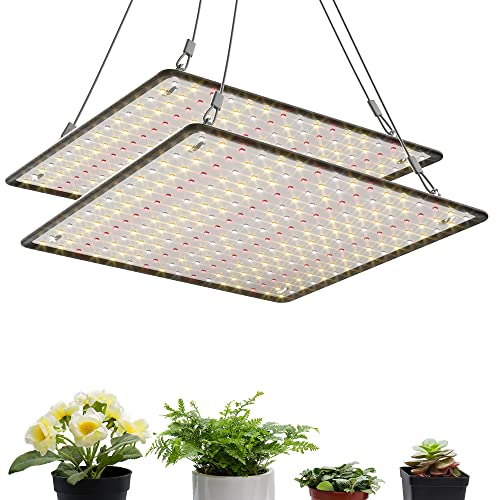
Step up from the smaller Uallhome bundle and you get a 200W two-pack aimed squarely at 4×4 grow tents and seedling racks. The sun-like spectrum mixes white, blue, red, UV, and IR diodes, the colored chips that target specific plant responses like compact growth and flower formation.
The warm white appearance keeps your indoor garden looking like a room rather than a laboratory. Tomatoes, peppers, and basil all respond well to this kind of mixed output. Where the previous Uallhome offering suits casual houseplant use, this 200W pair brings enough photon density (the amount of light energy hitting a given area) to drive fruiting crops through a full cycle.
Useful Strengths
- Sun-like spectrum with warm white output makes grow tents feel less harsh than pure purple-pink lighting.
- Two 200W panels deliver solid coverage for a 4×4 tent when hung at proper height.
- Mix of UV and IR wavelengths supports compact vegetative growth and flowering triggers.
Trade Offs
- Higher wattage panels run warmer, so plan for clip fans or exhaust ventilation in enclosed tents.
- Without a dimmer, you rely on raising and lowering the panels to control intensity for delicate seedlings.
Best Suited To
Mid-level growers running a single 4×4 tent for vegetables or herbs who prefer warm-white light over purple hues.
A Better Fit Elsewhere
The AGLEX K4000 suits you better when you want built-in dimming and the ability to daisy chain multiple units.
Beelux leans into raw output. Dual-chip LED arrays, meaning each spot on the panel uses two diodes instead of one, push more usable light per watt, and the dual switches let you toggle between veg and bloom modes without unplugging anything. Actual draw sits closer to 110W while delivering what a 1000W HPS (high-pressure sodium) bulb would, though HPS is a different lighting technology altogether.
The heavier red spectrum weighting promotes flowering and fruiting once you flip the bloom switch. Compared to the Uallhome 200W pair, this is a single brute-force unit better suited to a greenhouse shelf or a dedicated flower tent. The build runs warm, so leave clearance above the canopy.
The Value In It
- Dual-chip design delivers stronger light output than single-chip panels of similar wattage.
- Separate veg and bloom switches let you adjust spectrum without rewiring or swapping bulbs.
- Covers a 4×4 area adequately when hung at the recommended 18 to 24 inches.
Worth Noting
- Runs hot, so plan exhaust ventilation or accept a warmer room in smaller spaces.
- No external dimmer, so seed starting requires raising the fixture higher rather than dialing down intensity.
Who Should Grab It
Greenhouse growers and serious indoor gardeners who want one high-output panel rather than managing a multi-panel array.
Swap It Out When
The Yehsence 10-in-1 fits better when you need adjustable tripod lighting for scattered plants rather than one central panel.
TATU simplifies the category. White, blue, and 660nm red diodes cover the essentials: blue wavelengths keep plants stocky during vegetative growth, while red wavelengths at 660nm push flowering and fruiting. The full spectrum handles everything from lettuce to orchids without mode switching.
For hobbyists running a mixed indoor garden, the no-fuss approach removes one decision from setup. Compared to the Beelux, you lose the dual-switch refinement but gain a cleaner spectrum that grows anything you point it at. It’s the kind of light you set up once and forget.
Notable Upsides
- Straightforward full spectrum works for vegetables, herbs, and flowering plants on a single setting.
- White-dominant output blends more naturally into living spaces than purple-heavy alternatives.
- Lower price tier than comparable dual-chip panels while delivering similar coverage area.
Honest Caveats
- No dimmer or mode switch means adjusting intensity only by raising and lowering the fixture.
- Heat dissipation relies on passive cooling, which may limit how close you can hang it over seedlings.
Who Will Love This
Multi-crop home growers who want one panel that handles greens, herbs, and ornamentals without adjusting spectrum switches.
Not Your Match When
The VIPARSPECTRA XS1500 Pro fits better when precise dimming and daisy chaining matter more than raw coverage.
Yehsence takes a completely different route. Ten light heads on flexible goosenecks sit atop an adjustable tripod, letting you aim each arm at a different plant. With 500 LEDs across those heads, coverage spreads wide enough for a plant corner, a seed-starting table, or a multi-shelf rack.
The built-in timer handles 4, 8, or 12-hour cycles automatically, so you don’t have to remember to flip a switch. For someone keeping monstera, succulents, and herbs in one room, the gooseneck arms let each plant get its own angle. Compared to the panel-style Uallhome options, this trades deep canopy penetration for flexible positioning.
The Helpful Details
- Ten individual heads cover a wide horizontal area, ideal for plant groupings rather than single tents.
- Adjustable tripod height lets you raise or lower the entire array as plants grow.
- Auto on/off timer with 4, 8, or 12-hour settings keeps light cycles consistent without manual intervention.
Small Caveats
- Tripod footprint takes up floor space and may tip if bumped by pets or children in busy households.
- Goosenecks hold their position but loosen over time, so periodic re-tightening is part of ownership.
Right Fit For
Apartment dwellers and houseplant enthusiasts who want adjustable lighting for a mixed collection rather than a single grow tent.
Reach For A Different Pick When
The AURAZIGLI 4-Head clamp light fits better for tight desk setups where a tripod would crowd your workspace.
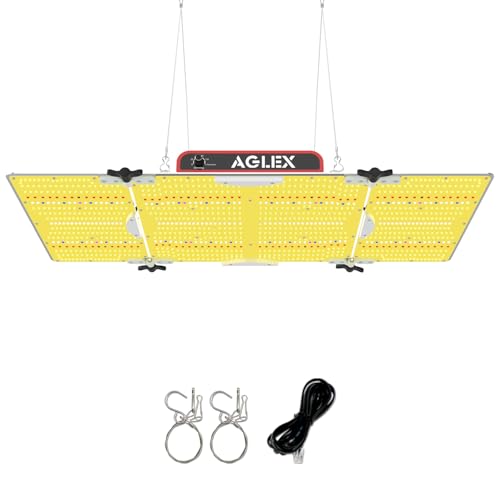
The AGLEX K4000 brings commercial features to a hobbyist price bracket. The spectrum runs from 3000K warm white through 730nm infrared, the far-red wavelength that triggers flowering responses, and includes UV at 405nm for compact growth. Coverage reaches 5×5 or 5×6 feet depending on hanging height.
The dimmer and daisy chain put serious control in your hands. You can dial output up for mature tomatoes or down for germinating seeds, then link multiple fixtures to one controller. Compared to the TATU panel, this is the upgrade path when you’ve outgrown single-mode lights.
Everyday Perks
- Built-in dimmer adjusts intensity for seedlings through flowering without changing hanging height.
- Daisy chain capability scales to multi-light commercial setups on one controller.
- Broad spectrum with UV and IR wavelengths supports every growth phase.
Points To Keep In Mind
- Larger footprint than panel-only options, so it demands a dedicated tent or grow room corner.
- Higher price point reflects the commercial-grade features that casual growers may not use.
Perfect Match For
Hydroponic growers and dedicated indoor gardeners running multi-light setups who want precise spectrum and intensity control.
Where A Sibling Pick Shines
The Beelux 1000W is a better entry point if you want strong output without paying for daisy chain and dimming you won’t use yet.
AURAZIGLI keeps it simple. Four red-blue heads clamp onto a desk, shelf, or plant stand and aim wherever you need. Ten dimming levels and a 3, 9, or 12-hour auto timer keep things hands-off once you’ve dialed in your cycle.
This is the clamp light you grab for a windowsill herb garden or a seed-starting tray on a bookshelf. The red-blue-only spectrum is less pleasant to live with than full-spectrum panels, so it works best in a garage, basement, or spare room rather than a living area. Compared to the Yehsence tripod, this trades flexibility for a smaller clamp footprint.
Strong Points
- Clamp mount attaches to desks, shelves, or stands without drilling or permanent hardware.
- Ten dimming levels give finer control than on/off-only panel lights.
- Auto timer with 3, 9, or 12-hour options fits most photoperiod requirements for common herbs.
Trade-Offs To Consider
- Red-blue spectrum casts a purple hue that may not blend with living room aesthetics.
- Lower total output means it’s best for seedlings, small herbs, and supplemental lighting rather than driving a full grow tent.
Built With In Mind
Beginners and apartment growers who want a compact, clamp-on light for a small herb garden or seedling tray.
Where Another Pick Suits Better
The Yehsence 10-in-1 tripod serves you better when you want fuller spectrum and more heads across a larger plant grouping.
What To Weigh Before Buying Grow Lights
Choosing grow lights comes down to matching spectrum, coverage area, and control features to your specific growing situation. A windowsill herb garden and a 4×4 fruiting tent need very different hardware.
Matching Coverage To Canopy
Coverage area, meaning the square footage the light effectively illuminates, is the first spec to lock down. A single 150W panel covers roughly 2×2 to 3×3 feet for seedlings, while a 1000W-class fixture or a two-panel spread handles 4×4 to 5×5 tents. Undersizing your light creates stretchy, pale plants reaching for photons; oversizing wastes electricity and can bleach leaf tips.
Spectrum Choices And Plant Response
Full spectrum lights, which combine white, blue, red, and sometimes UV and IR wavelengths, support every growth stage from seedling through flower. Blue wavelengths (around 460nm) drive compact vegetative growth. Red wavelengths (around 660nm) trigger flowering and fruiting. Far-red and IR push stretch and flowering responses. For mixed houseplants and herbs, full spectrum is the easier path. For dedicated veg or bloom rooms, single-spectrum lights can be more efficient.
Dimming, Timing, And Control
Dimmers and timers make daily care easier. A dimmer lets you lower intensity for fragile seedlings without raising the fixture. Auto timers handle the 12-to-18-hour light cycles plants need without manual switching. Daisy chain capability scales multi-light setups from one controller, which matters in larger tents and commercial grows.
Form Factor And Mounting
Panel lights hang from tent poles or ceiling hooks. Tripod lights stand on the floor with adjustable height. Clamp lights attach to desks or shelves. Your space dictates the form factor. A closet grow calls for a hanging panel, a living room plant corner suits a tripod, and a desktop herb garden fits a clamp light.
Key Considerations Across These Picks
Common Shopping Slip Ups
New growers often buy a light that’s too small for their space, then wonder why seedlings stretch toward the ceiling. Measure your grow area first and match the coverage spec, not the advertised wattage. Another mistake is ignoring heat. High-wattage panels run hot and need ventilation, especially in enclosed tents. Finally, don’t skip the dimmer. A fixture without intensity control forces you to raise and lower the unit constantly, which gets old fast.
What The Higher Tier Buys
Spending more on a premium grow light typically gets you better diodes, which are the individual LED chips that produce the light, and more refined spectrum control. Mid-tier panels run full spectrum but with less precise wavelength tuning. Premium lights add UV and IR for more complete plant response, dimming for delicate stages, and daisy chain capability for scaling. If you’re running a serious fruiting operation, the upgrade pays off in yield. For houseplants and herbs, mid-tier is plenty.
Frequently Asked Questions
How Far Should Grow Lights Hang Above Plants?
Hang seedlings 24 to 30 inches below the light to prevent leaf burn. Move the fixture to 18 to 24 inches once plants enter vegetative growth, and lower to 12 to 18 inches during flowering. Adjust based on how your specific plants respond.
Do LED Grow Lights Use Less Electricity Than Older Bulbs?
LEDs typically draw less power than HPS or fluorescent setups while producing comparable usable light. A 100W LED can roughly match a 300W HID bulb (a high-intensity discharge lamp that includes both HPS and MH, or metal halide, types) for vegetative growth, though flowering comparisons vary by spectrum tuning.
Can I Leave Grow Lights On 24 Hours A Day?
Most plants need a dark period to complete their growth cycles. Seedlings do fine with 18 to 24 hours of light, but established plants generally need 12 to 18 hours followed by 6 to 12 hours of darkness to trigger flowering and rest phases.
Do Grow Lights Work For Regular Houseplants?
Yes, full spectrum grow lights support common houseplants that struggle in low-light conditions. Fiddle leaf figs, monsteras, and pothos respond well to supplemental lighting during darker months or in north-facing rooms.
What’s The Difference Between Red-Blue And Full Spectrum Grow Lights?
Red-blue lights use only two wavelength ranges to drive photosynthesis, the plant process that converts light into growth energy. They’re efficient but cast a purple hue. Full spectrum lights include white and sometimes UV and IR, producing a more natural appearance and supporting a wider range of plant responses beyond basic photosynthesis.
The Takeaway
Start by measuring your space and identifying what you actually want to grow. A small herb garden on a kitchen shelf needs something completely different from a dedicated flower tent. Match coverage to your canopy area, prioritize dimming and timers for daily ease, and lean toward full spectrum unless you have a reason to stay single-band. Any of these eight picks will serve you well once it’s the right tool for your specific indoor garden.
