

Crabgrass taking over in June, dandelions colonizing the borders by May, broadleaf invaders pushing up through freshly laid sod. A well-timed liquid pre-emergent is the difference between a lawn you mow and a lawn you constantly rescue. These eight picks cover the main active ingredients worth considering: prodiamine, dithiopyr, mesotrione, sulfentrazone, and a few two-in-one formulas for homeowners who want fewer passes across the yard.
The Essentials At A Glance

Roundup Dual Action 365 Weed & Grass Killer + 12 Mo. Preventer Concentrate

Prodiamine 65 Wdg Pre-emergent Grass Broadleaf Weeds 5lbs
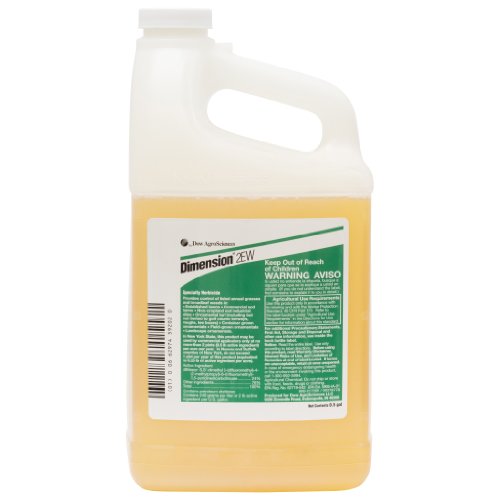
Dimension 2EW Herbicide Half Gallon

Liquid Harvest Mesotrione Bundle 8 oz with Surfactant
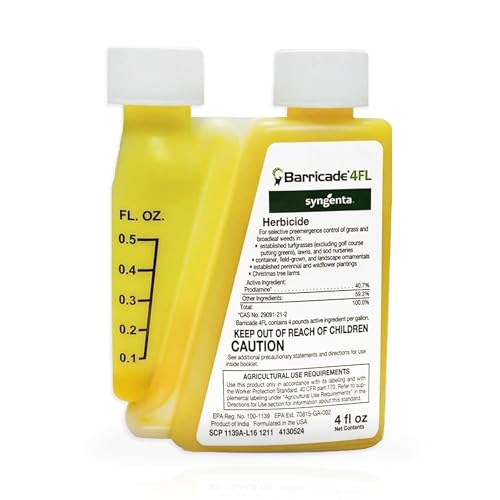
Barricade 4FL Herbicide Concentrate 4 fl oz

Mesotrione 16 Ounces Turf Herbicide
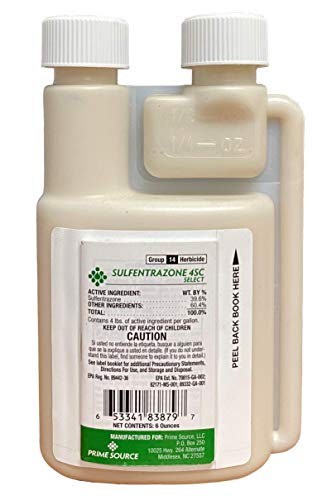
Sulfentrazone 4SC Herbicide 6 oz
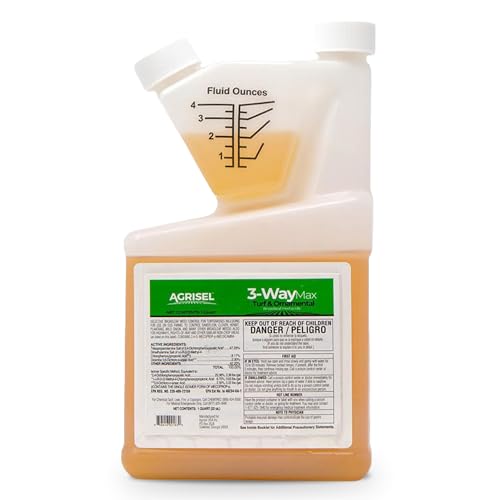
Agrisel 3 Way Max Weed Killer 32 oz
The Strengths Of Each Pick
Most pre-emergents only stop seeds that haven’t sprouted yet. This Roundup formula does both jobs in a single pass, knocking down existing vegetation while laying down a barrier that holds for the rest of the season. The 12-month prevention window is the headline feature for anyone tired of re-treating the same fence line every spring.
For homeowners with gravel driveways, patio edges, or fence rows where you genuinely want nothing growing, the dual-action approach saves a trip with a separate post-emergent sprayer. You mix it as a concentrate, so a single bottle goes further than a ready-to-use jug, and you can dial coverage to the area you’re working.
Practical Pluses
- Combines a burn-down herbicide with a season-long residual barrier in one mix
- Targets crabgrass, clover, dandelion, poison ivy, and a long list of broadleaf offenders
- Rainfast in roughly 30 minutes, so a passing shower won’t wash your work away
- Concentrate format stretches your dollar across larger areas like long fence rows
Points To Keep In Mind
- Designed for hardscape and border use, not for spraying across established turfgrass
- You handle the mixing and calibration yourself, so read the label rates before pouring
Best Suited To
Homeowners clearing weeds along driveways, fences, patios, and gravel areas who want one annual treatment instead of repeat spot spraying.
Skip It When
You’re working on a live lawn. Liquid Harvest Mesotrione Bundle is a smarter pick for grass you actually want to keep.
Prodiamine is the same active ingredient you’ll find in name-brand Barricade, sold here as a water-dispersible granule in a 5-pound jug. For a homeowner with half an acre or more, that size quickly pays for itself compared to buying multiple quarts of ready-to-mix concentrate.
The flexibility is the quiet win: you can apply prodiamine in either spring or fall, depending on which weeds trouble your lawn most. Crabgrass prevention is the headline use, but the chemistry also covers a wide range of grassy and broadleaf weeds that germinate through the cool season.
Everyday Perks
- Same active ingredient as Barricade at a budget-friendly price-per-acre
- 5-pound container covers very large lawns from a single purchase
- Spring or fall application windows, depending on which weeds you’re targeting
- Granule format dissolves cleanly in a tank sprayer for uniform coverage
Factors To Consider
- Granules need accurate measuring and a sprayer with agitation to stay mixed
- Less convenient than pre-mixed liquids for small lawns or quick spot jobs
Feature Snapshot
Right Fit For
Large-lawn homeowners who don’t mind mixing their own tank and want professional-grade crabgrass control without the professional price tag.
Look Elsewhere When
You have a small yard and don’t want to fuss with granular measuring. Barricade 4FL concentrate is simpler for compact spaces.
Dimension is the pre-emergent that forgives a late start. Where prodiamine strictly stops seeds before germination, dithiopyr, the active ingredient in Dimension 2EW, also catches very young crabgrass that has just emerged. For homeowners who misjudge soil temperatures and apply a week or two late, that built-in early post-emergence activity is a real safety net.
The 64-ounce bottle suits a mid-size lawn and the EW formulation mixes easily with water. Registered in every state, it tolerates both cool-season fescues and warm-season Bermuda or Zoysia without the injury concerns some pre-emergents carry on sensitive turf.
Where It Excels
- Early post-emergence crabgrass control in addition to pre-emergence activity
- Labeled for established cool-season and warm-season turfgrasses
- Tolerated on more than 440 ornamental plants in landscape beds
- Registered across every U.S. state, simplifying the buying decision
Trade-Offs
- Larger jug means planning storage space in a garage or shed
- Application rates vary by turf species, so reading the label closely pays off
- Some users find the EW formulation requires more thorough agitation than ready-to-mix liquids
Whose Shelf It Belongs On
Homeowners with mixed turf who want one product that handles cool-season and warm-season grass without switching chemicals mid-season.
Another Choice May Suit
If your weed pressure is mostly broadleaf rather than crabgrass, Prodiamine 65 WDG or a mesotrione option handles that list better.
Mesotrione works differently from prodiamine or dithiopyr. It bleaches chlorophyll in germinating weeds, covering a broad swath of species without harming most turfgrasses when used correctly. The Liquid Harvest bundle adds an 8-ounce surfactant bottle, which improves how the active ingredient spreads and sticks to leaf surfaces.
For homeowners renovating or seeding a new lawn, mesotrione has a rare quality: it’s labeled for use at seeding on certain grass types, letting you prevent weeds while your new grass establishes. The trade-off is patience: visible results can take two to three weeks.
Notable Upsides
- Functions as both pre-emergent and post-emergent on many weed species
- Targets 46 broadleaf and grass species including crabgrass, clover, chickweed, and dandelion
- Labeled for use during seeding on tolerant turf species, rare among pre-emergents
- Bundle includes surfactant so you don’t have to source a separate spreader-sticker
Soft Spots
- Requires rainfall or irrigation within 10 days of application for full activation
- Visible weed decline takes 2 to 3 weeks, slower than contact herbicides
- Not labeled for every turf species, so check compatibility with your specific grass
Who Should Grab It
Homeowners starting a new lawn from seed or sod who need weed control during the establishment window that other pre-emergents would disrupt.
Not Your Match When
You need broad-spectrum control on an established lawn without reading detailed species labels. Dimension 2EW is more forgiving for general use.
Barricade is the name most lawn-care professionals reach for when they want season-long crabgrass control without surprises. The 4FL formulation uses prodiamine as its active ingredient and ships as a concentrated liquid that mixes cleanly into a tank sprayer.
For ornamental beds, perennial plantings, and Christmas tree farms, Barricade is widely accepted as a reliable foundation treatment. One application lasts through the germination window for most warm-season weeds, freeing you from repeat trips with the sprayer.
Real-World Strengths
- Trusted prodiamine formulation used across professional lawn-care routes
- One application provides pre-emergence control for the full germination window
- Suitable for established turfgrasses, ornamentals, and wildflower plantings
- Concentrate format allows precise rate adjustment for different lawn sizes
Some Limits To Know
- 4 fl oz bottle suits smaller lawns or single-bed treatments rather than full-acre coverage
- Professional-grade chemistry requires careful attention to labeled application rates
Quick Facts
Made For
Homeowners with landscape beds, perennial borders, or wildflower plantings who want a trusted name-brand concentrate for those specific zones.
Swap It Out When
You need to cover a larger open lawn in a single bottle. Prodiamine 65 WDG delivers more material per dollar for big yards.
This 16-ounce bottle of Liquid Harvest mesotrione is the same active ingredient found in the popular Tenacity brand, sold without the brand-name markup. For homeowners who plan multiple applications through the season, the larger container costs less per ounce than the 8-ounce bundle.
Mesotrione’s value shines when you can rotate applications across spring and fall, catching both warm-season and cool-season weeds. Pair it with a separate surfactant, since this listing ships the herbicide on its own without a sticker additive.
What Pays Off
- Double the volume of the 8-ounce bundle for homeowners with multiple application windows
- Pre- and post-emergent activity covers weeds that have already broken the soil surface
- Targets crabgrass, clover, chickweed, dandelion, and many other broadleaf species
- Acceptable for use at seeding on tolerant turf types, a rare pre-emergent trait
Honest Caveats
- Shipped without surfactant, so factor in buying a separate wetting agent for full effectiveness
- Weed decline takes 2 to 3 weeks, so don’t expect overnight visual confirmation
- Rainfall or irrigation within 10 days is necessary for proper activation
Perfect Match For
Seasoned DIYers who want a larger mesotrione supply to split between spring and fall applications and don’t mind sourcing a surfactant separately.
Consider Something Else When
You’d rather have surfactant included. The Liquid Harvest Mesotrione Bundle 8 oz ships with a surfactant already paired.
Sulfentrazone fills a gap the standard pre-emergents leave open. Where crabgrass pressure leads most homeowners to prodiamine or dithiopyr, sedge and certain broadleaf weeds shrug those off. Sulfentrazone targets them, with visible damage appearing within 24 to 48 hours when applied post-emergence.
The 4SC concentrate mixes into a flowable formulation and is accepted on established turfgrasses across residential lawns, athletic fields, and golf course fairways. For southern lawns where nutsedge is the recurring headache, this active ingredient is worth knowing.
Notable Gains
- Targets sedges and broadleaf weeds that prodiamine and dithiopyr leave behind
- Visible damage within 24 to 48 hours on actively growing weeds
- Labeled for residential lawns, athletic fields, and commercial sod production
- Contains 4 pounds of active ingredient per gallon for efficient dosing
Possible Compromises
- Narrower weed spectrum than mesotrione if your lawn has diverse weed pressure
- Less commonly stocked at retail garden centers, so online ordering is typical
Core Details
Who It Suits Best
Homeowners in the South battling yellow nutsedge or purple nutsedge that crabgrass-focused pre-emergents don’t touch.
Reach For A Different Pick When
Crabgrass is your main problem. Dimension 2EW or Prodiamine 65 WDG handle crabgrass with broader residual control.
Technically a post-emergent broadleaf herbicide rather than a strict pre-emergent, Agrisel 3 Way Max earns its place on this list for households with active pets and kids. The formula targets over 50 broadleaf weeds, including dandelion, poison ivy, and clover, while leaving lawn grass intact.
Use it as a follow-up treatment after a pre-emergent like Prodiamine 65 WDG has stopped the first wave of grassy weeds. The 32-ounce bottle covers a respectable mid-size lawn, and the ready-to-mix format keeps the math simple for homeowners without a calibrated sprayer.
Useful Strengths
- Targets over 50 broadleaf weeds including tough ones like poison ivy and clover
- Designed with households in mind, including families with active pets
- 32-ounce bottle provides ample coverage for typical suburban lawns
- Specialized formula requires less product per application than traditional mixes
Things To Consider
- Functions as a post-emergent, so it handles weeds already growing rather than preventing germination
- Won’t stop crabgrass before it emerges, so it pairs best alongside a true pre-emergent
Feature Snapshot
Built With In Mind
Pet households that need broadleaf weed control on an established lawn and prefer a formula designed with active animals in mind.
Where A Sibling Pick Shines
If your goal is preventing crabgrass before germination rather than spot-treating broadleaf weeds, Prodiamine 65 WDG is the better foundation product.
Choosing The Right Liquid Pre-Emergent For Your Lawn
Start with your weed pressure, not the brand. Crabgrass is the most common reason homeowners reach for a pre-emergent, and prodiamine or dithiopyr handles it cleanly. If sedges are the recurring issue in your lawn, sulfentrazone deserves a closer look. Mesotrione is the wildcard for new lawns or mixed weed pressure that includes broadleaf species.
Turf type matters more than most labels suggest. Cool-season grasses like Kentucky bluegrass and tall fescue tolerate nearly every pre-emergent on this list. Warm-season grasses like Bermuda, Zoysia, and St. Augustine are more sensitive, so verifying compatibility on the product label before spraying saves a costly mistake.
Application timing ties to soil temperature, not the calendar. Crabgrass germinates when soil reaches roughly 55°F for several days, which can fall anywhere from late February in the Deep South to mid-May in the upper Midwest. A simple soil thermometer removes the guesswork.
Smart Pre-Purchase Considerations
Common Shopping Slip Ups
The biggest mistake is buying a pre-emergent without confirming your grass type on the label. Some products that work beautifully on tall fescue will injure Bermuda or St. Augustine. Another common slip is spraying over a lawn that’s about to be reseeded: most pre-emergents stop desirable grass seed along with weed seed.
Where The Extra Money Goes
Premium pre-emergents often include surfactant in the bottle, sparing you a separate purchase. Larger containers cost less per ounce but only pay off if your lawn is actually big enough to use the volume before the shelf life matters. Concentrate formats cost more upfront but stretch dramatically further than ready-to-use sprays.
Frequently Asked Questions
When should I apply a liquid pre-emergent? Spring applications target crabgrass and summer annuals once soil temperatures hold near 55°F. Fall applications target winter annuals and offer a second window before the season closes.
Can I seed my lawn after applying a pre-emergent? Most pre-emergents block grass seed along with weed seed, so seeding must wait until the residual barrier breaks down. Mesotrione is the rare exception, with limited labeling for use at seeding on certain turf species.
How long does a liquid pre-emergent last? Coverage windows run from roughly 3 to 6 months depending on the active ingredient and rate. Splitting applications between spring and fall extends protection through the full germination calendar.
Are liquid pre-emergents safe for pets? Drying time matters more than the formula itself. Keep pets off treated turf until the spray has fully dried, typically a few hours, and store concentrates in a secured area.
What’s the difference between pre-emergent and post-emergent? Pre-emergent stops weed seeds before they germinate and won’t help plants already growing. Post-emergent products, like Agrisel 3 Way Max, treat weeds already established in the lawn.
The Takeaway
Pick based on the weeds that frustrate you most. Crabgrass calls for prodiamine or dithiopyr, sedges need sulfentrazone, and broadleaf-heavy lawns benefit from mesotrione or a post-emergent partner. Match the active ingredient to your turf type and your calendar, and one well-timed application can carry your lawn through the toughest part of the year.
