

A yard that stretches past the reach of a typical hose-end sprinkler is a familiar frustration. Tall grass goes brown at the far edge, garden beds stay thirsty, and dragging a sprinkler around becomes a weekend chore. Long range sprinklers solve that by lifting the spray head higher, throwing water farther, and covering wide arcs without constant babysitting. The picks below cover everything from compact oscillating units for modest lawns to heavy-duty tripod impact heads that can soak a half-acre, plus a wheeled workhorse for serious acreage.
The Shortlist At A Glance

STYDDI Heavy Duty Impact Sprinkler on Tripod Base
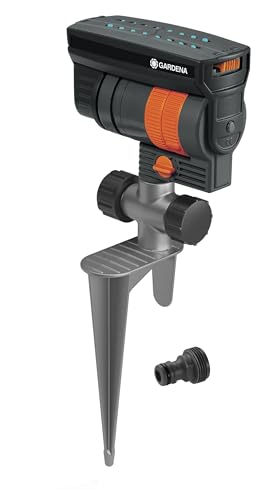
GARDENA ZoomMaxx Sprinkler on Metal Step Spike

WEMADE Heavy Duty Metal Pulsating Sprinkler

Triumpeek 2 Pack Impact Sprinkler on Tripod Base
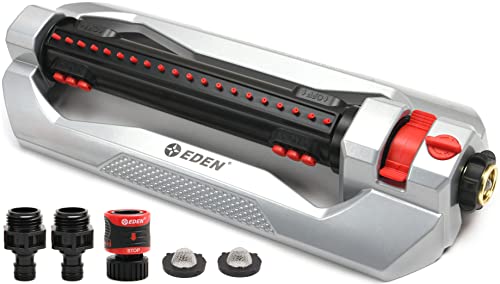
Eden 96216 Heavy Duty Turbo Oscillating Sprinkler

Impact Sprinkler on Tripod Base with Zinc Head

Orbit Brass Impact Sprinkler on Zinc Spike Base

Strongway Wheeled Sprinkler, 5 Nozzles
More Details On Our Top Picks
Backyard corners shaded by tall hedges or climbing vines are exactly the spots a ground-level sprinkler can’t reach. The STYDDI tripod stands well above standard sprinklers, lifting its pulsating head into clear air so the stream sails over low obstacles instead of crashing into them.
Its telescoping legs extend up to about 50 inches, which is genuinely useful when you want water to clear a fence row or top out a garden border. The metal tripod construction feels sturdy enough to survive being bumped by a mower wheel or kicked by a curious dog, and the impact head delivers the classic clicking pulse that gardeners have trusted for decades.
The Practical Payoff
- Throws water in a wide arc, covering up to roughly 90 feet in diameter under decent pressure
- Telescoping legs reach about 50 inches, helping the spray clear taller plantings and fence lines
- Tripod base lifts the head above turf, keeping spray patterns clean even over uneven ground
- Solid metal construction tends to handle repeated seasonal storage without flaking
- Classic impact head design keeps working in slightly dirty water sources
Things To Consider
- Tripod legs can catch on uneven terrain and may tip if bumped at full extension
- Highest throw distances require strong household water pressure; low-pressure wells may underperform
Who It Suits Best
Homeowners with wide, obstacle-dotted yards who want one sprinkler to cover ground that ground-level units simply miss.
A Better Fit Elsewhere
The Strongway Wheeled Sprinkler makes more sense for flat pastures and open acreage where tripod height isn’t needed.
Not every lawn needs a tripod tower or a wheeled unit. The GARDENA ZoomMaxx sits low on a metal step spike and uses an oscillating spray pattern that suits rectangular patches of grass where you want gentle, even soaking without overshooting garden beds.
The adjustable nozzle arms let you dial in width and reach so the spray stays on the lawn rather than wasting water on the driveway. Where the STYDDI tripod lifts its stream high above obstacles, this one works best on open turf with defined edges.
Positive Takeaways
- Compact oscillating footprint fits narrow side yards and tight lawn strips
- Range and width controls keep water off patios, driveways, and walkways
- Metal step spike anchors firmly into soft soil and resists tipping
- Gentle spray pattern is well suited to newly seeded or delicate grass
Worth Noting
- Maximum coverage tops out near 2,300 square feet, smaller than tripod impact heads
- Low-profile design means taller plants can block sections of the spray arc
Made For
Suburban gardeners with modest rectangular lawns who want predictable, adjustable coverage without a tall rig.
Swap It Out When
The Eden 96216 Turbo Oscillating Sprinkler covers nearly twice the area if your lawn runs wider and you still want an oscillating pattern.
Plastic sprinkler heads tend to crack after a few seasons in the sun, and that frustration is exactly what the WEMADE avoids. Its zinc alloy body and base shrug off rust and weather, so the unit stays in rotation long after cheaper rivals have ended up in the recycling bin.
The spray arc adjusts from a tight 20-degree wedge to a full 360-degree circle, giving you flexibility for odd-shaped lawns, vegetable plots, or curved flower borders. Compared to the GARDENA’s narrow oscillating rectangle, this one casts a wide circle that suits open lawn centers.
Why It Works Well
- All-metal zinc construction stands up to sun, moisture, and seasonal wear
- Arc adjusts from 20 degrees to full circle, useful for corners or full-coverage watering
- Coverage stretches up to about 85 feet in diameter under proper pressure
- Stable metal base resists tipping on flat turf
Honest Caveats
- Sits directly on the ground, so it can get caught in tall grass between uses
- Maximum reach assumes strong household water pressure and open surroundings
Right Fit For
Anyone tired of replacing plastic impact heads every couple of seasons who wants a metal sprinkler they can leave out year after year.
Consider Something Else When
The STYDDI tripod sprinkler is the smarter pick when tall hedges or fences block ground-level spray.
Most homeowners eventually realize one sprinkler isn’t quite enough: front yard, back yard, side strip, vegetable plot. Buying two tripod units separately adds up fast, which is where the Triumpeek bundle earns attention.
You get two impact heads, two tripod bases, and ground stakes, all the hardware you need to run water in two zones at once. Brass sprinkler heads anchor the package, and the same style of arc adjustment found on the WEMADE lets you fine-tune coverage from a narrow wedge to a full sweep.
Advantages To Know
- Two-tripod bundle covers front and back yards from a single purchase
- Brass impact heads resist clogging in mineral-heavy or slightly dirty water
- Included ground stakes add stability on soft or sandy soil
- Operating range of about 41 to 113 degrees Fahrenheit suits most climates
Trade Offs
- Recommended temperature range means winter storage is wise in colder zones
- Two units require enough hose length or a splitter to run both at once
Best Suited To
Property owners with two distinct lawn zones who want to water both without dragging a single sprinkler back and forth.
Not Your Match When
The Eden 96216 single oscillating unit is a better choice if you only need to cover one wide rectangular lawn.
An oscillating sprinkler (one that sweeps a fan-shaped spray back and forth) is a smart shape for rectangular lawns, and the Eden 96216 takes that pattern and pushes it to a much larger footprint. Up to 20 precision nozzles spread water across roughly 4,900 square feet.
The turbo drive motor keeps the sweep smooth and quiet, while the aluminum base anchors the unit without flexing. Compared to the GARDENA ZoomMaxx’s smaller rectangle, this one covers more than double the ground area.
What Pays Off
- Covers up to about 4,900 square feet, suiting medium and large rectangular lawns
- Twenty clog-resistant nozzles help maintain even spray over time
- Flow and width controls fine-tune the watering rectangle
- Aluminum base resists rust and keeps the unit stable on turf
- Quick-connect fittings speed up hose attachment and removal
Points To Keep In Mind
- Oscillating pattern suits rectangular layouts, less so for curved or pie-shaped lawns
- Inline filters need occasional rinsing to prevent nozzle buildup in hard-water areas
Perfect Match For
Homeowners with wide, rectangular lawns who want quiet, even soaking without the height of a tripod rig.
Look Elsewhere When
The Orbit Brass Impact Sprinkler is worth a look for circular lawns or reclaimed water sources where clog resistance matters most.
Some gardeners want one tripod that adjusts to whatever job the day brings. This unit extends from roughly 16 inches up to about 37 inches, with flip locks that hold position without slipping. A short gardener can run it low over ground cover, then raise it for tall ornamentals.
The zinc impact head sits on a goose-neck hose connector that simplifies setup, and an included O-ring filter helps keep grit out of the nozzle. It throws a 20 to 35 foot radius depending on water pressure, so coverage scales with your home’s plumbing.
Useful Touches
- Adjustable tripod height from 16 to 37 inches suits a range of plants
- Flip locks hold legs in place without slipping during use
- Rubber O-ring filter reduces sand and gravel reaching the nozzle
- Goose-neck hose connector speeds setup and takedown
Less Ideal Details
- Maximum 35 foot radius is shorter than some larger tripod impact heads
- Range depends heavily on household water pressure between 20 and 80 PSI
Who Should Grab It
Gardeners who want one sprinkler that adapts between low garden beds and taller plantings without buying a second unit.
Another Choice May Suit
The Triumpeek two-pack offers better value for shoppers who need to water two zones from the start.
Brass has long been the gold standard for sprinkler heads because it shrugs off sediment and lasts through decade after decade of seasons. The Orbit pairs that brass impact head with a zinc step spike, giving you a low-profile unit that pushes water across up to a 90-foot diameter.
Where the WEMADE offers an all-zinc construction, this one routes water through brass internals for smoother long-term performance, especially in homes pulling from wells, ponds, or greywater systems. The tri-point step spike pushes into soft soil with foot pressure and stays put during use.
Where It Excels
- Brass impact head tolerates slightly dirty or reclaimed water without clogging
- Coverage up to roughly 90 feet in diameter under good pressure
- Adjustable arc supports full or partial circle watering
- Step spike installs in seconds without extra tools
Points To Note
- Brass adds weight compared to all-plastic alternatives
- Ground-level placement means tall grass can interfere with the spray arc
Built With In Mind
Homeowners drawing from well water, ponds, or greywater systems who need a sprinkler that won’t clog at the first sign of sediment.
Reach For A Different Pick When
The WEMADE all-metal unit costs less if brass internals aren’t a priority for your water source.
Once you move past the residential lawn and into horse pastures, athletic fields, or multi-acre lots, residential sprinklers fall short. The Strongway Wheeled Sprinkler is built for that scale, with a die-cast aluminum head, brass union, and five nozzles that push serious volume across a 150-foot diameter.
At up to 63 gallons per minute on a 28-degree trajectory, this isn’t a casual backyard tool. It rolls across turf on built-in wheels and demands a high-capacity water source. Where the STYDDI tripod is the go-to for suburban yards, this is the heavy artillery.
Standout Benefits
- Covers up to 150 feet in diameter, handling pastures and athletic fields
- Five-nozzle head spreads water evenly across the full throw radius
- Wheeled chassis makes repositioning across large lots manageable
- Die-cast aluminum head with brass union resists wear at high flow rates
Things To Weigh Up
- Requires high-volume water supply; standard residential spigots may not keep up
- Size and weight make it overkill for typical home lawns
Whose Shelf It Belongs On
Owners of small farms, riding arenas, or large rural properties who need commercial-grade reach and don’t mind the higher water demand.
Where A Sibling Pick Shines
The STYDDI Heavy Duty Impact Sprinkler on Tripod Base handles most suburban lawns without the water-supply demands of a wheeled unit.
Matching A Sprinkler To The Way You Water
Choosing a long range sprinkler comes down to matching the unit’s throw pattern and reach with the shape, obstacles, and size of the lawn it has to cover. Three attributes tend to drive most decisions, and understanding them keeps the shortlist above from feeling interchangeable.
Reach And Coverage Shape
Coverage numbers tell you how far the water travels, but the shape of that coverage matters just as much. Rectangular lawns pair naturally with oscillating units like the Eden 96216, which sweep a fan-shaped spray back and forth. Open, round, or irregular yards generally benefit from impact heads like the WEMADE, STYDDI, or Orbit, which rotate in a circle you can shrink or expand. For very large properties, the Strongway wheeled unit covers acreage that tripod impact heads simply can’t match.
You may find that the listed maximum reach assumes strong household water pressure. Low-pressure wells or long hose runs can shrink real-world throw distance considerably, so it’s worth thinking about how far the sprinkler sits from the spigot.
Height And Obstacle Clearance
Tripod sprinklers, like the STYDDI and the Wexo-style adjustable tripod, lift the spray head above ground level so water can arc over shrubs, low fences, and tall flower borders. Ground-level impact heads and oscillating units work best on open turf without obstacles, since taller plants interrupt the spray pattern and leave dry patches behind.
Construction And Water Quality
Plastic sprinkler heads are light and inexpensive, but they tend to crack after a few seasons of UV exposure. Metal construction (zinc, brass, or aluminum) costs a bit more up front but lasts longer, especially when paired with slightly dirty, mineral-heavy, or reclaimed water. Brass internals in particular resist the clogging that plagues plastic nozzles over time.
Picking Apart The Practical Differences
Where Shoppers Go Wrong
The most common slip-up is choosing a sprinkler purely on the maximum reach number. A 90-foot throw looks great on paper, but it doesn’t help if the spray pattern is a narrow wedge that misses half the lawn. Shape, arc adjustment, and obstacle clearance often matter more than the diameter headline.
Another trap is overlooking water supply. Sprinklers that need 60-plus gallons per minute, like the Strongway, simply won’t perform on a typical residential spigot. Match the unit’s demand to your actual flow before committing.
What The Higher Tier Buys
Moving up the price ladder typically buys three things: heavier metal construction that survives multiple seasons, brass internals that resist clogging in tough water, and larger coverage areas that let one sprinkler do the work of two. For most suburban lawns, a mid-tier metal impact sprinkler covers everything you need without the cost of commercial wheeled units.
Frequently Asked Questions
How far can a typical long range sprinkler actually throw water?
Most tripod impact sprinklers reach about 80 to 90 feet in diameter under standard residential water pressure, while commercial wheeled units can stretch past 150 feet. Real-world reach depends heavily on pressure, hose length, and wind.
Do I need a tripod sprinkler if my lawn is flat and open?
Not necessarily. Ground-level impact heads and oscillating units work well on open turf without tall plants or fences. Tripods earn their keep when the spray needs to clear obstacles that would otherwise block the stream.
Are metal sprinklers really worth more than plastic ones?
Metal construction, particularly brass and zinc, tends to last through many more seasons than plastic and handles dirty or mineral-heavy water without cracking. For most homeowners, the longer service life offsets the higher cost.
How do I keep my sprinkler from clogging?
Most sprinklers include a small filter washer at the hose connection that catches sediment before it reaches the nozzle. Rinsing that filter once or twice a season and clearing any visible debris from the nozzle keeps flow consistent.
Can I run two sprinklers from one spigot?
You can, using a Y-connector or hose splitter, but flow at each sprinkler will drop. For best results, look for sprinklers with lower gallons-per-minute requirements, or water one zone at a time.
Bottom Line
The right long range sprinkler depends on the lawn you actually have: tripod impact heads for obstacle-heavy yards, oscillating units for wide rectangles, and wheeled commercial models for genuine acreage. Start with your yard’s shape and your water pressure, and the shortlist above will narrow itself quickly to the one or two units that fit best.
