

A neglected tree drops its branches where it pleases, and a wobbly ladder should never be part of the plan. Long reach loppers give you the height and leverage to trim what grows beyond arm’s length without sending you up a step stool. The right tool makes a tall job feel routine, while a mismatch leaves you fighting rusted handles and splintered cuts. This roundup covers eight current picks for different yards, branch sizes, and grip strengths, so you can match the tool to the work.
How The Shortlist Stacks Up
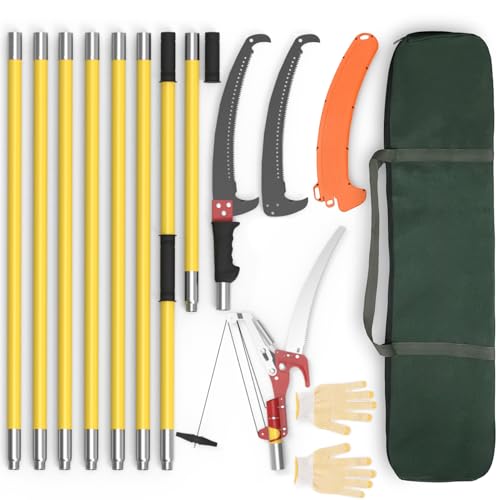
LETYANGER 7.3-27FT Extendable Long Handle Pole Saw

Likeem 27FT Tree Pole Pruner Manual Branch Trimmer
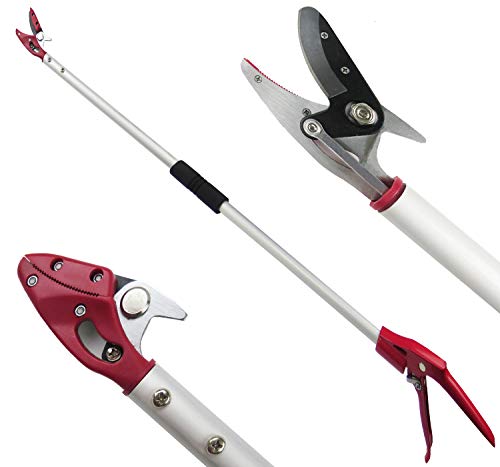
Mesoga 6FT Long Reach Pruner and Fruit Picker

Kings County Tools Tree Trimmer Loppers 26-40 Inch

GARTOL Telescopic Pruner and Fruit Picker 3.67-5.45FT
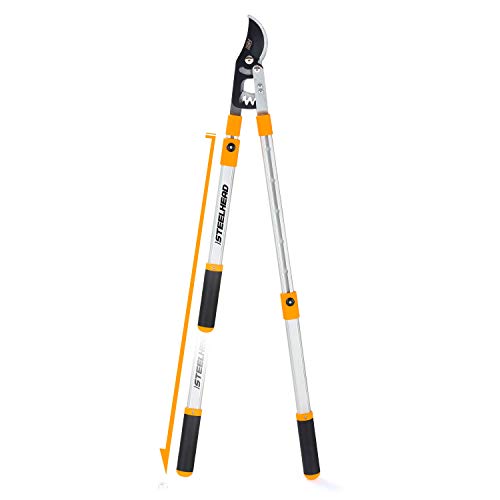
STEELHEAD Heavy-Duty 27-40 Inch Gear-Bypass Lopper

GARTOL Heavy-Duty Extendable Loppers 28-41 Inch
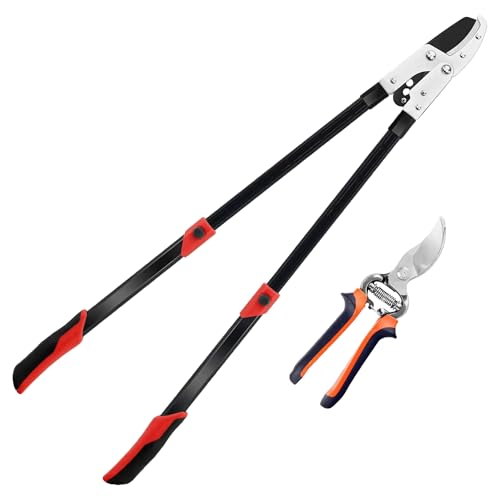
YRTSH Loppers Branch Cutter with Compound Action
More Details On Our Top Picks
Standing on a patio beneath a 25-foot oak, you want a tool that reaches the upper branches without a ladder leaning against the trunk. The LETYANGER extends from roughly 7.3 to 27 feet, stacking seven fiberglass and epoxy-resin poles joined by aluminum alloy collars. You can swap between a saw head and a bypass pruner head without leaving the ground.
Compared to the Likeem pole saw covered next, this kit ships with a spare blade and a carry bag, so a worn saw tooth does not end the day. For tall trees and frequent canopy thinning, the height alone sets it apart from every other pick in this guide.
Standout Benefits
- 27-foot working reach handles canopy work most hand loppers cannot touch.
- Dual head system swaps between bypass pruner and toothed saw for different branch sizes.
- Fiberglass-reinforced poles stay rigid at full extension, reducing flex during the cut.
- Alloy steel saw blade resists bending when slicing through seasoned hardwood.
- Carry bag and spare blade make transport and field repair straightforward.
Practical Considerations
- Seven pole sections take a few minutes to assemble before each session.
- Length makes the tool unwieldy around narrow pathways and tight gate openings.
- Owners commonly report cleaning resin residue off the pole joints after wet weather to keep extension smooth.
Who It Suits Best
Homeowners with mature trees between 15 and 30 feet tall who want one tool for both sawing and light pruning.
Reach For A Different Pick When
The Mesoga 6FT Long Reach Pruner suits fruit-picking chores and shorter reach tasks where a 27-foot pole is overkill.
Tall hedges and orchard trees demand two cutting modes in one pole: a clean shear for live wood and a coarse saw for thicker limbs. The Likeem pole pruner combines a hardened carbon-steel shear head with an alloy-steel saw blade on a 27-foot extendable frame. Spring-loaded jaws pull branches into the cutting edge once you draw the rope.
Where the LETYANGER ships with a spare blade and bag, the Likeem focuses purely on cutting hardware. Its pruner head uses a pulley mechanism to multiply hand force, so older gardeners find the pull noticeably lighter at full extension.
Bright Spots
- 27-foot reach handles tall trees and second-story roofline clearance.
- Pulley-operated shear head reduces rope-pull effort at full length.
- Alloy-steel saw blade holds an edge across multiple pruning days.
- Carbon-steel jaws cut cleanly through green branches up to small-diameter limbs.
Honest Caveats
- Pole flex increases at maximum extension, so plan for slower, deliberate cuts.
- Shear head is best for small branches; very thick wood will still demand the saw.
- Long-term owners commonly wipe down the rope and pulley after wet sessions to prevent rust buildup.
Right Fit For
Gardeners managing tall fruit trees and overhead limbs who want a single pole that handles both shearing and sawing.
Consider Something Else When
The Kings County Tools Tree Trimmer Loppers fit better for someone working at chest height who values ratcheting power over vertical reach.
Apple season puts seniors and casual gardeners on ladders they would rather avoid. The Mesoga keeps the work grounded with a 6-foot aluminum pole weighing just 1.43 pounds, light enough to swing overhead for an hour without shoulder strain. A 90-degree rotating head lets you angle the cut into awkward branch positions.
The defining feature is the cut-and-hold gripper, which clamps the severed fruit or twig so it does not fall and bruise on the patio below. Pair that with a high-carbon steel blade and you have a tool aimed squarely at fruit trees, ornamentals, and overhead shrubs where the Likeem’s 27-foot reach would be excessive.
What Pays Off
- 1.43-pound pole stays comfortable overhead for extended picking sessions.
- Cut-and-hold gripper prevents dropped fruit and broken twigs.
- Rotating head angles the blade without twisting your wrist.
- High-carbon steel blade stays sharp across many fruit-tree harvests.
Points To Keep In Mind
- 6-foot total length limits you to first-floor branches and low canopies.
- Cut-and-hold works best on smaller twigs; heavier branches may slip.
Made For
Home gardeners harvesting backyard fruit trees and trimming low ornamental branches without climbing.
Swap It Out When
The GARTOL Telescopic Pruner and Fruit Picker fits when you want a similar fruit-picking design with adjustable length from roughly 3.67 to 5.45 feet.
Cutting green wood calls for a bypass blade, where two curved edges slide past each other for a clean, scissor-like cut that does not crush tender bark. The Kings County Tools loppers deliver that geometry with telescoping handles that lock into six positions between 26 and 40 inches. Rubber grips cushion each stroke.
A double ratcheting mechanism steps up the cutting force across multiple clicks, so a thicker limb that stops a standard lopper will surrender as the ratchet advances. The jaw capacity reaches 2 inches, more than enough for most living branches in a backyard.
The Upside
- Bypass geometry suits live, growing wood without crushing the cambium layer.
- Double ratcheting multiplies hand force for clean cuts through thicker limbs.
- Six pin-locked handle positions dial in the right leverage for the branch height.
Less Ideal Details
- Bypass design struggles on dry, dead wood compared to anvil loppers.
- Longest 40-inch setting adds weight at the tips, noticeable during long sessions.
- Owners commonly oil the pivot periodically to keep the ratchet engaging smoothly.
Best Suited To
Gardeners focused on shaping live shrubs, fruit trees, and ornamental branches where a clean bypass cut matters.
A Better Fit Elsewhere
The GARTOL Heavy-Duty Extendable Loppers make more sense for deadwood and dense, dry growth where an anvil cut is the right tool.
Tight garden beds and bramble patches punish long tools that cannot pivot. The GARTOL keeps the working length between 3.67 and 5.45 feet with an aluminum handle that telescopes smoothly and a head that rotates to match the angle of the branch. You cut the bramble instead of chasing it.
The 1-inch cutting capacity is modest, and that is the trade for the compact size. For most home gardeners pulling suckers off tomatoes, deadheading roses, or picking low-hanging pears, the shorter reach is a feature rather than a limit.
Benefits That Matter
- Compact working length fits tight garden beds and dense borders.
- Rotating blade head solves awkward angles near walls and fences.
- Lightweight aluminum reduces fatigue during repeated trimming.
Soft Spots
- 1-inch capacity rules out any branch thicker than a thumb.
- Short handle means stepping closer to the canopy, which can mean dodging thorns.
Who Should Grab It
Urban gardeners with small fruit trees, rose bushes, and tight borders who want precise cuts at chest height.
Look Elsewhere When
The Mesoga 6FT Long Reach Pruner suits situations that need a bit more height with the same cut-and-hold convenience.
Hard maple, stubborn oak, and overgrown privet hedges can stall a basic lopper mid-stroke. The STEELHEAD solves that with a compound ratcheting gear-bypass jaw that the brand describes as delivering roughly three times the cutting force of a standard bypass. The handles telescope from 27 to 40 inches without tools, so the leverage is dialed in before you start.
Forged from high-carbon steel with a non-stick corrosion-resistant coating, the blade sheds sap and debris during long sessions. DuraGrip overmolded handles absorb shock at the wrists and shoulders, which matters when you have a hundred cuts ahead.
Practical Pluses
- Ratcheting gear-bypass jaw multiplies cutting force on hard, stubborn limbs.
- Tool-less telescoping handles adjust from 27 to 40 inches in seconds.
- Non-stick blade finish resists sap buildup and corrosion across seasons.
- Ergonomic DuraGrip handles reduce fatigue through long pruning days.
- 1.75-inch cutting capacity handles most backyard branch diameters.
Small Caveats
- Ratcheting mechanism adds weight compared to a basic bypass lopper.
- Locking collars need occasional cleaning to stay free of grit.
Whose Shelf It Belongs On
Serious gardeners and homeowners with mature hardwood trees who need power and reach in one tool.
Where Another Pick Suits Better
The YRTSH Loppers Branch Cutter suits lighter, more casual trimming where the gear-bypass weight is more than the job requires.
Dead branches and dry, seasoned wood benefit from an anvil blade, a flat top edge that meets a sharp lower blade like a chisel on wood. The GARTOL Heavy-Duty Extendable Loppers use that geometry with telescoping aluminum handles from 28 to 41 inches, giving you length without a ladder. A four-step ratchet advances the cut incrementally, so a tough limb never gets the upper hand.
The design targets hardwood and deadwood, where the STEELHEAD gear-bypass excels on green wood. The brand lists 2-inch dry wood capacity, useful for clearing winter storm damage or trimming back overgrown hedges.
Why It Works Well
- Anvil blade geometry crushes through dry and dead wood cleanly.
- Four-step ratchet system progresses the cut without forcing the blade.
- Aluminum handles stay light while extending to 41 inches.
Factors To Consider
- Anvil action can crush live cambium, so avoid using on green, growing wood.
- Ratchet mechanism adds moving parts that benefit from occasional lubrication.
Perfect Match For
Homeowners clearing storm damage, deadwood, and dense dry shrubs where brute force matters more than a delicate bypass cut.
Skip It When
The Kings County Tools Tree Trimmer Loppers make more sense for live-wood shaping where a bypass cut protects the bark.
Some gardeners want one tool that handles both live and dry wood without switching heads. The YRTSH compound-action loppers use an alloy-steel blade with a Teflon low-friction coating, which the brand positions for both green and seasoned branches. Compound action, where a second lever multiplies the force from the first, makes the cut feel easier than the hand pressure suggests.
This is a focused hand tool, not a pole saw, so it suits chest-high and ladder-reach work rather than 20-foot canopies. For homeowners pruning a few ornamental trees each season without ratcheting or telescoping complexity, the simplicity is the appeal.
Notable Gains
- Teflon-coated blade stays sharp and resists sap buildup.
- Compound action multiplies hand force for easier cuts on thick branches.
- Works on both green and dry wood without switching tools.
Small Limitations
- Hand-held design rules out overhead canopy work without a ladder.
- Compound linkage adds weight compared to a basic bypass lopper.
The Right Fit
Casual gardeners pruning ornamentals and small fruit trees at reachable heights.
Not Your Match When
The STEELHEAD Heavy-Duty 27-40 Inch Gear-Bypass Lopper suits anyone needing reach plus ratcheting power for taller limbs.
Choosing The Right Long Reach Loppers For Your Yard
Picking a long reach lopper starts with the height of the work and the type of wood you are cutting. A pole saw like the LETYANGER or Likeem reaches where hand tools cannot, but a hand lopper with telescoping handles like the STEELHEAD or GARTOL extendable model handles 20 to 40 inches of overhead reach without the bulk of stacked pole sections.
Reach Vs. Maneuverability
Taller reach sounds appealing until you carry a 27-foot pole through a garden gate or alongside a fence. For most home yards, 6 to 12 feet of working reach covers the bulk of the work. Save the extreme lengths for genuinely tall trees or roofline clearance.
Bypass Vs. Anvil Cutting Geometry
A bypass blade, two curved edges sliding past each other, is the right geometry for green, growing wood because it slices cleanly without crushing the cambium layer beneath the bark. An anvil blade, a flat top plate that meets a sharp lower edge, delivers more force on dry and dead wood but can bruise live tissue. Match the blade style to the wood.
Drive Mechanism And Force Multiplication
Basic loppers rely on hand strength alone. Ratcheting loppers, like the Kings County Tools or GARTOL heavy-duty, step the cut forward in clicks so a thick branch surrenders in stages. Compound-action designs, like the YRTSH, use a second lever to multiply force on each stroke.
Build Materials And Maintenance
Fiberglass-reinforced epoxy poles resist flex and weather, while aluminum handles stay light but can dent under heavy loads. Carbon-steel blades cut cleanly but benefit from a wipe-down after wet sessions. Plan on oiling pivot joints once a season for any ratcheting or compound-action tool.
What To Weigh Before You Buy
Where Shoppers Go Wrong
The most common slip is buying a pole saw for branches that are well within ladder or hand-lopper range, ending up with a tool that is awkward to assemble every time. The other trap is choosing an anvil blade for a fruit tree, which crushes the bark and invites disease into the cambium.
The Case For Spending Up
Higher-tier loppers, like the STEELHEAD gear-bypass or the LETYANGER 27-foot pole saw, cost more because they use forged steel heads, corrosion-resistant coatings, and ratcheting or compound drive systems. You feel the difference after a hundred cuts, where a basic tool wears out your hands and a higher-tier model keeps the work moving.
Frequently Asked Questions
How High Can Long Reach Loppers Reach?
Most extendable pole saws in this roundup reach between 7 and 27 feet when fully extended, while telescoping hand loppers typically reach 28 to 41 inches of handle length. For very tall trees, choose a pole saw; for typical yard work, telescoping handles often suffice.
What Is The Difference Between Bypass And Anvil Loppers?
A bypass lopper uses two curved blades that pass each other like scissors, ideal for green, living wood. An anvil lopper has a sharp blade that closes onto a flat plate, delivering more force on dry or dead wood.
Are Long Reach Loppers Safe To Use Without A Ladder?
They are safer than climbing because you stay on the ground, but overhead cuts require awareness of falling branches. Wear eye protection and keep bystanders clear of the drop zone.
Can Long Reach Loppers Cut Thick Branches?
Cutting capacity varies by model. The GARTOL Heavy-Duty Extendable Loppers handle 2-inch dry wood, while the Kings County Tools loppers reach 2 inches on green wood. Always check the listed capacity before tackling a thick limb.
How Do I Maintain Long Reach Loppers?
Wipe blades clean after each use, oil pivot points seasonally, and tighten any locking collars on telescoping handles. Storing the tool dry prevents rust on steel components.
Final Verdict
The right long reach lopper depends on your trees, your reach, and the kind of wood you cut. Tall canopy work calls for a pole saw, while most backyard pruning is handled well by a telescoping hand lopper with the right blade geometry. Match the tool to the task, keep the blades clean, and the work stays straightforward.
