

Compacted soil quietly suffocates grass roots, blocking water, air, and nutrients from reaching the places they matter most. A manual aerator solves that problem affordably, without gas, cords, or rental fees, and gives you a reason to actually enjoy weekend yard work. This list rounds up seven well-built options suited to small lawns, patchy trouble spots, and homeowners who want real results without dragging heavy equipment across the yard.
Your Options, Compared

Jardineer Lawn Aerator Tool, Updated 36″ Spike Aerator

Walensee Rolling Lawn Aerator, Heavy Duty with 42 Spikes

Grenebo Lawn Aerator Manual Tool with 16 Spikes

Dolibest Lawn Coring Aerator, Stainless Steel 4 Corer
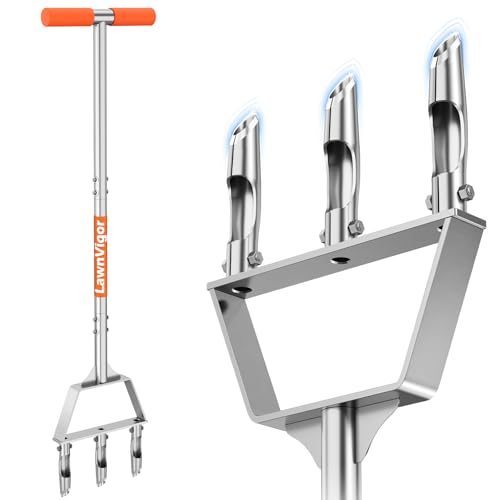
LawnVigor Manual Core Aerator with Hollow Tines

seasky Lawn Aerator with Padded T-Handle & Foot Plate

Colwelt Aerator Lawn Tool with Rugged Wide Spike
More Details On Our Top Picks
The Jardineer lawn aerator arrives fully assembled, which is a small relief for anyone who would rather start poking holes than read instructions. Its 36-inch handle gives you real leverage without hunching over, and the foot plate lets your body weight do the work instead of your arms. Where the rolling Walensee covers ground quickly, this one trades speed for precision, ideal for awkward corners, narrow strips beside a fence, or spot-treating the patch near the mailbox.
You step, the heat-treated spikes (steel that has been hardened with controlled heating to resist bending) bite in, and you move on. Twelve spikes at a time means fewer stomps per square foot than single-spike tools, and the longer 2.75-inch reach gets past surface crust into the layer where roots actually live. For typical residential lawns with light-to-moderate compaction, that depth is enough to matter.
Everyday Advantages
- Pre-assembled out of the box, no tools or setup time required
- 36-inch handle saves your back during longer sessions
- Heat-treated spikes resist bending in average residential soils
- Twelve-spike plate covers ground faster than single-spike plug tools
- Light enough to store upright in a garage or shed corner
Things To Consider
- Spike aerators compact soil sideways near the hole rather than removing cores, so heavily compacted or clay-heavy lawns may need repeat passes
- Works best on moist soil; dry ground turns each step into a workout and can blunt the spikes faster
Made For
First-time aerator owners with a small-to-medium residential lawn who want a forgiving, ready-to-use tool that does not require assembly or technique.
Skip It When
Clay-heavy or severely compacted soil is your daily reality, in which case the Dolibest coring aerator will give you deeper, more meaningful relief.
The Walensee rolling aerator changes the rhythm of the job entirely: instead of stepping and lifting, you push. Forty-two spikes arranged across a wide drum mean each pass scores dozens of holes, which matters once your yard stretches past a few hundred square feet. Compared with the Jardineer spike tool above, this one trades precision for raw coverage, turning a long afternoon into a shorter stroll.
It weighs enough to push itself into the soil, so your legs provide the motion rather than brute force on each step. The catch is that extra mass makes it tougher to lift over pavers or store on a high shelf, and it does best when the lawn is already soft from watering. For most homeowners with a mid-sized yard and decent soil, the trade-off feels fair.
Bright Spots
- Rolling drum with 42 spikes covers large areas much faster than step-style tools
- Wide body weight provides downward pressure so you push instead of stomp
- Heavy-duty construction handles repeated passes over typical residential lawns
- Even hole spacing improves water infiltration across the whole yard
Points To Note
- Heavier to lift over walkways, curbs, and into a vehicle for transport
- Spikes can collect debris and soil; a quick rinse after use is part of routine care
- Not ideal for tight, irregular lawn shapes where the wide drum cannot reach
Best Suited To
Homeowners with medium-to-large open lawn areas who want faster coverage and prefer pushing a tool over stepping repeatedly into the soil.
A Better Fit Elsewhere
For narrow strips, patchy trouble spots, or heavily compacted ground, the Jardineer spike aerator gives you the precision this rolling drum cannot.
The Grenebo tool punches above what its price tier usually delivers. Sixteen spikes laid out in a stable 4-by-4 grid make each step worth the effort, and the 3.1-inch spike length is deeper than what most entry-level aerators offer. Where the Jardineer above leans on twelve spikes at 2.75 inches, this one gives you four extra penetrations per step plus extra reach, which can matter on soil that has crusted over after a hot summer.
The self-cleaning rebound design helps shake loose soil free as you lift, so you are not stopping every few steps to clear compacted plugs. It is still a spike tool, not a coring tool, so on seriously tight clay you will want patience and a pre-watering routine. For most lawns in average condition, that is a fair compromise for the price.
What Stands Out
- 3.1-inch spike length reaches deeper than typical entry-level tools
- 4-by-4 spike grid creates more holes per step than smaller plates
- Self-cleaning rebound action reduces mid-session clogging
- Accessible price tier for first-time buyers on a budget
Honest Caveats
- Spike design still compresses some soil sideways; very compacted ground may need multiple passes
- Foot plate surface is modest, so wet or muddy conditions can feel less stable underfoot
Right Fit For
Budget-conscious homeowners with light-to-moderate compaction who want deeper spike reach than typical entry-level tools provide.
Swap It Out When
Your lawn has heavy thatch or seriously compacted clay, in which case the LawnVigor hollow-tine aerator will remove material instead of merely displacing it.
The Dolibest coring aerator does something the spike tools cannot: it actually pulls plugs of soil out of the ground. That distinction matters more than it sounds, because removing cores relieves compaction directly, while spikes simply push soil sideways to make room for the metal. On problem patches near walkways or under play sets, you will see actual results within a season.
Four coring tines mean each lift costs effort, so this is a tool for targeted work rather than full-yard coverage. The stainless steel body with a black powder-coated finish is built to resist rust through repeat seasons of storage, and the soft rubber grip saves your hands during long repair sessions. Think of it as a surgical tool, not a coverage tool.
What It Does Well
- Coring action removes soil plugs for genuine compaction relief instead of displacement
- Stainless steel construction resists rust through repeated seasonal storage
- Soft rubber grip reduces hand fatigue during longer repair sessions
- Targeted approach is efficient for trouble spots under play sets or near walkways
Trade-Offs To Consider
- Four tines make full-yard coverage slow; not designed for broad-acre use
- Soil plugs left on the surface should be raked up or broken down to finish the job cleanly
Who Should Grab It
Homeowners with localized compaction problems, pet paths, or high-traffic patches who want genuine plug removal rather than spike displacement.
Consider Something Else When
You need to cover an entire lawn efficiently, in which case the Walensee rolling aerator delivers the broad, fast pass this coring tool cannot match.
The LawnVigor core aerator focuses on one specific pain point that plagues most coring tools: clogging. Hollow tines are designed to release soil cleanly rather than packing it inside the tube, which means fewer stops to clear stuck plugs. On clay-heavy or moisture-rich soil, that single design choice saves real frustration.
Like the Dolibest above, this is a stepping tool meant for targeted work rather than full-yard blitzing. The metal construction is sturdy enough for repeated seasonal use, though you should wet the ground beforehand and avoid twisting the tool while it sits in the soil. With reasonable care, it becomes a reliable yearly companion.
The Value In It
- Hollow tine design resists clogging better than solid coring tools in sticky soils
- Genuine plug removal delivers real compaction relief for struggling patches
- Sturdy metal build holds up through multiple aeration seasons
- Foot plate provides stable leverage for consistent depth on each step
Worth Noting
- Stepping action makes full-yard coverage slow; best reserved for trouble areas or smaller lawns
- Soil must be pre-watered; using this on hard, dry ground risks bending the tines
Quick Facts
Who Will Love This
Homeowners with clay-heavy or moisture-rich soil who have struggled with coring tools that jam up halfway through the job.
Look Elsewhere When
You want broad yard coverage in one pass, in which case the Walensee rolling aerator will save you time and effort.
The seasky aerator focuses on the parts of the job that wear you out: your hands and your feet. A padded T-handle softens grip pressure over long sessions, and a wide foot plate gives your boot a confident platform so each step lands cleanly. Fifteen solid steel spikes arranged in a dual-layer pattern create extra holes per step compared with single-row designs.
Where the Grenebo above uses a rebound spring to shake soil free, this one also relies on dual-layer geometry to reduce sticking. The trade-off shows up in weight: more spikes and a beefier handle mean more tool to lift over walkways. For homeowners who value comfort over compact storage, that balance makes sense.
Positive Points
- Padded T-handle reduces hand fatigue during longer aeration sessions
- Wide foot plate improves stability and downward force on each step
- Dual-layer spike arrangement increases holes per step versus single-row layouts
- Solid steel spikes hold up to repeated use in typical residential soils
Some Limits To Know
- Heavier overall than simpler spike tools; storage in tight sheds may be awkward
- Spike-style penetration still displaces soil sideways, so severe compaction may need repeat passes
Perfect Match For
Homeowners with mid-sized lawns who prioritize comfort during longer aeration sessions and want a tool that reduces strain on hands and feet.
Another Choice May Suit
You need lighter, more compact storage or minimal assembly, in which case the Jardineer spike aerator offers a simpler profile at a similar tier.
The Colwelt tool is built for the simplest possible job: poke a hole, move on. Its rugged wide-spike design is approachable for first-time users, and assembly is quick with the included hardware and instructions. Where the multi-spike tools above optimize for coverage, this one trades volume for ease of use, which is exactly what most beginners actually need.
For targeted patch repair or small lawn aeration, the wide spike gives you a meaningful hole without requiring perfect step alignment. Pre-watering helps a lot, especially on hard or dry ground, and the included instructions walk you through the small amount of setup required. You will not cover a big yard quickly with this, but you also will not overthink the job.
Everyday Perks
- Simple wide-spike design is approachable for first-time users
- Quick assembly with included hardware and instructions
- Effective for small patches, repair spots, and seasonal touch-ups
- Lightweight frame is easy to store and carry around the yard
Practical Considerations
- Wide-spike layout covers less ground per step than multi-spike tools on larger lawns
- Spike-style penetration displaces soil rather than removing cores, so results on clay may be modest
Built With In Mind
Beginners tackling small patches, repair spots, or thin strips of grass who want a simple tool without a learning curve.
Where A Sibling Pick Shines
You need to aerate a wider lawn area efficiently, in which case the Walensee rolling aerator covers far more ground per session.
Picking The Right Manual Aerator For Your Lawn
A spike aerator pushes metal tines into the soil to create holes, while a core (or coring) aerator removes small plugs of soil entirely. Spike tools work fine for light compaction and routine maintenance, but heavily compacted or clay-rich soil usually responds better to plug removal, because pulling cores out actually relieves pressure rather than just shifting it sideways.
Spike length matters more than spike count in most cases. Anything shorter than about 2.5 inches barely clears the surface crust, while 3 inches or longer reaches the layer where grass roots actually grow. Spike count affects speed: more spikes per step means fewer steps per square foot, which adds up across a mid-sized yard.
Pre-watering the lawn the day before you aerate turns a brutal workout into a manageable one. Dry ground resists penetration, dulls spikes faster, and turns each step into a frustration. Most manufacturers in this category recommend the same routine, and skipping it is the single biggest reason new owners feel like their tool underperforms.
Finally, think about storage and transport before you commit. Rolling drums cover ground fast but take up shed space. Step tools store upright in a corner but require more physical effort. Your garage, your vehicle, and your back all vote in this decision.
What These Picks Share And Where They Differ
Common Shopping Slip Ups
The most frequent mistake is buying a spike aerator when you actually need a core aerator. If your lawn has serious thatch, hard clay, or visible runoff problems, displacement-style tools will not solve them, no matter how sharp the spikes are. Match the tool style to the soil condition before you match anything else.
Another common slip is skipping the watering step and blaming the tool when nothing penetrates. Pre-watering is not optional, especially with manual aerators. Plan to irrigate the day before your session and you will be surprised how much easier the work becomes.
Where The Extra Money Goes
Higher-tier manual aerators tend to spend the budget on spike material (heat-treated or stainless steel), better rebound or self-cleaning mechanisms, and longer handles with padded grips. Those upgrades show up over years of seasonal use rather than in a single session.
The honest read is that a budget tier tool is plenty for light, occasional work on a small lawn. The upgrade pays off for homeowners with mid-sized yards, compacted soil, or anyone who wants to aerate every year without the tool loosening, rusting, or wearing out after two seasons.
Frequently Asked Questions
How often should you aerate a residential lawn?
Most residential lawns benefit from aeration once a year, typically in early fall or spring when grass is actively growing. Heavily used lawns with kids or pets may need it twice yearly to stay ahead of compaction.
Can you aerate a wet lawn?
Soil should be moist but not soggy. Water the lawn the day before so the top few inches are soft, then avoid aerating right after heavy rain, because waterlogged soil compacts inside the tines and creates more mess than relief.
Do spike aerators really work as well as core aerators?
Spike aerators help with light compaction and routine maintenance, but core aerators remove actual soil plugs and deliver more meaningful relief on heavily compacted ground. The choice depends on how bad your compaction actually is.
How long does manual aeration take?
Plan on roughly 30 to 60 minutes for a small lawn with a step tool, and closer to 20 to 40 minutes with a rolling drum on a medium yard. Pre-watering and cleanup of cores add to the total time but are part of doing the job right.
When is the best season to aerate?
Early fall is ideal for cool-season grasses because the lawn is still growing and can recover quickly. Warm-season grasses respond best to late spring or early summer aeration, right as active growth resumes.
Bottom Line
The right manual aerator comes down to your lawn size, soil type, and how much effort you want to spend. Spike tools like the Jardineer, Grenebo, seasky, and Colwelt handle light compaction affordably and store easily. Rolling options like the Walensee trade storage space for speed across larger yards. Coring picks like the Dolibest and LawnVigor deliver the deepest relief where soil really struggles. Pick the style that matches your conditions, water the day before, and your lawn will thank you within a season.
