

Digging holes by hand is one of those jobs that feels manageable for the first three or four holes and punishing by the tenth. A purpose-built manual post-hole digger takes that punishment off your back, your knees, and your trowel, and it does it without fuel, batteries, or noise complaints from the neighbors. The right pick depends on what you’re planting, how deep it needs to go, and whether you’d rather push a drill auger or sink a classic clamshell pair.
The Picks In Brief

K-Brands Auger Drill Bit 3 Pack with Extension
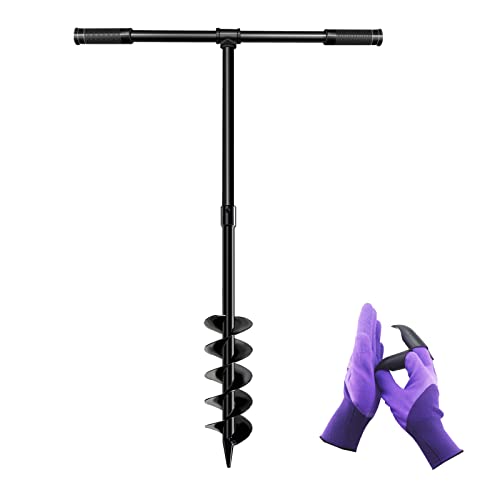
LONGRUN Hand Drill Auger 4″x38″

LONGRUN Manual Garden Hole Drill 6″x38″

VASGOR Set 3 Solid Shaft Auger Drill Bits

Laelr Garden Auger Drill 3.9×23.6″

Seymour S500 Industrial Auger 8″

VNIMTI Post Hole Digger 58″ Fiberglass
DAKEPOLE Post Hole Digger 55″ Dual Blade
A Deeper Look At The Lineup
Planting a mixed bed of tulips, daffodils, and a few gallon-size shrubs usually means swapping tools every five minutes. This three-pack solves that by giving you a small, medium, and large bit in the same box, plus a 16.5-inch extension so you can reach deeper without kneeling on wet soil.
The 3/8-inch hex drive is the standard fitment on most cordless drills in the 18V class, so most people already own the tool it needs. For weekend gardeners laying out a couple dozen bulbs before frost, the set’s range covers everything from a one-inch crocus hole up to a 2.6-inch transplant slot.
Everyday Wins
- Three working diameters in one kit means one drill handles tulips, bedding plants, and small shrubs.
- The 16.5-inch extension reaches deep enough for a root ball without flipping the drill or the planter upside down.
- Standard 3/8-inch hex drive fits the drill you likely already own, no adapter hunt required.
- Mixing bit sizes mid-project keeps planting depth consistent across a whole bed.
Trade Offs
- The auger does the cutting, but you still provide the downward force, so rocky ground will twist your wrist.
- Owners commonly report that caked-on clay needs to be scraped off the spiral after each hole, or the next one bogs down.
Quick Facts
Built With In Mind
Weekend gardeners who already own an 18V drill and want to plant a mixed bulb bed without renting or buying a power auger.
Consider Something Else When
The Seymour S500 Industrial Auger is a better fit for contractors and serious landscapers who need to sink real fence posts, not just plant flowers.
Not everyone wants to drag a cordless drill out to the back forty just to plant a flat of annuals. This hand-powered auger uses your arms instead of a battery, which keeps things quiet, fume-free, and usable on the deck without scaring the dog.
The three-piece assembly telescopes to 38 inches total, putting the working end in the ground while you stay mostly upright. The wide rubber-gripped top handle is the real comfort feature here: it’s textured for gloves-on grip, and the wide profile gives you leverage without cranking your wrist sideways.
The Upside
- No drill, fuel, or battery needed, so it works anywhere a person can stand.
- 38-inch assembled length saves your lower back on bigger beds.
- Four-inch bore suits bedding plants, small perennials, and even patio umbrella holes.
Points To Keep In Mind
- Hand-cranking a spiral in compacted clay is genuine exercise, so it’s best matched to already-worked soil.
- The threaded sections can loosen mid-project in rocky ground, requiring you to stop and re-seat them.
- Smaller stowed footprint than a drill-driven auger, but the 38-inch length still needs closet space.
Right Fit For
Older gardeners, apartment balcony planters, and anyone putting in a small herb or flower garden without owning a power drill.
Look Elsewhere When
The K-Brands Auger Drill Bit 3 Pack is the better call for shoppers who already own a drill and want more flexibility across hole sizes.
The 4-inch sibling above is great for petunias, but most shrubs and young trees need wider root balls. This wider version keeps the same hand-powered, three-piece format and pushes the bore to a full six inches, which is the practical minimum for one-gallon and two-gallon container plants.
For shoppers putting in a row of privacy shrubs or a single ornamental tree, that extra two inches of diameter means you stop fighting to squeeze a root ball into a too-tight hole. The rubberized T-handle still does the heavy lifting on grip and torque.
Notable Upsides
- Six-inch bore handles one- and two-gallon shrubs without crushing the roots on insertion.
- Same twist-together 38-inch format as the smaller sibling for easy storage.
- Hand-powered operation suits renters who can’t store gas or battery gear.
Honest Caveats
- Wider spiral pulls harder in the soil, so expect a real workout in dry conditions.
- Overkill for tulips and small bulbs, where the K-Brands set’s smaller bits make more sense.
Core Details
Who Should Grab It
Homeowners laying out a hedge, planting a young ornamental tree, or setting a few fence posts in worked soil.
A Better Fit Elsewhere
The DAKEPOLE Post Hole Digger 55″ Dual Blade is the right tool when the project demands deeper, narrower holes for actual fence posts rather than transplants.
The solid-shaft construction here is the differentiator worth noticing. Where hollow-shaft augers can flex and bind when they hit a root, this VASGOR set keeps the bit rigid from hex to tip, which translates to less wrist snap on unexpected contact.
Three diameters (1.6, 2.6, and 3.5 inches) all share the same 16-inch length, which is a thoughtful touch. It means you can swap bits between planting tulips and bedding plants without recalibrating how deep you’re drilling, because every hole ends up at the same depth.
The Value In It
- Solid shaft resists flex better than hollow alternatives when soil surprises you.
- Uniform 16-inch length keeps planting depth consistent across different species.
- Three sizes cover the full bulb-to-bedding-plant spectrum in a single cordless drill session.
Soft Spots
- 3/8-inch hex fitment limits you to drills with that chuck size, which excludes most 12V compact models.
Made For
Detail-oriented gardeners who plant in long rows and care about uniform hole depth across tulips, daffodils, and small annuals.
Swap It Out When
The Laelr Garden Auger 3.9×23.6″ is the better pick when you need to reach a deeper root zone for young trees rather than stay shallow for bulbs.
Tree seedlings and small fruit trees usually need a hole that’s both wide enough for the root flare and deep enough to anchor the trunk. At 23.6 inches long with a roughly 3.9-inch diameter, this Laelr auger pushes deeper than most drill-mounted bits, which means you can plant a small bare-root tree without excavating half the bed first.
The coated steel finish and non-slip top handle are the practical touches. The coating helps resist rust when the bit lives outside between sessions, and the T-handle grip keeps the torque under control when the spiral catches a hidden root.
Where It Excels
- 23.6-inch reach handles small tree seedlings and root balls that shallower bits can’t sink.
- Gloss-coated steel finish resists surface rust during outdoor storage.
- Non-slip T-handle reduces wrist fatigue on longer drilling sessions.
- Manual operation skips the noise and fumes of gas-powered augers in tight yards.
Some Limits To Know
- The drill-bore listing describes both a metric and an imperial sizing that reads inconsistently, so confirm the exact shaft spec if you already own a drill chuck to match.
- Long length makes it harder to control in tight perennial borders, where a shorter bit is easier to manage.
Product Snapshot
Who It Suits Best
Backyard orchardists and homeowners planting young fruit or ornamental trees who want more depth than a typical bulb auger provides.
Another Choice May Suit
The VASGOR Set 3 Solid Shaft Auger is the cleaner pick for dedicated bulb beds, where uniform shallow depth matters more than tree-ready depth.
Most augers on this list target gardeners. The Seymour S500 targets the people who hire gardeners, plus anyone sinking real fence posts in real dirt. The hardwood handle, riveted steel blade, and welded T-grip tell you immediately that this is industrial-spec gear rather than a weekend tool.
An 8-inch point spread is a serious bite per stroke, and the replaceable hardwood handle means that when the wood finally dries out and loosens, you can swap it instead of buying a whole new auger. It’s a tool built for repeat use on job sites, not one project per year.
Notable Gains
- Replaceable hardwood handle extends the tool’s working life and simplifies repairs.
- 8-inch point spread handles real post holes, not just transplant slots.
- Riveted steel blade holds up to rocky and clay-heavy soils better than light-gauge alternatives.
- Made in the USA construction typically signals tighter quality control on metalwork.
Practical Considerations
- Heavier than the drill-mounted or hand-auger options, so fatigue on a long fence line is real.
- Hardwood handle benefits from occasional oiling to prevent splitting in dry climates.
- Overkill for casual gardeners who mostly plant annuals.
Key Product Details
Whose Shelf It Belongs On
Contractors, fence installers, and serious homesteaders who set posts regularly enough to justify industrial-grade construction.
Reach For A Different Pick When
The DAKEPOLE Post Hole Digger 55″ Dual Blade is friendlier for general yard work that mixes planting, weeding, and occasional post-setting.
A traditional clamshell post-hole digger is the right tool for narrow, deep holes, but the steel-handled versions beat up your hands after a dozen repetitions. The VNIMTI swaps steel for fiberglass and stretches the handle to 58 inches, which gives you both weight savings and reach.
The classic two-handle, two-blade design sinks into soil and pulls out a plug of dirt with each bite. Fiberglass won’t conduct cold the way steel does on a chilly spring morning, and it generally shrugs off weather that would rust untreated metal.
Everyday Advantages
- Fiberglass handle weighs noticeably less than comparable steel-handled diggers.
- 58-inch length reduces how far you bend on each stroke.
- Two-handle design gives balanced leverage for pulling plugs from deeper holes.
- Non-slip grip section keeps hands planted during heavy lifts.
Potential Compromises
- Two-handle clamshells are slower per hole than drill augers, so a long fence line adds up.
- Fiberglass can crack under hard sideways prying, so lifting technique matters.
Best Suited To
Taller gardeners and anyone sinking actual fence posts in soft to medium soil who values lighter weight over speed.
Skip It When
The Seymour S500 Industrial Auger is a better match for contractors who need an 8-inch bite per stroke and don’t mind the extra weight.
The DAKEPOLE closes the list because it’s the most versatile non-auger option here. The two opposing spade heads aren’t just for post holes: they cut through roots, lift tough weeds, edge a flowerbed, and open a planting hole without needing a second tool on the porch.
For gardeners who treat the digger as a multi-tasker rather than a one-trick specialist, that flexibility earns its shelf space. The 55-inch handle splits the difference between the VNIMTI’s reach and the easier storage of a shorter tool.
Real-World Strengths
- Two sharpened spade heads handle digging, weeding, edging, and trenching in one tool.
- 55-inch length is comfortable for most adults without dominating the shed.
- Pre-sharpened edges reduce the prep work before the first hole.
- Works in tighter spaces than a long drill auger, useful between established perennials.
A Few Limitations
- Dual-blade design is slower per bite than a single-spiral auger in soft soil.
- Sharpened edges need occasional touch-up to stay efficient in compacted ground.
- Less specialized than the Seymour S500 for heavy fence-post work on job sites.
Perfect Match For
All-purpose home gardeners who want one tool to handle bulbs, weeds, edging, and the occasional post hole without swapping equipment.
Not Your Match When
The LONGRUN Manual Garden Hole Drill 6″x38″ is the cleaner pick when the priority is rapid, repeatable transplant holes rather than multi-purpose digging.
What To Weigh Before Choosing Manual Post-Hole Diggers
The first decision is auger versus clamshell. Drill-mounted and hand-cranked augers use a spiral to pull soil up and out, which makes them fast on soft, worked, or sandy ground. Clamshell diggers use two opposing blades to bite and lift plugs, which makes them slower per hole but better at cutting through actual roots and harder-packed soil.
The second decision is hole diameter and depth. Bulbs and bedding plants rarely need more than three inches across or eight inches deep, so a small bit set like the K-Brands or VASGOR packages is plenty. Shrubs and young trees push you toward the five- to six-inch range, which is where the LONGRUN 6″ and Laelr 3.9×23.6″ earn their keep. Fence posts and sign installations demand the eight-inch point spread that industrial augers like the Seymour S500 deliver.
The third call is power source. Manual hand augers are quiet and portable but genuinely tiring on clay. Drill-mounted augers multiply your effort but tie you to a battery or cord. Industrial manual augers trade weight for total independence from power. Matching the tool to your soil and stamina matters more than matching it to a marketing claim.
Key Considerations Across These Picks
Common Shopping Slip Ups
The easiest mistake is choosing a bit size based on the plant’s above-ground size rather than its root ball. A two-foot-tall shrub in a one-gallon pot needs a hole that fits the root mass, which is usually wider than you’d guess. Picking an auger that’s too narrow forces you to widen the hole by hand afterward, which negates the time savings.
Another trap is underestimating how rocky or rooty your soil actually is. Augers and clamshells both struggle when they hit a buried stone or thick root. Buyers with newly built home sites often discover clay subsoil beneath a thin layer of topsoil, which demands a heavier-duty tool than the one they bought for the demo garden.
Where The Extra Money Goes
Higher-tier manual post-hole diggers usually cost more for three reasons: thicker steel that resists bending, replaceable parts like handles and blades, and tighter manufacturing tolerances on the blade-to-handle joint. The Seymour S500 exemplifies all three: the riveted steel blade, replaceable hardwood handle, and pliable iron yoke are upgrades you feel the moment the tool hits resistance.
The honest read is that the upgrade pays off most for people who will use the tool more than a handful of times per year. Casual gardeners usually get their money’s worth from mid-tier augers, while contractors and serious homesteaders recover the extra cost quickly through durability alone.
Frequently Asked Questions
What is the difference between an auger and a post-hole digger?
An auger is a spiral bit that drills into soil and pulls it up the flights, usually powered by a drill or turned by hand. A post-hole digger in the traditional sense is a clamshell tool with two opposing blades that bite and lift plugs of dirt, operated by hand.
Can a manual post-hole digger handle rocky soil?
Manual diggers can handle small stones, but large rocks or thick root mats will stop most of them. In genuinely rocky ground, a powered auger or a digging bar is usually a better choice than any tool on this list.
How deep do these diggers typically reach?
Most drill-mounted augers on this list reach between 12 and 24 inches, depending on bit length and extension. Traditional clamshell diggers reach as deep as you can keep digging, but fatigue usually sets in well before you hit 30 inches.
Do I need a drill for an auger-style digger?
Drill-mounted augers require a drill with a 3/8-inch hex chuck and enough torque to spin through soil. Hand-cranked augers and traditional clamshell diggers do not need a drill at all.
How do I keep an auger from rusting?
Coating the steel with a light film of oil after each use and storing the bit indoors or under cover is the most reliable approach. Coated-steel finishes resist rust longer than bare steel, but they still benefit from being wiped clean before storage.
Wrap Up
The right manual post-hole digger depends on what you’re putting in the ground and how often. Drill-mounted bit sets cover most flower and bulb work, hand augers handle transplants without needing power, and industrial clamshells and augers earn their keep on real fence posts. Match the tool to your soil and your stamina, and the rest of the project tends to take care of itself.
