

A plain backyard turns into a small wildlife corridor when the right pollinator housing goes up. Mason bees work early mornings and cooler temperatures than honeybees, so a thoughtful hotel supports fruit trees, berries, and flower beds through the shoulder seasons. Home gardeners who want more blooms without chemical inputs lean on these shelters to host gentle, non-aggressive native species that get on with the work. The picks below cover compact balconies, larger garden walls, and everything in between, with options that hold up across wet winters and dry summers alike.
The Choices Worth Comparing

Cestari Mason Bee House Bamboo Tube Solitary Bee Hotel

Cestari Bamboo Tube Bee Hotel for Solitary Bees
POLLIBEE Wax Coated Bee Hotel Wooden Pollinator House

Elipark Wooden Insect Bee Butterfly Habitat House

POLLIBEE Handmade Wooden Bee Hive Wax Coated

POLLIBEE Wax Coated Wooden Bee Hotel for Outdoors

GardeningProducts4Less Cedar Wooden Insect House

EGREE Outdoor Wooden Bee Hotel for Garden and Yard
What Each Pick Brings To The Table
This is the kind of bee house that quietly disappears into the garden once installed, in a good way. The 8 by 7.5 by 5-inch footprint fits against a fence post or garden shed without crowding nearby flowers, and the sloped roof sheds rain away from the bamboo tubes.
Inside, around 75 tubes made from FSC-certified wood and bamboo give cavity-nesting bees a stable place to lay eggs. The fir frame is finished with a water-based stain that holds up across a couple of seasons outdoors, and the rose pink tint adds a soft pop of color without looking out of place in a green bed.
The Helpful Details
- Around 75 bamboo and wood tubes provide plenty of nesting slots for early-season solitary bees
- Sloped roof design keeps rainwater from pooling at the entrance and damaging cocoons
- FSC-certified wood sourcing appeals to shoppers who care about responsible forestry
- Compact size suits balconies, raised beds, and small urban gardens where space is tight
Points To Keep In Mind
- Stained fir can weather visibly after a year or two in harsh sun, so placement in partial shade helps
- Tubes cannot easily be swapped out, so plan to refresh the whole unit every couple of seasons for parasite control
Best Suited To
First-time hosts working with a small backyard, patio, or raised bed who want a tidy, low-profile house that blends in.
Look Elsewhere When
You want more interior volume per square inch, in which case the Cestari Bamboo Tube Bee Hotel for Solitary Bees offers denser tube packing.
Where the previous Cestari unit leans toward a tidy, decorative profile, this one prioritises bee diversity. The design intentionally varies the tube diameters, an attribute that matters because different solitary bee species prefer different cavity widths.
With roughly 75 tubes over four inches deep, the hotel creates dark, sealed chambers that mimic the hollow stems bees seek out in nature. The FSC-certified wood frame keeps the build aligned with responsible sourcing, and the larger tube count means more chances for successful pollination through the early spring bloom.
Where It Excels
- Varied tube diameters appeal to multiple native bee species beyond the standard mason bee
- Tubes over four inches deep support full cocoon development and safer overwintering
- FSC-certified wood reassures gardeners focused on sustainable material sourcing
Trade-Offs To Consider
- Dense tube layout can make seasonal cleaning trickier without disturbing neighboring cocoons
- Construction is rated for one to two seasons, so plan a replacement cadence if parasites build up
- Larger footprint than compact picks, so placement options narrow on smaller fences
Quick Facts
Whose Shelf It Belongs On
Curious gardeners who want to host more than one species and track which bees actually show up across the season.
Swap It Out When
You are working with very limited wall space, since the EGREE Outdoor Wooden Bee Hotel for Garden and Yard fits a tighter footprint.
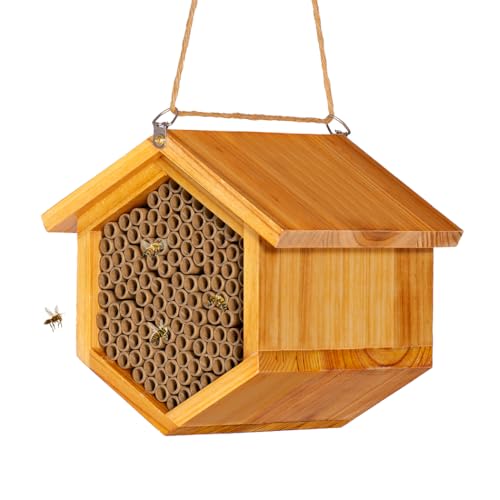
Wet climates punish untreated wood faster than dry ones, and that is where a wax-dipped shell earns its keep. This POLLIBEE house wraps the full body in beeswax, which slows water absorption and helps the unit survive shoulder-season rains without swelling apart.
It arrives assembled, so the first job is finding a hook or branch. A stainless steel screw clasp on the back makes mounting on a tree or fence straightforward, and the natural wood grain shows through the wax for a softly finished look.
Why It Works Well
- Full-body wax dip slows moisture damage and extends outdoor service life
- Pre-assembled build skips fiddly setup and gets the house in service faster
- Stainless steel hanging clasp resists rust on tree trunks and outdoor walls
Worth Bearing In Mind
- Wax coating can soften in direct, intense summer sun, so partial shade helps longevity
- Tubes are not user-replaceable, so the whole unit needs refreshing when parasites appear
Right Fit For
Gardeners in damp coastal or four-season climates who want a weather-tough shell without a premium spend.
Reach For A Different Pick When
You want a smaller decorative piece for a patio wall, in which case the Cestari Mason Bee House Bamboo Tube Solitary Bee Hotel is more compact.
Most bee hotels keep their scope narrow, but this one steps back and welcomes the rest of the beneficial crowd. The roughly 9 by 15.7 by 2.5-inch frame is filled with pine wood, bamboo, and pine cones, each chamber shape appealing to a different visitor.
Butterflies shelter under the sloped metal roof during showers, ladybugs tuck into the cone crevices, and solitary bees claim the bamboo sections. It is the most eclectic habitat on this list, and that variety is the point.
Strengths Worth Knowing
- Mixed materials support bees, ladybugs, and butterflies in a single wall-mounted panel
- Metal roof sheds rain and protects lower chambers during heavy weather
- Unpainted natural finish blends with rustic and cottage-style gardens
Possible Compromises
- Thin 2.5-inch depth means cocoons sit closer to the front, so parasitic wasps may reach them more easily in some climates
- Pine cones shed debris, and owners commonly report the need for an annual tidy
Feature Snapshot
Made For
Wildlife-friendly gardeners who treat beneficial insects as a community rather than a single-species target.
A Better Fit Elsewhere
You live in heavy rain zones where depth matters most for cocoon safety, and the Cestari Bamboo Tube Bee Hotel for Solitary Bees offers deeper chambers.
Where the smaller POLLIBEE pick stays compact, this one feels like the older sibling. The beeswax coat covers the entire body for water resistance, and the handmade build gives each unit a slightly different character that mass-produced houses lack.
A stainless steel clasp on the front and back turns hanging into a one-minute task, and the natural wood tone stays warm even after a few seasons outside. For gardeners who like the idea of a sturdier long-term habitat, this lands well.
Real-World Strengths
- Full beeswax coating slows water absorption and supports multi-season service
- Front and back hanging clasps let you reposition the house as the garden changes
- Handmade construction gives a unique look that stands out from stamped wood panels
- Stainless steel hardware avoids the rust streaks common on cheaper fittings
Small Caveats
- Larger profile than compact picks, so apartment balconies may feel crowded
- Wax finish benefits from occasional re-coating in very wet climates for full benefit
Quick Technical Notes
Who Should Grab It
Gardeners committed to pollinator support who plan to keep the house in service across multiple seasons.
Consider Something Else When
You need a free-standing ground-mount option, in which case the GardeningProducts4Less Cedar Wooden Insect House includes a stake.
This sits in the POLLIBEE range as the grab-and-go option. The beeswax coating does the heavy lifting against rain, while the ready-to-hang design means you can mount it on a fence or wall without hunting for extra hardware.
Compared to the slightly larger POLLIBEE Handmade Wooden Bee Hive Wax Coated, this one keeps a slimmer profile that fits tight garden corners. For shoppers who want a no-fuss install and a tidy look, the simplicity is the main event.
The Value In It
- Arrives ready to mount, so installation takes a few minutes rather than an afternoon
- Wax-coated body holds up through damp mornings and shoulder-season showers
- Compact frame fits fence posts and narrow shed walls where larger houses crowd the space
Some Limits To Know
- Smaller tube count than denser picks means fewer bees per season
- Wax finish can fade in constant direct sun, so morning sun with afternoon shade works best
Perfect Match For
Casual gardeners who want something easy to hang without committing to a large footprint or a complex install.
Not Your Match When
You want to host multiple species side by side, since the Elipark Wooden Insect Bee Butterfly Habitat House offers a wider variety of chamber types.
Cedar handles moisture and insects well on its own, which is why this house skips the wax coat and relies on natural wood oils for protection. A ground stake is included, so you can push it into a flower bed or lawn edge without a separate mounting kit.
Inside, multiple compartments of different sizes appeal to bees, ladybugs, and other small beneficial insects. For gardeners who prefer a free-standing yard feature over a wall-mounted panel, the staking design is the main draw.
Bright Spots
- Cedar wood resists rot naturally, so it survives multi-season outdoor exposure
- Included ground stake lets you set up in open beds without wall space
- Multiple chamber sizes attract a wider mix of beneficial insects
A Few Limitations
- Free-standing placement exposes the house to curious pets and lawn equipment
- Cedar scent fades over time, so the natural insect-repelling benefit weakens across seasons
Feature Snapshot
Built With In Mind
Yard gardeners who want a free-standing pollinator feature rather than drilling holes in a fence or wall.
Where A Sibling Pick Shines
You want the natural wood tone of the house itself, since the ELIPARK model uses a similar untreated wood look with a wall-mount format.
The 8 by 7.5 by 5-inch pine body is the smallest footprint on this list, which makes the EGREE house a smart fit for first-time hosts who want a low-commitment trial. A hanging ring on top installs in seconds, and the bamboo tubes provide standard cavity nesting for mason and orchard bees.
The build is rated for one to two seasons, which is honest for a starter unit and sets realistic expectations for replacement timing. For shoppers easing into pollinator gardening, the simple setup is the main selling point.
Everyday Wins
- Top-mounted hanging ring installs on any hook, branch, or nail in seconds
- Pine and bamboo build stays light enough to move around as the garden shifts
- Medium size suits balconies, small patios, and tight yard corners
Things To Weigh Up
- One to two-season lifespan means you will need to plan for replacement sooner than wax-coated options
- Mount about four feet off the ground in a sheltered spot to keep bees safe from wind and predators
Who It Suits Best
First-time pollinator hosts working with a balcony, small yard, or compact garden who want a simple test run.
Where Another Pick Suits Better
You want stronger weather protection out of the gate, in which case the POLLIBEE Wax Coated Bee Hotel Wooden Pollinator House handles rain better from day one.
Choosing The Right Mason Bee House For Your Garden
A bee house earns its place by matching the actual climate, space, and species mix in your yard. Tube depth is the first thing worth weighing, since cocoons need at least four inches of sealed cavity to develop safely through winter. Tube diameter comes next: a mix of widths invites more than one species, while a uniform tube count favours predictable populations.
Mounting style shapes placement more than most shoppers expect. Wall-mounted units need a sheltered south or east-facing spot, ideally around four to six feet off the ground. Free-standing cedar picks like the GardeningProducts4Less Cedar Wooden Insect House go in open beds but need protection from curious pets and lawn gear.
Material finish matters in wet climates. Wax-coated wood sheds moisture but benefits from partial shade, while untreated cedar relies on natural oils that fade over time. Stained fir, like the Cestari Mason Bee House Bamboo Tube Solitary Bee Hotel, holds up in mild climates but needs replacing sooner in heavy rain zones.
Key Considerations Across These Picks
Where Shoppers Go Wrong
A common slip is mounting a bee house in full afternoon sun, which overheats cocoons and shortens the lifespan of the wood. Morning sun with afternoon shade is the safer bet. Another frequent miss is placing the house near outdoor lights, since night illumination disrupts the dark conditions cavity bees rely on. Finally, skipping annual tube replacement allows parasites to build up across seasons, so a refresh cadence matters more than initial build quality.
What Separates Premium From Basic
Spending up typically buys deeper tubes, more durable wood finishes, and stainless steel hardware that does not rust. Wax-coated shells and FSC-certified wood add material sourcing reassurance. The real upgrade is longevity, since a premium house survives three or more seasons while budget picks often need replacing after one or two. For gardeners in tough climates, that longer service life is where the extra spend earns its place.
Frequently Asked Questions
How high should a mason bee house be mounted?
Aim for around four to six feet off the ground, in a sheltered spot with morning sun and afternoon shade. That height keeps bees above most predators and away from splash-back rain.
When is the best time to put out a bee house?
Early spring, just as temperatures climb above the mid-50s Fahrenheit, lines up with mason bee emergence. Hanging the house a few weeks early gives bees time to locate it during scouting flights.
How do you clean a mason bee house?
The simplest approach is to swap out the bamboo tubes each season and dispose of the old ones sealed in a bag. For wood houses, replacing the inner block or the entire unit is the safer route for parasite control.
Do mason bee houses actually attract bees?
Yes, when mounted in the right spot at the right time. Houses near blooming fruit trees, berry bushes, or early-spring flowers tend to fill faster than those placed in sparse areas.
Can a bee house be used year-round?
The house stays out year-round, but bees only occupy it during the active spring and summer months. Cocoons overwinter inside the tubes, so leaving the house in place through cold weather is part of the cycle.
Final Verdict
The right mason bee house fits your space, your climate, and the species mix your garden actually attracts. Start with tube depth, mounting height, and material finish, and the rest of the decision tends to fall into place. Pick the unit that matches your real conditions rather than the most decorative option on the shelf, and your garden will thank you through bloom season after bloom season.
