

A young sapling doesn’t get a second chance once a buck rubs its antlers against the trunk or a string trimmer nicks the bark. Mesh tree bark protectors are a low-cost, low-effort way to keep that tender cambium layer intact through the seasons when deer are hungry, rodents are gnawing, and lawn tools are flying. Homeowners with a handful of new fruit trees, suburban gardeners fighting rabbits, and small orchardists replanting every spring all reach for these guards. The right one depends on the threats you face, the size of your saplings, and whether you want plastic flexibility or metal muscle.
The Essentials At A Glance

Aukney Plastic Spiral Tree Guard Tree Trunk Protector Wrap
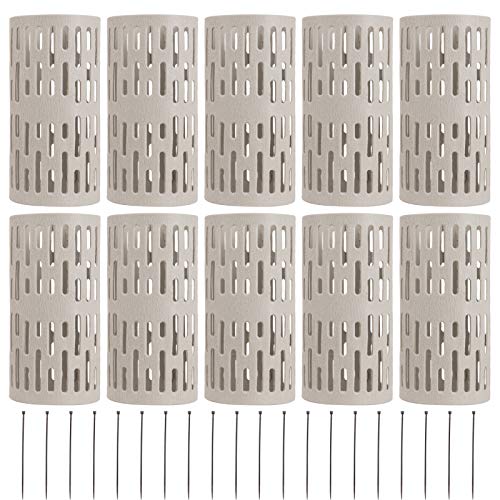
Aulock 10pcs Plastic Tree Trunk Protectors, Easy Flexible Guards

Yowlieu Mesh Tree Trunk Protectors, 6 Pack 40 Inches

HOLANHING 15 Pack Tree Trunk Protector, Metal Mesh 5″ Dia x 16-1/2″ H

HOLANHING 6 Pack Tree Trunk Protector, Metal Mesh 5″ Dia x 16-1/2″ H

HOLANHING 3 Pack Tree Trunk Protector, Metal Mesh 5″ Dia x 16-1/2″ H

HOLANHING 12 Pack Tree Trunk Protector, Metal Mesh 5″ Dia x 16-1/2″ H

HOLANHING 9 Pack Tree Trunk Protector, Metal Mesh 5″ Dia x 16-1/2″ H
Taking A Closer Look At The Options
The Aukney spiral guard takes a different route than the rigid mesh designs further down the list. You stretch the open side and rotate the tube around the trunk from bottom to top, joining extra spirals together for taller saplings. Two size options ship in the pack, so you can match narrow whips and stockier transplants from the same box.
For anyone installing guards on a dozen young trees in an afternoon, the spiral design skips zip ties and stakes entirely. The plastic wall blocks browsing deer, gnawing rodents, and string trimmer nicks in equal measure. Homeowners with deer pressure and a trimmer habit get the most from this layout.
Real-World Strengths
- Spiral wrap design wraps around trunks without separate fasteners
- Pack ships with two sizes to fit mixed sapling diameters
- Plastic wall stops deer browse, rodent gnawing, and mower nicks
- Modular spirals link together for taller trunks
Things To Consider
- Edges on the spiral opening can be sharp, so gloves help during install
- Plastic eventually degrades in UV-heavy yards and may need swapping after a few seasons
Feature Snapshot
Made For
First-time planters wrapping a small grove of young saplings want a no-fuss install that wraps on in seconds.
Skip It When
Reach for the HOLANHING 6 Pack metal mesh tree trunk protector when heavy buck pressure makes plastic walls feel too thin.
The Aulock set ships ten flexible plastic guards with twenty nylon zip ties in the same box. PP plastic, a moisture-resistant polymer that shrugs off rain and dew, gives the guards a softer hand than rigid mesh, so they bend around curved trunks without splitting. Each piece measures roughly 13.4 by 8.3 inches, sized for young whips rather than mature trees.
Compared to the spiral Aukney design above, this set leans on traditional wrap-and-tie install. Two zip ties per guard keep the wall closed around the trunk, which takes a few extra minutes per tree. Gardeners on tight budgets covering a long row of saplings get the most from a ten-pack.
Why It Works Well
- PP plastic flexes around curved or angled trunks
- Kit ships with double the zip ties for spares or larger trunks
- Moisture-resistant plastic survives wet spring weather
- Ten-pack covers a full starter row in one buy
Trade Offs
- Smaller footprint than the Yowlieu guards, so taller trunks need stacking
- Plastic loses stiffness under direct summer sun over multiple seasons
- No ground stakes included, so install relies on ties alone
Who It Suits Best
Cost-conscious gardeners shielding a row of newly planted whips from rabbits and string trimmers appreciate the per-tree price.
Look Elsewhere When
Pick the Yowlieu 6 Pack 40-inch mesh tree trunk protector if your saplings already stand over three feet tall and need taller coverage.
The Yowlieu guards measure 39.5 by 13.3 inches, putting them firmly in mid-height territory, taller than the Aulock wraps but shorter than some of the metal kits below. Six guards, sixty zip ties, and a dozen U-shaped ground nails ship in the box, so you have hardware for anchoring the mesh and tying it closed. Each cylinder fits trunks up to roughly four inches in diameter.
For suburban lots with deer traffic and a half-dozen new trees, the kit hits a sweet spot. The mesh breathes and lets light reach the bark, which matters for healthy cambium growth. Larger trunks connect multiple guards end-to-end, an upgrade over the all-plastic Aulock approach.
Everyday Advantages
- 40-inch height covers mid-range saplings in one guard
- Mesh breathes and dries out after rain, reducing rot risk
- Kit includes U-shaped ground nails for stable anchoring
- Modular design lets you connect guards for wider trunks
Worth Noting
- Mesh bends under heavy buck antler rubbing in tight spots
- Only six guards per kit limits larger planting projects
- Installation takes longer than the spiral Aukney design
Perfect Match For
Suburban homeowners with a small orchard of mid-sized saplings need breathable mesh plus anchoring hardware in one box.
Consider Something Else When
Step up to the HOLANHING 15 Pack tree trunk protector when a deer-heavy property demands heavier-gauge wire cylinders.
HOLANHING’s 15-pack shifts the conversation from plastic to 2mm-thick steel wire, roughly twice the gauge of lighter mesh guards. Each cylinder measures 5-1/2 inches in diameter and 16-1/2 inches tall, sized for trunks under about five inches across. Thirty metal stakes and a bundle of cable ties come in the box.
Where the Yowlieu mesh above flexes under hard antler rubs, this wire stands firm. A buck learns quickly that there’s nothing to push against, and rodents can’t chew through a steel wall. Rural properties with serious deer pressure and tight planting budgets get the most from a 15-pack.
A Favorable Mix
- 2mm steel wire outlasts plastic in UV and weather
- Mesh still allows airflow and sunlight to the cambium
- Plenty of stakes and ties for full install out of the box
- Fifteen guards suit medium orchards
Room For Improvement
- Wire edges can scratch hands during install without gloves
- 5-1/2 inch diameter caps trunk size, so bigger trees need linking or skipping
- Metal cost runs higher than plastic alternatives
Feature Rundown
Best Suited To
Rural homeowners and small-scale orchardists need durable metal mesh in bulk for serious deer country.
Reach For A Different Pick When
Switch to the Aukney spiral guard when ease of install matters more than the heavier wire build.
The 6-pack version keeps the same 2mm wire and 5-1/2 inch diameter as the 15-pack above, scaled down for smaller yards. Six guards, fifty cable ties, and twelve metal stakes handle a modest planting of new trees without leftover hardware sitting unused in the garage. The wire wall still beats the plastic kits for serious deer and rodent pressure.
For most backyards with three to six saplings, six guards feels like the right count. You get the same build without buying extras to round up to a 15-pack. Suburban gardeners with mixed pest pressure get a balanced fit.
The Case For It
- Six-pack matches small yards without surplus leftovers
- Hardware ratio covers every guard plus spares
- Steel build handles buck rubs where plastic fails
- Mesh breathability protects cambium health
Minor Gripes
- Diameter tops out near five inches across for trunks
- Wire cylinders don’t stretch for unusual trunk shapes
Right Fit For
Homeowners with a handful of new saplings in moderate deer country want metal durability without bulk-buy extras.
A Better Fit Elsewhere
Choose the Yowlieu 6 Pack 40-inch mesh tree trunk protector when trunks are tall enough that 16-1/2 inches won’t reach the critical browsing zone.
Three guards, forty cable ties, and six metal stakes ship in this compact bundle. The 2mm wire and 5-1/2 inch diameter match the larger HOLANHING kits, so you don’t sacrifice build quality for a smaller count. The bundle suits front-yard specimen trees or a tidy trio along a driveway.
Owners planting a single maple or a matching row of three fruit trees get exactly the hardware they need. The kit lands in the sweet spot for tight landscapes where 6, 9, 12, or 15 guards would mean storing extras.
Well-Handled Touches
- Compact 3-pack matches single or paired plantings
- Hardware count fits the guard count without waste
- Heavy-gauge wire handles browse pressure
- Same proven dimensions as larger HOLANHING kits
Points To Note
- Limited count makes expanding the orchard a second purchase
- 16-1/2 inch height falls short for tall saplings
Whose Shelf It Belongs On
Homeowners planting one or two prized saplings in the front yard get the right count without bulk-buying extras.
Swap It Out When
Move up to the HOLANHING 9 Pack tree trunk protector when planning a longer driveway row of matched trees.
Twelve guards, a hundred and twenty cable ties, and twenty-four metal stakes round out a backyard orchard kit. The 12-pack sits between the 9-pack and the 15-pack in count, which suits folks who planted a dozen trees in spring and want enough hardware to do the job without overshooting. Wire gauge and dimensions stay consistent across the HOLANHING line.
Where the 6-pack feels light for a serious planting, the 12-pack gives breathing room. If you expect to replace a guard or two after a storm, having spares on hand avoids another trip to the store.
Bright Spots
- Twelve guards fit a typical backyard orchard size
- Ties and stakes run roughly ten per guard, leaving spares
- Steel build takes weather that plastic can’t match
- Mesh breathability stays consistent across the kit
Small Caveats
- Heavier kit weighs more to ship and stage at install
- Higher total cost than smaller count kits
Who Should Grab It
Backyard orchardists with a dozen fruit or nut saplings find the count matches their planting plan without leftovers.
Where A Sibling Pick Shines
The HOLANHING 15 Pack tree trunk protector is a smarter buy when an additional row of trees is on the planting list.
The 9-pack fits the awkward middle ground between small and bulk buys. Nine guards with eighteen metal stakes suit gardeners who planted a slightly larger block but don’t need the 12 or 15-pack total. The wire and dimensions match the rest of the HOLANHING line, so swapping or expanding stays simple.
For a yard with a curved planting bed or an uneven number of trees, nine guards fits without rounding up. It’s a useful count that often gets overlooked in favor of round numbers.
What Works In Its Favor
- Nine-guard count suits odd-number plantings
- Same steel build as the rest of the HOLANHING family
- Hardware ratio covers each guard with extras to spare
- Mesh design allows airflow to the trunk
Honest Caveats
- Stakes included may fall short of full coverage at nine guards
- Diameter limit excludes larger caliper saplings
Built With In Mind
Gardeners with a nine-tree block or odd-count planting want a kit sized to match their layout exactly.
Where Another Pick Suits Better
Pick the Aulock 10-piece plastic kit when flexibility and lightweight handling beat steel durability.
What Matters Most Before Choosing Mesh Tree Bark Protectors
Material And Build
Plastic guards flex around trunks, install in seconds, and ship in tall spirals, but they degrade under UV and give way to persistent rodents. Steel mesh stands up to buck rubs and gnawing, breathes well, and lasts multiple seasons, though it costs more and needs gloves during install. The honest read is that plastic suits short-term protection on whips under three years old, while steel mesh earns its keep on saplings you plan to keep for a decade or more.
Height And Diameter
A guard shorter than the typical deer browse line leaves the upper trunk exposed. Most browsing happens under three feet, so 16-inch guards cover the vulnerable zone on young whips, while 40-inch options reach higher trunks. Diameter matters once your sapling caliper passes four to five inches; rigid cylinders stop fitting, and you’ll need to link units or move to wraps.
Hardware And Anchoring
Ties and stakes seem minor until wind flips a loosely tied guard across the yard. Kits that ship with ten ties per guard and at least one stake per guard give the install enough redundancy to survive weather. Bundles that skip stakes force you to buy extras separately, which inflates the real cost.
Pack Size And Use Case
Count your trees before you count your pack. Buying a 15-pack for three trees wastes hardware and storage space, while under-buying for twelve trees means two trips. Match the kit to your planting plan as closely as possible, leaving one or two spares for damage replacements.
Key Considerations Across These Picks
Common Shopping Slip Ups
The most frequent mistake is buying a guard too short for the local deer population. In areas where bucks stand tall on hind legs, anything under 24 inches invites trouble. Another slip is grabbing rigid cylinders for trunks that aren’t yet straight; angled saplings push against the wall and leave gaps. Measure your trunk diameter at planting height, then size up the guard by an inch or two for trunk growth through the season.
What The Higher Tier Buys
Moving from plastic spirals to 2mm steel mesh brings more than just durability. The mesh breathes, which keeps the cambium, the thin living tissue beneath the bark that carries nutrients, healthier during humid summers, and the steel stands up to antler rubs that flatten plastic in a single evening. The extra cost pays off when your saplings represent years of growth and you want guards that survive weather and rodents without annual replacement.
Frequently Asked Questions
How tall should a mesh tree bark protector be?
For most suburban deer pressure, guards between 16 and 40 inches cover the typical browse line on young saplings. In rural areas with larger deer populations, taller guards protect upper trunks from rubbing damage.
Can mesh tree bark protectors stop rodents?
Steel mesh stops rodents from reaching the bark, while thin plastic guards can be chewed through by persistent voles and squirrels. Where rodent pressure is heavy, 2mm wire cylinders outperform plastic spirals.
How long do these guards last?
Plastic spirals typically last two to four seasons before UV degrades the material. Steel mesh guards can last ten years or more, depending on climate and exposure.
Do I need stakes for tree trunk protectors?
Stakes anchor guards against wind and lawn equipment, especially on smooth trunks where guards can shift. Kits without stakes rely entirely on zip ties, which hold less reliably in loose soil.
Can I reuse mesh tree bark protectors?
Steel mesh guards remove cleanly at season’s end and reinstall on the next planting. Plastic spirals often crack during removal, making single-season use more realistic.
