

You set out to water your yard consistently, and the sprinkler hose never quite cooperates. Micro-irrigation controllers solve that by automating delivery, so your tomatoes get a slow soak at dawn while you sleep in.
These eight picks span everything from full drip kits to app-driven smart timers, each chosen for a specific kind of garden and gardener.
A Snapshot Of The Selections
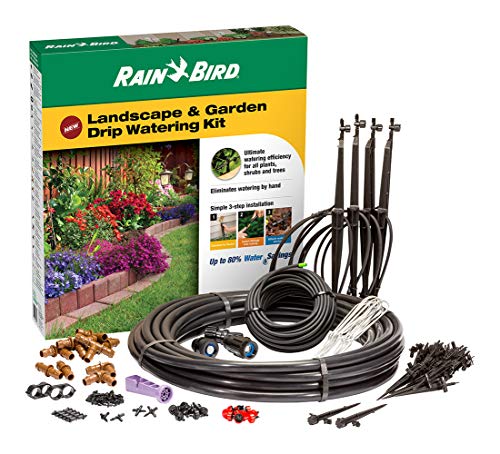
Rain Bird LNDDRIPKIT Drip Irrigation Kit

Rain Bird SST400IN Indoor Irrigation Controller, 4-Station

Rain Bird MANIFRE6S Drip Manifold

Rain Bird MBF4PKS Drip Micro-Bubbler, Full Circle, 4-Pack

Rain Bird MSSTKTF1S Drip Micro-Spray, Full Circle, 1/4″
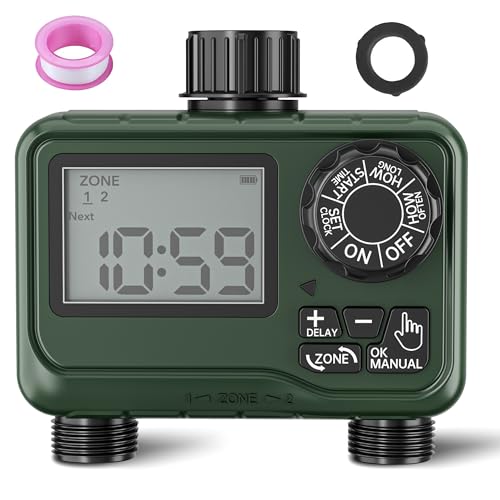
BN-LINK Outdoor Water Timer, 2 Zone

Rain Bird ARC8 Smart WiFi Irrigation Controller, 8-Zone

Rain Bird 1ZEHTMRP Professional Irrigation Controller
The Picks, Examined More Closely
Starting a drip system from scratch usually means buying parts from three different aisles, and the Rain Bird LNDDRIPKIT keeps everything in one box. A 108-piece assortment covers tubing, fittings, and three watering device types, so you can target thirsty shrubs one way and delicate seedlings another. The kit connects to a standard outdoor faucet and lays out across raised beds or foundation plantings without much fuss.
For a homeowner laying their first drip line, this bundle removes the trial-and-error of mixing drippers, stakes, and tubing from separate brands. Compared with the components-only picks further down this list, you trade some flexibility for a faster path to a working system.
The Practical Payoff
- Everything needed for a basic install arrives in one package, cutting the parts-hunting phase
- Three watering device styles let you match flow to different plant types in the same bed
- Up to 80% water savings over hand watering in typical landscape setups, useful in dry regions
- Connects to a standard hose bib with no special tools or threaded adapters required
Things To Consider
- Owners expanding the system later commonly report the included tubing length runs short for larger yards
- No built-in timer means you still need to remember to turn the faucet on and off, or pair it with a separate controller
Who It Suits Best
First-time drip installers with a small-to-medium garden who want a one-purchase solution rather than piecing parts together.
Consider Something Else When
You already run a multi-zone setup and just need replacement emitters, in which case the Rain Bird MBF4PKS Drip Micro-Bubbler, Full Circle, 4-Pack offers better value per outlet.
Wall-mounted controllers often feel like they belong in a commercial greenhouse, but the SST400IN keeps the layout intuitive enough for a garage shelf. Four stations cover most residential yards, and a one-touch seasonal adjust lets you bump run times during July heat or trim them back in October. The dial-style programming is forgiving for first-time users, and the indoor enclosure means no weatherproofing box to buy separately.
Programmable controllers like this one replace the need to manually open and close valves on a rotating schedule, and the Rain Delay feature pauses watering when rain is on the radar. Pair it with the LNDDRIPKIT above and you have a complete beginner-friendly setup, hardware and brain included.
Advantages To Know
- Zone-by-zone scheduling means the lawn, flower bed, and veggie patch each get their own timing
- One-touch seasonal adjust saves fiddling with multiple program steps in hot or cool months
- Indoor-rated design works in a garage or waterproof shed without an extra enclosure
- Rain Delay function prevents overwatering when storms roll through
Worth Noting
- Four stations cap out smaller properties; larger yards will outgrow it quickly
- No WiFi or app access, so schedule edits require physical access to the unit
Right Fit For
Homeowners with a modest yard who want reliable scheduling without the learning curve of a smart controller.
Look Elsewhere When
You want remote control and weather automation, in which case the Rain Bird ARC8 Smart WiFi Irrigation Controller, 8-Zone is a stronger match.
The MANIFRE6S handles a problem that pops up after your drip system grows past a couple of zones: distributing water to six separate 1/4″ lines from a single 1/2″ riser. The barbed outlets accept tubing from any major brand, so it slots into an existing layout without forcing you to standardize on one manufacturer. UV- and chemical-resistant construction helps it survive summers on a sun-baked valve box.
Pressure-regulated water sources feed this manifold without issue, and the 1/2″ female pipe thread base attaches to standard risers. Where the LNDDRIPKIT above delivers a complete starter system, this piece is the expansion joint that lets you build outward.
Features That Help
- Six outlets from one riser dramatically reduce the parts needed at a manifold point
- Brand-agnostic barbed fittings accept any 1/4″ drip tubing in a typical install
- UV- and chemical-resistant build suits exposed valve boxes in sunny locations
- Rated to 40 psi, well within residential regulated pressure
Trade Offs
- Non-regulated free flow requires a pressure-regulated source upstream to prevent emitter blowouts
- Not a standalone watering solution; you still need tubing, stakes, and emitters downstream
Best Suited To
Gardeners expanding an existing drip system who need to branch six lines from a single supply point.
Skip It When
You have not yet installed a 1/2″ riser, in which case the Rain Bird LNDDRIPKIT Drip Irrigation Kit is a better starting point.
Micro-bubblers fill the gap between a slow drip emitter and a tiny sprinkler, and the MBF4PKS delivers eight gentle streams in a full-circle pattern. The twist cap adjusts spray distance from 0 to 3 feet, so a single stake can hydrate a small shrub or a cluster of annuals without flooding the surrounding path. Staked design and a barbed fitting make it quick to drop into a 1/4″ line anywhere in the bed.
For deep watering around a tree’s root flare or targeted moisture for a tomato cluster, this bubbler gives more visible coverage than a standard drip emitter. It pairs naturally with the MANIFRE6S above, which can route 1/4″ lines to each bubbler location.
Positive Points
- Twist-cap adjustment lets you dial in coverage without swapping parts
- 360-degree full-circle pattern suits a single specimen plant or a small grouping
- Shut-off option on the cap makes it easy to disable a head when a plant is removed
- Four-pack covers a small bed at reasonable cost per outlet
Honest Caveats
- 3-foot maximum radius is tight for larger shrubs, where you would want a true microsprayer like the MSSTKTF1S
- Stakes can lean in loose soil over a season, occasionally needing re-setting
Made For
Gardeners targeting moisture at the base of individual shrubs, small trees, or closely planted annuals.
A Better Fit Elsewhere
You need wider coverage for groundcover, in which case the Rain Bird MSSTKTF1S Drip Micro-Spray, Full Circle, 1/4″ reaches further.
Where the MBF4PKS above targets a small footprint, the MSSTKTF1S throws fine droplets across up to 13.5 feet, mimicking a tiny rainstorm for groundcover and seed beds. The 18-inch staked riser lifts the spray above foliage, and 36 inches of pre-attached 1/4″ tubing plus a self-piercing barb cut install time to a single push into the main line. Spray pattern is adjustable between roughly 2.5 by 2.5 and 4 by 4 feet, or full circle up to the larger radius.
This is the head you reach for when a drip emitter feels too slow but a full rotor sprinkler feels like overkill. It threads into the same 1/2″ drip main as the other picks and is commonly used to bridge lawn edges and dense perennial plantings.
A Few Strong Suits
- Adjustable spray distance up to 13.5 feet covers a wide groundcover patch from one stake
- 18-inch riser keeps spray above most flowering plants and decorative grasses
- Self-piercing barb installs without cutting the main line, speeding up the layout
- Fine droplet pattern reduces soil compaction compared with heavy bubbler streams
Points To Keep In Mind
- Wind can distort the spray pattern in exposed beds, sometimes leading to uneven coverage
- Long throw distance uses more water per cycle than a focused bubbler, so runtime planning matters
Perfect Match For
Garden beds with groundcover, annual flowers, or seed-starting areas needing gentle overhead moisture.
Swap It Out When
You are watering a single shrub where the Rain Bird MBF4PKS Drip Micro-Bubbler, Full Circle, 4-Pack would be more efficient.
The BN-LINK outdoor timer splits a single hose bib into two independently programmed zones, which is the most common layout for a front-and-back yard combo. Each outlet runs its own schedule for duration and frequency, and the 12/24-hour format option keeps the display familiar regardless of preference. It threads onto a standard outdoor faucet and feeds either drip lines or hose-end sprinklers downstream.
Where the SST400IN above is a wired wall controller, this unit screws directly onto the spigot and survives a full outdoor season. For yards that already have working drip tubing and just need scheduling brainpower, it lands at a more approachable cost than a multi-station panel.
What Makes Sense
- Two independent zones handle a typical front-yard/back-yard pair without extra hardware
- Hose-thread install takes under five minutes and needs no tools
- Supports both 12- and 24-hour time formats for scheduling flexibility
Possible Compromises
- Plastic housing and battery compartment require a sheltered location to maximize lifespan
- Two-zone limit means larger properties will need a different controller or a second timer
Who Will Love This
Budget-focused homeowners splitting a yard into two watering zones without rewiring a controller panel.
Another Choice May Suit
You need four or more zones, in which case the Rain Bird SST400IN Indoor Irrigation Controller, 4-Station is the better fit.
The ARC8 represents the smart end of micro-irrigation, with eight zones controllable from a phone anywhere on the cellular network. Setup runs through the Rain Bird app, and you can monitor schedules, delay cycles before a rainstorm, or hand-water a single zone without touching the wall unit. EPA WaterSense certification (an independent federal program that labels water-efficient products) signals measurable savings versus a non-certified timer in typical use.
This is the pick for a household already living in an app-driven smart home, where pulling out a phone beats walking to a garage dial. Compared with the BN-LINK above, you trade some simplicity for remote control and the kind of scheduling granularity a mid-sized property actually needs.
Benefits That Matter
- App-based control from anywhere removes the need to stand at the controller to adjust
- Eight zones handle most mid-sized residential properties in a single unit
- WaterSense certification points to verified water efficiency in real-world operation
- Family sharing lets multiple people manage the schedule without sharing a password
Where It Is Less Suited
- Requires stable home WiFi at the install location; a weak signal can disrupt connectivity
- App-based programming carries a learning curve for anyone not used to smart-home devices
Who Should Grab It
Tech-forward homeowners with mid-sized yards who want remote scheduling and weather-aware automation.
Reach For A Different Pick When
You prefer physical dials and minimal setup, in which case the Rain Bird SST400IN Indoor Irrigation Controller, 4-Station feels more familiar.
The 1ZEHTMRP operates as a digital hose-end timer, the kind you see screwed onto a spigot above a drip system or soaker hose. A large program dial and an easy-read LCD keep the menu navigable, and the unit handles hose-end sprinklers, drip lines, and soaker hoses interchangeably. A timer at this position in the lineup usually means a single outlet, so it is best suited to a focused lawn or bed zone rather than whole-yard coverage.
For an established bed fed by a single hose line, this unit offers a step up from a mechanical knob timer without committing to a wall-mounted panel. It complements the LNDDRIPKIT above by adding the scheduling piece that kit deliberately leaves out.
What It Does Well
- Large dial and LCD make programming straightforward without a smartphone or app
- Compatible with hose-end sprinklers, drip lines, and soaker hoses in the same install
- Single-outlet focus simplifies scheduling for one specific zone
Factors To Consider
- Single outlet means you cannot run two zones independently from the same faucet
- Battery-powered operation requires periodic battery changes, typically once or twice a season
Built With In Mind
Gardeners managing a single targeted zone who want a dedicated schedule without the complexity of a multi-station panel.
Where A Sibling Pick Shines
You want to control two zones from one faucet, in which case the BN-LINK Outdoor Water Timer, 2 Zone handles that need more efficiently.
What Matters Most Before Choosing Micro-Irrigation Controllers
Match The Controller To Your Zone Count
Counting the actual watering zones in your yard before shopping saves the frustration of buying a four-station panel when you really have six. A small flower bed and a lawn patch can share a single hose-end timer like the 1ZEHTMRP, but a property with foundation beds, a lawn, and a vegetable garden quickly outgrows two zones. Smart controllers like the ARC8 cover eight zones, which fits most mid-sized homes without expansion modules.
Decide Between Hose-End, Indoor, Or Smart
Hose-end timers thread directly onto a spigot and need no wiring, which suits a beginner or a renter. Indoor wall controllers like the SST400IN require mounting near an outlet and running low-voltage wire to valves, a better match for a permanent install. Smart units like the ARC8 add WiFi and app control but introduce a dependency on a stable home network. Pick the form factor that matches both your skill level and your tolerance for ongoing configuration.
Confirm Compatibility With Existing Parts
A controller is only useful if the drip components downstream speak the same language. Manifolds, tubing, and emitters are mostly cross-compatible across major brands, but a 1/2″ riser requirement or a pressure regulation note on the manifold can rule out a particular layout. Confirm thread sizes and pressure ratings before checkout, and you avoid returns for parts that physically do not fit.
Plan For Weather And Seasonal Adjustments
Hot summers and rainy shoulder seasons are exactly when an unadjusted schedule over- or under-waters. A seasonal adjust dial, a rain delay feature, or app-based weather automation prevents the most common failure mode: a yard that looked great in May and yellowed in August. If you live in a region with strong seasonal swings, this capability is worth prioritizing over a lower cost.
Key Considerations Across These Picks
Common Shopping Slip Ups
The most frequent mistake is buying a controller before counting zones, then discovering mid-install that the unit is one station short. Another common slip is overlooking the pressure rating on manifolds like the MANIFRE6S, which expects a regulated source upstream, and pairing it with unregulated household pressure. Finally, shoppers sometimes assume every timer is outdoor-rated, and the SST400IN specifically requires a sheltered location. Reading the install environment carefully prevents all three.
What The Higher Tier Buys
Stepping up to a smart controller like the ARC8 adds WiFi scheduling, weather-aware automation, and enough zones for most mid-sized properties in one box. The premium is justified when you travel, manage a household with multiple users, or want schedules that adapt without manual edits. For a small, single-zone setup, the BN-LINK or 1ZEHTMRP deliver the core scheduling benefit without the recurring app learning curve. The extra spend really pays off when remote control and automatic weather response replace a fixed dial.
Frequently Asked Questions
What is a micro-irrigation controller?
A micro-irrigation controller is a timer that automates drip lines, soaker hoses, and low-flow sprinklers, opening and closing valves on a schedule you set. It replaces the daily ritual of turning a spigot on and off at the same time each morning.
How many zones do I need?
Count the number of distinct areas you want to water on independent schedules, and that is your zone count. Most small yards run two to four, while mid-sized homes with beds, lawn, and gardens commonly use six to eight.
Can I install one without professional help?
Hose-end timers and basic drip kits are designed for homeowner install with no special tools, and most people finish in an afternoon. Wall-mounted multi-zone controllers involve low-voltage wiring to valves and are a reasonable DIY project for someone comfortable with basic electrical work.
Do these controllers work in winter?
Outdoor-rated hose-end timers should be removed or covered during freezing weather, since the valves and battery compartments are not designed to handle ice expansion. Indoor-mounted controllers in a heated garage run year-round, but the drip lines themselves need winterization regardless.
How do I expand an existing system?
Add a multi-outlet manifold like the MANIFRE6S to branch additional 1/4″ lines, and increase your controller’s zone count or add a second timer if you have outgrown the original. Plan the new layout on paper first, so each new zone has its own supply line and pressure source.
Wrap Up
Your best pick depends more on the size and shape of your yard than on any single feature, so start by counting zones and choosing between hose-end, indoor, or smart form factors. From there, matching the controller to the right emitters, tubing, and manifolds turns a pile of parts into a system you barely have to think about. The right setup means more time enjoying the garden and less time standing at a faucet with a hose.
