

Growing microgreens at home turns a sunny windowsill into a tiny produce aisle, but the tray you choose quietly decides how often you’ll keep up the habit. After weighing size, material thickness, drainage style, and how forgiving each design is for first-timers, these eight trays cover the main ways people actually grow microgreens in a real kitchen.
The Lineup, Simplified

EBaokuup 5 Pack Seed Sprouter Trays Growing Kit

EBaokuup 10 Pack Seed Sprouter Tray Growing Kit

Gardzen 5-Pack Sprouts Growing Kit

Bootstrap Farmer 1020 Trays Green 10 Pack

Bootstrap Farmer 1020 Extra Strength Orange 10 Pack

Bootstrap Farmer 1020 Extra Strength Pink 10 Pack

Legigo 10 Pack Seed Sprouter Trays Kit
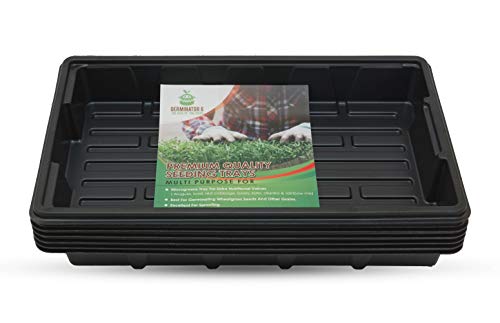
Germinator 6 Premium Seedling Trays 6 Pack
The Picks, Examined More Closely
Sprouting microgreens without soil gets messy fast, so a tray that holds the planting paper flat and drains cleanly makes a real difference. This EBaokuup kit ships with five nursery trays and twenty planting sheets, sized at roughly 8.8 by 5.7 inches each. The footprint slips onto a windowsill or narrow shelf without rearranging your kitchen, which is a relief for anyone working with limited counter space.
The mesh holes measure about 0.15 inches, so tiny seeds like broccoli and alfalfa tend to sit where you place them rather than wash through the bottom. PP plastic keeps the build light and easy to rinse. For first-time growers who want to test whether the hobby sticks before committing to a bigger setup, this pack lands in a sensible spot.
Notable Gains
- Small tray footprint suits apartments and narrow windowsills.
- Tight mesh retains tiny seeds that would slip through wider holes.
- Five-tray count staggers harvests across the week.
- PP plastic rinses clean without holding onto flavors.
Things To Consider
- Thin walls can flex when lifted fully loaded with water-soaked paper.
- Five trays may run out quickly once you settle on favorite varieties.
- Planting paper refills must be sourced separately over time.
Key Attributes
Made For
First-time growers who want a low-commitment kit to test whether microgreen growing fits their routine.
Look Elsewhere When
You want heavier soil-based seeding, in which case the Bootstrap Farmer 1020 Trays Green 10 Pack offers sturdier walls.
Once the novelty wears off, most growers discover they want a steady rotation rather than a one-off batch. This ten-pack from the same EBaokuup line doubles the count and adds forty planting sheets, using the identical tray footprint and mesh pattern as the smaller set. You get the same gentle learning curve, just with enough trays to keep several varieties going at once.
For a household that eats microgreens on toast three or four mornings a week, ten trays means you can plant a fresh pair every few days without burning through your supply. The PP body holds up to repeat rinsing, and stacking the trays in a cabinet between cycles saves space. Nothing flashy about it; just a sensible capacity bump.
Strengths Worth Knowing
- Ten trays create a continuous harvest schedule.
- Matching design across the EBaokuup line keeps workflow consistent.
- Mesh holes hold small seeds without clogs.
Worth Noting
- Storage space matters once you stack ten trays between cycles.
- Plastic walls stay thinner than commercial-grade alternatives.
Right Fit For
Growers who have settled on favorite seed mixes and want consistent weekly harvests.
Consider Something Else When
You want the rigidity of thicker polypropylene walls, where the Bootstrap Farmer 1020 Extra Strength Orange 10 Pack performs better.
Wheatgrass and mung beans punish trays with holes that are too wide; the seeds migrate to the corners and the roots tangle into a mat. The Gardzen kit is built around densely spaced holes that grip small seeds and let air circulate around developing roots. Five trays give you enough variety to compare germination rates side by side without overwhelming a small kitchen.
The soil-free design skips the mess of pre-soaking coco coir or peat, which is helpful in apartments where cleanup space is tight. Owners commonly report that the trays rinse clean under a faucet in seconds, with no clinging residue between cycles. It leans into a single purpose, sprouting, and handles it without overcomplicating the process.
What It Does Well
- Dense holes grip tiny wheatgrass and mung seeds in place.
- Soil-free setup skips substrate prep entirely.
- Light plastic rinses clean in seconds.
Trade Offs
- Five trays limit simultaneous varieties.
- Denser mesh slows drainage compared to wider-hole designs.
Feature Snapshot
Best Suited To
Indoor kitchens where wheatgrass, mung, or alfalfa dominate the planting list.
Reach For A Different Pick When
You want to run soil-based trays at scale, in which case the Bootstrap Farmer 1020 Trays Green 10 Pack handles heavier media without flexing.
Soil-heavy microgreen mixes saturate a tray quickly, and a flimsy bottom bows under the weight. The Bootstrap Farmer 1020 trays use polypropylene walls roughly 1.8 to 2 millimeters thick, which keeps the tray rigid even when filled with damp soil and a thick seed mat. Ten trays in a pack give a serious grower a true working set rather than a starter handful.
Where the small EBaokuup trays sit on a windowsill, these belong on a sturdy shelf or a grow rack. They accept standard 1020 humidity domes and heat mats, so you can build a propagation setup that mimics a small greenhouse. For gardeners moving beyond a casual hobby, the extra wall thickness is the kind of detail that pays off across dozens of planting cycles.
What Earns Its Place
- Thick walls resist flex under saturated soil.
- Standard 1020 footprint pairs with domes and heat mats.
- Reusable build holds up across repeated seasons.
Room For Improvement
- Larger footprint demands more shelf space than compact trays.
- Higher price per pack than soil-free starter kits.
Whose Shelf It Belongs On
Garden growers running soil-based microgreens on a dedicated rack or greenhouse bench.
Swap It Out When
You only need a handful of small windowsill trays, where the EBaokuup 5 Pack Seed Sprouter Trays Growing Kit takes less space.
Color-coding trays sounds like a small thing, but it solves a real problem: when radish and broccoli sit next to each other, telling seedlings apart gets tough. This Bootstrap Farmer pack uses the same 1.8 to 2 millimeter polypropylene walls as the green version, finished in a bright orange that stands out on a crowded rack. Each tray measures 21.2 by 11 by 1.25 inches, which lines up with most standard seedling accessories.
Drainage holes run across the bottom, so excess water clears without pooling around the roots. Moving a fully planted tray from the rack to the sink takes confidence, and rigid walls give you that. For growers who run a half-dozen varieties in rotation, the color cue helps avoid mixing up plantings between cycles.
Features That Help
- Vivid orange color separates batches visually.
- Rigid walls prevent flex during transport.
- Standard dimensions fit common humidity domes.
A Few Limitations
- Bright color may clash with neutral kitchen shelves.
- Same large footprint as the green version.
Technical Highlights
Who Should Grab It
Multi-variety growers who need clear visual separation between seedling runs.
Skip It When
You prefer a softer shelf look, where the Bootstrap Farmer 1020 Trays Green 10 Pack blends in more easily.
Pink looks cheerful on a greenhouse shelf, but the real story sits in the wall thickness. This pink version of the Bootstrap Farmer line mirrors the orange pack’s 1.8 to 2 millimeter build, with the same 21.2 by 11 by 1.25 inch footprint and drainage holes. Ten trays weigh in around 6.75 pounds total, which speaks to the heavier-gauge plastic used throughout.
The thicker walls come into play when you’re moving trays between a grow rack and a sink several times a day. Thinner trays bow, and water sloshes over the rim; these hold their shape. For growers who plan to reuse the same trays across multiple seasons, the rigid build is a quiet but meaningful upgrade.
Noteworthy Benefits
- Heavy-duty walls last through repeated planting cycles.
- Color helps distinguish planting batches.
- Compatible with standard 1020 accessories.
Honest Caveats
- Color choice limits flexibility if you want neutral tones.
Perfect Match For
Long-term growers who need a tray set that survives daily handling across many planting cycles.
Where Another Pick Suits Better
Smaller kitchens that can’t spare shelf space for full-size 1020 trays, where the Legigo 10 Pack Seed Sprouter Trays Kit offers a mid-size alternative.
The Legigo kit lands between compact sprouter trays and full-size 1020 trays. Each unit measures roughly 13.07 by 9.85 by 1.46 inches, which gives seeds enough room to spread out without demanding a full greenhouse shelf. Ten kits ship with ten planting sheets, so you can run a meaningful rotation without a major cabinet reshuffle.
The two-part inner-and-bottom tray setup keeps roots suspended above standing water, which is the part of microgreen growing that trips up beginners most. Compared to the EBaokuup kits, the larger surface area suits heavier seeds like sunflower and pea shoots that benefit from more space. It’s the kind of middle ground that grows with you as your routine stabilizes.
Useful Touches
- Larger tray area suits heavier seed varieties.
- Two-part design keeps roots above standing water.
- Ten-pack supports a real planting schedule.
Points To Note
- Takes more shelf space than the EBaokuup 5 Pack Seed Sprouter Trays Growing Kit.
- Walls thinner than commercial-grade Bootstrap Farmer trays.
Quick Facts
Who Will Love This
Growers working with sunflower, pea shoots, or other larger-seed crops that need room to spread.
A Better Fit Elsewhere
You only need a single windowsill set, where the Gardzen 5-Pack Sprouts Growing Kit handles small seeds with less counter use.
Countertop growers worry about water stains on wood or quartz, and a tray with no drain holes removes that anxiety entirely. The Germinator 6 pack ships six solid-bottom trays made from 1.5 millimeter polystyrene, intended as drip-catching bases under a planted top tray. You set them under any of the sprouter trays above to keep moisture contained.
Used alone, they double as a flood-style tray for very dense plantings. The rectangular shape stacks neatly in a cabinet. For renters or anyone working with surfaces that stain easily, the lack of drain holes is a feature, not a flaw.
Real Benefits
- Solid bottom catches drips and protects countertops.
- 1.5 mm walls feel sturdy for a base tray.
- Recyclable polystyrene rinses clean between cycles.
Worth Bearing In Mind
- No drainage means water must be poured off manually.
- Polystyrene is more brittle than polypropylene under heavy loads.
Built With In Mind
Countertop sprouters who need a tray that doubles as a drip catcher beneath their planting setup.
Not Your Match When
You want a single tray that handles both planting and drainage, where the Bootstrap Farmer 1020 Extra Strength Pink 10 Pack combines both jobs.
Choosing the Right Microgreen Tray for Your Setup
Tray choice comes down to three real-world factors: where you’ll keep the trays, how you’ll water them, and how much seed you actually go through each week.
Match the tray size to the space you have. Compact kits around 8 by 6 inches suit windowsills and galley kitchens, while full 1020 trays demand a shelf, rack, or greenhouse bench. Mid-size options like the Legigo pack give you more planting surface without claiming a whole shelf.
Decide between soil-free sprouting and soil-based growing. Soil-free kits with mesh holes work well for small seeds and quick cleanup. Soil-based 1020 trays support bigger seeds and thicker root mats, but require substrate and a bit more maintenance.
Plan tray count around your weekly harvest. Two or three trays keep a casual grower in steady supply; six to ten trays give you true rotation between varieties. The honest read is that more trays mean more variety but also more commitment.
Points Worth Weighing Before You Click
Pitfalls Shoppers Hit
Choosing a tray without drain holes can leave roots sitting in water, which invites mold. Picking a tray too large for your shelf means it sits unused in a closet. Buying thin-walled trays for soil-heavy plantings leads to cracked corners within a season.
Where The Extra Money Goes
Thicker polypropylene walls add cost, but they resist warping across dozens of planting cycles. Standard 1020 dimensions open the door to reusable domes, heat mats, and standard shelving. Color-coded trays save time during multi-variety runs where seedlings look identical at the seedling stage.
Frequently Asked Questions
What size microgreen tray should a beginner start with? A 5-pack of small trays around 8 by 6 inches gives you room to learn without committing to a large setup.
Do microgreen trays need drainage holes? Drainage holes prevent root rot, but solid trays work well as drip-catchers beneath a planted top tray.
How thick should microgreen tray walls be? Wall thickness around 1.5 millimeters suits lightweight sprouts; 1.8 to 2 millimeters handles soil-heavy mixes without flexing.
Can the same tray be reused for different seeds? Yes, rinsing the tray between cycles is usually enough to switch varieties without cross-contamination.
Are 1020 trays worth the larger footprint? For growers running multiple varieties on a rack, the standard 1020 size pays off in compatibility with domes and heat mats.
Closing Remarks
Your best tray matches the space you already have, the seeds you actually want to grow, and the planting rhythm that fits your week. Start small if you’re still testing the hobby, and step up to thicker-walled 1020 trays once the habit sticks.
