

Thick grass punishes standard blades, leaving ragged tips and forcing you to mow the same patch twice. You need an edge that stays sharp, lifts the clippings up so they don’t smother what’s underneath, and matches your deck. The eight picks below cover walk-behinds, robotic mowers, and commercial zero-turns, so there’s a fit whether you tend a small yard or several acres.
A Snapshot Of The Selections

Oregon 21 Inch Lawn Mower Blade for AYP, Craftsman & More
FourShow Blade Discs + Blades for Mammotion LUBA 1 & 2 AWD

BCQNXX High Lift Mower Blades Set for 60-Inch Deck Mowers
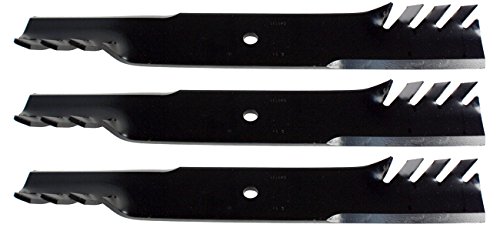
USA Mower Blades CMB276BP Toothed High Lift 3-Pack

Lasnten 16-Piece Metal String Trimmer Replacement Blades

GICOOL 942-0741A 21-Inch Mulching Blades for Troy-Bilt MTD

USA Mower Blades CMB184BP Toothed High Lift 6-Pack

Chway 942-0741A Mulching Blade for 21-Inch Deck Mowers
A Closer Look At Each Pick
A 21-inch walk-behind deck is the most common setup in suburban driveways, and the Oregon replacement blade drops right into that ecosystem. It cross-references several OEM numbers for AYP, Sears, Husqvarna, Craftsman, and Poulan models, so most homeowners can confirm a match by comparing the part number printed on their existing blade.
For thick grass, the heavy-duty steel construction and a sharpened cutting edge along the full length help the blade keep moving through dense turf instead of skipping over it. Compared to the FourShow kit further down, this is a standard walk-behind format rather than a robotic mower accessory, so the two serve entirely different machines.
Real Benefits
- Long-lasting steel construction holds an edge through repeated thick-grass sessions
- Wide compatibility covers a large share of residential walk-behind mowers on the market
- 21-inch span matches standard deck sizes for efficient single-pass cutting
- Mulching-friendly profile chops clippings finely so they break down faster in the lawn
Points To Note
- Heavy-duty steel adds noticeable weight, so small engines may bog in wet, overgrown conditions
- Part-number matching is essential; the cross-reference list is long, and the wrong match simply won’t bolt up
Key Specs
Built With In Mind
Homeowners with a 21-inch AYP, Craftsman, Husqvarna, or Poulan walk-behind who mow weekly and want a single replacement blade that drops in without modifications.
Look Elsewhere When
The GICOOL mulching blade is a better fit if your mower is a Troy-Bilt or MTD model and you want a blade tuned specifically for mulching clippings back into the lawn.
Robotic mowers handle thick grass with tiny, fast-spinning cutters, and those blades dull quickly. The FourShow kit ships two replacement discs and fourteen replacement blades for the Mammotion LUBA 1 and LUBA 2 AWD models up to the 2024 production run.
The blade discs use polyamide nylon (a tough engineering plastic) reinforced with fiberglass, and the stainless-steel screw holders are molded directly into the disc rather than glued or printed on. That’s a meaningful construction detail because plastic disc kits can sometimes split at the hub after months of use.
Bright Spots
- Two discs and fourteen blades cover a full season of regular edge-rotation swaps
- Glass-filled nylon disc resists cracking better than plain plastic hubs
- Integrated stainless-steel hardware keeps the cutters firmly seated at high RPM
- Specifically engineered for AWD LUBA models, so fit is consistent
Trade Offs
- Compatibility ends with model year 2024, so newer LUBA units will need a different revision
- Small parts are easy to drop during swaps, so a magnetic tray helps during changes
The Right Fit
Owners of LUBA 1 or LUBA 2 AWD robotic mowers who want a packaged refresh kit rather than sourcing individual blades and discs separately.
Reach For A Different Pick When
The Oregon 21-inch blade suits anyone running a standard walk-behind rather than a robotic platform, since the form factors are completely different.
A 60-inch commercial zero-turn chews through acreage fast, and high-lift blades (blades with a strongly curved sail that pulls grass upright before cutting) are the right call when grass gets tall. The BCQNXX set ships three blades that cross-reference Bad Boy, Exmark, Gravely, Hustler, Toro, Ariens, and Windsor part numbers, which covers most of the popular ZT60 and CZT60 machines in service today.
Where the Oregon blade above is built for a homeowner’s walk-behind, this set is sized and balanced for a commercial spindle. The lift geometry stands clippings up tall for a clean cut and pushes them into a bag or discharge chute with real authority.
What Helps Most
- Three-blade set covers a full 60-inch deck replacement in one purchase
- High-lift sail produces strong airflow for bagging or heavy side discharge
- Cross-references many of the common commercial part numbers used on zero-turns
Worth Bearing In Mind
- High-lift geometry demands more engine power, so low-horsepower units may stall in wet grass
- Compatibility is deck-specific; double-checking the OEM number before ordering prevents a return
Feature Snapshot
Who Should Grab It
Landscapers and acreage owners running a 60-inch Bad Boy, Exmark, Hustler, Toro, or comparable zero-turn who cut tall, thick turf weekly.
A Better Fit Elsewhere
The USA Mower Blades CMB184BP 6-pack is the smarter move for Bad Boy owners cutting with smaller 32-to-48-inch decks, since the geometry matches that size class.
Toothed blades have a serrated edge that grips and shreds tall stalks instead of pushing them down, and the CMB276BP builds that pattern into a heavy-duty high-lift format. The 20-1/2-inch length, 3-inch width, and quarter-inch thickness give the steel real inertia against dense growth.
For Ariens and Gravely 60-inch XR-7, Z, and Super Z riders (and several Dixon 200/300 series units), the cross-reference list is precise enough that a quick check against the existing blade confirms fit. The trade-off shows up in noise and edge life: toothed cutters cut aggressively, which means they wear faster on sandy soils.
Everyday Wins
- Serrated cutting edge grips tall, fibrous grass and slices cleanly
- Heavy .250-inch steel resists bending on impact with hidden debris
- Three-blade pack replaces a full 60-inch deck in one order
Honest Caveats
- Serrated edges dull faster than plain edges, especially in sandy or gritty soil
- Toothed blades run louder than smooth high-lift designs, so hearing protection matters during long sessions
Quick Facts
Right Fit For
Ariens, Gravely, Hustler, and Dixon owners with a 60-inch deck who cut thick, tall grass and want the gripping power of a toothed edge.
Where A Sibling Pick Shines
The BCQNXX three-pack is the alternative for anyone with a Bad Boy, Exmark, or Toro 60-inch machine, since the OEM numbering differs across those brands.
Trimmer blades are a different category from mower blades, but thick grass doesn’t care about that distinction when it’s wrapping your line head. The Lasnten set ships sixteen metal cutter blades at a standard 15-centimeter length that drops into most cordless and corded string trimmer heads.
The transparent storage box is a small touch that keeps spare blades organized instead of rattling around in a drawer. For most backyards, sixteen pieces mean a year or more of replacements, depending on how aggressively you edge.
Notable Upsides
- Bulk sixteen-pack value lowers the per-blade cost compared to buying singles
- Standard 15 cm length suits most trimmer heads on the market
- Transparent storage box keeps spare blades visible and contained
Some Limits To Know
- Metal blades are less forgiving around decorative stone, fencing, and tree bark than nylon line
- Not a substitute for a full mower blade; the Lasnten set works on trimmer heads, not mower decks
Whose Shelf It Belongs On
Homeowners who edge and trim alongside mowing and want a stockpile of metal blades ready to swap when the old ones dull.
Consider Something Else When
Anyone needing to cut the main lawn should pair this trimmer kit with one of the walk-behind blades like the Oregon or GICOOL, since trimmer blades alone can’t handle full-yard mowing.
Mulching blades use a curved profile that holds clippings inside the deck long enough to chop them into fine pieces before dropping them back into the lawn. The GICOOL 942-0741A is shaped specifically for Troy-Bilt and MTD 21-inch decks, with extensive cross-references covering Cub Cadet, Craftsman, and similar models.
Compared to the Oregon blade earlier in this list, the GICOOL leans into mulching performance rather than a balanced cut-and-discharge profile. For thick grass, that means slower ground speed, since the deck needs time to circulate clippings through the cutting chamber.
What Earns Its Place
- Curved mulching profile produces fine clippings that disappear into the turf
- Wide model coverage across Troy-Bilt, MTD, Cub Cadet, and Craftsman walk-behinds
- Direct OEM cross-references simplify fitment checks
Room For Improvement
- Mulching decks require slower travel in tall grass, or the chute clogs
- Less effective as a bagging blade; airflow isn’t tuned for high-lift discharge
Technical Sheet
Best Suited To
Troy-Bilt, MTD, and Cub Cadet walk-behind owners who prefer mulching over bagging and cut frequently enough that clippings stay short.
Swap It Out When
Oregon’s 21-inch blade is the cleaner choice if you bag clippings or discharge to the side, since its profile handles that workflow better than a dedicated mulching curve.
The CMB184BP is the smaller-deck sibling to the CMB276BP reviewed earlier, with a 16-1/2-inch length built for 32-inch to 48-inch Bad Boy mowers plus Bunton, Great Dane, Lesco, and Scag units. A six-pack covers multiple seasons of service or a full fleet rotation.
The toothed high-lift geometry grips stalks the same way its larger cousin does, which matters on overgrown areas where standard blades push grass flat. The quarter-inch steel and 5/8-inch center hole match the spindle hardware on the listed commercial models.
The Good Stuff
- Six-blade pack offers genuine multi-season supply for one buyer or a small fleet
- Toothed edge chews through fibrous, thick grass that smooth blades skate past
- Cross-references Bad Boy, Bunton, Great Dane, Lesco, Scag, and Toro part numbers
Potential Drawbacks
- Serrated edges require more frequent sharpening than smooth profiles
- Bulk pack is overkill for a single homeowner with one mower
Who It Suits Best
Commercial cutters and acreage owners running Bad Boy, Bunton, Great Dane, or Scag machines in the 32-to-48-inch deck class who need a steady blade inventory.
Where Another Pick Suits Better
The USA Mower Blades CMB276BP 3-pack fits Bad Boy 60-inch XR-7 and Super Z owners more precisely, since the longer blade geometry matches those wider decks.
The Chway single blade uses the same 942-0741A replacement number that the GICOOL two-pack references, but ships one blade instead of a pair. For someone who only needs to replace a single damaged blade, that’s a meaningful difference in cost and storage.
It fits the same Troy-Bilt, MTD, Cub Cadet, and Craftsman 21-inch decks listed in the GICOOL review, so the cross-reference work is identical. The mulching profile recirculates clippings inside the deck for a finer cut, which suits frequent mowing more than sporadic heavy cutting.
A Favorable Mix
- Single-blade format suits anyone replacing one damaged or worn cutter
- Same 942-0741A cross-reference compatibility as higher-priced competitors
- Curved profile handles mulching duties on standard walk-behind decks
Small Caveats
- Single-blade pack means a second purchase is needed if the opposite side is also worn
- Mulching design requires slower travel in overgrown sections to avoid chute clogging
Perfect Match For
Homeowners with a Cub Cadet, Craftsman, Troy-Bilt, or MTD 21-inch walk-behind who only need one blade and want to keep the replacement cycle simple.
Skip It When
The GICOOL 942-0741A two-pack is the better value if both blades are due for replacement, since buying two at once usually costs less per blade than two separate singles.
Picking The Right Edge For Your Lawn
Several variables determine whether a blade earns its place on your mower, and skipping any of them usually means a second pass or a trip back to the retailer.
Match the blade to your deck first. Deck size dictates blade length, and the spindle hardware dictates the center hole. Measure the existing blade tip-to-tip, then check the center hole against the spec sheet before anything else. A blade that’s even a half-inch short leaves uncut strips down the center.
Choose a profile that fits how you finish. Standard blades balance cut quality and discharge. High-lift blades pull grass upright and throw clippings hard, which is ideal for bagging or for tall, thick growth that flattens under a standard blade. Mulching blades recirculate clippings for a finer chop, which suits weekly cutting but stalls in overgrown turf.
For robotic and trimmer blades, fit is everything. Robotic mower discs and trimmer blades use proprietary mounts, so always match by model number rather than guessing. The FourShow kit above is a good example of why cross-references matter; the 2024 production cutoff excludes newer units.
Mind the steel. Thicker steel holds an edge longer but demands more engine torque. A 0.250-inch commercial blade on a small residential engine can bog in wet grass, while a thin blade on a 25-horsepower commercial deck wears out fast. Match the blade weight to your engine class.
Key Considerations Across These Picks
Common Slip Ups Shoppers Make
The most common error is matching by deck size alone and ignoring the center hole. A 21-inch blade with a 3/8-inch hole won’t fit a spindle that takes a 5/8-inch hole, even if the length is identical. Another frequent mistake is choosing a high-lift blade for a low-horsepower engine; the extra sail surface loads the motor and stalls in wet turf. Run a part-number check against the OEM number stamped on your existing blade before ordering.
Why Premium Blades Cost More
The upgrade typically buys heavier steel, a more refined heat treatment, and tighter dimensional tolerances. Thicker steel keeps a sharper edge longer between sharpening cycles and resists bending on hidden debris. For commercial operators who mow daily, that durability shows up fast; for homeowners cutting weekly, a mid-tier blade is usually sufficient.
Frequently Asked Questions
How often should mower blades be sharpened?
Most residential blades benefit from sharpening once or twice per mowing season, while commercial blades may need attention every few weeks under daily use. A dull edge tears grass tips instead of slicing them, leaving brown frays that show up within a day.
Can I use a high-lift blade for mulching?
High-lift blades generate strong airflow that throws clippings out of the deck, which works against the recirculation mulching requires. Dedicated mulching blades hold clippings inside the chamber for a finer chop. You can swap seasonally, but a true mulching profile does better mulching work.
Are toothed blades worth the extra wear?
Toothed blades grip tall, fibrous grass that smooth blades tend to flatten, so they earn their place on overgrown or stalky turf. The trade-off is faster edge wear, especially in sandy soil, and more noise during operation.
Do thicker blades always cut better?
Thickness affects durability and inertia more than cut quality. A thicker blade resists bending and stays balanced longer, but it adds weight that smaller engines feel during heavy cuts. Match thickness to engine class rather than buying the heaviest option available.
How do I know which replacement number fits my mower?
Look for the OEM number stamped on the existing blade near the center hole, then cross-reference it against the replacement blade’s compatibility list. When the number matches, the spindle fit, length, and hole spacing are all confirmed.
Closing Remarks
The right blade turns thick grass from a wrestling match into a clean pass, and the choice comes down to your deck size, engine power, and preferred finish. Match the part number first, pick a profile that suits your cutting style, and keep a spare on hand so a dull edge never derails a weekend mow.
