

A worn-out engine or a snapped recoil spring can shut a mower down mid-season, and the replacement part is rarely a simple grab-and-go. You need to match shaft size, horsepower class, and engine series before you click “buy,” because a mismatch means a refund and a longer lawn.
This roundup lines up eight replacement engines, starters, and recoil assemblies that cover the common repair paths for walk-behind and riding mowers. Each pick is evaluated on fitment data, build details, and the kind of repair you’re actually trying to make, so the part on your workbench is the part that fits the machine.
How The Shortlist Stacks Up

BILT HARD 7HP Gas Engine Horizontal Shaft, 212cc 4 Stroke OHV
497680 Rewind Starter for Briggs & Stratton Lawn Mower

Briggs & Stratton 33S877-0019-G1 Professional Series 19 HP 540cc Vertical Engine
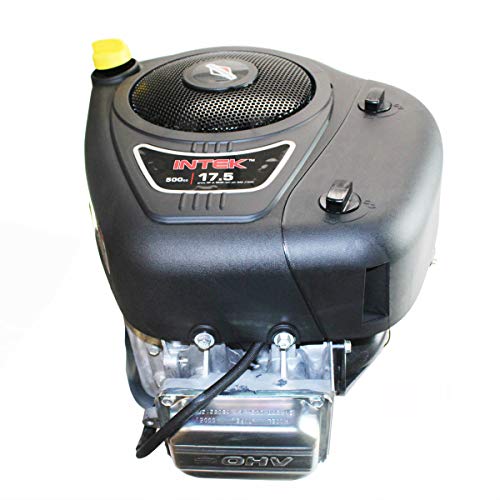
Briggs and Stratton Vertical 17.5 HP 500cc INTEK Engine

Briggs and Stratton 13R232-0001-F1 Engine, 208cc

1999-1140051 12V Starter Motor for Kohler 7000 Series
16 Tooth Starter Motor for Craftsman LT Series Riding Mowers

Recoil Starter for Tecumseh 590739 / 590702 Lawn Mower
Taking A Closer Look At The Options
Walk-behind mower swaps lean heavily on shaft geometry, and this BILT HARD unit ships with a horizontal 3/4-inch output shaft that fits a wide swath of older residential decks. The 212cc OHV (overhead valve) four-stroke design delivers roughly 7 horsepower, which lands in the sweet spot for push mowers and small log splitters alike.
For homeowners breathing life back into a tired push mower or a contractor replacing a worn horizontal-shaft mill on a cement mixer, this engine reads as a versatile drop-in. The mounting pattern is fairly standard, so fabrication work should stay minimal for most residential frames.
Where It Excels
- Horizontal 3/4-inch shaft with 3/16-inch keyway matches common walk-behind mower transmissions
- OHV four-stroke layout tends to run cooler and sip less fuel than older side-valve designs
- EPA-compliant construction simplifies storage and transport considerations
- Mid-range 7 HP output handles residential mowing without overwhelming smaller decks
Things To Consider
- You will need to confirm the 6.40-inch mounting footprint matches your specific mower or equipment cradle before ordering
- Horizontal-shaft engines don’t swap directly with vertical-shaft units, so double-check your orientation first
Feature Snapshot
Who It Suits Best
DIYers rebuilding a push mower or compact equipment with a horizontal-shaft drivetrain.
Where Another Pick Suits Better
The Briggs & Stratton 33S877-0019-G1 Professional Series 19 HP 540cc Vertical Engine is a stronger match for owners of riding mowers needing a vertical-shaft replacement.
When the pull rope on a Briggs & Stratton engine snaps or the recoil spring loses its snap, the whole mower becomes a paperweight. This Yinlowa rewind starter cross-references a long list of OEM part numbers, including 497830, 496650, 495766, 692696, 494846, and 494782, plus Oregon 31-068, Rotary 12368, and Stens 150-320.
It fits select 190cc 725EX series engines, which covers a sizable portion of walk-behind mowers from the past decade. Anyone who’s pulled a frayed rope out of a chewed-up housing knows that having the right cross-reference number is the difference between a 30-minute repair and a parts chase.
Notable Gains
- Wide cross-reference coverage spans multiple Briggs & Stratton part numbers and aftermarket brands
- Targets the common 190cc 725EX engine family found on many residential walk-behind mowers
- Direct-fit assembly avoids fabricating adapters or modifying the housing
Points To Note
- Part 498144 is a pulley and spring assembly only, not a complete housing, so verify your original starter number before checkout
- Aftermarket recoil assemblies may have slightly stiffer spring tension out of the box until they break in
Best Suited To
Homeowners with a Briggs & Stratton 725EX-series walk-behind mower facing a snapped rope or worn recoil spring.
Skip It When
The DKIIGAME Recoil Starter for Tecumseh 590739 / 590702 Lawn Mower is the more compatible fit for older Tecumseh-powered machines.
Big-acreage owners and commercial mowing crews live or die by their engine’s torque curve. This Briggs & Stratton Professional Series mill delivers 19 horsepower from a 540cc single cylinder, with full-pressure lubrication (oil circulated by an internal pump rather than splash), an oil filter, and a cast-iron Dura-Bore cylinder sleeve that extends service life under sustained loads.
It directly replaces the 33R877-0003-G1 model, which is a common sight on older riding mowers. The electric start, pulse fuel pump, and 9-amp charging system make this a self-contained replacement rather than a partial swap, so wiring and fuel delivery tend to land close to factory.
A Favorable Mix
- Full-pressure lubrication with an oil filter keeps internal components protected during long mowing sessions
- Dura-Bore cast iron cylinder sleeve extends engine life under heavy commercial use
- Electric start and pulse fuel pump simplify installation on riding mower chassis
- 3300 max RPM ceiling delivers the headroom needed for thick grass and inclines
Trade Offs
- Larger 540cc displacement demands more storage space in your shop or garage than smaller engines
- Replacement engines of this class often benefit from a break-in oil change after the first few hours, adding a small maintenance step
Core Details
Made For
Commercial landscapers and acreage owners who need a serious riding mower engine replacement.
A Better Fit Elsewhere
The Briggs & Stratton 13R232-0001-F1 Engine is the right call for compact equipment where a 208cc mill is plenty of power.
Stepping down from the 19 HP Professional Series, this 17.5 HP INTEK engine keeps the same vertical-shaft layout for residential riding mower compatibility. The 500cc single cylinder, 9-amp charging system, and 1-inch by 3-5/32-inch shaft tap into the same install-friendly geometry as its bigger sibling.
For homeowners with a half-acre to two-acre lot who don’t need commercial-grade output, this INTEK sits in a comfortable middle ground. Owners of older Craftsman, Husqvarna, and Poulan riding mowers frequently find this engine family in their machines, so the replacement market for it stays active.
Positive Points
- 17.5 HP output covers typical residential riding mower workloads without overkill
- Vertical-shaft design matches the most common riding mower drivetrain orientation
- 9-amp charging supports standard mower electrical accessories like headlights
- INTEK platform carries a broad service-parts ecosystem for future repairs
Honest Caveats
- Slightly less torque than the 540cc Professional Series, so very steep terrain may feel underpowered
- Shipping may be subject to hazardous materials regulation, which can affect delivery timing
Key Product Details
Right Fit For
Residential riding mower owners with half-acre to two-acre lots looking for a non-commercial replacement.
Not Your Match When
The Briggs & Stratton 33S877-0019-G1 Professional Series 19 HP 540cc Vertical Engine is the better fit for commercial-grade workloads.
Not every mower needs 19 horsepower. This compact 208cc Briggs & Stratton single cylinder delivers 9.50 gross torque (a measure of twisting force at the crankshaft) in a 14.5 by 12 by 13.5-inch package, which fits tighter equipment housings where larger engines simply won’t drop in.
It’s the kind of engine you’d find on a rear-engine riding mower, a small tiller, or a generator. Compared to the larger 540cc mill reviewed earlier, this one trades raw output for a much smaller footprint, and that trade-off matters in sheds with limited floor space.
The Value In It
- Compact dimensions slide into rear-engine riding mowers and small equipment frames
- 208cc single-cylinder design is fuel-efficient for lighter mowing tasks
- Genuine Briggs & Stratton construction keeps replacement parts widely available
Worth Noting
- Not suited for large lawns or steep terrain that demand more torque
- Smaller engine class means the replacement cycle may come sooner under heavy use
Who Will Love This
Owners of rear-engine riding mowers or compact equipment needing a small-footprint replacement engine.
Consider Something Else When
The BILT HARD 7HP Gas Engine Horizontal Shaft is the better fit for walk-behind mower rebuilds with a horizontal drivetrain.
Starters die at the worst times, often after a wet mowing session or a long winter in the shed. This SUONE 12V starter targets the Kohler 7000 series engines that power many Cub Cadet, John Deere, and Troy-Bilt riding mowers, and it adds an aluminum alloy lower edge for improved moisture resistance compared to standard OEM starters.
The sealed design helps in regions with heavy rainfall or where mowing often happens on damp grass. For owners whose original starter has already failed once, an upgraded corrosion-resistant replacement tends to feel like cheap insurance against another mid-season breakdown.
Strengths Worth Knowing
- Aluminum alloy lower edge offers better moisture and corrosion resistance than stock units
- Direct OEM-style fit for Kohler 7000 series engines reduces install time
- 12V design matches standard riding mower electrical systems
Some Limits To Know
- Niche fitment means it only helps Kohler 7000 series owners; cross-compatibility is limited
- Aftermarket starters occasionally require minor shimming during installation to align properly
Best Suited To
Riding mower owners in wet climates running Kohler 7000 series engines who need a more corrosion-resistant starter.
Look Elsewhere When
The ProMintu 16 Tooth Starter Motor for Craftsman LT Series Riding Mowers is the right call for Craftsman owners running Briggs & Stratton Intek OHV engines.
Craftsman LT and GT series tractors are a fixture of suburban driveways, and this 16-tooth starter covers a long list of them, including LT1000, LT3000, LT4000, LT2500, and GT5000 models. It’s rated for Briggs & Stratton Intek OHV engines ranging from 16 HP all the way up to 26 HP, which makes it one of the more flexible starters in this roundup.
Compared to the Kohler-specific SUONE starter covered earlier, this unit trades narrow specialization for broader compatibility. For homeowners who know their mower sits in the LT family, this starter tends to slot in without surprises.
Strong Points
- Covers an exceptionally wide range of Craftsman LT and GT series tractors
- Compatible with Briggs & Stratton Intek OHV engines from 16 HP to 26 HP
- Designed for use with plastic or aluminum flywheels (the rotating toothed disc the starter engages)
Practical Considerations
- Only works with plastic or aluminum flywheels; cast-iron flywheels need a different starter count
- Wider fitment range can mean more careful verification of your specific engine model number before buying
Perfect Match For
Craftsman LT1000, LT3000, LT4000, LT2500, and GT5000 owners running Briggs & Stratton Intek OHV engines.
Swap It Out When
The SUONE 12V Starter Motor for Kohler 7000 Series Mowers fits Kohler-powered riding mowers much more cleanly.
Older Tecumseh engines keep showing up on vintage Lawn-Boy, Toro, and Craftsman mowers, and finding a recoil starter for them can feel like archaeology. This DKIIGAME assembly cross-references part numbers 590739, 590472, 590621, 590686, 590694, 590702, 590737, and 590785, plus Oregon 31-117 and Stens 150-575 aftermarket references.
It fits a wide swath of Tecumseh models including LEV80, LEV100, LEV115, LEV120, LEV150, OV195EA, OV195XA, OVRM60, OVRM65, TVS90, and many more. For anyone restoring a 1990s-era mower or simply nursing one through another season, the cross-reference depth here is the main draw.
Benefits That Matter
- Broad Tecumseh part-number coverage simplifies finding the right fit for older engines
- Aftermarket cross-references to Oregon and Stens expand sourcing options
- Direct-fit design avoids fabricating mounts for vintage mower housings
Minor Gripes
- Spring tension on aftermarket recoil assemblies often requires a few pulls to break in fully
- Older Tecumseh housings may show wear, so inspect the mounting points before reusing the original bolts
Built With In Mind
Restorers and long-time owners of Tecumseh-powered mowers who need a direct-fit recoil replacement.
Reach For A Different Pick When
The Yinlowa 497680 Rewind Starter for Briggs & Stratton Lawn Mower Pull Start Assembly is the correct fit for Briggs & Stratton 725EX-series engines.
Matching The Right Engine To Your Mower
Identifying Your Engine Class
The replacement path splits into three big buckets: full engine swaps, starter motors, and recoil assemblies. Knowing which bucket your repair falls into is the first step. A mower that won’t turn over with the key but turns over with a pull rope points at the starter; a snapped pull rope with no compression issue points at the recoil; chronic low power or seized internals points at the engine itself.
Shaft Orientation And Mounting
Shaft orientation, which is the direction the output shaft points relative to the ground, is non-negotiable. A horizontal-shaft engine like the BILT HARD 212cc unit will not bolt into a chassis built for vertical-shaft output without adapter fabrication. Always measure the existing engine’s shaft diameter, length, keyway size, and mounting bolt pattern before ordering. Even a quarter-inch mismatch can derail a repair day.
Horsepower And Torque Matching
Going bigger on horsepower sounds appealing, but torque curves and chassis strength matter more. A 19 HP engine in a frame designed for 17.5 HP can stress spindles and drivetrain components not rated for the extra load. Match the replacement to the original spec when possible, and step up only if the chassis clearly supports it.
Electric Start Versus Pull Start
Riding mowers with depleted batteries or bad solenoids often get blamed for starter failures when the actual culprit is the starter motor itself. Testing the battery and solenoid first saves a wasted starter purchase. For pull-start walk-behinds, a fresh recoil assembly with a properly seated spring is a 30-minute repair that costs a fraction of a new mower.
Key Considerations Across These Picks
Common Shopping Slip Ups
The most frequent error is trusting a model number alone without checking the full spec sheet. Briggs & Stratton alone uses dozens of suffixes that change displacement, shaft length, and starter type. Cross-referencing the full model number against the replacement part’s compatibility list prevents the classic “it bolts on but doesn’t fit right” scenario. Buying a recoil starter for the wrong housing series is the second most common mistake; the cross-reference numbers in the Yinlowa and DKIIGAME listings exist precisely to head this off.
What Separates Premium From Basic
In this category, the jump from a budget replacement to a higher-tier option usually shows up in three places: cylinder sleeve material (cast iron versus aluminum), lubrication system (splash versus full pressure with filter), and starter or recoil assembly durability. The Briggs & Stratton Professional Series reviewed earlier carries full-pressure lubrication and a cast-iron sleeve, which is why commercial operators gravitate toward it. For homeowners on smaller lots, those upgrades may be more engine than the workload requires, so matching the tier to the use case saves real money without sacrificing reliability.
Frequently Asked Questions
How do I know if my mower needs a new engine or just a starter?
A weak or dead battery often mimics a bad starter. Charge and test the battery first, then listen for a click from the solenoid when turning the key. If you hear a click but the engine doesn’t crank, the starter is the likely culprit. Persistent low compression, oil leaks, or a seized crankshaft points at the engine itself.
Can I install a higher-horsepower engine in my mower?
Yes in some cases, but the chassis, drivetrain, and deck spindles must be rated for the additional torque. Going from a 17.5 HP to a 19 HP engine in the same chassis family is usually safe, but doubling the output risks damaging components not designed for the load. Always check the manufacturer’s recommendations before upsizing.
What’s the difference between a recoil starter and a rewind starter?
They refer to the same component: the spring-loaded pull-start assembly on small engines. The recoil or rewind spring stores energy as you pull the rope, then uses that stored energy to retract the rope after the engine fires. When the spring breaks or the rope frays, the entire assembly typically needs replacement.
Are aftermarket recoil starters worth buying?
Aftermarket recoil starters from brands that cross-reference OEM part numbers tend to work reliably for residential use. The key is verifying the cross-reference list matches your specific engine model. Spring tension may feel stiffer than OEM initially, but it usually loosens up after a few pull cycles.
How long does a mower engine typically last?
With regular oil changes, clean air filters, and proper winter storage, a residential mower engine can last 8 to 10 years or longer. Commercial engines with full-pressure lubrication and cast-iron sleeves can exceed 1,500 to 2,000 operating hours, which translates to many seasons of professional use.
Closing Remarks
The right replacement part comes down to matching your engine’s spec sheet, not chasing the biggest number on the listing. Walk-behind mower owners with a Briggs & Stratton 725EX engine will find the Yinlowa rewind starter covers the most ground, while Tecumseh-powered machines pair best with the DKIIGAME recoil assembly. For full engine swaps, match shaft orientation and horsepower class before anything else, and step up to the Professional Series only when the workload genuinely demands it.
