

A yard that spans several acres is a different animal than a quarter-acre patch behind a townhouse. Battery drain, slope handling, deck width, and how often you actually want to spend a Saturday pushing a mower all start to compound fast. This guide lines up eight machines that genuinely cover the 5 to 10 acre range, from smart robots that handle themselves to gas-powered rough-cut units for overgrown fields. Each pick is sized to a specific job, so you can match your terrain, slope, and tolerance for upkeep instead of guessing.
The Main Contenders

Worx 40V 21″ 3-in-1 Cordless Lawn Mower (WG752)
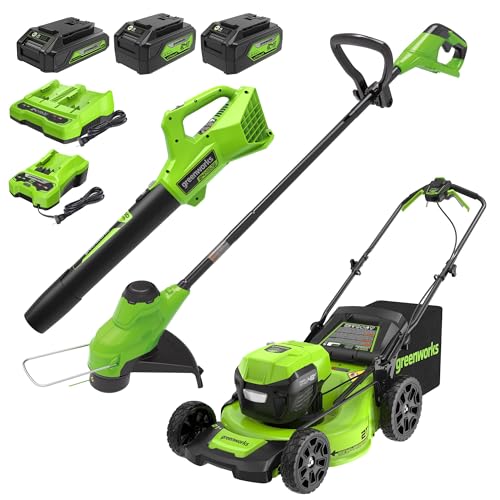
Greenworks 48V 21″ Self-Propelled Yard Combo
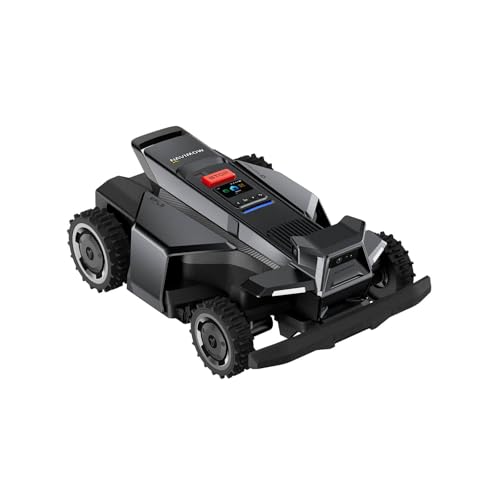
Segway Navimow X430 Robot Lawn Mower (4WD)

Sunseeker X5 AWD Robot Lawn Mower (RTK + Vision)
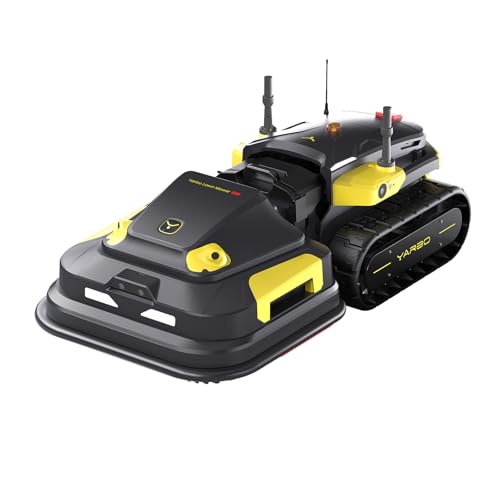
YARBO Robot Lawn Mower Pro (6 Acres)

Mammotion LUBA 3 AWD 3000H Robot Lawn Mower

21″ Self-Propelled Gas Lawn Mower (170cc)

Swisher Predator 11.5 HP 24″ Rough Cut Mower
Why These Options Stand Out
The Worx WG752 sits at the friendly end of the cordless category, pairing a 40V battery platform with a 21 inch cutting deck. Aerodeck technology moves air through the deck to lift grass for a cleaner finish, which matters more than spec sheets suggest when blades are tall or damp.
For most owners in a quiet neighborhood, the swap from gas to battery is the real win. Startup is a button press, runtime is enough for a modest yard, and storage in a small garage stays painless. On larger properties, you may find yourself chasing charging cycles more than cutting grass.
Where It Excels
- 21 inch deck covers ground quickly for a walk-behind
- 3-in-1 design supports bagging, mulching, and side discharge
- 40V battery removes fuel mixing and pull starts
- Quieter operation suits early morning mowing
- Lower upkeep compared to gas equivalents
Things To Consider
- Battery runtime is the limiting factor for big properties
- Best suited to flat or gently rolling lawns
Made For
Suburban homeowners with smaller lots who want a quiet, low-maintenance cut without gas engine hassles.
Look Elsewhere When
The Segway Navimow X430 Robot Lawn Mower suits anyone managing a larger or sloped property who wants hands-off mowing.
The Greenworks combo pairs a self-propelled 21 inch mower with a 12 inch trimmer and blower, all running on a shared 48V battery family. Three batteries and two chargers ship in the box, so you can rotate power between tools without waiting around.
A brushless motor, vertical storage that claims around 70 percent space savings, and LED headlights for low-light sessions make this a practical whole-yard package. The 7-position height adjustment is the quiet hero, giving real flexibility across patchy spring growth and full summer thickness.
A Favorable Mix
- Self-propelled drive lightens work on slopes up to roughly 21 degrees
- 4-in-1 cutting function adds rear bagging flexibility
- Steel deck stands up to rougher conditions
- Three batteries keep all three tools working through the day
Trade Offs
- Heavier than a single-purpose walk-behind
- Battery rotation takes planning on larger lots
- Trimmer and mower share platform but not all accessories
Best Suited To
Homeowners who want one battery family covering mowing, trimming, and blowing without juggling chargers.
Swap It Out When
The Worx WG752 is a lighter pick for small lawns, while the Swisher Predator 24 inch Rough Cut Mower fits properties that look more like fields than yards.
The Navimow X430 is built around the kind of terrain that ruins lesser robots. An ORV-tuned dual suspension system, dual 180W motors, and all-wheel drive let it tackle slopes up to roughly 84 percent while crossing obstacles just under three inches tall.
Zero-turn steering reduces turf damage on tight pivots, which matters when the lawn is more obstacle course than open field. Cutting height adjusts from 0.75 to 4 inches, so you can dial in anything from a tight fairway cut to a longer summer setting. Compared to the Sunseeker X5 AWD, this unit leans harder into extreme slope work.
The Upside
- Handles 84 percent slopes that stop other robots cold
- Zero-turn steering spares the lawn during direction changes
- Dual suspension smooths out root-heaved ground
- Wide cutting height range fits different grass types
- Wire-free setup avoids burying boundary lines
A Few Limitations
- Coverage is listed up to 1 acre, smaller than the YARBO Pro
- Setup requires clear sky view for satellite positioning
Feature Snapshot
Who Will Love This
Owners of hilly or uneven lots up to about an acre who want a robot that climbs where others stall.
Reach For A Different Pick When
Properties larger than an acre, or with mostly open terrain, are better matched by the YARBO Robot Lawn Mower Pro, depending on your budget.
The Sunseeker X5 layers three navigation systems: RTK satellite positioning, VSLAM (visual simultaneous localization and mapping, where a camera builds a map while tracking its own position), and Vision AI. The combination is the main selling point, because pure RTK robots lose accuracy under heavy tree cover and pure vision robots struggle in low light.
All-wheel drive and rugged tires handle uneven ground, roots, and thicker turf better than the typical small-yard robot. Coverage tops out at roughly half an acre, so this is targeted at smaller properties where signal dropouts are a real problem.
A Few Highlights
- Tri-system navigation holds coverage under trees and shade
- Vision AI keeps the robot working into dusk
- AWD and chunky tires grip roots and uneven ground
- Wire-free boundary setup saves install time
Small Caveats
- Half-acre ceiling rules out larger properties
- Complex sensor stack adds cost over basic RTK units
Perfect Match For
Homeowners with tree-shaded or visually cluttered yards up to about half an acre who want reliable coverage.
A Better Fit Elsewhere
Larger properties should look at the YARBO Robot Lawn Mower Pro, while the Segway Navimow X430 Robot Lawn Mower suits steeper terrain.
The YARBO Pro is the largest-footprint machine in this roundup, with rated coverage up to 6 acres and a modular build that goes beyond mowing. Two blade options (razor and straight) ship with the unit, and the platform is designed for four-season yard work rather than a single summer task.
Fully autonomous navigation is the headline feature for owners with golf, estates, turf farms, or hospitality properties. The trade-off is obvious: this is a serious investment meant for properties where robotic mowing pays for itself in labor hours. Compared to the Mammotion LUBA 3 AWD 3000H, the YARBO trades multi-zone cleverness for raw coverage.
The Helpful Details
- Up to 6 acre coverage handles genuinely large properties
- Modular platform supports year-round yard tasks
- Twin blade options handle thick or overgrown grass
- Autonomous navigation reduces hands-on time
- Wire-free boundary avoids buried perimeter wire
Points To Note
- Significant upfront cost compared to walk-behind units
- Overkill for properties under 2 acres
- Modular add-ons expand the total investment further
Built With In Mind
Premium property owners managing 2 to 6 acres who want near-zero hands-on mowing across a full season.
Where A Sibling Pick Shines
Mid-size properties with tighter budgets get more practical value from the Mammotion LUBA 3 AWD 3000H Robot Lawn Mower.
The LUBA 3 AWD 3000H blends three positioning systems into one navigation stack. A 360 degree LiDAR (light detection and ranging, basically a spinning laser that maps surroundings) unit, NetRTK satellite corrections, and dual-camera AI Vision work together so the robot can switch sensing methods when conditions change.
All-wheel drive, 30-zone management, and 80 percent slope handling put this in the same league as the Segway Navimow X430 Robot Lawn Mower, with a stronger emphasis on multi-zone programming. Coverage is listed up to about three-quarters of an acre, which keeps it squarely in the mid-size residential category.
Standout Benefits
- Tri-fusion positioning keeps navigation accurate across conditions
- 30-zone management handles complex yard layouts
- AWD grips 80 percent slopes without slipping
- 2.2 to 4 inch cutting height range suits varied turf
- Wire-free setup avoids perimeter wire installation
Honest Caveats
- Coverage cap rules out multi-acre estates
- Multi-zone programming takes time to dial in
- Sensor stack costs more than basic RTK robots
Quick Facts
Whose Shelf It Belongs On
Tech-comfortable owners with multi-zone yards up to roughly three-quarters of an acre who want premium navigation.
Not Your Match When
Properties spanning several acres get more useful coverage from the YARBO Robot Lawn Mower Pro.
This Ezasin gas mower stays simple in the right ways. A 170cc 4-cycle OHV engine (overhead valve, a layout that runs cooler and more efficiently than side-valve designs) drives a self-propelled 21 inch deck, with a 1.9-bushel grass collector for bagging.
The 3-in-1 cutting system handles bagging, mulching, and side discharge. Owners commonly report that gas power makes a real difference when grass gets thick after rain, where battery units tend to bog down. Compared to the Worx WG752, this unit trades quiet operation for stronger sustained cutting.
Practical Advantages
- 170cc engine holds power through thick or wet grass
- Self-propelled drive reduces pushing effort
- 3-in-1 cutting modes cover bagging, mulch, and discharge
- Generous 1.9-bushel collector cuts down on emptying stops
- No battery charging logistics to plan around
Less Ideal Details
- Gas engine requires fuel mixing, oil checks, and seasonal storage prep
- Louder than cordless or robotic alternatives
The Right Fit
Homeowners with mid-size lawns who want reliable, no-fuss power without battery range anxiety.
Consider Something Else When
Anyone who would rather skip mowing entirely should look at the Sunseeker X5 AWD Robot Lawn Mower instead.
The Swisher Predator is not a lawn mower in the polite sense. An 11.5 HP engine drives a 24 inch rough-cut deck built to chew through saplings up to 1.5 inches thick, which puts it in field-clearing category rather than turf-finishing category.
A 4-speed transmission with reverse, a 3 to 4.75 inch cutting height range, and large pneumatic chevron tires handle uneven ground and pasture regrowth without complaint. The adjustable handlebar is a real comfort win for long sessions. This unit sits far from the cordless and robotic picks, and that is exactly the point.
Real-World Strengths
- 11.5 HP engine cuts brush and saplings that stall residential mowers
- 4-speed transmission with reverse improves maneuverability
- Wide pneumatic tires grip soft or uneven terrain
- Adjustable handlebar supports taller operators
- 3 to 4.75 inch cutting range for rough, tall growth
Things That May Matter
- Far too aggressive for maintained turf
- Heavy enough to need serious storage space
- Gas engine adds the usual maintenance overhead
Who Should Grab It
Property owners with brushy edges, pasture regrowth, or overgrown lots who need clearing power more than a clean finish.
Skip It When
A manicured residential lawn is better served by the Ezasin 21 inch Self-Propelled Gas Lawn Mower or any of the robotic picks.
Picking A Mower That Fits 5 To 10 Acres
Acres of grass shift the math in three ways that matter more than the brand on the box. First, runtime or coverage per charge becomes the dominant variable: a 21 inch deck running 45 minutes per battery clears far less than the same deck running through a full workday. Second, slope and terrain stop being optional details. A flat suburban half-acre barely stresses a basic robot, while a rolling five-acre lot with a creek bank can defeat it entirely. Third, the line between a lawn and a field gets blurry, which is why the right machine depends on whether you are maintaining turf or reclaiming overgrowth.
Deck width and drive type set the pace. A 21 inch self-propelled walk-behind handles a couple of acres comfortably if you do not mind the walking. Robotic units with RTK and vision mapping earn their keep on layouts where dragging out a gas mower every weekend feels wasteful. For properties that have gone feral, a rough-cut walk-behind cuts saplings that would jam a normal blade.
Battery versus gas is no longer a simple tradeoff. Modern 40V and 48V platforms deliver real cutting power for residential lawns, and runtime keeps improving. Gas still wins on sustained heavy work, instant refueling, and long sessions far from an outlet. The honest read is that battery suits most maintained yards under two acres, while gas and rough-cut units still own anything larger, thicker, or steeper.
Maintenance expectations should drive the decision as much as features. Cordless mowers need battery care and blade swaps. Robotic units want occasional cleaning, software updates, and boundary checks. Gas engines demand oil changes, air filters, and off-season storage. Picking a machine whose upkeep matches your actual habits is the difference between a tool that gets used and one that sits in the garage.
Key Considerations Across These Picks
Wrong Turns To Avoid
The most common mistake is buying a mower rated for one acre and expecting it to cover five. Coverage ratings assume flat, rectangular lawns with clean boundaries. Real properties have trees, slopes, narrow side strips, and obstacles that quietly shrink the rated area. Owners who skip this math end up babysitting the battery or robot far more than they planned.
Another trap is ignoring terrain. A robot that performs beautifully on a flat lawn can struggle on the first real slope, and a walk-behind without self-propel turns a hillside into a workout. Match slope rating and drive system to your actual ground, not the easy stretch you mowed last summer.
Where The Extra Money Goes
Premium tiers in this category buy navigation, sensor fusion, and coverage. A basic robot gets you wire-free mowing on simple layouts. Stepping up adds LiDAR, RTK corrections, and AI vision that hold accuracy under trees, at dusk, and across multi-zone yards. The case for paying more is strongest on properties with mixed terrain and complex shapes, where cheaper robots lose signal or miss patches.
Higher-tier gas and rough-cut models add displacement, heavier decks, and transmission options that hold up to thicker growth and longer sessions. For properties with brush, pasture, or neglected sections, the upgrade pays off in durability and time saved per acre.
Frequently Asked Questions
How big a mower deck do you actually need for 5 to 10 acres?
A 21 inch deck is the practical minimum for maintained turf, but deck alone does not solve 5 to 10 acres. Walk-behind mowing at that size becomes a serious time commitment, which is why robotic units and self-propelled gas models with larger decks are common picks.
Are robot mowers realistic for properties this size?
Modern robotic mowers are realistic for the residential portion of a 5 to 10 acre property, especially when broken into zones. Open pasture, dense brush, and very large continuous areas still favor a gas or rough-cut unit, while the maintained lawn area can run autonomously.
What slope rating should you look for?
For mostly flat ground, basic robots handle gentle grades. For real hills, look for units rated above 30 percent slope with all-wheel drive. Anything over 50 percent slope is specialist territory, and the Segway Navimow X430 and Mammotion LUBA 3 AWD 3000H are built for exactly that kind of terrain.
How long does a battery mower realistically last per charge?
Most 40V and 48V walk-behind battery mowers run 30 to 60 minutes per charge under typical cutting loads, with thicker grass pulling that number down. For multi-acre lawns, that usually means swapping batteries or planning recharge breaks rather than finishing in a single pass.
Is a rough-cut mower worth it for residential lots?
A rough-cut mower earns its place when sections of the property have gone overgrown, brushy, or brush-lined. For a clean residential lawn, it is overkill and leaves a rougher finish than a standard deck.
The Takeaway
Mowing 5 to 10 acres stops being a single-decision purchase the moment you account for slope, terrain, and how much weekend you actually want to give up. Robotic units like the Segway Navimow X430, Sunseeker X5 AWD, Mammotion LUBA 3 AWD 3000H, and YARBO Pro cover the automated end of the spectrum, while the Worx WG752, Greenworks combo, and Ezasin gas mower handle hands-on maintenance. The Swisher Predator stands ready for the wild edges. Match the machine to your ground, and the rest takes care of itself.
