

Bermuda grass spreads fast, loves the heat, and rewards homeowners who mow often with a tight, carpet-like turf. Picking the wrong cutting height, blade type, or mower class turns that same lawn brown at the edges and patchy in the middle. This lineup mixes reel mowers, battery walk-behinds, and autonomous robots, plus the seed and feed products that keep Bermuda thick between cuts.
A Closer Look At The Lineup

Scotts Turf Builder Rapid Grass Bermudagrass, 1 lb.

O.M. Scott & Sons Bermudagrass Grass Seed, 5 lbs.

American Lawn Mower 1725-16GC Reel Mower

KOMASTY 40V Cordless 16″ Mower

Scotts Turf Builder Thick’R Lawn Bermudagrass

AirSeekers TRON Robot Lawn Mower
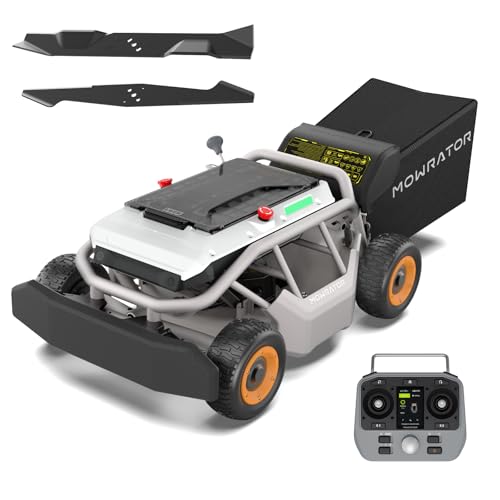
Mowrator S1 4WD 18Ah Remote Mower
Mowrator S1 4WD 12Ah Remote Mower
Taking A Closer Look At The Options
Bermuda lawns that go thin in summer traffic zones usually need seed and feed working together, and Scotts Turf Builder Rapid Grass Bermudagrass bundles both in a single 1 lb bag. The combined seed-plus-starter-fertilizer format trims a step out of patch repair, which matters when hot weather narrows the seeding window.
For most backyards, a 1 lb bag covers modest bare patches rather than full reno work, so it slots in best next to a mower you already own. Think of it as the recovery supplement for the rest of this list: pair it with the reel or robotic mower you prefer and the lawn knits back faster.
Notable Upsides
- Combined seed and fertilizer in one pass saves a spreading trip across the lawn
- Formulated specifically for Bermuda, so the cultivar matches the surrounding turf
- Small bag size is easy to store in a garage or shed between repair seasons
- Helps traffic-worn patches recover without disturbing the rest of the yard
Things To Consider
- One pound covers a small area, so larger renovation projects require multiple bags
- Seed germination still depends on consistent watering during the first weeks
Who It Suits Best
Homeowners patching dog runs, foot paths, and kid-play zones in an otherwise healthy Bermuda lawn.
Where Another Pick Suits Better
For full-yard reseeding, the larger O.M. Scott & Sons Bermudagrass Grass Seed 5 lb bag offers more square footage per purchase.
Stepping up from spot repair to a full reseeding effort changes the math, and the 5 lb O.M. Scott & Sons Bermudagrass Grass Seed bag is sized for that scale. The blend targets warm-season southern lawns, which is where Bermuda thrives from late spring through early fall.
Unlike the 1 lb Rapid Grass bag above, this one assumes you are starting from bare soil or near-bare soil across a meaningful footprint. A rotary or drop spreader and a disciplined watering routine matter more here, since germination depends on keeping the seedbed consistently damp.
Key Advantages
- Five-pound volume suits medium to large southern yards rather than small patches
- Cultivar mix is aimed at hot, sun-exposed sites common across the South
- Pairs naturally with a rotary spreader for even, repeatable coverage
Honest Caveats
- Does not include fertilizer, so a separate starter feed application is required
- Storage life drops if the bag sits open in a humid garage, so plan the purchase close to seeding day
- New seedbeds need steady irrigation for several weeks, which raises the water bill
Feature Snapshot
Made For
Southern homeowners renovating a full lawn or filling in large worn areas with a Bermuda-specific blend.
Look Elsewhere When
For spot repairs under a few square feet, the Scotts Turf Builder Rapid Grass Bermudagrass 1 lb bag is the more efficient pick.
A reel mower cuts grass with a scissor action rather than tearing it with a rotary blade, and that difference shows up fast on Bermuda kept under two inches. The American Lawn Mower 1725-16GC uses seven blades across a 16-inch cutting width, which produces the clean cut that makes Bermuda look like a putting green.
This is a manual push mower, so it trades engine noise for elbow grease. Homeowners with flat, mid-size Bermuda lawns who enjoy the ritual of mowing get a tidy cut with no fuel, no batteries, and a simple mechanical design that’s easy to store and maintain.
What Makes Sense
- 7-blade reel setup is tailored to dense, low-cut warm-season grasses like Bermuda
- Sixteen-inch deck balances coverage with maneuverability around beds
- No fuel or battery means lighter storage and fewer charging routines
- Sharp reel action produces a cleaner cut that resists browning on leaf tips
Worth Noting
- Best on flat ground; tall or overgrown Bermuda may need a pre-cut pass with another tool
- Push effort rises on thick turf, which can tire out smaller operators on larger lots
- Blade adjustment and reel sharpening require occasional mechanical attention
Quick Facts
Best Suited To
Bermuda enthusiasts who mow frequently at low heights and want a clean, scissor-style cut on flat terrain.
Skip It When
For larger or sloped lawns where manual pushing becomes tiring, the Mowrator S1 4WD 18Ah remote mower handles the same Bermuda without the workout.
Battery mowers have matured into genuine rotary replacements, and the KOMASTY 40V Cordless 16″ lands in the small-yard sweet spot. The two 4.0 Ah batteries ship in the box along with two chargers, so you can rotate packs and keep moving if the first one runs low mid-lawn.
Where the reel mower above rewards low-cut discipline, this rotary 2-in-1 mulching-and-bagging setup works for Bermuda kept at typical suburban heights. A 5-position height adjustment helps dial in the 1 to 2 inch range Bermuda prefers during peak summer.
Points In Its Favor
- Dual 4.0 Ah batteries in the box let you mow and recharge in parallel
- 2-in-1 mulching and bagging suits both lawn-recycling and tidy-finish preferences
- Five height positions cover Bermuda’s recommended summer cut range
- Ten-and-a-half-gallon bag holds enough clippings for a small yard without constant emptying
Points To Note
- Sixteen-inch deck means more passes on lots above a quarter acre
- Battery runtime shrinks in thick spring growth, so a second pack helps
Feature Rundown
Who Will Love This
Suburban Bermuda homeowners with small lots who want quiet, cord-free mowing without gas-engine upkeep.
Consider Something Else When
For hands-off mowing on larger Bermuda areas, the AirSeekers TRON robot mower removes the operator entirely from the loop.
Thin Bermuda lawns need more than seed, and the 10 lb Scotts Turf Builder Thick’R Lawn Bermudagrass bag layers seed, fertilizer, and a soil improver into a single application. That three-in-one approach targets the underlying cause of thinning: tired soil that no longer holds moisture or feeds roots.
Compared with the 5 lb O.M. Scott & Sons bag above, this one is heavier, more complete, and aimed at large repair projects rather than fresh seeding. Depending on your soil condition, you may find the thicker application genuinely reshapes a tired lawn over a single growing season.
What Stands Out
- Combines seed, fertilizer, and soil improver to address multiple causes of thin turf
- Ten-pound bag covers a meaningful renovation footprint in one purchase
- Bermuda-specific blend avoids mismatched turf color or texture
Trade Offs
- Heavier bag is harder to carry and may require a spreader for even application
- Soil-improving component works best when watered in thoroughly after spreading
- Thicker results vary based on starting lawn condition, so expectations should match reality
Right Fit For
Homeowners with widespread thinning who want a single product that addresses seed, feed, and soil together.
Another Choice May Suit
For smaller spot fixes, the 1 lb Scotts Turf Builder Rapid Grass Bermudagrass is easier to handle and budget.
Older robot mowers needed a buried boundary wire, and the AirSeekers TRON skips that step with a wire-free setup rated for up to 0.6 acre. A 300-degree AI vision system paired with nRTK positioning maps the lawn without manual perimeter walks, which shortens the install from a weekend project to an afternoon.
For Bermuda specifically, frequent light cuts match how the grass grows, and a robot returning every day or two keeps blades in the ideal 1 to 2 inch window. The dual-layer blade deck also mulches clippings finely so they disappear back into the turf as natural fertilizer.
Everyday Wins
- Wire-free mapping saves the buried-cable installation step
- nRTK plus AI vision handles complex shapes better than perimeter-wire robots
- Daily-cut pattern matches Bermuda’s fast growth habit in summer
- Safety sensors detect pets, toys, and wildlife before contact
Room For Improvement
- Initial mapping run still requires a clean lawn free of debris for accurate boundaries
- 4G connectivity adds a data dependency that older Wi-Fi-only robots avoid
- Heavy garden furniture or steep drop-offs may need manual exclusion zones
Spec Overview
Perfect Match For
Busy Bermuda homeowners who want consistent mowing frequency without scheduling weekend yard work.
Not Your Match When
For steep hillsides where traction matters most, the Mowrator S1 4WD 18Ah remote mower climbs where wheeled robots slip.
Slopes are where most mowers give up, and the Mowrator S1 4WD 18Ah remote mower is built to keep climbing. The 4WD drivetrain handles grades up to 37 degrees, while the 21-inch deck covers ground fast enough for larger Bermuda lots.
Because it is remote-controlled rather than autonomous, you stay in the loop on tricky terrain without riding on the mower itself. You may find this format works well for properties with mixed flat and steep zones where a robot would get stuck and a push mower would be exhausting.
A Favorable Mix
- Four-wheel drive climbs slopes that stall two-wheel-drive mowers
- Twenty-one-inch deck handles bigger Bermuda lawns in fewer passes
- Remote operation removes the operator from underfoot on uneven ground
- Higher amp-hour battery extends runtime for larger properties
Possible Compromises
- Remote mowing takes practice before it feels as quick as walking a mower
- Unit weight and size make storage and transport more involved than a compact mower
- Higher amp-hour battery adds cost compared with the 12 Ah sibling below
Who Should Grab It
Bermuda homeowners with steep, mixed-grade lots who want traction and a wide cutting deck without riding the mower.
Reach For A Different Pick When
For flat Bermuda lawns under 0.6 acre, the AirSeekers TRON robot mower handles the same turf autonomously.
The Mowrator S1 4WD 12Ah keeps the 4WD drivetrain and 21-inch deck of its 18Ah sibling but trims the battery down to a lighter 12 Ah pack. That drop in capacity makes the unit easier to handle and less expensive, with the trade-off of shorter runtime per charge.
For mid-size Bermuda lawns where the full 18 Ah runtime is overkill, this version hits a friendlier middle ground. Compare that to the 18 Ah model above: same slope rating and same deck, but a smaller battery that suits properties with shorter mowing sessions.
Features That Help
- Same 4WD chassis and 37-degree slope rating as the larger battery sibling
- Twenty-one-inch deck keeps cut time short on each pass
- Lighter battery pack eases transport and storage in tighter garages
- Remote control removes the operator from underfoot on tricky terrain
Worth Bearing In Mind
- Shorter runtime per charge means larger lawns may need a mid-mow break
- Still a remote platform, so the learning curve applies just like the 18 Ah model
Details At A Glance
Built With In Mind
Bermuda homeowners with mid-size lawns and sloped terrain who want remote mowing without the heaviest battery pack.
A Better Fit Elsewhere
For very large Bermuda properties where runtime matters more, the Mowrator S1 4WD 18Ah covers more ground per charge.
What Matters Most When Shopping For Bermuda Mowers
Bermuda grass behaves differently from cool-season fescues or rye, and the mower choice should follow the grass, not the other way around. Cutting height is the single biggest factor: Bermuda thrives when kept between roughly 1 and 2 inches during peak summer, and mowers that struggle at low settings will scalp the lawn. Blade action matters next, since reel mowers cut cleaner at low heights while rotary mowers handle taller or uneven growth more easily.
Slope, lawn size, and how often you want to mow all steer the format choice. Flat small yards under a quarter acre often match a cordless rotary, while flat manicured Bermuda loves a reel. Sloped or large lots shift toward remote or robotic platforms, and seed or thickening products round out the routine between cuts.
Match the mower to the maintenance rhythm you actually want, not the one a sales pitch describes. Frequent light cuts beat occasional heavy cuts on Bermuda, so any mower you enjoy using twice a week will outperform a fancier model you avoid.
Key Considerations Across These Picks
Pitfalls Shoppers Hit
Buying a reel mower for tall, weedy Bermuda is a recipe for frustration, since reel setups struggle above 2 inches. Choosing a small battery mower for a half-acre lawn creates range anxiety mid-mow, and skipping starter fertilizer when seeding leaves new Bermuda hungry in poor soil.
When Paying More Pays Off
Higher-tier mowers earn their keep through blade quality, drivetrain strength, and battery capacity. A 4WD remote or wire-free robot costs more up front, but it changes how often you actually mow, which over a southern summer matters more than the initial spend. The honest read is: spend up when the mower removes a chore you dread, not just because a spec sheet looks impressive.
Frequently Asked Questions
How short should you mow Bermuda grass? Bermuda looks and grows best at roughly 1 to 2 inches during summer, with slightly higher cuts in early spring and fall while the grass transitions.
Can you use a reel mower on Bermuda? Reel mowers work very well on Bermuda because the scissor-style cut matches the dense, low growth habit, especially when mowed every few days.
How often should you mow Bermuda in summer? During peak summer heat, mowing every 5 to 7 days keeps Bermuda tidy, though daily light cuts from a robot mower produce the tightest turf.
Do robot mowers handle Bermuda well? Robot mowers suit Bermuda’s fast growth since frequent small cuts prevent scalping and return short clippings as natural fertilizer.
When is the best time to seed Bermuda? Late spring through early summer is ideal, once soil temperatures stay warm and the lawn’s growth cycle is fully active.
Closing Remarks
The right mower for Bermuda depends on lawn size, slope, and how often you want to think about mowing at all. Match the format to your routine, keep the cut height in the 1 to 2 inch window, and the lawn will reward you with the dense, even turf Bermuda is known for.
