

Rocky ground punishes a weak deck and stalls a light motor in the first ten feet. Whether you manage a sloped back acre, a rural property laced with stone, or a yard that doubles as a gravel access lane, the right machine turns a sweaty Saturday into a calm one. The eight picks below cover self-propelled gas walk-behinds, hybrid remote-control units, and wire-free robotic mowers with serious all-wheel-drive traction.
A Closer Look At The Lineup

YARDMAX 22 in. 201cc Select PACE 6 Speed CVT Self Propelled Mower
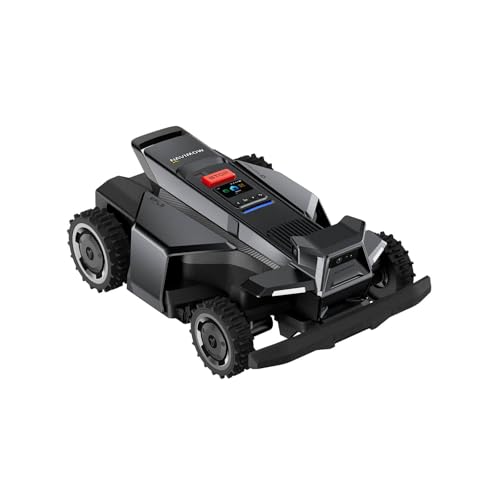
Segway Navimow X430 Robot Lawn Mower 4WD Wire Free

GasXcel 21″ Self-Propelled Gas Lawn Mower 170cc
SYKEND Remote Control Hybrid 4WD Lawn Mower

DREAME A3 AWD 1000 Robot Lawn Mower LiDAR + Vision

PowerSmart 21″ Self-Propelled Gas Mower RWD Alloy Deck
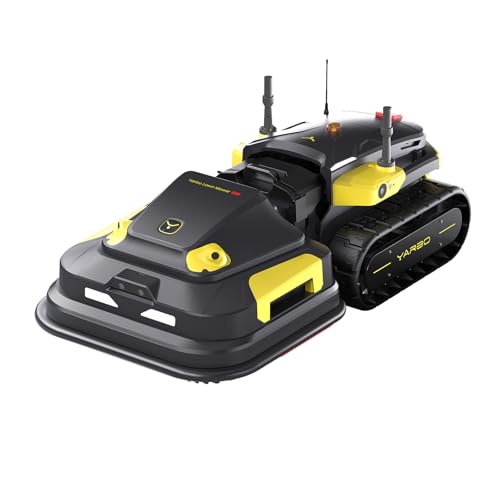
YARBO Robot Lawn Mower Pro Wire-Free for 6 Acres

Mammotion LUBA 3 AWD 3000H Robot Lawn Mower Tri-Fusion
The Details Behind The Selections
A 22-inch deck and a 201cc overhead-valve engine give the YARDMAX YG2860 enough mass and torque to roll over scattered stones without bogging down. The Select PACE transmission (a continuously variable setup, meaning you dial speed like a dimmer rather than shift through fixed gears) lets you match pace to the terrain, slow for rocky patches and quick for open turf. High rear wheels lift the deck over uneven ground that would scalp a low-slung mower.
You trade some weight for that confidence. Owners managing a quarter acre of mixed grass and gravel report that the front-wheel drive handles slopes reasonably well, though the rear can lighten on steeper grades. The 3-in-1 deck (mulch, bag, side discharge) keeps the machine flexible through changing seasons.
Everyday Advantages
- CVT transmission keeps pace matched to your stride, no clunky gear hunt
- High rear wheels clear roots and small stones without lifting the front
- Automatic choke removes the priming-and-choking ritual on cold starts
- 22-inch cut shaves time on yards where a 21-inch deck means another pass
Points To Keep In Mind
- Front-wheel drive may lighten on grades steeper than a moderate slope
- Gas engine requires seasonal oil changes and fuel stabilizer storage
- Bulkier frame needs more shed space than the fold-flat designs below
Who It Suits Best
Homeowners on quarter-to-half-acre lots who want gas power with smart speed control and don’t mind routine engine upkeep.
Look Elsewhere When
Sloped acreage demands the Segway Navimow X430’s all-wheel-drive traction instead.
The Navimow X430 skips the perimeter wire entirely, leaning on GPS and vision instead, and pairs that freedom with serious four-wheel-drive hardware. ORV-tuned dual suspension (think off-road-vehicle-style independent control) and twin 180-watt hub motors push it through 84% slopes and across obstacles up to 2.8 inches. Zero-turn steering keeps the turf from tearing on tight pivots.
For rocky one-acre properties, the X430 handles the kind of grade where the YARDMAX would struggle and never asks you to push. You give up the meditative routine of weekend mowing in exchange for an autonomous setup that handles complex terrain without complaint.
Real Benefits
- 84% slope rating covers nearly any residential hillside without slipping
- Wire-free install removes the buried-cable labor of older robotic mowers
- Hub motors keep maintenance low, no brushes or belts to replace
- Adjustable 0.75 to 4-inch cutting range handles thin turf and overgrown lots
Things To Consider
- Initial setup demands a strong GPS signal and clear sky view at the base station
- Replacement blades and battery service are specialized parts over time
Feature Snapshot
Made For
Property owners with steep, rocky one-acre yards who’d rather automate than wrestle a walk-behind every weekend.
Skip It When
Flat half-acre lawns with mild terrain suit the PowerSmart 21″ Self-Propelled Gas Mower better.
The GasXcel 21-inch packs a 170cc overhead-valve engine, a 4-in-1 deck, and a 65-liter rear bag into a budget-friendly package that handles small rocks better than its price suggests. You get mulching, rear bagging, side discharge, and rear discharge in one unit, a versatility rarely seen at this tier. The 8-inch front and 10-inch rear wheels add noticeable stability on uneven ground.
For homeowners stepping up from an entry-level push mower, this is a sensible first self-propelled buy on rocky soil. The fuel-efficient engine runs up to 1.5 hours per tank, enough to finish most lots in one session without mid-job refueling.
Practical Pluses
- 4-in-1 cutting system adapts to seasonal grass conditions
- Larger rear wheels improve traction over loose gravel and minor ruts
- Self-propelled and push modes let you match effort to terrain
- 170cc overhead-valve design runs cooler and quieter than older side-valve engines
Worth Noting
- Smaller engine than the YARDMAX above, so dense wet grass may slow it down
- Rear bag fills quickly in overgrown spring growth, plan for extra stops
- Steel deck finish typically benefits from a rinse-and-dry habit after each use
Best Suited To
First-time rocky-lot owners who want a versatile deck without overspending on premium hardware.
Consider Something Else When
Six-acre estates need the YARBO Robot Lawn Mower Pro’s broader coverage and modular platform.
The SYKEND remote-controlled mower is purpose-built for the kind of terrain that makes push mowers dangerous. You guide a 21.65-inch cutting deck with a 7.5-horsepower oil-electric hybrid four-wheel-drive platform from a distance, sidestepping flying rocks and steep drops. Cutter height adjusts manually between roughly 1.6 and 3.1 inches, useful for everything from saplings to pasture.
This is the pick for rocky back acreage, overgrown fence lines, and anywhere you’d rather watch from the porch than walk behind a noisy engine. Compared to the gas walk-behinds above, it trades hands-on engagement for personal safety on rough ground.
Standout Benefits
- Remote operation removes you from the cutting path and from kickback risk
- 4WD hybrid drivetrain handles grades and mud where 2WD units stall
- Wide 21.65-inch deck covers weedy areas faster than narrow models
- High-visibility remote feedback reduces guesswork on hidden obstacles
Trade Offs
- Hybrid fuel system requires both oil checks and battery monitoring
- Manual height adjustment means stopping to swap heights mid-job
- Smaller production scale can make replacement parts slower to source
Who Should Grab It
Rural property owners managing rough, sloped, or weed-choked ground where standing behind a mower feels unsafe.
A Better Fit Elsewhere
Mildly uneven suburban lawns are better served by the PowerSmart 21″ Self-Propelled Gas Mower.
DREAME’s A3 AWD packs serious mapping intelligence into a quarter-acre footprint. The 360-degree 3D LiDAR (laser-based distance sensing that builds a real-time map of surroundings) and AI dual-vision cameras identify rocks, pets, and garden furniture before contact, while all-wheel-drive hub motors climb 80% slopes and clear 2.17-inch obstacles. A 45-minute fast charge keeps downtime minimal between sessions.
This is the robotic pick for obstacle-heavy yards, where toy trucks, hoses, and decorative stone borders would confuse a basic robot. It navigates tighter, messier lawns than the Navimow above, though its smaller coverage suits mid-size lots better.
Noteworthy Benefits
- LiDAR plus AI vision recognizes small objects that bump sensors miss
- AWD motors deliver grip on slopes without bogging in soft soil
- 45-minute fast charge doubles operational uptime per day
- Wire-free boundary setup avoids trenching your established lawn
Honest Caveats
- Quarter-acre coverage underserves properties over half an acre
- Sensor cleaning becomes routine in dusty or pollen-heavy seasons
Quick Facts
Perfect Match For
Suburban households with obstacle-strewn lawns who want automation without burying boundary wire.
Not Your Match When
Larger estates benefit more from the Mammotion LUBA 3 AWD’s tri-fusion accuracy.
PowerSmart’s 21-inch walk-behind leans on a 170cc overhead-valve engine, an alloy-steel deck, and rear-wheel drive for traction that holds on inclines. Six height positions let you step the blade up over hidden rocks and step it back down for clean cuts on open turf. Owners commonly report the machine starts in one or two pulls even after winter storage.
It’s a focused design with no robotic frills, just a steel deck, a reliable engine, and 10-inch rear wheels that grip where smaller-diameter tires spin out. If your rocky lot includes regular slopes, rear-wheel drive keeps the rear planted while you guide the front.
The Upside
- Rear-wheel drive pushes uphill without the front lifting off the ground
- Alloy-steel deck resists denting on stray rocks better than plastic alternatives
- Easy-start engine reduces the prime-and-pull routine on chilly mornings
- 3-in-1 deck handles mulch, bag, and side discharge without swapping parts
Small Caveats
- Rear-wheel drive is heavier to turn around flat ground than front-wheel setups
- Alloy deck adds weight that takes a toll over long push sessions
Right Fit For
Homeowners with medium hilly yards who value rear traction over nimble turning.
Where A Sibling Pick Shines
Totally hands-off mowing is the Mammotion LUBA 3 AWD’s lane, not this walk-behind’s.
YARBO positions its Pro model as a four-season yard-care platform rather than a single-purpose mower, with a modular design that supports add-on tools over time. Coverage stretches to six acres, dwarfing the quarter-acre and one-acre robots above. The cutting system handles thick, wet, overgrown grass, a torture test for most residential mowers.
Property owners managing estates, golf-course-adjacent grounds, or turf farms see the value here. Razor blades and straight blades ship with the unit, letting you match cut style to grass type without buying extras.
A Strong Showing
- Six-acre coverage suits estates, resorts, and turf farms
- Modular platform accepts future attachments as needs evolve
- Heavy-duty cut system chews through thick wet grass without stalling
- Wire-free navigation simplifies installation on large or oddly shaped lots
Potential Drawbacks
- Modular system carries a footprint larger than single-purpose robots
- Specialized service and parts come from fewer channels than mainstream brands
Key Specs
Whose Shelf It Belongs On
Estate owners and turf professionals managing multi-acre properties with seasonal yard demands.
Swap It Out When
Quarter-acre suburban lots are over-served by this platform; the DREAME A3 AWD fits better.
Mammotion’s LUBA 3 AWD 3000H stacks three positioning systems for navigation that’s hard to fool. NetRTK delivers centimeter-accuracy GPS corrections (satellite positioning refined by a ground reference for sub-inch precision), LiDAR maps the perimeter, and AI vision spots objects in real time. All-wheel drive climbs 80% slopes, and 30-zone management handles complex lawns with separate mowing rules.
Cutting height adjusts from 2.2 to 4 inches, and the platform covers three-quarters of an acre. Compared to the DREAME above, this robot trades a smaller LiDAR-only coverage area for richer satellite-grade accuracy on bigger lots.
Reasons It Performs
- Tri-fusion positioning maintains accuracy under tree cover where single-system units fail
- 30-zone management customizes cut plans per lawn section
- All-wheel drive grips slopes and rocky transitions without slipping
- 2.2 to 4-inch range covers short turf and taller pasture grass
Less-Strong Areas
- NetRTK accuracy depends on reference station placement and sky view
- More sensors mean more components to clean and inspect each season
Feature Snapshot
Built With In Mind
Tech-comfortable homeowners managing three-quarter-acre yards with slopes, trees, and multiple lawn zones.
Reach For A Different Pick When
Six-acre estates outgrow this robot; the YARBO Pro handles that scale instead.
Picking The Right Machine For Rocky Ground
Traction Matters More Than Engine Size
On rocky terrain, what keeps the blade turning is grip, not raw horsepower. All-wheel-drive robotic platforms and rear-wheel-drive walk-behinds both plant power where it counts. Front-wheel drive is fine for flat suburban lots but can lighten on slopes, especially when the rear wheels lose contact over a hump. For mixed rocky ground, prioritize driven wheels at the back of the unit, where weight transfers uphill.
Deck Material And Blade Design
A steel or alloy deck resists stone strikes better than plastic, and a deep deck improves airflow for cleaner cuts in thick grass. Mulching decks return clippings to the soil but need sharper blades to avoid tearing. Side-discharge decks push clippings outward, useful when grass is wet and bagging would clog.
Power Source Trade-offs
Gas engines deliver sustained torque but require oil changes, fuel stabilizer, and seasonal storage care. Battery-powered robots trade that maintenance for charging downtime and battery replacement every few years. Hybrid remote-control units split the difference, offering gas torque with electric control, though they need both fuel and battery attention.
Coverage Area And Zone Management
Small lots under a quarter acre are well-served by the DREAME A3 AWD, while three-quarter-acre yards with multiple zones benefit from the Mammotion LUBA 3’s 30-zone support. Properties over an acre should look at the Segway Navimow X430 or, for multi-acre estates, the YARBO Pro’s six-acre platform.
Key Considerations Across These Picks
Pitfalls Shoppers Hit
Rocky ground punishes narrow tire widths and shallow ground clearance. Mowers with small front wheels dig ruts in soft soil between stones, leaving tracks that show after the first rain. Skipping a pre-mow walk to pick up large stones is another common miss; even rugged machines suffer when a softball-sized rock meets a spinning blade. Robotic mowers need clean sight lines to their reference station, so a covered patio or dense tree canopy can break GPS lock mid-session.
Why Top Tier Costs More
Premium picks like the Segway Navimow X430 and Mammotion LUBA 3 carry price tags that reflect their all-wheel-drive hardware, multi-sensor navigation, and weather-resistant enclosures. The upgrade pays off when slopes exceed 30%, when the lawn has narrow corridors, or when you simply want weekend time back. For flat quarter-acre lawns with light debris, a budget walk-behind like the GasXcel handles the job without the extra spend.
Frequently Asked Questions
What Makes A Mower Good For Rocky Terrain?
Strong traction from rear-wheel or all-wheel drive, a durable steel or alloy deck, and high ground clearance from larger rear wheels. Robotic models benefit from AWD motors and obstacle-avoidance sensors that recognize stones before contact.
Are Robotic Mowers Safe On Uneven Rocky Ground?
Modern wire-free robots with LiDAR and AI vision map obstacles in real time and reroute around them. Performance on extreme slopes still depends on the model; 80% slope ratings cover most residential hills.
How Often Should I Service A Self-Propelled Gas Mower On Rocky Lots?
Oil changes every 25 hours of use, blade sharpening twice per season, and under-deck cleaning after each mow to prevent caked grass from corroding the deck. Air filter checks every 10 hours keep the engine breathing cleanly in dusty conditions.
Do I Need A Special Battery For Robotic Mowers In Cold Climates?
Lithium-ion batteries lose capacity below freezing, so winter storage in a climate-controlled space extends lifespan. Some models include low-temperature charge protection; check your manual before leaving the unit outside overnight.
Can A Robotic Mower Replace A Walk-Behind On A Rocky Acre?
For most flat-to-moderately-sloped acres, yes. Extreme rocky grades with deep ruts still favor a self-propelled gas walk-behind or remote-controlled hybrid where traction and ground clearance matter most.
Bottom Line
Rocky terrain rewards machines built for grip, ground clearance, and durable decks. Self-propelled gas walk-behinds like the YARDMAX YG2860 and PowerSmart 21″ handle traditional mowing with confidence, while the SYKEND remote-controlled hybrid steps in for genuinely dangerous slopes. Wire-free robots from Segway, DREAME, Mammotion, and YARBO take over the routine once you’ve mapped your lot, freeing your weekends for anything but lawn care. Match the platform to your acreage, slope, and tolerance for engine maintenance, and the rocks stop being the story.
