

A thick, black layer creeping across your lake floor isn’t just ugly; it chokes oxygen, feeds weeds, and stinks up every岸边 afternoon. Lake owners balancing fish health, swim spots, and property value need a steady way to break that organic layer down. The eight picks below cover both enzymatic treatments and mechanical tools, so you can match the approach to your water depth, acreage, and patience.
The Essentials At A Glance

Cabin Obsession Pond Sludge Remover 5 lb

Not Rocket Sciences 4X Pond Cleaner 32oz
LMJP Muck Reducer 5 lb

LMJP Muck Reducer 15 lb Bulk

LMJP Muck Reducer 1 lb
pond boss PRO The Block 5 lb
Beachroller Lake Weed Removal Tool 20ft

Jenlis Muck Razer Aquatic Tiller
A Breakdown Of The Leading Choices
Cabin Obsession takes a patient approach, dropping slow-dissolving pellets that sink and feed a steady colony of bacteria and enzymes right at the muck line. For most backyards with a quarter- to half-acre pond, that steady-release design means tossing the tub out once a month instead of mixing liquids weekly.
Made in the USA and labeled safe for aquatic life and recreation, the formula suits ponds used for swimming, fishing, or livestock. You trade speed for ease: nothing to measure, no pumps, just scatter and let biology handle the rest.
The Practical Payoff
- Gradual-release pellets work for weeks without reapplication.
- Safe around fish, pets, and recreational use.
- No measuring or mixing, which simplifies routine.
- Domestic manufacturing supports tighter quality claims.
- Pellets sink directly to the bottom, targeting the sludge layer where it sits.
Things To Consider
- Works slowly; expect a season or more for visible results on thick buildup.
- Cold-water months reduce bacterial activity, slowing progress in winter.
- A 5 lb tub covers modest footprints; larger lakes may need multiple refills.
Key Product Details
Who It Suits Best
Owners of recreational ponds who want a low-effort, seasonal routine and don’t mind slow, steady progress over instant results.
Look Elsewhere When
Surface-area seekers managing multi-acre lakes should look at the bulk LMJP 15 lb option instead.
Not Rocket Sciences skips the scoop-and-spread routine with a pourable liquid that claims four-times the strength of competing gallons. A 32-ounce bottle handles smaller lakes or pond margins where clarity matters more than total muck removal.
The enzymes target suspended organics that cloud shallow water, which is why the brand leans into color and clarity as much as sludge. Lake owners with established ecosystems may find it slots in nicely as a seasonal top-up alongside a primary treatment.
Where It Delivers
- Compact 32-ounce bottle ships and stores easily.
- Targets both muck and suspended particles for clearer water.
- Liquid format doses quickly across broad surfaces.
Points To Note
- Smaller bottle size means frequent repurchase on larger bodies.
- Liquid dosing is harder to confine to problem spots.
- Heavy debris still benefits from a mechanical pass first.
Feature Snapshot
Made For
Lake owners who want a quick, easy-to-pour boost for clearer water in modest areas.
Where A Sibling Pick Shines
For full-coverage muck work across bigger acreage, the LMJP 15 lb tablet tub handles depth more reliably.
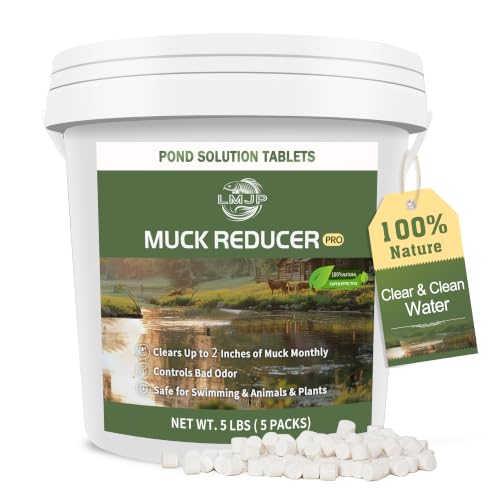
LMJP’s 5 lb tub sits in the comfortable middle of the lineup, generous enough for small lakes yet light enough to toss in a shed without a forklift. The tablets sink fast, dissolve in place, and release enzymes into the deepest sludge pockets where anaerobic bacteria thrive.
First-timers often land here because the dosage guidance is straightforward, and the format forces the active ingredients to the bottom instead of floating past the problem. It pairs well with the larger 15 lb version once you confirm results.
The Case For It
- Tablet format drives treatment right to the muck layer.
- Aids odor control from anaerobic decay.
- Manageable tub weight for solo application.
Less Ideal Details
- Tablets can drift before sinking in moving water.
- Stockpiling multiple tubs adds up for larger properties.
Right Fit For
New lake owners who want a friendly entry dose before scaling up to bulk treatment.
Skip It When
Tackling thick mats over a half-acre or more, where the LMJP 15 lb bulk size delivers better value per pound.
Where the 5 lb tub is a test run, the 15 lb version is a season’s commitment. Property owners managing multi-acre lakes need that kind of volume to push tablets across broad shallow shelves where sludge builds fastest.
The same enzymatic action applies, just at scale, and the larger pail tends to lower your cost per pound meaningfully. If your water test strips show persistent odor and muck rings along the shore, this is the size that starts moving the needle.
Advantages To Know
- Bulk format reduces cost per treatment area.
- Covers multi-acre lakes in fewer applications.
- Targets odor alongside sludge reduction.
- Pairs with manual tools like the Muck Razer for hybrid programs.
Worth Bearing In Mind
- A 15 lb pail is heavy and benefits from a hand truck.
- Over-application can cloud water briefly during die-off.
- Storage in a dry spot prevents clumping between uses.
Core Details
Whose Shelf It Belongs On
Lake owners managing broad properties who want fewer reorder cycles and steady seasonal progress.
Not Your Match When
Tiny backyard ponds where the LMJP 1 lb size delivers a friendlier first dose without waste.
The 1 lb LMJP tub exists for shoppers who want to test the waters before committing. A small ornamental pond or a single neglected cove won’t justify a 15 lb pail, and this format keeps the trial tidy.
It uses the same tablet format and enzyme blend as the larger sizes, which means your results at this scale predict how the bulk option will perform. Storage is a non-issue, and you can keep a tub on a garage shelf between treatments.
Practical Pluses
- Small footprint fits any shed or garage shelf.
- Low-commitment way to gauge enzyme treatment effectiveness.
- Same formula as bulk sizes for consistent results.
Honest Caveats
- Limited coverage means frequent repurchase for lakes.
- Small count of tablets makes even spread across big areas harder.
Best Suited To
Trial-run shoppers and owners of small decorative ponds who want a manageable first dose.
Reach For A Different Pick When
Scaling up to a full-lake program calls for the LMJP 15 lb bulk instead, which lowers cost per pound.
The Block from pond boss PRO swaps loose tablets for a single 5-pound brick that sits on the bottom and leaches bacteria and enzymes for months at a time. For lake owners who’d rather not remember monthly dosing, that hands-off design changes the maintenance equation.
It functions as a clarifier as well as a sludge digester, attacking the nutrient soup that feeds algae blooms. Drop one near the worst muck pocket, and the slow-release matrix does the rest.
Useful Touches
- Single block per zone cuts down on dosing trips.
- Long-release matrix suits low-effort lake maintenance.
- Clarifies water while reducing sludge.
- Targets leaf litter, clippings, and decaying plants at the bottom.
Trade-Offs To Consider
- One block per problem area, so large lakes need several.
- Positioning matters; current can drift the treatment zone.
- Limited ability to target thin spots from shore.
Who Should Grab It
Lake owners who’d rather place a block and walk away than commit to frequent dosing schedules.
Consider Something Else When
Spreading treatment across a wide lake with multiple pockets may suit the LMJP 15 lb tablet format better.
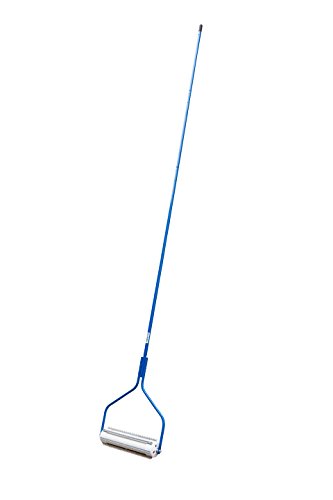
The Beachroller breaks from the enzymatic pack entirely: this is a manual roller tool with a 20-foot handle and stainless steel blades that you push along the lake floor. The roller fills with water, sinks into the weeds, and rips roots loose as you walk the shoreline.
That makes it a fit for lake owners with buildable arms and patience, who want mechanical results without chemicals. Pairing the Beachroller with an enzyme treatment later in the season helps break up the loosened material.
What Works In Its Favor
- 20-foot handle reaches deeper than most shoreline tools.
- Stainless steel blades resist corrosion in fresh water.
- Cuts and pulls weeds by the root, not just tops.
- No chemicals, which fits swim areas and fish habitats.
Some Limits To Know
- Manual effort means a real workout across broad areas.
- Cuts a narrow path; wide lakes need many passes.
- Requires wading or dock access at the working depth.
Built With In Mind
Active lake owners with shallow swim areas and shoreline access who prefer physical work over chemistry.
A Better Fit Elsewhere
Owners wanting a less labor-intensive approach should look at the pond boss PRO The Block for set-and-forget enzyme action.
The Jenlis Muck Razer operates like an underwater rake, with hooked steel teeth designed to dig out bottom weeds and churn loose debris. Drag it through the shallows, and you oxygenate the muck while loosening material for bacteria to finish off.
It shines in shoreline zones and swim areas where weeds creep toward the beach. Unlike the Beachroller’s longer handle, the Razer stays compact and manageable from a dock or shallow wade.
Features That Help
- Hooked steel teeth break up stubborn weed roots.
- Oxygenates muck during use, supporting aerobic breakdown.
- Compact format handles tight shoreline corners.
- Suits swim, boat, and dock zones specifically.
Factors To Consider
- Shorter reach than the Beachroller for deep water.
- Requires physical pulling effort in heavy muck.
Who Will Love This
Lake owners focused on shallow edges, swim areas, and shoreline clearing where weeds meet the bank.
Another Choice May Suit
Reaching deeper water across open lake bottom calls for the Beachroller’s 20-foot handle system instead.
Matching Tools To The Water You Actually Have
Enzymatic treatments and mechanical tools solve different parts of the same problem, so the right choice depends on your lake’s depth, size, and tolerance for labor. Bacterial and enzyme products work quietly over weeks and months, digesting organic sludge from the bottom up. They suit lake owners who’d rather scatter tablets and wait than wrestle with tools, and they pair especially well with properties where wading isn’t practical.
Mechanical options like the Beachroller and Muck Razer take the opposite approach: they’re physical, immediate, and demand effort, but they deliver visible results in a single pass. Shallow swim areas and shoreline zones respond well to raking, while deeper floors typically benefit from chemical digestion instead. Many property owners combine both, using a tool to break up the worst mats and a tablet or block to finish the cleanup biologically.
Cold-water months slow bacterial action, so dosing schedules in northern climates often shift to spring and early fall. Larger lakes also need bulk formats like the LMJP 15 lb tub for cost-effective coverage, while small ponds fit the 1 lb size or a single pond boss block. Match the format to your scale, your climate, and how often you’re willing to reapply.
Things Most Shoppers Overlook
Pitfalls Shoppers Hit
Treating symptoms without measuring the actual problem leads to repeated frustration. Skipping a quick muck depth check at the shoreline means dosing blind, and you may end up over-treating clear areas while ignoring the worst pockets.
Another common slip is ignoring water temperature. Enzymes work best above 50 degrees Fahrenheit, so dosing in deep winter mostly wastes product and sets unrealistic expectations.
Why Top Tier Costs More
Bigger bulk sizes and longer-release blocks carry higher upfront costs because they pack more active bacteria and a denser dissolution matrix. The extra spend buys extended coverage windows and fewer reapplication trips, which adds up across a full season.
Stainless steel components in tools also drive higher prices, though they resist corrosion in constant submersion. For lake owners managing larger footprints, the upgrade typically pays for itself in saved labor.
Frequently Asked Questions
How long does it take to see results from lake muck removers? Enzymatic treatments typically need several weeks to a few months of consistent dosing before visible reduction, with the strongest progress showing up after a full season. Mechanical tools show faster, more obvious results during use, but they don’t address the deeper sludge layer on their own.
Are muck removers safe for fish and other aquatic life? Most bacterial and enzyme blends are designed for recreational and fish-bearing waters and don’t harm aquatic life at recommended doses. Always check the product label for species-specific notes, especially if you stock sensitive fish or maintain plant life you want to keep.
Can I use multiple treatments together? Yes, combining a manual tool with an enzyme treatment is a common strategy. The tool breaks up compacted muck and weeds first, and the bacteria finish digesting the loosened material in the following weeks.
How often should I reapply muck removers? Monthly dosing during the warm season is typical for tablet and liquid formats, while block products may last several months per placement. Reapplication frequency depends on water temperature, muck depth, and overall lake size.
Do muck removers fix cloudy water? Enzyme blends that target suspended organics can improve clarity over time, but persistent cloudiness may signal algae or sediment issues that need separate treatment. Test your water to identify the actual cause before expecting any single product to fix it.
Wrap Up
The best lake muck remover depends on whether you want a low-effort seasonal routine, a fast mechanical cleanup, or both. Start with a clear picture of your water depth, your tolerance for labor, and your long-term goals for the lake. The right product or tool, used consistently, will reshape the bottom over time and bring back the swim spots and shoreline access your property deserves.
