

Healthy perennials start with what lies beneath the foliage. The right mulch locks in soil moisture, keeps roots cool through summer heat, and slowly returns organic matter to the bed as it breaks down. The wrong mulch can mat down, repel water, or sit like a plastic sheet for an entire season.
Perennial beds also bring their own headaches: aggressive roots, emerging shoots that need a soft landing, and a finish that should look tidy through fall cleanup. The picks below cover everything from compressed coconut chips to wheat straw and decorative cocoa shells, so you can match material to bed size, climate, and the look you want. Each option is sized for a real backyard project, not a single patio pot.
The Leading Options At A Glance

SuperMoss Coco Mulch 200 in3 Natural Brown

Galapagos Cypress Tank Mulch 8-Quart

Legigo 2 Pack Coco Chips 2.2lb

HealthiStraw GardenStraw 3 cu ft 20 lbs

Blue Mountain Hay Organic Garden Straw 5lb
Hull Farm Cocoa Bean Shell Mulch 2 cu ft

Rubberific Rubber Mulch Bagged Brown

Halatool 2 Pcs Coco Husk Chips 2.2 LB
Inside Each Recommended Option
A small brick of coco mulch earns its place in a tidy perennial vignette, the kind where a cluster of hostas or a single ornamental grass anchors the bed. SuperMoss compresses a meaningful amount of material into a 200-cubic-inch package, so storage stays simple and you only hydrate what you need for the current project.
The natural brown tone reads as a soft, finished look without the reddish hue of dyed wood products. For most backyards, that neutral palette pairs well with both cool greens and warm autumn foliage. Compared with the larger straw bags later in this list, this format suits detail work around specimen plants rather than full-border coverage.
What Makes Sense
- Compact 200-cubic-inch brick fits on a shelf and expands only when you add water.
- Coco fibers hold moisture near the root zone, easing summer watering chores.
- Natural brown color blends into perennial borders without competing with blooms.
- Renewable coconut-based material offers a peat-free alternative for eco-minded gardeners.
Trade Offs To Consider
- The small volume means you may need multiple bricks for anything beyond a single accent bed.
- Rehydration takes a few minutes of soaking, so plan ahead before spreading.
Best Suited To
Container plantings and small perennial groupings where a polished, moisture-retentive top-dress matters more than coverage volume.
Reach For A Different Pick When
You are mulching a long border and want faster coverage, where HealthiStraw GardenStraw delivers a much wider footprint per bag.
Cypress bedding is a known quantity for moisture-loving settings, and the Galapagos 8-quart bag brings that texture into a perennial context. The chips are sized to interlock loosely, which helps them stay in place after a heavy rain while still letting water travel down to the soil underneath.
This is the bag to consider for shaded fern corners, boggy rain gardens, or any bed where the surrounding air stays damp for long stretches. It also has a pleasant, natural forest-floor scent that fades after a few weeks outdoors. For dryer perennial borders, you may find a straw-based product easier to spread evenly.
Advantages To Know
- Cypress material resists breaking down quickly, so a single application can last across an entire growing season.
- Loose chip structure allows air and water to pass through to the soil surface.
- Resealable 8-quart bag keeps unused material from drying out between sessions.
Points To Keep In Mind
- Wood-based cypress does not return as much organic matter to the bed as straw or coco chips.
- The aroma is noticeable indoors if you store the bag in a garage or shed near living space.
Made For
Shade gardeners and anyone tending a moisture-retentive bed of astilbes, ferns, or ligularias.
Where Another Pick Suits Better
Sun-baked perennial borders that need quick water savings are better matched to HealthiStraw GardenStraw, which lays flatter and shades the soil more evenly.
Two bricks of coco chips give you enough volume to refresh a meaningful chunk of perennial bed without committing to a giant bale. Legigo’s chips arrive screened and rinsed, so you can hydrate them without the gritty sediment that sometimes shows up in cheaper coir products.
Chip size sits in a useful middle ground: large enough to create air pockets around thick perennial roots, small enough to settle into a tidy top layer. Pair this with the SuperMoss option above for a multi-stage approach, or use it as your primary bed topping for a more textured, natural look.
The Value In It
- Two-pack format gives roughly 4.4 pounds of dry material, enough for several mid-size perennials.
- Pre-rinsed chips expand cleanly with water, leaving fewer fines to wash away.
- Biodegradable coconut fibers break down slowly, feeding the bed across multiple seasons.
Honest Caveats
- Chips dry out on the surface between waterings, so a top-up of finer mulch may help the look.
- You will need a bucket or wheelbarrow for the rehydration step, which adds setup time.
Whose Shelf It Belongs On
Mid-career perennial gardeners who want a versatile, organic-friendly mulch without paying for a large compressed bale.
Skip It When
You need a ready-to-spread bag with no soaking step, in which case Blue Mountain Hay Organic Garden Straw works straight out of the package.
When the perennial bed runs long and the hose barely reaches the far corner, wheat straw earns its keep. HealthiStraw’s 3-cubic-foot bag covers a meaningful border in a single pass, and the straw arrives cleaned to remove much of the dust and seed content that comes with farm-fresh bales.
The cleaned wheat straw also composts down at the end of the season, so a fall turn-in adds carbon to the bed rather than hauling debris to the curb. If you have a vegetable patch nearby, this bag doubles as a winter cover for garlic or overwintering roots. For decorative front-yard beds, you may find the pale gold tone more rustic than cocoa shell mulch.
A Few Strong Suits
- 3-cubic-foot volume covers a long perennial border or multiple mid-size beds in one bag.
- Cleaned straw reduces the weed-seed load that often arrives with field-fresh bales.
- Used straw breaks down into compost-friendly material, enriching the bed at season end.
- Non-GMO wheat straw offers a sustainable, plant-based alternative to dyed wood products.
Potential Drawbacks
- Straw can mat down after heavy rain, occasionally requiring a fluff-up with a rake.
- The light color brightens a bed in early spring but may not match the visual style of a formal landscape.
Feature Snapshot
The Right Fit
Large perennial borders and water-wise gardeners looking to cut back on summer irrigation without covering the bed in dyed wood chips.
A Better Fit Elsewhere
Formal foundation plantings where a darker, more uniform surface is the goal are better served by Hull Farm Cocoa Bean Shell Mulch.
A 5-pound bag of organic straw fits the raised bed on the patio or the small perennial island by the mailbox. Blue Mountain Hay keeps the package small enough to store in a garden cabinet, which is a real advantage for anyone without garage space.
The straw works well as a top-dress around shallow-rooted perennials like coral bells, lavender, or sedum, where a thick layer of wood mulch would feel heavy. You also get a clean, seed-screened application that keeps the bed from sprouting surprise grains. If you are covering a long driveway border, step up to the larger HealthiStraw bag instead.
The Upside
- Light 5-pound bag is easy to carry and store without a dedicated shelf.
- Organic straw suits food-adjacent beds like herb spirals or edible flower plantings.
- Cuts down on evaporation, which matters most in terracotta containers that dry out fast.
Where It Is Less Suited
- The compact size means multiple bags for anything larger than a small raised bed.
Perfect Match For
Patio gardeners and small-plot growers who want a tidy, organic top-dress without committing to a giant bale.
Not Your Match When
You are mulching around play structures or pathways, where Rubberific Rubber Mulch offers a longer-lasting, slip-resistant surface.
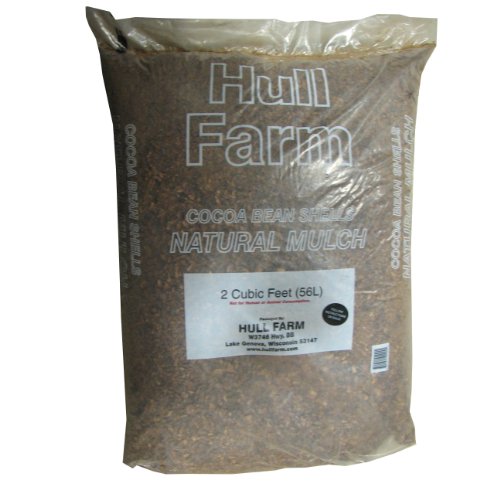
Cocoa shell mulch earns its spot in the front-of-border display, where the deep brown finish pairs with the textures of heuchera, Japanese maple, and stone. Hull Farm’s 2-cubic-foot bag is sized for those accent plantings rather than a full backyard.
The shells also carry a gentle nutrient profile as they weather, feeding the bed slowly without risk of burning tender new growth. The trade-off is the rich chocolate aroma when the bag is first opened, which fades within a few weeks outdoors. Cocoa shells can also become slick in deep shade, so a thinner layer is safer in damp corners.
Where It Delivers
- Deep brown tone gives foundation plantings a finished, high-contrast look against foliage.
- Slow nutrient release supports flowering perennials through the active growing months.
- Lightweight shells spread easily by hand for detailed work around specimen plants.
Small Limitations
- The 2-cubic-foot volume suits smaller beds and may require several bags for larger projects.
- Cocoa shells can mat into a slick surface in heavy shade, so keep layers thin there.
- Keep the bag away from curious pets, since the chocolate scent can attract attention.
Spec Overview
Who Will Love This
Detail-oriented gardeners building a refined front-yard display and willing to refresh the surface once or twice a season.
Look Elsewhere When
You want a single application that lasts multiple years with no top-up, where Rubberific Rubber Mulch requires far less seasonal attention.
Rubber mulch sits in a different lane than the rest of this list, and that is the point. The shredded rubber does not decompose, does not blow away in a storm, and does not need to be replaced every spring. For a low-maintenance perennial island around a mailbox or a utility strip, that durability is hard to beat.
It also stays put through heavy rain without matting, and the brown tone holds its color longer than dyed wood. The honest trade-off is the material itself: rubber does not feed the bed or improve soil structure, so it works best where the perennials are already established and you mostly want a tidy, long-lasting surface.
Strengths Worth Knowing
- Long service life means a single install can carry through multiple growing seasons.
- Holds color and texture through heavy rain and summer heat without fading quickly.
- Won’t compact into a water-repellent crust the way some organic mulches can over time.
Things To Weigh Up
- Does not contribute organic matter to the soil, so plan a separate feeding routine.
- Heavier than straw or coco chips, which matters if you haul bags any distance.
- Less suitable around edibles or beds where you till the soil each year.
Built With In Mind
Low-maintenance perennial islands and established foundation beds where refresh frequency matters more than soil building.
Swap It Out When
You want the bed to improve season over season, where the straw options in this list return organic matter to the soil naturally.
Compressed coco bricks suit apartment patios and balcony perennial collections, where every square foot of storage counts. Halatool’s two-pack arrives in tidy flat bricks, each one expanding up to about 7 quarts once hydrated. The chip size also handles a range of potted perennials from small ferns to larger ornamental grasses.
The low-EC (electrical conductivity, a measure of soluble salt content) and pH-balanced profile is worth noting if you tend to rotate tender or unusual perennials through your pots each year. The main planning step is a soaking bucket and a few minutes of patience before spreading.
Useful Highlights
- Flat-pack format stores on a closet shelf without taking over a closet floor.
- Low-EC, pH-balanced chips suit a wide range of potted perennials without risk of salt stress.
- Compressed bricks expand roughly sevenfold, giving meaningful volume from a small package.
Some Limits To Know
- Hydration adds a step before you can start spreading the material.
- Two-pack volume still feels modest for any project beyond a few large containers.
Right Fit For
Container-focused perennial gardeners in apartments or townhomes who want a tidy, organic-friendly mulch without hauling big bales upstairs.
Consider Something Else When
You are planting a long in-ground perennial bed, where Legigo 2 Pack Coco Chips offers a similar material in a more bed-friendly footprint.
Choosing Mulches That Actually Suit Your Perennial Beds
A good mulch choice starts with the bed itself, not the bag. Sun exposure, soil type, and the size of the planting all shape what works. A north-facing fern bed asks for moisture-holding material that breathes, while a south-facing rock garden wants something that dries fast and does not smother the crowns.
Material type matters more than most people expect. Straw, wood, coco coir, cocoa shells, and rubber each behave differently over a season, and each breaks down (or refuses to break down) on its own timeline. Perennials in particular benefit from mulch that complements the plant’s growth cycle rather than fighting it, since these beds stay in place for years and respond to whatever you lay down season after season.
Match Material to Bed Conditions
Shade gardens with consistent moisture take to cypress or coco chips, which breathe well and do not smother roots. Sunny, drought-prone borders do better with straw, which shades the soil surface and slows evaporation through the hottest part of the day. Cocoa shell mulch fits decorative front-yard beds where the look is part of the appeal.
Layer Depth and Refresh Cadence
A 2 to 3 inch layer is the working range for most perennials, with lighter materials like straw needing a touch more and heavier materials like cocoa shells doing better at the lower end. Plan on refreshing straw each spring, coco chips every other season, and cocoa shells once or twice a year depending on the bed’s exposure.
Storage and Handling
Compressed bricks and small bags earn their place when storage is tight, while big bales reward you with fewer trips to the curb. Heavier materials like rubber need a wheelbarrow and a plan for getting the bag to the bed. Choosing a format you can actually move without strain matters more than the material itself, since the best mulch is the one you will actually refresh each year.
What To Double-Check Before You Order
Mistakes Worth Dodging
Buying more volume than your bed can hold is a common slip up: an over-deep layer can smother perennial crowns and invite rot. Measure the bed’s square footage first, then match bag volume to a 2 to 3 inch target depth. Another easy miss is mixing incompatible materials, like piling rubber over a bed you plan to amend each fall, since rubber and compost do not cooperate well at cleanup time.
When Paying More Pays Off
Higher-tier mulches tend to buy you two things: cleaner processing and longer service life. Pre-rinsed coco chips and screened wheat straw cost a bit more but skip the sediment and seed content that show up in farm-fresh bales. Cocoa shell mulch carries a gentler nutrient release than raw wood, and rubber mulch trades compostability for multi-year durability. The upgrade is worth it when the bed is the focal point of the yard, or when you would rather mulch once and forget about it until next spring.
Frequently Asked Questions
How often should I refresh mulch in a perennial bed?
Most organic mulches need a top-up once a year, with straw asking for spring refresh and coco chips lasting through two seasons. Inorganic options like rubber can go several years between full replacements.
Is cocoa shell mulch safe around all perennials?
Cocoa shells work well around most ornamental perennials, but the chocolate aroma can attract dogs, so keep the bag stored out of reach and consider a thinner layer in pet-friendly yards.
Can I mix straw with coco chips in the same bed?
Yes, layering straw over a base of coco chips is a common approach, with the chips underneath holding moisture and the straw on top shading the soil. Keep total depth under 3 inches so the crowns still breathe.
Do I need to remove old mulch before adding a new layer?
A light raking to break up matted spots is usually enough, and full removal only matters when the old layer has built up past 4 inches. Leaving a thin base helps suppress weeds while the new layer settles in.
What is the best mulch for a brand-new perennial bed?
Cleaned wheat straw is a forgiving starting point because it suppresses weeds, retains moisture, and breaks down into compost by the following spring, which gives new roots a soft, enriched start.
The Takeaway
A well-chosen mulch quietly does a lot of work: it holds moisture, blocks weeds, and gives a perennial bed a finished look that lasts the whole season. The right pick depends on the bed you have, from the shaded fern corner to the formal front border.
Start with what the bed actually needs, then match the material to the work. Any of the options above will reward a thoughtful choice, and the comparison here should make that choice easier.
