

Onions ask a lot from the soil. They want steady nitrogen for leafy top growth early on, then a shift toward phosphorus and potassium once bulbing kicks in, and they respond strongly to sulfur. Picking the right fertilizer means matching those stages to a formula that actually delivers. This list rounds up eight focused options, from organic granular blends to crop-specific liquids, so you can match your patch, your soil, and your watering routine without guesswork.
The Shortlist At A Glance

Jobe’s Organics Granular All Purpose Fertilizer, 4 lbs Bag

FoxFarm Happy Frog Tomato & Vegetable Fertilizer, 4 lb

Ammonium Sulfate High Nitrogen Fertilizer, 5lb

Garlic Fertilizer, Liquid Plant Food, 8 oz
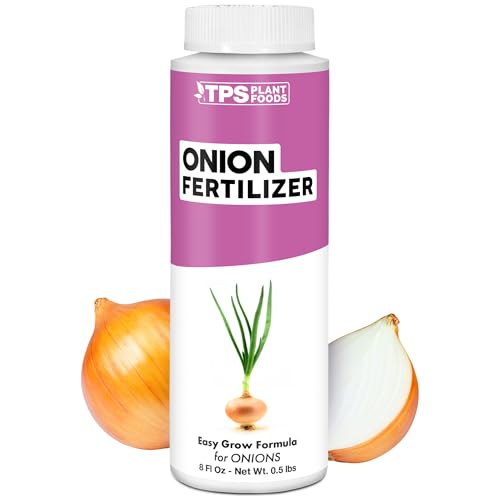
TPS Nutrients Onion Fertilizer, Liquid, 8 oz

TPS Nutrients Onion Fertilizer, Liquid, 32 oz

Prevegenics Onion Fertilizer, 32 fl. oz.

Gardenera Liquid Power Onions Fertilizer, 8 oz
What Each Pick Brings To The Table
Jobe’s Organics Granular All Purpose Fertilizer is the kind of bag that quietly anchors a whole vegetable bed. It is an organic granular formula sized for general garden feeding, and it spreads easily along a row or around transplants without needing extra mixing equipment. For a backyard grower juggling tomatoes next to onions next to leafy greens, that versatility matters: one bag covers the patch.
Granular organics release nutrients as soil microbes break them down, which means a steadier feed than a one-shot water-soluble dose. In raised beds with regular irrigation, that pacing suits onions well during their leafy establishment phase. Compared with later picks like the FoxFarm blend, this one is broader and less crop-specific, so expect to layer timing judgment on top.
The Case For It
- Organic granular formula suits mixed beds, not just onions, which keeps shopping simple for gardeners running several crops in the same row.
- Granular format means one application feeds over weeks as microbes process the material, lowering the risk of a single burn event.
- Spreading around seedlings or transplants is straightforward, no measuring spoons or mixing bottles required.
- Works for vegetables, flowers, shrubs, and trees, so leftover product carries over to other parts of the yard.
Worth Noting
- Granules need watering or rain to start releasing, so dry stretches delay feeding.
- Because it is a broad all-purpose mix, dedicated bulbing crops may want a more targeted supplement later in the season.
Key Product Details
Whose Patch It Belongs On
Home growers running mixed raised beds who want one organic bag that covers onions alongside their other crops.
Look Elsewhere When
Growers focused purely on a large onion plot should reach for the Prevegenics Onion Fertilizer, since its nutrient mix is designed specifically for bulb crops.
FoxFarm Happy Frog Tomato and Vegetable Fertilizer sits in the middle of the lineup in terms of crop focus, built for vegetables that pull hard from the soil. The 5-7-3 NPK ratio (nitrogen, phosphorus, potassium) leans slightly toward phosphorus and potassium, which mirrors what fruiting and bulbing crops want once they move past leafy growth. Calcium and mycorrhizal fungi round out the bag.
Mycorrhizal fungi are beneficial soil microbes that colonize plant roots and help them draw in phosphorus and water, and calcium supports cell wall strength in rapidly expanding bulbs. For an onion bed that needs a mid-season push, that combo lands well. Unlike the all-purpose Jobe’s granular, it expects you to commit to a vegetable-focused feeding routine.
Useful Highlights
- 5-7-3 ratio skews toward phosphorus and potassium, which lines up with bulb swelling and root development stages.
- Includes calcium to support cell structure in expanding bulbs and reduce the risk of disorders tied to calcium demand.
- Mycorrhizal fungi help roots access phosphorus and moisture more efficiently, especially in low-disturbance beds.
- Granular format integrates into existing top-dress routines without new equipment.
Trade Offs
- Higher nutrient density means over-application can burn seedlings, so careful measuring matters during the early growth phase.
- The 4 lb bag covers a smaller footprint than the Jobe’s 4 lb bag, depending on application rate, so larger plots may need multiple bags.
Right Fit For
Intermediate gardeners growing heavy feeders like tomatoes, peppers, and onions together who want a soil-building fertilizer with biological support.
Skip It When
You are working a small patio onion patch in containers, where the Gardenera Liquid Power Onions Fertilizer concentrate is easier to dose accurately.
The Grow Co Ammonium Sulfate is the most aggressive tool on this list. With a 21-0-0 ratio and 24% sulfur, it delivers pure nitrogen along with a meaningful sulfur dose, both of which onions respond to strongly. Sulfur plays a role in the compounds that give onions their characteristic flavor and pungency, and nitrogen pushes the leafy top growth that fuels bulb sizing later.
It also acts as a soil acidifier, which suits alkaline plots where onions struggle. Unlike the FoxFarm or Jobe’s organic blends, this is a synthetic mineral salt that works fast and runs hot, so it pays to read the rate carefully. For a backyard gardener with a known alkaline patch, it can be the missing piece that turns thin tops into thick ones.
Where It Excels
- 21-0-0 NPK ratio delivers concentrated nitrogen for the leafy establishment stage onions rely on before bulbing.
- 24% sulfur supports flavor compound development in alliums, a nutrient many general fertilizers leave out.
- Acidifying effect helps lower pH in alkaline soils, which improves onion nutrient uptake.
- Mineral form dissolves quickly, so watering in produces a fast response in green tops.
Honest Caveats
- Highly concentrated nitrogen means easy over-application, which can burn roots and stall bulb development.
- Synthetic salt form lacks organic matter, so pairing with compost or mulch is wise to protect soil structure.
Made For
Experienced growers working alkaline or sulfur-deficient soils who want a targeted nitrogen source and are confident in their application rate.
Reach For A Different Pick When
You prefer organic inputs and gentler feeding, in which case the FoxFarm Happy Frog blend gives you fertility with biological activity instead.
TPS Nutrients Garlic Fertilizer leans into the family side of alliums. Garlic and onions share most of the same nutritional needs, so a garlic-focused formula carries over cleanly into an onion patch, especially during bulb formation. The 8 oz bottle concentrates the dose, and the liquid format means it mixes into watering cans without any pre-soaking of granules.
What sets it apart from the Jobe’s granular is delivery speed. Liquid feeding reaches roots in hours, not the weeks microbes take to process organic granules. That timing can rescue a slow start in cool spring soil. Compared with the dedicated onion picks that follow, this is the gentler sibling: useful across both crops without forcing you to buy a separate bottle for each.
Notable Gains
- Liquid format mixes directly into watering routines, so no special applicator is needed.
- Designed for bulb crops, meaning the NPK leans toward what alliums want during bulb expansion rather than leafy growth alone.
- Compact 8 oz bottle suits gardeners with smaller beds who want a manageable amount of concentrate on hand.
Things To Consider
- Positioned as a garlic-specific formula, so check the nutrient panel if you are running other crops through the same bottle.
- Small bottle runs out faster on larger plots, pushing frequent shoppers toward the 32 oz sizes later in this list.
Who It Suits Best
Growers splitting rows between garlic and onions who want one bottle that handles both without separate products.
Swap It Out When
Onions are your only allium crop and you want a formula tuned for their growth cycle, in which case the TPS Nutrients Onion Fertilizer is the more direct fit.
TPS Nutrients Onion Fertilizer in the 8 oz size is the most approachable entry point on this list. It targets onion-specific feeding through two key stages: early root establishment and later bulb expansion. That framing matters because many home growers either over-feed during leafy growth or stop feeding too early, and this formula is structured around the actual onion calendar.
Liquids are forgiving for first-timers because you see results within days, so timing mistakes are easier to course-correct than with slow-release granules. The 8 oz bottle is sized for a small raised bed or a short row, which keeps cost low while you learn. Versus the garlic sibling earlier, this one skips the dual-crop flexibility and leans fully into onion.
What Helps Most
- Onion-specific formulation removes the guesswork of matching a general fertilizer to onion growth stages.
- Liquid format delivers nutrients quickly, useful for fast course correction in cool spring soils.
- Small bottle keeps upfront cost low for new gardeners testing liquid feeding for the first time.
Points To Keep In Mind
- An 8 oz bottle covers a limited footprint, so larger onion plots will burn through it fast.
- Designed for one crop, so any leftover is essentially single-purpose unless your neighbors grow onions too.
Best Suited To
First-time onion growers with a small raised bed who want a low-commitment liquid option tailored to the crop.
Consider Something Else When
You plan to feed a larger onion plot across the full season, in which case the 32 oz TPS Nutrients Onion Fertilizer stretches your dollar further.
The 32 oz sibling of the TPS Nutrients Onion Fertilizer keeps the same crop-focused formulation but quadruples the volume. That jump matters for gardeners running a full onion bed or multiple rows through the season, because liquid feeding gets repetitive fast and a small bottle can disappear before bulbing even starts.
Because it is built around the same two-phase approach, early roots and later bulb expansion, the larger format simply buys more of the same reliable feeding. Compared with the Jobe’s organic granular that spreads across many crops, this is a specialist tool, not a generalist. Owners commonly report that 32 oz covers a mid-size bed for the full season when dosed per the bottle.
Bright Spots
- Same onion-specific formulation as the 8 oz bottle, but sized for full-season feeding without reordering mid-grow.
- Liquid format integrates with routine watering, so adding fertilizer is one extra step rather than a separate chore.
- Crop-specific design balances leafy growth with bulb development, helping avoid the all-tops-no-bulbs trap.
Softer Spots
- Liquid format means more frequent applications than a single granular top-dress, which adds to the watering routine.
Perfect Match For
Gardeners with mid-size raised beds or in-ground onion rows who want crop-specific liquid nutrition across the whole season.
A Better Fit Elsewhere
You prefer set-and-forget granular feeding and do not want to mix liquids weekly, in which case the FoxFarm Happy Frog granular reduces the routine.
Prevegenics Onion Fertilizer is the most complete liquid option on this list, and the source data backs that up with the full nutrient list. It carries nitrogen, phosphorus, potassium, calcium, magnesium, sulfur, boron, copper, manganese, and zinc. That mix covers both macronutrients (the NPK plus calcium, magnesium, and sulfur, which plants need in larger amounts) and micronutrients (boron, copper, manganese, and zinc, which plants need in trace amounts), so a single bottle covers deficiencies a simpler formula leaves behind.
Micronutrients like boron and manganese play quiet but real roles in onion bulb development and skin quality, and boron deficiency in particular can hollow out bulbs. Compared with the TPS Nutrients 32 oz, which focuses on the core NPK feeding arc, Prevegenics adds the trace layer underneath. For gardeners with depleted plots or sandy soils that leach minerals quickly, that breadth is the main reason to pick this over the simpler option.
What Works In Its Favor
- Full nutrient panel including micronutrients like boron, copper, manganese, and zinc covers deficiencies simpler fertilizers leave behind.
- Onion-specific formulation targets the crop without forcing you to interpret a general-purpose label.
- 32 oz format supports full-season feeding on a mid-size onion plot without mid-grow top-ups.
Less Ideal Details
- Higher micronutrient density means over-dosing can cause buildup over time, so rotating with compost or alternating seasons helps.
- Liquid-only delivery adds mixing steps compared with a single granular top-dress.
Quick Technical Notes
Who Will Love This
Onion-focused gardeners working depleted or sandy soils who want a single bottle that handles both macro and micronutrient feeding.
Where Another Pick Suits Better
You run a mixed vegetable bed and want one product to cover tomatoes, garlic, and onions together, in which case Jobe’s Organics granular is the more flexible option.
Gardenera Liquid Power Onions Fertilizer closes the list as the most concentrated option. The formula blends nitrogen, phosphorus, potassium, organic acids, and chelated micronutrients. Chelated micronutrients are minerals bound to organic molecules that help plants absorb them more efficiently than standard mineral salts, even in less-than-ideal soil conditions, which matters for fast action.
The 8 oz concentrate is built for active growers who measure carefully and want indoor-outdoor flexibility. Compared with the TPS Nutrients 8 oz, Gardenera leans harder into chelation and organic acids, which can help in container setups where nutrient availability is touchier. The trade-off is a steeper learning curve on dilution ratios for new gardeners.
Real-World Strengths
- Concentrated format means a small bottle goes a long way when diluted correctly, lowering per-application cost on large beds.
- Chelated micronutrients stay available to roots in a wider pH range, which helps in containers and alkaline plots alike.
- Works indoors and outdoors, so the same bottle covers a windowsill herb-and-onion setup and a backyard row.
- Fast-acting liquid format delivers visible top-growth response during the leafy stage when timing matters most.
Practical Considerations
- Concentrate demands accurate dilution, and over-application can cause leaf burn quickly in tender seedlings.
- An 8 oz bottle, while concentrated, runs out faster on large plots, so larger onion growers may need multiple bottles per season.
Built With In Mind
Active gardeners running mixed indoor and outdoor setups who want a concentrated, chelation-supported liquid for onion crops.
Not Your Match When
You want a simpler low-measurement routine, in which case the Jobe’s Organics granular removes dilution from the equation entirely.
Matching Fertilizer Form To Your Onion Bed
Granular vs Liquid Delivery
Granular fertilizers like the Jobe’s Organics and FoxFarm options release nutrients slowly as soil microbes break them down or as water dissolves mineral salts. That pacing suits gardeners who prefer one application every few weeks. Liquid fertilizers like the TPS Nutrients and Gardenera bottles deliver nutrients within hours, which fits growers who want fast course correction or who feed through a watering can anyway. In most backyards, the honest read is that granular wins for low-effort routines and liquids win for precise timing around bulbing.
NPK Ratios That Actually Matter
Onions want different nutrient balances at different stages. During the leafy establishment phase, nitrogen drives top growth that fuels later bulb size, so a higher first number helps. Once bulbing starts, phosphorus and potassium take over, which is why formulas like FoxFarm’s 5-7-3 work well mid-season. The Ammonium Sulfate 21-0-0 is an extreme nitrogen push for soils that clearly need it, not a general-purpose choice.
Crop-Specific vs General Formulas
Crop-specific formulas like the TPS Nutrients, Prevegenics, and Gardenera bottles remove the guesswork of matching a general feed to onion needs. General formulas like the Jobe’s Organics granular give you flexibility across mixed beds. For gardeners growing onions alongside tomatoes, garlic, and leafy greens, a general organic base plus a crop-specific liquid supplement during bulbing is a common combination that does not force you to commit to one bottle for everything.
Key Considerations Across These Picks
Mistakes Worth Dodging
Over-fertilizing with nitrogen late in the season is the most common onion-growing trap. It pushes lush tops at the expense of bulbs and delays maturity. Skipping sulfur is another, since alliums use it for the pungent compounds that define their flavor. Finally, ignoring pH undermines every other choice: alkaline soil locks out nutrients even when the fertilizer itself is solid, which is exactly why the Ammonium Sulfate option exists for high-pH plots.
Where The Extra Money Goes
The jump from a basic 8 oz liquid to a fuller 32 oz formula like Prevegenics mostly buys you micronutrients and volume. The upgrade pays off on depleted or sandy soils that leach minerals quickly, or for gardeners who want one bottle that covers the whole onion calendar without rotating products. If your soil is healthy and you already compost regularly, the simpler liquids and the FoxFarm blend often match the results at a lower commitment.
Frequently Asked Questions
How Often Should You Fertilize Onions During The Season?
Most onion beds benefit from feeding every two to three weeks during active growth, slowing as bulbs mature. Liquid options like the TPS Nutrients or Gardenera bottles fit that cadence naturally when mixed into routine watering.
Is Organic Or Synthetic Fertilizer Better For Onions?
Both work, and the choice depends on your soil and your routine. Organic granulars like Jobe’s feed slowly and improve soil biology over time, while synthetics like the Ammonium Sulfate deliver fast targeted nitrogen when a soil test shows a clear deficiency.
When Should You Stop Fertilizing Onions?
Most growers stop feeding once the tops begin to fall over naturally and bulbs are sizing up, typically a few weeks before harvest. Continued nitrogen past that point can delay curing and reduce storage life, depending on variety.
Can You Use The Same Fertilizer For Onions And Garlic?
Yes. Garlic and onions share most of the same nutritional needs, which is why a garlic-targeted formula like the TPS Nutrients Garlic Fertilizer carries over well. For pure onion plots, the onion-specific bottles remove a layer of interpretation.
Do Onions Need Sulfur In Their Fertilizer?
Sulfur supports the flavor compounds alliums are known for, and it slightly acidifies soil. Onions grown in sulfur-deficient plots often lack pungency, which is one reason the Ammonium Sulfate option earns its place for alkaline gardens.
Bottom Line
Matching the right fertilizer to your onions comes down to soil pH, plot size, and how hands-on you want the routine to be. General organics cover mixed beds, crop-specific liquids nail the onion calendar, and targeted mineral salts fix specific soil problems. Pick the format that fits your watering habits, and your bulbs will reward the consistency.
