

Keeping a houseplant happy comes down to more than sunlight and the right watering rhythm. The soil in a pot runs out of nutrients fast, and a balanced organic feed keeps leaves green, roots active, and growth steady without the harsh chemical feel of synthetic mixes. Whether you tend a windowsill pothos or a full shelf of tropicals, the right organic fertilizer makes daily care simpler and your plants visibly healthier.
Your Options, Compared

Houseplant Fertilizer Self-Dissolving Tablets (4 Tablets)

HiThrive 16oz Houseplant Fertilizer 6-2-4 Concentrate
Grow Queen Organic Liquid Indoor Plant Food 8oz

Grow Queen Organic Liquid Indoor Plant Food 12oz

Grow Queen Organic Liquid Indoor Plant Food 16oz

Houseplant Resource Center Indoor Plant Food 8oz

EarthPods Organic Indoor Plant Food 100 Capsules

Miracle-Gro Organic Plant Food 32 fl. oz.
The Picks, Examined More Closely
If a stack of measuring spoons and half-empty concentrate bottles already clutters your kitchen shelf, the INSTANT BIOLOGICS tablets cut that fuss to almost nothing. You drop one tablet into a watering can or glass, wait for it to dissolve, and pour as you normally would. No measuring, no guessing at ratios in a rush.
The format works best for someone who keeps a modest collection, maybe five to ten pots on a windowsill or a single plant stand. Because the tablets are pre-portioned, overfeeding by accident is harder to do than with a liquid concentrate. Compared to the liquid picks later in this list, you trade long-term yield for day-to-day simplicity.
Real-World Strengths
- No measuring spoon, no mixing cup, no splashed concentrate on the counter.
- Pre-portioned tablets reduce the chance of accidental overfeeding in a hurry.
- Works across tropicals, succulents, and other common houseplant types.
- A short four-tablet pack keeps the entry cost low for a curious first-time user.
Things To Consider
- Four tablets cover only a handful of feedings, so heavy users repurchase often.
- Owners with very hard tap water sometimes find tablets dissolve more slowly in cold water.
Feature Card
Right Fit For
Casual houseplant owners who want a tidy, no-mess way to feed a handful of pots without buying a separate bottle.
Look Elsewhere When
Collectors running dozens of plants should reach for HiThrive 16oz Houseplant Fertilizer 6-2-4 Concentrate, where the cost-per-gallon math works out much friendlier over a year.
The HiThrive bottle leans into scale. A single 16-ounce bottle dilutes to roughly 87 gallons of feeding solution, which is the kind of math that matters when you water a fiddle leaf fig, a handful of monsteras, and a few smaller pots on the same weekend. The 6-2-4 NPK ratio (nitrogen-phosphorus-potassium, the three numbers that tell you how a fertilizer leans leafy versus root-building) tilts toward nitrogen, so foliage plants tend to respond with quick green growth.
Where the tablets above aim for simplicity, this one assumes you already own a watering can and a basic rhythm. Mix a small amount into water at each feed and you are set. You may find that succulents and cacti want a lighter hand, since the high nitrogen that fuels leafy tropicals can stretch their leaves awkwardly.
Positive Points
- High dilution ratio keeps the per-feeding cost low for active plant owners.
- Nitrogen-leaning formula suits pothos, fiddle leaf figs, and similar foliage plants.
- Liquid format spreads evenly through the root zone with regular watering.
- One bottle replaces months of smaller-format refills.
Worth Noting
- Requires measuring and a separate watering can, unlike the tablet format from pick one.
- The nitrogen tilt can over-stretch slow growers like succulents if used at full strength.
Feature Card
Made For
Indoor gardeners with a mid-size collection of leafy tropicals who feed on a steady weekly or biweekly schedule.
Consider Something Else When
You prefer a balanced, even nutrient split for a wider plant range, in which case the Grow Queen 5-5-5 blends covered below are a closer match.
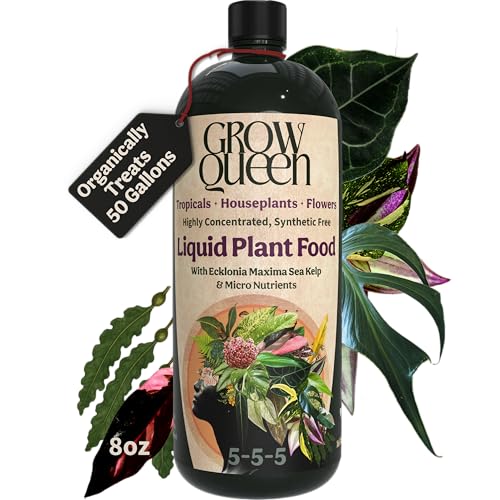
The 8oz Grow Queen bottle is the smallest of the three sizes the brand offers, and it doubles as a useful way to test whether organic feeding suits your routine. The 5-5-5 ratio is balanced across nitrogen, phosphorus, and potassium, which means fewer of the stretchy-leaf surprises you can get from a nitrogen-heavy mix. Sea kelp is included in the formula, and that often translates into slightly sturdier stems and better tolerance for the occasional missed watering.
For a small household or a starter set of pots, an 8oz bottle that treats about 50 gallons is plenty for a full growing season. It also costs less up front than the 12oz and 16oz versions, which is helpful if you are not yet sure how much you will use. The honest read is that dedicated growers will outgrow this bottle within a few months.
The Practical Payoff
- Balanced 5-5-5 ratio works across a wide range of common houseplants.
- Includes sea kelp, which tends to support root resilience and steady growth.
- Smaller bottle keeps the upfront cost low for new organic feeding routines.
- Liquid format mixes easily into a standard watering can.
Trade Offs
- Smaller yield means repurchasing sooner than the 16oz version.
- Balanced ratios grow steadily rather than forcing fast leafy pushes.
Quick Facts
Perfect Match For
Newcomers to organic feeding who want a balanced, gentle formula in a small starter bottle.
Reach For A Different Pick When
You already water more than a dozen plants each week and want fewer refills, in which case the Grow Queen 16oz Grow Queen Organic Liquid Indoor Plant Food 16oz is the better match.
The 12oz Grow Queen bottle is the middle child of the lineup, and that middle spot actually suits a lot of indoor gardeners. It shares the same 5-5-5 balanced ratio and sea kelp inclusion as the 8oz version, but treats around 75 gallons, which covers a typical growing season for a moderately sized collection without forcing a second purchase halfway through summer.
If you already rotate between monsteras, pothos, peace lilies, and a handful of smaller pots, the balanced ratio keeps each species happy without overthinking. Compared to the more nitrogen-heavy HiThrive, this blend grows leaves at a steadier pace, which some indoor gardeners prefer for slower, more controlled shape.
Useful Touches
- Mid-size bottle covers a full season for typical indoor collections.
- Balanced 5-5-5 ratio keeps growth measured rather than leggy.
- Sea kelp supports root recovery after dry spells.
- Compatible with tropicals, foliage plants, and common potted varieties.
Minor Gripes
- The 12oz sits at a small price premium over the 8oz, so casual users pay slightly more per ounce than the smaller bottle.
- Balanced feed produces visible growth more slowly than nitrogen-leaning formulas.
Feature Snapshot
Best Suited To
Indoor gardeners with a mid-size mixed collection who want balanced organic feeding without buying in bulk.
Swap It Out When
You feed a large indoor jungle and want the fewest refills, in which case the 16oz Grow Queen covers you for closer to 110 gallons.
The 16oz Grow Queen bottle is the bulk option for committed indoor gardeners. At roughly 110 gallons of feeding solution, it tends to outlast a full growing season even for people who tend a dense shelf of plants. The same 5-5-5 ratio and sea kelp base carry over from the smaller bottles, so the feeding experience itself does not change, only the refill cadence.
Where smaller bottles appeal to first-timers, this one rewards consistency. You measure, mix, and water without thinking about reordering for months. The trade-off shows up in storage: 16 ounces of liquid concentrate needs a spot on a shelf or in a cabinet, away from direct sun, so the bottle does not degrade.
What Stands Out
- Largest yield in the brand line, suited to heavy feeders.
- Balanced organic profile reduces the risk of leaf burn on sensitive species.
- Sea kelp inclusion continues to support resilience across seasons.
- Liquid format integrates into existing watering routines without extra gear.
Room For Improvement
- Higher upfront cost than the 8oz or 12oz versions, which may put off casual users.
- A 16oz bottle takes up more shelf space than typical small-format plant foods.
Feature Rundown
Who Will Love This
Active indoor gardeners who water a large plant collection weekly and want fewer bottle refills per season.
A Better Fit Elsewhere
Travelers who skip feedings for stretches at a time may prefer EarthPods Organic Indoor Plant Food 100 Capsules, since the slow-release capsules feed even when you are away.
The Houseplant Resource Center formula lands on a 3-1-2 ratio, which is closer to how research-grade horticulture blends read. The lower nitrogen number keeps growth measured rather than leggy, while the higher potassium side supports overall plant vigor and root function. Chelated micronutrients (minerals bound so plants can absorb them more easily) are included for long-term availability in the soil.
For aroids like pothos, monstera, and peace lily, that ratio tends to fit well, since these plants reward steady nutrition more than aggressive nitrogen pushes. Cactus and other slower growers are also on the label, though you may want to feed them at half strength to avoid overshooting.
The Helpful Details
- 3-1-2 ratio mirrors widely cited horticultural guidelines for indoor plants.
- Chelated micronutrients support steady uptake over time.
- Suited to aroids, peace lily, monstera, and cactus in one bottle.
- Compact 8oz bottle fits easily in a kitchen drawer or small shelf.
Honest Caveats
- Lower nitrogen produces less dramatic leaf growth than the HiThrive concentrate.
- Cactus and succulents often need a diluted mix to avoid soft, stretched growth.
Who Should Grab It
Aroid and tropical plant collectors who prefer a research-driven NPK profile over a nitrogen-heavy feed.
Where Another Pick Suits Better
Gardeners looking for the simplest possible routine may prefer EarthPods Organic Indoor Plant Food 100 Capsules, which skip mixing entirely.
EarthPods take a different path from every liquid on this list. Each capsule is a small, compressed pod of organic fertilizer that you push into the soil near the stem and water as usual. One tube holds 100 individual capsules, which is roughly 100 feedings depending on pot size, and the slow-release design means you do not have to remember a strict schedule.
For travelers, office plant caretakers, or anyone who forgets feeding for a week or two, that hands-off rhythm is genuinely useful. The pods also avoid the spills and sticky bottles that come with concentrates. Small plants need only one or two capsules, medium plants two to four, so a single tube lasts longer than you might expect.
Well-Handled Touches
- Slow-release formula feeds plants over weeks instead of days.
- No measuring, mixing, or watering-can cleanup involved.
- One tube covers months of feedings for a typical home collection.
- Compact tube stores easily on a shelf or in a plant-care kit.
Points To Note
- Hard, dry potting mixes sometimes need pre-watering so capsules break down evenly.
- Slow-release timing gives less control over rapid growth pushes compared to liquids.
Built With In Mind
Busy plant owners, frequent travelers, and anyone who wants a near-zero-effort feeding routine.
Not Your Match When
You want a quick, adjustable dose for fast-growing foliage, in which case HiThrive 16oz Houseplant Fertilizer 6-2-4 Concentrate gives finer control.
The 32oz Miracle-Gro Organic Plant Food rounds out the list with the largest bottle of the group. It is built around plant-based fertilizer ingredients and is listed for organic use, which puts it in the same broad category as the smaller organic blends above, only sized for gardeners who maintain both indoor and outdoor container plants.
The bigger format means less frequent repurchasing, and the liquid format integrates into your existing watering routine without extra gear. Where capsule-style feeds trade control for convenience, this one keeps the adjustable liquid dose, just at a volume that suits a wider mix of pots around the home.
Features That Help
- Large 32 fl. oz. bottle suits both indoor and patio container plants.
- Liquid format allows adjustable feeding strength at each watering.
- Plant-based formula fits organic gardening preferences.
- Single bottle reduces packaging waste over multiple small refills.
A Few Limitations
- Larger bottle needs dedicated storage space away from direct sunlight.
- Specific NPK details are not listed on the retailer page, so dosing is somewhat general.
Whose Shelf It Belongs On
Gardeners who care for both indoor houseplants and outdoor container plantings and want one organic liquid to cover both.
Skip It When
You keep only a few indoor pots and value a more clearly defined NPK ratio, in which case the Grow Queen 8oz or 16oz blends offer a more transparent formula breakdown.
What Matters Most When Choosing Organic Fertilizers For Houseplants
Reading the NPK Ratio
The three numbers on any fertilizer stand for nitrogen, phosphorus, and potassium, in that order. Nitrogen pushes leafy growth, phosphorus supports roots and blooms, and potassium helps overall plant vigor. For foliage-heavy houseplants like pothos and monsteras, a balanced 5-5-5 or a slightly nitrogen-leaning 6-2-4 keeps leaves green without over-stretching stems. For flowering or fruiting plants, a higher middle number helps bud set, but most indoor foliage plants lean toward nitrogen.
Matching Format to Your Routine
Liquid concentrates mix into your watering can and feed immediately, which suits people who already water on a schedule. Tablets and capsules trade some control for a hands-off approach, slow-releasing nutrients over weeks. Travelers and forgetful waterers often prefer capsules, while hands-on gardeners usually favor liquids because the dose adjusts from week to week.
Considering Bottle Size and Yield
Small bottles cost less up front but run out faster, especially in collections over a dozen pots. Larger bottles cover full seasons but require shelf space. A simple rule: estimate one gallon of feeding solution per small plant per month, then pick a bottle size that lasts at least three months at that pace.
Checking for Sensitive Plant Adjustments
Cactus, succulents, and other slow growers often need fertilizer at half strength, regardless of the formula. Most organic liquids are gentle enough that you can dilute freely, but it helps to confirm the NPK ratio before applying at full strength to a sensitive species.
Smart Choices Across the Category
Where Shoppers Go Wrong
The most common slip is overfeeding. New organic gardeners sometimes assume that organic means unlimited, but nutrients still build up in potted soil over time. Diluting to half strength for the first month and watching leaf response helps avoid the soft, stretched growth that signals excess nitrogen. Another miss is ignoring water quality. Hard tap water can leave mineral residue that compounds with fertilizer salts, so flushing pots with plain water once a month keeps the root zone balanced.
When Paying More Pays Off
Higher-tier organic fertilizers typically include chelated micronutrients and natural additives like sea kelp, which support root resilience and stress tolerance. The extra cost shows up most in larger collections, where steadier growth and fewer leaf-drop setbacks save money on replacing struggling plants. For a single windowsill pothos, the difference between a budget blend and a premium one is hard to see. For a full room of tropicals, the upgrade pays for itself across a season.
Frequently Asked Questions
How often should you fertilize indoor houseplants?
Most indoor plants benefit from feeding every two to four weeks during the active growing season, which runs roughly from spring through early fall. Reduce or pause feeding during winter months, when slower light levels mean plants use fewer nutrients.
Are organic fertilizers safe for cats and dogs?
Organic plant foods generally avoid harsh synthetic chemicals, but most still contain concentrated nutrients that can upset a pet’s stomach if ingested. Store bottles and capsules in a closed cabinet and keep pots out of reach of curious animals.
Can you use the same fertilizer for succulents and tropicals?
You can, but succulents and cacti usually want the same fertilizer at half strength, since their slower metabolism cannot process full doses. A balanced organic blend covers both groups with a simple dilution change.
Do houseplants really need fertilizer?
Potted soil runs out of essential nutrients within a few months, since watering gradually leaches them out. Without replenishment, leaves yellow, growth stalls, and the plant slowly declines. Regular light feeding keeps the soil active and the plant growing.
What does NPK mean on a fertilizer label?
NPK stands for nitrogen, phosphorus, and potassium, listed in that order as percentages of the total mix. Those three nutrients drive most plant growth, and the ratio tells you whether the feed favors leaves, roots, or overall vigor.
The Takeaway
The right organic fertilizer depends less on which product wins on paper and more on how you already care for your plants. Casual owners with a few pots often do best with the simplicity of tablets or capsules. Active indoor gardeners with shelves of tropicals usually prefer liquid concentrates for the control and yield. Match the format to your routine, the NPK to your plant mix, and your leaves will show the difference within a few weeks.
