

Raised beds turn a sunny corner of any yard into a productive little patch, but only if you start with soil that drains well and feeds steadily. You’re probably weighing bags of organic raised bed soils right now and trying to figure out which ones justify the spend without leaning on synthetic shortcuts. This list focuses on mixes, amendments, and granular feeds that support organic gardening from the day you fill the bed through the rest of the season.
The Essentials At A Glance

Miracle-Gro Organic Indoor Potting Mix, 16 qt.

Miracle-Gro Raised Bed Plant Food, 2 lbs.

R&M Organics Compost Soil Amendment Fertilizer

Espoma Organic Vegetable & Flower Garden Soil, 1 cu ft
Coast of Maine Castine Blend Soil, 2 cu ft

Wiggle Worm Organic Raised Bed Mix, 40lb (Pack of 3)

Miracle-Gro Organic All Purpose Plant Food, 3 lb.

Espoma Organic Vegetable & Flower Garden Soil, 1 cu ft (2-Pack)
The Picks, Examined More Closely
This is the pick for small spaces where the soil has to multitask. The 16-quart bag fits a kitchen shelf without dominating the closet, and the blend pulls together coir (shredded coconut husk that holds air and water), sphagnum peat moss (decomposed bog moss that stores moisture and releases it slowly), and a quick-start natural fertilizer. That trio helps the mix forgive the usual indoor mistakes like a missed watering or a sunny window that cooks the pot.
Compared with the larger bed-focused options below, this one isn’t meant to fill a 4×8 raised bed. It’s tuned for herbs on a sill, a fiddle-leaf fig in a corner, or a few patio containers. You may find it compacts faster than a coarser outdoor mix, so plan to fluff the soil with a fork once a month during the growing season.
Real Benefits
- Coarser-than-typical indoor blend that resists the soggy-bottom syndrome common in potted houseplants.
- Coir component keeps the mix airy so roots don’t sit in waterlogged soil.
- Quick-start natural fertilizer gives seedlings and transplants a gentle push right out of the bag.
- 16-quart size is manageable for apartment dwellers who need to pour from the bag without spilling.
Honest Caveats
- Small bag means a refill is likely mid-season for anyone running more than four medium pots.
- Once the fertilizer charge fades, container plants commonly show nutrient drop, so a follow-up feed is the practical move.
Who It Suits Best
Apartment growers and small-space gardeners tending a handful of pots on a patio or windowsill.
Where Another Pick Suits Better
For filling full raised beds, the Coast of Maine Castine Blend offers far more volume and longer-lasting structure.
Raised beds are hungry systems. Vegetables and herbs pull nutrients out fast, and a generic lawn fertilizer rarely covers what tomatoes, peppers, and leafy greens actually need. This granular feed was formulated specifically for raised bed crops and adds calcium along with the usual micronutrients, which matters because calcium helps prevent blossom-end rot in tomatoes and supports stronger cell walls in fruiting plants.
Where the first pick handled moisture in a pot, this one handles nutrition in a bed. A 2-pound pouch covers a modest setup, and you’ll likely reapply through the season depending on what you’re growing. In most setups, one feeding at planting followed by a midseason top-up keeps heavy feeders like squash and brassicas moving.
Useful Highlights
- Calcium addition targets the deficiencies most common in raised bed edibles.
- Granular format is easy to broadcast by hand around established plants.
- Pair-it design works alongside any organic raised bed soil, including the Coast of Maine blend reviewed below.
- Lightweight pouch stores neatly on a garage shelf between feedings.
Points To Keep In Mind
- Not a complete soil, so it pairs with a base mix rather than replacing one.
- Heavier feeders may need more frequent applications than the label suggests in deep, fast-draining beds.
Quick Facts
Made For
Vegetable gardeners focused on fruiting crops who want a calcium-aware feed in a small, easy-to-store package.
Consider Something Else When
If you want a single product that covers both soil base and nutrition, the Coast of Maine Castine Blend is a more complete answer.
Compost is the quiet workhorse of organic gardening, and this amendment leans on a dairy cow manure base that gardeners have trusted for decades. The compost is screened and aged, so it spreads like dark, crumbly soil rather than wet slurry. You’re getting a soil conditioner meant to be worked into the top few inches or blended into a tired bed before replanting.
Unlike the Miracle-Gro feeds above, this isn’t a quick nutrient hit. It’s a slow-release builder that improves texture and biology alongside nutrient content. For raised beds that have produced two or three seasons of crops, this kind of amendment is what brings structure back and replaces organic matter lost to decomposition.
Notable Upsides
- Dairy manure compost delivers organic matter that improves both drainage and water retention.
- Works on lawns, vegetable plots, fruit trees, and container plantings without changing the routine much.
- Aged format cuts down on the strong ammonia smell fresh manure can carry.
- Repleishes depleted beds after heavy harvests without forcing a full soil swap.
Trade Offs
- Not a standalone planting medium, so it needs to be mixed into existing soil or blended with a lighter mix.
- Manure-based composts can vary between batches in texture and moisture, which sometimes means clumping that needs breaking up by hand.
Who Should Grab It
Long-time gardeners refreshing beds between seasons and anyone converting lawn space into a productive plot.
Skip It When
For an all-in-one ready-to-pour raised bed fill, the Wiggle Worm Raised Bed Mix saves a step.
Espoma has built a quiet reputation among organic gardeners, and this bag leans on that legacy. It’s designed for in-ground use, meant to be mixed thoroughly with native garden soil at planting time rather than poured straight into a hole. The blend includes earthworm castings (the nutrient-rich waste worms leave behind, often called “black gold” by gardeners), which add a gentle biological boost alongside the standard organic matter.
Where the R&M compost above is mostly an amendment, this one is closer to a soil conditioner with planting-ready intent. It’s a sensible match for flower borders, herb spirals dug into existing ground, and any in-ground vegetable plot where the native soil needs help but doesn’t need replacing.
A Few Strong Suits
- Earthworm castings enrich the blend with beneficial microbiology that supports root development.
- Mix-in format improves native soil without forcing a full raised bed conversion.
- Compatible with organic gardening protocols for those growing edibles.
- One cubic foot is a manageable pour for weekend planting projects.
Minor Gripes
- Single bag may run short for larger garden renovations, so you’ll likely need multiple bags or the two-pack option below.
- Best results depend on thorough blending with native soil, which adds labor versus ready-to-use raised bed mixes.
Feature Snapshot
Right Fit For
In-ground gardeners enriching an existing bed or border without committing to raised bed construction.
Another Choice May Suit
For raised bed filling straight from the bag, the Coast of Maine Castine Blend skips the mixing step.
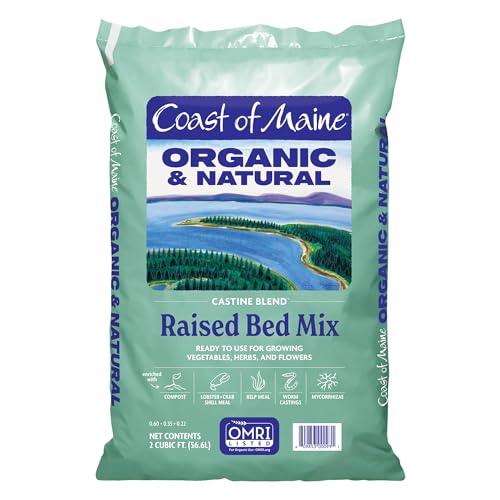
This is the soil to reach for when you want to fill a raised bed once and grow in it all season. The blend pulls in worm castings, mycorrhizae (beneficial fungi that attach to roots and extend their reach), biochar (a charcoal-like material that holds nutrients and improves soil structure over years), green sand, kelp meal, and lobster and crab shell meal. That ingredient list reads like a soil scientist’s grocery list, and the result is a mix engineered for long-term productivity.
It’s ready to use straight from the bag, no recipe required. Compared with the Espoma in-ground option above, this one is built for raised beds and containers specifically, and the 2 cubic foot volume makes short work of filling a smaller frame. You may find the initial cost higher per cubic foot, but the ingredient density means fewer midseason amendments.
Benefits That Matter
- Mycorrhizae inoculation supports root expansion and nutrient uptake from day one.
- Biochar contributes long-term soil structure that survives multiple growing seasons.
- Crab and lobster shell meal adds organic calcium plus a natural pest deterrent for soil-dwelling insects.
- Ready-to-use format skips the recipe-tinkering that other organic soils often require.
Small Caveats
- Two cubic feet only fills a small raised bed or a handful of large containers in one pass.
- Higher-end ingredient list typically carries a higher price tag per bag than basic mixes.
Best Suited To
Serious raised bed gardeners building a long-term planting system who want premium ingredients without mixing their own soil.
Look Elsewhere When
If budget matters more than ingredient quality, the Wiggle Worm Raised Bed Mix gives you volume at a friendlier cost per pound.
Sometimes you just need volume. This pack of three 40-pound bags delivers 120 pounds of compost-based raised bed mix, and the bags are heavy enough that you won’t want to lug them far from the truck. The base is high-quality compost with trace worm castings, plus worm eggs that hatch over time and continue working the soil after planting.
Unlike the single-bag options earlier in this list, this is a project-sized purchase. Filling a 4×8 raised bed to a depth of about 10 inches eats roughly 8 to 10 cubic feet, so this pack covers that and then some. The honest read is that the texture is rougher than the Coast of Maine blend, and you may notice a few woody bits that need breaking up.
Practical Pluses
- Three-bag pack covers a full-size raised bed in a single purchase.
- Worm eggs hatch and continue aerating the soil through the growing cycle.
- Compost-heavy base supports steady nutrient release for heavy feeders.
- Plant-direct format means no mixing required before adding transplants.
Areas To Watch
- Bags are heavy and awkward to carry without a hand truck or a helper.
- Rougher texture than premium blends, with occasional woody fragments that need raking out.
Feature Rundown
Perfect Match For
First-time raised bed builders who want enough soil to fill a frame without juggling multiple separate purchases.
Reach For A Different Pick When
You want a single, lighter bag to handle and a finer texture for container growing, in which case the Miracle-Gro Indoor Mix fits better.
Granular feeds have a quiet advantage: you sprinkle, you water, you move on. This 3-pound option covers a backyard’s worth of mixed flower and vegetable beds and feeds for up to three months per application. Unlike the raised-bed-specific feed earlier in this list, this one targets both outdoor vegetable gardens and flower beds, so it’s the more flexible choice for mixed planting areas.
Where the Miracle-Gro Raised Bed Plant Food focuses on calcium for fruiting crops, this all-purpose version leans into root development and general resilience. For a yard that mixes ornamentals with a few tomato plants and a row of greens, that’s a sensible one-bag-does-most approach.
Well-Handled Touches
- Up to three months of feeding per application reduces how often you’re out there with the spreader.
- Works on both vegetable gardens and flower beds without changing product.
- Granular format stores dry on a shelf without the clumping liquid feeds can show.
- Builds strong root systems, which matters for plants facing summer heat or drought stress.
Worth Noting
- Not formulated with calcium emphasis, so fruiting crops in raised beds may still want a calcium-specific supplement.
- Heavy summer rains can leach nutrients faster than three months, so midseason reapplication is the practical move in wet climates.
Whose Shelf It Belongs On
Mixed-yard gardeners who want one feed to cover both flowers and vegetables without buying two separate products.
Where A Sibling Pick Shines
For dedicated raised bed edibles where calcium matters most, the Miracle-Gro Raised Bed Plant Food is more targeted.
The two-pack version of the Espoma blend solves the practical problem the single bag created. Two cubic feet is enough to amend a sizeable in-ground garden bed or refresh a tired flower border without scrambling for a second order. The earthworm castings, organic matter, and natural ingredient list match the single-bag version exactly, so there’s no guesswork about what you’re spreading.
Compared with the raised bed-specific options earlier, this stays true to in-ground gardening. It’s the choice when you’re planting directly into native soil and want to improve it season over season rather than filling a frame. Depending on your soil’s starting condition, two bags may still leave you short on a big project.
Strengths Worth Knowing
- Two-bag format covers a larger in-ground garden in one purchase.
- Earthworm castings add the same biological boost as the single-bag version.
- Compatible with organic gardening standards for edible plantings.
- Mixes thoroughly into native ground for a long-term soil improvement.
Less-Strong Areas
- Still meant for mixing into native soil, so it’s not a ready-to-pour raised bed fill.
- Larger gardens may require more than two bags, pushing the project cost up.
Built With In Mind
Homeowners with established in-ground beds who want to refresh soil between seasons without rebuilding the layout.
Swap It Out When
For a ready-to-fill raised bed project, the Wiggle Worm Raised Bed Mix skips the native soil blending step entirely.
What To Weigh Before Choosing Organic Raised Bed Soils
Match The Product To The Project
The first question is whether you’re filling a raised bed, refreshing in-ground soil, or feeding an existing setup. Raised bed fills want ready-to-pour mixes like the Coast of Maine Castine Blend or the Wiggle Worm pack, both engineered to drop straight into a frame. In-ground gardens do better with mix-in amendments like the Espoma or R&M compost blends that improve native soil over time. Container and indoor growing calls for a finer, moisture-balanced potting mix like the Miracle-Gro Indoor option, because outdoor bed mixes compact too aggressively in pots.
Read The Ingredient List, Not Just The Label
“Organic” on the bag means the ingredients meet certification standards, but the actual recipe varies wildly. Look for named amendments like worm castings, biochar, kelp meal, or mycorrhizae. Each contributes something specific: worm castings add slow-release nutrition and biology, biochar improves long-term structure, mycorrhizae extend root reach. A bag with only “composted forest products” and peat is technically organic but offers less diversity than a blend with five or six named inputs.
Consider Volume And Weight Honestly
Bags at 40 to 60 pounds are awkward to haul from a delivery drop-off to the backyard. The Wiggle Worm 3-pack covers a project but takes planning to move. Smaller bags like the 16-quart Miracle-Gro Indoor Mix or the 1 cubic foot Espoma are easier to handle but require multiple purchases for large projects. For most home gardeners, two to four mid-size bags is the sweet spot between manageability and project coverage.
Plan For Follow-Up Feeding
Even premium organic raised bed soils deplete over a growing season. Heavy feeders like tomatoes, squash, and brassicas pull nutrients fast, so pairing a quality base soil with a granular feed like the Miracle-Gro Organic All Purpose or the calcium-aware Raised Bed Plant Food keeps production steady. Skipping the follow-up feed is a common reason home gardens stall by midsummer.
Picking Across The Lineup
Common Shopping Slip Ups
The biggest mistake is buying raised bed fill for an in-ground project, or vice versa. Raised bed mixes are formulated to drain well in a frame with no native soil contact, so they dry out fast when spread thin over clay. In-ground amendments don’t have the structure to anchor roots in a frame without blending. Another frequent error is underestimating volume: a 4×8 raised bed at 10 inches deep needs roughly 25 to 30 cubic feet of soil, far more than most people guess.
What The Higher Tier Buys
Premium blends like the Coast of Maine Castine Blend include biochar and mycorrhizae that basic compost-and-peat mixes skip. Biochar persists in soil for years, improving water retention and nutrient holding capacity season after season. Mycorrhizae attach to roots and extend their reach into the soil, which means plants access water and nutrients they couldn’t reach alone. The upcharge pays off over multiple growing seasons rather than one, so gardeners planning to keep the same bed productive for years see the strongest return on the higher-tier investment.
Frequently Asked Questions
How much organic soil do I need for a typical raised bed?
A 4×8 raised bed filled to 10 inches deep needs roughly 25 to 30 cubic feet of soil. For most gardeners, that means planning on multiple bags or a bulk delivery rather than a single purchase.
Can I use organic raised bed soil in containers?
Yes, but outdoor bed mixes tend to compact in containers over time. For pots, blend with a lighter potting mix or refresh the soil each season to keep drainage steady.
How often should I add compost to a raised bed?
Most home gardens benefit from a top-dressing of compost once or twice per season, typically in spring at planting and again midseason after the first heavy harvest. A granular organic feed supplements between compost applications.
Is organic raised bed soil safe for vegetable gardens?
Yes. Certified organic soils use ingredients allowed under organic gardening standards, which makes them suitable for edible crops including vegetables, herbs, and fruits.
Do I need to add fertilizer if the soil is already organic?
Often, yes. Organic soils feed plants slowly, and heavy feeders like tomatoes and squash commonly need a midseason supplement to maintain production through the hottest weeks of summer.
The Takeaway
Organic raised bed soils vary widely in ingredient quality, volume, and intended use, so the best pick depends on whether you’re filling a frame, refreshing in-ground beds, or feeding established plantings. Premium blends with biochar and mycorrhizae deliver the longest-lasting results, while bulk compost-based options give project-sized coverage at a friendlier cost. Match the product to your project, plan for follow-up feeding, and your beds will reward the effort all season long.
