

Raised bed gardening has a way of humbling you the first season. The native soil underneath that cedar frame rarely delivers the loose, crumbly texture that lettuces, tomatoes, and herbs crave. A well-chosen bag of organic soil can turn that struggle into a harvest, and the eight options below cover the most common raised bed situations: filling a brand-new bed, refreshing tired soil between seasons, supplementing with worm-rich castings, or dialing in a low-pH mix for acid-loving crops like blueberries. Each entry leans on ingredient lists and formulation notes, not lab claims, so you can match the soil to your climate, your crops, and your watering habits.
The Essentials At A Glance

Miracle-Gro Organic Indoor Potting Mix, 16 qt

Miracle-Gro Raised Bed Plant Food, 2 lbs

R&M Organics Compost Soil Amendment

Espoma Organic Vegetable & Flower Garden Soil
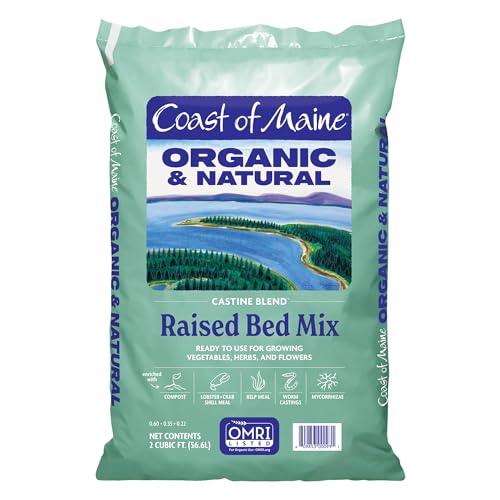
Coast of Maine Castine Blend Soil

Coast of Maine Acid-Loving Planting Soil

Wiggle Worm Organic Raised Bed Mix

Plantonix Coco Coir Bricks 5-Pack
The Details Behind The Selections
Miracle-Gro’s organic indoor mix leans on coir (shredded coconut husk fiber used to hold air and moisture), sphagnum peat moss, and a quick-start natural fertilizer. That blend is built for containers, not for the deep fill of a 4×8 cedar bed, so treat it as a specialty option rather than a primary fill. You may find it most useful on a sunny windowsill where herbs sit next to a south-facing pane and dry out fast.
For a small patio herb planter or a cluster of houseplants that like steady moisture, the coir component helps buffer the swing between waterings. The formulation is also widely reported to handle the underwatering-AND-overwatering trap that catches most indoor gardeners, which is its real selling point.
Practical Advantages
- Coir adds airspace, helping roots avoid the soggy bottom that kills most houseplants.
- Quick-start fertilizer gives a noticeable early push for newly potted herbs.
- Sphagnum peat moss holds water, so a forgotten watering day does not always end in wilt.
- Lightweight 16-quart bag is easy to haul up apartment stairs.
Things To Consider
- Not formulated for outdoor raised bed volume, so it gets expensive at scale.
- Peat-based mixes tend to compact over a season and benefit from a perlite top-up.
Who It Suits Best
Apartment dwellers and balcony herb gardeners who want one bag for both houseplants and small patio containers.
Where Another Pick Suits Better
Coast of Maine Castine Blend Soil is a smarter fill if you are filling a full raised bed outdoors.
This is a plant food, not a soil, and that distinction matters. The Miracle-Gro raised bed formula is designed to feed established beds of vegetables, herbs, flowers, and fruit, layering calcium and micronutrients into whatever soil you already have. You sprinkle it in mid-season rather than use it as a base.
Edible gardeners running tomatoes, peppers, and kale through a hot summer benefit from the added calcium, which is the same nutrient that helps prevent blossom-end rot on tomatoes. For raised beds already filled with Coast of Maine or Wiggle Worm, this is a season-two supplement rather than a replacement.
Reasons It Performs
- Calcium-focused blend targets a common tomato and pepper deficiency.
- Granular format spreads easily with a hand scoop, no mixing required.
- Works across flowers, herbs, and edibles without recipe changes.
- Compact 2-pound container stores neatly in a shed through winter.
Trade Offs
- It feeds, it does not fill, so it is useless for a brand-new empty bed.
- Granular feeds need reapplication every 4 to 6 weeks depending on rainfall.
Key Specs
Made For
Edible-bed gardeners who already have a quality base soil and need mid-season feeding without measuring liquids.
Look Elsewhere When
R&M Organics Compost Soil Amendment is a smarter call if you actually want to bulk up poor native soil instead of just feeding it.
R&M Organics compost is a dairy-cow-manure amendment, the kind of soil conditioner you spread over an existing bed rather than a complete fill on its own. The compost replaces nutrients that last year’s tomatoes pulled out, and it works equally well on lawns, vegetable plots, fruit trees, and flower borders. For raised beds, think of it as the season-end refresh.
Vegetable gardeners on a clay-heavy native base often blend R&M into the top few inches in late winter. You may find the texture loosens up noticeably by planting time, and earthworm activity tends to spike in the amended layer.
Useful Touches
- Dairy-cow compost releases nutrients slowly, so one application carries a long bed through spring.
- Works on lawns, in-ground beds, and containers, not just raised frames.
- Helps rebuild microbial life in beds that have grown heavy feeders for years.
- Replenishes trace minerals that synthetic fertilizers skip.
Points To Note
- Strong earthy smell at first, so keep bags off a hot porch.
- Not a standalone fill: clay or sandy beds still need a base mix like Wiggle Worm or Coast of Maine.
Feature Snapshot
Best Suited To
Seasoned gardeners with established raised beds who want to rebuild tired soil between rotations without buying a full new fill.
Consider Something Else When
Espoma Organic Vegetable & Flower Garden Soil is a better starter if you are planting a brand-new bed from scratch.
Espoma’s vegetable and flower mix is built for the planting-and-transplanting moment: when you dig a hole for a tomato start or a perennial division and want the surrounding soil to give the roots a running start. The blend includes earthworm castings and a mycorrhizal inoculant, the beneficial fungi that attach to roots and extend their reach into the surrounding soil. In a raised bed frame, you scoop this into each transplant hole rather than use it as the entire fill.
First-time gardeners tend to reach for this because the bag spells out exactly when to use it. You may also find it works in containers, so the same bag covers a patio tomato pot and a raised bed.
Bright Spots
- Mycorrhizae colonize roots early, helping transplants establish faster than plain native soil.
- Earthworm castings add gentle organic fertility without burning tender roots.
- One cubic foot bag is a manageable weight for a single trip from the car.
- Works for both edible and ornamental plantings in the same bed.
Small Caveats
- It is a transplant booster, not a complete bed fill, so a new 4×8 frame needs far more than one bag.
- Storage in a damp shed can lead to mold on the bag surface; keep it dry and sealed.
The Right Fit
New gardeners who want a clear, single-purpose bag for transplanting tomatoes, peppers, and flowers into raised beds.
Skip It When
Wiggle Worm Organic Raised Bed Mix is a more efficient choice if you need to fill or top-up an entire bed by volume.
Coast of Maine’s Castine Blend is the most ingredient-dense raised bed mix on this list. Worm castings, mycorrhizae, biochar (a charcoal-like soil amendment that holds water and nutrients in microscopic pores), green sand, kelp meal, and lobster-and-crab shell meal all show up in the formulation. The result is a ready-to-use bed soil that does not need recipe tweaking, which is rare for an off-the-shelf product.
Gardeners filling a new cedar or galvanized bed in spring tend to land here because the soil goes in and plants go straight in on the same day. The lobster shell meal also adds a slow trickle of calcium and chitin, which can deter some soil pests over time.
Real-World Strengths
- Mycorrhizal inoculant and biochar together improve long-term soil structure beyond a single season.
- Crab and lobster shell meal offers slow-release calcium plus natural pest-deterrent properties.
- No mixing needed: the bag is a finished bed soil, not a concentrate.
- Light enough to lift into a wheelbarrow without throwing out your back.
Things To Weigh
- Two cubic feet fills one corner of a 4×8 bed, so a full fill needs several bags.
- Coastal ingredients give the soil a slight briny scent when first watered.
Quick Facts
Who Will Love This
Serious raised bed gardeners who want a single-bag fill with biochar and shell meal already mixed in, no DIY blending required.
Another Choice May Suit
Coast of Maine Acid-Loving Planting Soil is a smarter pick if your raised bed is dedicated to blueberries or azaleas.
The acid-loving blend from Coast of Maine targets the plants most raised-bed soil ignores: blueberries, azaleas, rhododendrons, hollies, camellias, ferns, and hydrangeas. The formulation sits at a low pH, which is the soil acidity level these species evolved to need, and it balances moisture retention with drainage so roots do not rot in a wet spring.
Berry gardeners running a dedicated raised bed for blueberries find this is the simplest way to skip the sulfur-amendment routine. The 20-quart pack of two also works as a soil refresh around an existing acid-loving shrub if the original bed has drifted toward neutral over a few seasons.
Where It Helps
- Low-pH blend removes the guesswork of acidifying a raised bed by hand.
- Suitable list covers blueberries, azaleas, rhododendrons, ferns, and hydrangeas in one bag.
- Lightweight texture blends easily into existing raised bed soil.
- OMRI-listed (reviewed by the Organic Materials Review Institute for use in organic production) for gardeners keeping strictly organic beds.
Honest Caveats
- Specialized: using this on tomatoes or peppers would actually hurt them.
- Smaller bag volume means it is a supplement, not a fill, for most full raised beds.
Feature Card
Whose Shelf It Belongs On
Backyard berry and ornamental gardeners with a dedicated raised bed for blueberries, azaleas, or hydrangeas who want a clean low-pH start.
Reach For A Different Pick When
Coast of Maine Castine Blend Soil handles a general vegetable or flower raised bed better.
Wiggle Worm’s raised bed mix is a vermicompost-forward blend (vermicompost is worm-processed organic matter that delivers nutrients in a plant-available form), packaged in a three-bag, 40-pound set aimed squarely at the gardener filling or topping off a real-sized raised bed. The worm castings feed soil biology, and the included worm eggs hatch over the season to keep that biology active.
If you maintain multiple raised beds or one oversized 4×12 frame, the bulk format keeps you from running out mid-fill. Compared to Coast of Maine Castine, the trade-off is fewer amendments: no biochar, no shell meal, just clean compost and worm action.
Points In Its Favor
- Three-bag pack covers a full raised bed without a second order.
- Worm castings and worm eggs build a living soil that improves over the season.
- Plant directly into the bag, no recipe mixing required.
- Strong choice for organic gardeners avoiding synthetic fertilizers.
Some Limits To Know
- Each 40-pound bag is heavy, so plan a wheelbarrow or hand truck for delivery day.
- Worm egg levels can vary between batches, and some growers report slower hatch in cool spring soil.
Perfect Match For
Raised bed gardeners managing multiple beds or large frames who want bulk worm-castings soil in a single delivery.
Swap It Out When
Plantonix Coco Coir Bricks are a better fit if you only need to blend your own mix from a fiber base.
Plantonix’s coco coir comes in compressed 650-gram bricks, five to a pack, and expands dramatically when soaked. Coco coir is the fibrous husk of the coconut, processed into a peat-free growing medium that holds air and water without the acidity of sphagnum peat. The bricks are pre-rinsed and pre-screened to filter out sand and fiber debris, so the fluff-up tends to come out cleaner than cheaper bricks.
For gardeners who like to mix their own soil, coir is the fiber base that goes into seed-starting blends, lightens clay-heavy beds, and stretches a bag of premium mix further. Storage is the quiet win: five bricks stack on a garage shelf where a comparable volume of bagged soil would not.
Notable Gains
- Compressed bricks save significant shelf space over bagged soil.
- Pre-rinsed and pre-screened for cleaner expansion with less debris.
- Peat-free choice for gardeners avoiding sphagnum peat harvesting.
- OMRI-listed for organic use in vegetable beds and seed-starting.
- Each brick expands to several quarts, so a 5-pack covers a meaningful blend job.
A Few Limitations
- Coir alone has almost no nutrients, so it needs pairing with compost or a feed like Miracle-Gro Raised Bed Plant Food.
- Bricks require soaking time and a large bucket, which is less convenient than opening a bag.
Right Fit For
DIY soil blenders and seed starters who want a clean, peat-free fiber base they can mix into raised beds or starting trays.
Not Your Match When
Wiggle Worm Organic Raised Bed Mix is a simpler one-bag answer if you do not want to measure and blend.
Picking The Right Soil Mix For Your Raised Bed
Choosing a raised bed soil comes down to three honest questions: what stage is your bed in, what are you growing, and how much hands-on blending do you want to do. A brand-new empty frame calls for a finished fill like Coast of Maine Castine Blend or Wiggle Worm Organic Raised Bed Mix, both ready to plant into. An established bed that grew heavy feeders last year usually wants a refresh: top-dress with R&M Organics Compost Soil Amendment and feed through the season with Miracle-Gro Raised Bed Plant Food. Crops matter too. Blueberries and azaleas simply will not thrive in general vegetable soil, and a low-pH blend like Coast of Maine Acid-Loving Planting Soil saves years of pH frustration.
Hands-on effort is the third axis. Mixers and seed starters get more control from a compressed coir base plus amendments. Hands-off gardeners pay a little more per cubic foot for a bag that goes straight into the bed with no recipe required. Either approach works; the mismatch happens when a hands-off gardener buys raw coir, or a blender buys a pre-finished bag and then wonders why nothing changes when they refresh.
The final piece is your climate. Hot, dry summers punish any soil that dries out fast, so look for water-holding ingredients like coir, peat, or worm castings. Cool, wet springs punish dense blends, so biochar, perlite, or shell-meal amended soils drain better. Matching the soil to your bed’s stage, your crop list, and your regional rainfall is what separates a productive raised bed from one that just looks tidy in photos.
Smart Choices Before You Order
Common Buying Mistakes
The most common raised bed soil mistake is buying the wrong category. Potting mixes like Miracle-Gro Organic Indoor are engineered for containers and break down quickly under outdoor UV and weather. They look like soil, but a full raised bed filled with them compacts within a season. Plant foods are the other trap: Miracle-Gro Raised Bed Plant Food is a fantastic mid-season supplement, but it does not fill a single cubic inch of empty bed.
The other frequent slip is under-buying. A standard 4×8 foot raised bed at 10 inches deep needs roughly 27 cubic feet of fill, and most bags run 1 to 2 cubic feet. Shoppers who grab one bag and assume they are set end up with a half-full frame and a second delivery fee. Measure your bed’s interior dimensions before ordering, then divide by the bag volume to know exactly how many you need.
When Paying More Pays Off
Premium blends like Coast of Maine Castine cost more per cubic foot than basic compost, and the gap buys three specific things: added biology, longer soil structure, and fewer mid-season interventions. Mycorrhizal inoculants colonize roots and extend their reach, biochar holds nutrients in microscopic pores for months, and shell meal adds calcium slowly enough that one application carries a full growing season. Cheaper bags cover the same volume, but they lean on the gardener to add biology and fertilizer separately.
The upgrade is worth it for permanent beds that you intend to plant year after year. For a single-season trial or a small patio box, a value-priced compost-and-castings blend gets you most of the way there. Where you spend less on soil, plan to spend more time feeding and refreshing.
Frequently Asked Questions
How much organic soil do I need to fill a raised bed? Measure the interior length, width, and depth of your frame in feet, then multiply those three numbers to get cubic feet. A 4×8 bed at 10 inches deep needs about 27 cubic feet, which is 9 to 14 bags depending on bag size.
Can I use indoor potting mix in a raised bed outdoors? You can, but it tends to compact and dry out faster than outdoor bed mixes. Indoor blends work in patio containers, but for a full raised bed you get better results from a blend formulated for outdoor volume, like Coast of Maine Castine or Wiggle Worm.
Do I need to mix organic soil with native dirt? Most finished raised bed mixes go in pure, no native dirt required. If you are top-dressing an established bed, blending half-and-half with the existing soil keeps the transition from abrupt and helps roots cross the boundary.
How often should I replace or refresh raised bed soil? A yearly top-dress of 1 to 2 inches of compost, like R&M Organics, is enough for most beds. A full replace every 3 to 5 years prevents the texture breakdown that comes from repeated watering and root growth.
Is coco coir a soil substitute or an amendment? Coco coir is best treated as a fiber amendment, not a full soil. It holds air and water but carries almost no nutrients, so pair it with compost or a fertilizer for productive results.
Closing Remarks
The right organic soil depends on what your raised bed actually needs this season: a fresh fill, a seasonal refresh, a low-pH start for berries, or a fiber base for blending. Match the bag to the job, measure your bed’s interior before ordering, and your plants will reward the attention long before the harvest comes in.
