

Growing tomatoes organically usually starts with one quiet question: what do you actually put in the soil? Synthetic feeds can push quick results, but organic options tend to work with the soil biology over a full season, supporting steady root development and fruit set without the burn risk that comes with high-salt mineral fertilizers. The eight picks below cover a range of formats, from dry blends you scratch into a planting hole to water-soluble concentrates you mix in a watering can. Whether you tend a few patio pots or run a backyard row, the right match depends on your planting style, your watering habits, and how much you want to think about feeding through the summer.
The Choices Worth Comparing

Down To Earth Organic All Purpose 4-6-2 (5 lb)

Down To Earth Organic All Purpose 4-6-2 (1 lb)
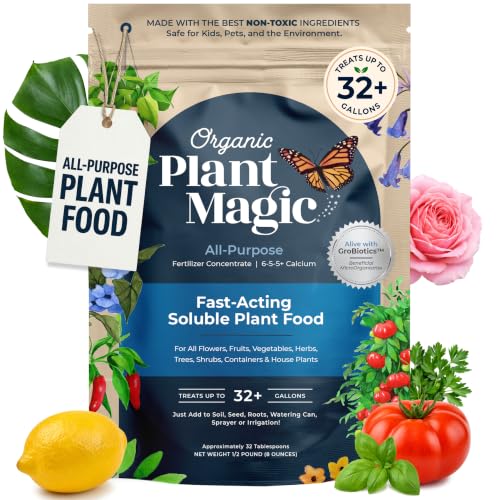
Organic Plant Magic Water Soluble Fertilizer 1/2 lb

True Organic Tomato & Vegetable Food (8 lb Bag)

True Organic Tomato & Vegetable Food (4 lb Bag)

Espoma Organic Tomato! Liquid Concentrate 8 oz

FoxFarm Happy Frog Tomato & Vegetable 5-7-3 (4 lb)

FoxFarm Happy Frog Tomato & Vegetable 5-7-3 (Twin Pack)
The Details Behind The Selections
The 5-pound box of Down To Earth’s all-purpose blend is a sensible starting point if your vegetable patch includes more than just tomatoes. The 4-6-2 ratio leans toward phosphorus (the middle number, which supports root and bloom development), with moderate nitrogen and a modest potassium finish. That balance makes it forgiving across mixed beds where tomatoes share space with peppers, herbs, and leafy greens.
Granular organic fertilizers like this one release nutrients as soil microbes break them down, so timing matters less than with synthetic feeds. Most gardeners scratch a measured amount into the planting hole at transplant, then side-dress once fruit sets. The 5-pound size covers a small kitchen garden for a full season without taking up much shed space.
The Practical Payoff
- Balanced 4-6-2 ratio suits tomatoes alongside other vegetables
- Slow-release format lowers the risk of leaf burn common with synthetic feeds
- Granular texture spreads evenly in planting holes and side-dress trenches
- 5-pound box covers a small mixed garden without constant repurchasing
Points To Keep In Mind
- Nutrient release depends on soil temperature and microbial activity, so cold spring soil slows visible results
- Not a tomato-specific formula, so heavy feeders in poor soil may want extra potassium during fruiting
Right Fit For
Home gardeners growing tomatoes as part of a mixed vegetable bed who want one bag to feed everything without juggling specialized products.
A Better Fit Elsewhere
Tomato growers chasing maximum fruit size in containers should reach for Espoma Organic Tomato! Liquid Concentrate instead, since a liquid feed delivers nutrients faster in the limited root zone of a pot.
This is the same Down To Earth blend as the 5-pound box, just trimmed down to a 1-pound carton for tighter gardens. The smaller footprint makes it useful if you only run two or three tomato plants, or if you are trying an organic approach for the first time and don’t want to commit to a bulk container.
The OMRI-listed designation (a third-party review that confirms inputs meet organic gardening standards) makes it a clean choice for anyone keeping a kitchen garden that feeds into a fully organic household routine. For most patios, a single 1-pound box lasts a full season with a little leftover for spring transplanting.
What Stands Out
- Same trusted formula in a smaller, easier-to-store carton
- OMRI-listed for verified organic gardening compliance
- Low commitment for first-time tomato growers testing organic feeding
Worth Noting
- Larger plots will burn through 1 pound quickly, making the per-application cost higher than the 5-pound version
- Still a general-purpose blend rather than a tomato-specific formula
Key Product Details
Who It Suits Best
Apartment growers and small-space gardeners with a handful of tomato plants who want a recognizable, certified organic blend without buying in bulk.
Consider Something Else When
If your tomatoes need a stronger potassium push during fruit set, the FoxFarm Happy Frog Tomato & Vegetable 5-7-3 is a better match thanks to its tomato-specific nutrient ratio.
Organic Plant Magic takes a different approach. Instead of a granular feed you dig into soil, you get a water-soluble powder that dissolves in a watering can and feeds plants through both roots and leaves. A half-pound pouch yields more than 32 gallons of liquid feed, which is enough to cover a busy household of houseplants and a small outdoor vegetable patch from one bag.
The convenience angle is real for gardeners juggling tomatoes with herbs, indoor foliage, and flower beds. You mix once, water as usual, and the same jug works across the whole collection. The trade-off is the regular feeding rhythm: liquid feeds wash through the root zone faster than granular options, so you reapply on a schedule rather than once at planting.
Benefits That Matter
- Half-pound bag produces 32+ gallons of liquid feed, stretching across many plants
- Works on vegetables, herbs, fruit trees, flowers, and indoor houseplants from one container
- Water-soluble format gives a faster nutrient response than granular organics
- Handy for gardeners who already water by can rather than granular side-dressing
Less Ideal Details
- Liquid feeds drain through potting mix quickly, so consistent reapplication is required
- Mixing a fresh batch each time is less convenient than a one-time granular side-dress for hands-off gardeners
Best Suited To
Gardeners who tend both indoor and outdoor plants with a watering can and want a single organic feed to cover all of them through the season.
Look Elsewhere When
If you prefer a one-and-done granular feeding at planting time, the Down To Earth All Purpose 4-6-2 (5 lb) is a more relaxed seasonal routine.
True Organic’s 8-pound bag is the bulk sibling in this lineup, sized for gardeners with a real plot to feed. The 4-5-6 NPK leans potassium-forward, which matters because potassium is the nutrient that drives fruit development and overall plant vigor during the heavy-bearing stage. A 6% calcium dose rounds out the formula, which helps prevent the blossom-end rot that often shows up when calcium uptake falters in uneven watering.
Coverage lands at roughly 140 square feet per bag, which works for a modest backyard row or several raised beds. For gardeners who prefer one purchase to cover the whole tomato run, this format tends to make sense over multiple small bags.
A Few Strong Suits
- 4-5-6 NPK with extra potassium matches what tomatoes pull hardest during fruiting
- 6% calcium supports cell wall strength and helps reduce blossom-end rot risk
- Single bag covers up to 140 square feet for season-long feeding
- Slow-release nitrogen component provides steady feeding without a mid-season spike
Honest Caveats
- 8-pound bag is bulky to store in small sheds and may overwhelm patio gardeners with just a few pots
- Granular organics depend on active soil life, so heavily compacted or lifeless soil sees slower results
Feature Snapshot
Made For
Backyard gardeners with several tomato plants in rows or raised beds who want one bag to feed the whole plot through the season.
Skip It When
Container growers with only two or three pots should consider the True Organic 4-pound version for less storage hassle and the same feeding profile.
The 4-pound bag uses the same 4-5-6 formula with 6% calcium as its 8-pound sibling, just at half the volume and around 70 square feet of coverage. For most home gardeners running a couple of raised beds or a single tomato row, this is the more practical buy. You get the full fruiting and rot-prevention benefits without committing to a bulk bag that has to live in the garage for two seasons.
True Organic designs this formula specifically for tomatoes and other heavy-feeding vegetables, so it carries a stronger tomato focus than a generic all-purpose feed. Mid-sized plots, balcony growers with several large containers, and first-time tomato gardeners all tend to land here.
Strong Points
- Tomato-targeted 4-5-6 ratio with potassium emphasis for fruit set
- 6% calcium helps guard against blossom-end rot in inconsistent watering
- 4-pound size covers about 70 square feet, a sweet spot for raised beds
- Easier to store and handle than the larger 8-pound option
Trade Offs
- Multiple bags needed for gardeners with plots larger than 70 square feet
- Granular organics still rely on soil biology, so very sandy or sterile soil may need supplemental feeding
Whose Shelf It Belongs On
Raised-bed and small-plot growers who want a tomato-focused organic feed without buying more than they can use in one season.
Another Choice May Suit
Liquid-feeding fans with a packed container garden will find the Espoma Organic Tomato! Concentrate a tidier option for the small root volumes in pots.
Espoma’s Tomato! concentrate comes as an 8-ounce bottle you dilute into a watering can, with a measuring cap that takes the math out of the mix. Half a cap per quart of water is the standard dose, applied every two to four weeks through the growing season. For gardeners who already water on a regular schedule, slipping the feeding into that routine is barely an extra step.
The liquid format suits containers well, because nutrients reach roots quickly in the limited volume of potting mix. Espoma has been a familiar name in organic gardening for decades, and this bottle brings that reputation into a tight, easy-to-store container that fits on a potting bench or under a kitchen sink.
Bright Spots
- Simple dosing, half a cap per quart, removes the guesswork of measuring
- Liquid delivery suits container root zones where nutrients leach through quickly
- Compact 8-ounce bottle stores easily on a shelf or in a garden tote
- Safe formulation for households with kids and pets around the garden
Soft Spots
- 8-ounce bottle requires regular refilling across a full season of multiple plants
- Liquid feeds need consistent reapplication, unlike a single granular side-dress
Quick Facts
Who Should Grab It
Container gardeners and small-space growers who already water by can and want a tomato-specific organic liquid feed with no measuring fuss.
Reach For A Different Pick When
If you maintain a large in-ground tomato row and want a single seasonal application, the True Organic Tomato & Vegetable Food 8-pound bag spreads more evenly across bigger plantings.
FoxFarm’s Happy Frog blend pushes the middle number higher than most organic feeds on this list, with a 5-7-3 NPK that puts phosphorus front and center for the bloom and fruit-set window. Phosphorus is the nutrient plants use most heavily during flowering, so a slightly higher dose during this stage can support fuller blossom clusters and stronger fruit initiation.
The 4-pound bag also includes calcium and mycorrhizal fungi, beneficial soil microbes that form a symbiotic relationship with plant roots and help them draw in water and nutrients more efficiently. For gardeners working with poor or compacted soil, that microbial component is often what tips the balance between a struggling plant and a productive one.
A Few Highlights
- 5-7-3 ratio emphasizes phosphorus for stronger fruit set
- Includes calcium to support cell walls and reduce blossom-end rot risk
- Mycorrhizal fungi component boosts root efficiency, especially in poor soil
- Granular format spreads evenly in planting holes and side-dress applications
Small Caveats
- Higher phosphorus can throw off balance in already rich soil, so light feeders may not need the full dose
- Granular feed needs watering in to activate, so dry-soil gardeners should plan around their irrigation
Spec Overview
Built With In Mind
Tomato growers with heavier-feeding varieties (think beefsteak types) or poorer native soil who want a blend that supports both nutrition and root-zone biology.
Where A Sibling Pick Shines
Balcony growers with smaller cherry tomato plants in modest pots will find the lighter 4-6-2 of Down To Earth’s all-purpose blend easier to manage without overfeeding.
The twin pack delivers two 4-pound bags of the same FoxFarm Happy Frog 5-7-3 formula, doubling your coverage without doubling your storage footprint in any meaningful way. For gardeners running multiple beds, splitting a row of tomatoes and a row of berries, or planning ahead for a fall planting, the bulk format removes the worry of running out mid-season.
You get the same calcium and mycorrhizal fungi blend as the single bag, so the soil-biology benefits apply across both plantings. The honest trade-off is that two bags is more than most patio or balcony setups need, and the bulk format sits awkwardly in a small shed.
What Pays Off
- Two bags cover more ground or stretch across two growing seasons
- Same 5-7-3 blend with calcium and mycorrhizal fungi as the single bag
- Useful for gardeners splitting feed between tomatoes and berry beds
- Bulk format means fewer repurchases during peak growing season
Factors To Consider
- Two 4-pound bags take up more storage space than a single bag
- More than needed for small patio setups with just a couple of pots
Perfect Match For
Multi-bed gardeners or anyone feeding a tomato patch alongside berry bushes who wants the FoxFarm blend on hand without reordering mid-season.
Swap It Out When
A solo tomato grower with two or three plants is better served by the single FoxFarm Happy Frog 4-pound bag, which keeps the same formula without surplus.
Matching Organic Tomato Fertilizers to Your Garden Style
Reading NPK Ratios Without the Jargon
Those three numbers on every fertilizer bag tell you the percentage of nitrogen (N), phosphorus (P), and potassium (K) by weight, in that order. Nitrogen drives leafy green growth, phosphorus fuels root development and bloom production, and potassium supports overall plant vigor and fruit quality. For tomatoes specifically, a balanced or slightly phosphorus-forward ratio tends to work through the season, with extra potassium becoming more valuable once fruit begins to set. Calcium often shows up as a separate percentage because it plays a distinct role in preventing blossom-end rot, a physiological disorder (not a disease) where the bottom of the fruit turns dark and leathery due to inconsistent calcium uptake.
Matching Format to Your Watering Habits
Granular organic fertilizers break down slowly as soil microbes process them, so a single application at planting can carry plants for weeks. They suit gardeners who water on a deep but infrequent schedule and don’t want to think about feeding every week. Water-soluble concentrates and liquid feeds reach roots faster and wash through the root zone more quickly, which makes them a natural fit for container gardens and for gardeners who already water by can on a regular cadence. Liquid feeds also let you adjust dose and frequency more responsively as the season unfolds.
Plot Size and Storage Realities
A 4-pound bag covers roughly 60 to 70 square feet, while an 8-pound bag extends to around 140 square feet. Container gardeners rarely need more than a single small bag, while raised-bed growers with multiple beds may find a bulk format more practical. Storage matters too: granular fertilizers do best in a cool, dry spot with the bag sealed, since moisture can clump the granules and make even spreading harder.
When Calcium Becomes the Deciding Factor
Tomatoes are notoriously hungry for calcium during fruit development, especially in containers and raised beds where moisture swings are common. Blends that include 5% to 6% calcium, like the True Organic options and FoxFarm’s Happy Frog, take a step toward preventing blossom-end rot before it starts. Gardeners dealing with known calcium-deficient soil or inconsistent irrigation will benefit most from this built-in calcium, while those gardening in already-calcium-rich native soil may not notice as dramatic a difference.
Key Considerations Across These Picks
Pitfalls Shoppers Hit
One common misstep is reaching for a high-nitrogen lawn fertilizer, since the green-up power that works on turf produces lush tomato foliage with very little fruit. Another trap is buying a large bulk bag to “save” on per-application cost, then watching the granules clump through a humid summer because the bag sat half-used in a damp shed. A third mistake is treating all “organic” labels as identical. OMRI-listed products have been third-party reviewed against organic input standards, which matters if you’re gardening with full organic certification in mind. Unlisted organic-leaning products may still be fine for a home gardener, but the certification is the cleanest shorthand for verified inputs.
Where The Extra Money Goes
Higher-tier tomato blends tend to spend their premium on three places: a stronger phosphorus ratio for bloom support, added calcium for rot prevention, and biological components like mycorrhizal fungi that improve root efficiency. For gardeners with poor native soil, heavy-feeding varieties, or a history of blossom-end rot, those upgrades pay off through stronger fruit set and fewer crop losses. For patio growers with rich potting mix and a handful of cherry tomatoes, a general-purpose organic blend covers the bases without the extra spend.
Frequently Asked Questions
How often should organic tomato fertilizer be applied?
Granular organic feeds are typically scratched into the soil at planting and then side-dressed once or twice more through the season as fruit sets. Liquid concentrates like Espoma’s Tomato! are applied every two to four weeks as part of a normal watering routine.
Is OMRI listing important for organic tomato gardening?
For certified organic growers, OMRI listing is the practical confirmation that inputs meet organic standards. Home gardeners without certification can still use OMRI-listed products for peace of mind, but unlisted organic blends aren’t necessarily lower quality for casual use.
Can the same fertilizer be used on other vegetables?
Yes, most organic tomato blends work well on other heavy feeders like peppers, eggplants, and squash. General-purpose organic blends like Down To Earth’s 4-6-2 cover a wider range, while tomato-specific formulas lean toward the nutrient ratios fruiting vegetables pull hardest.
What causes blossom-end rot even with organic fertilizer?
Blossom-end rot is usually a watering problem rather than a fertilizer problem. Inconsistent moisture prevents calcium from moving through the plant even when calcium is present in the soil. Steady irrigation and mulching to retain soil moisture often resolve it more effectively than adding more fertilizer.
Do tomato plants need different feeding as they grow?
Young transplants benefit from a phosphorus-forward starter to establish roots, while fruiting plants shift toward potassium for fruit development and overall vigor. Many organic blends support both stages through slow-release feeding, though heavy producers may want a mid-season potassium boost.
Closing Thoughts
The right organic tomato fertilizer depends less on chasing a perfect formula and more on matching format and feeding rhythm to your garden size and watering habits. Pick a blend you can apply consistently through the season, store it somewhere dry, and let the soil biology do the rest of the work.
