

Turning kitchen peelings and yard trimmings into rich soil is one of those quiet wins that pays off season after season. The right composter cuts smell, speeds decomposition, and keeps pests out without taking over your patio. Whether you’re working with a small apartment patio or a generous backyard, the lineup below covers every realistic scenario you might face.
A Quick View Of The Lineup

F2C 80Gal Outdoor Compost Bin with Gloves
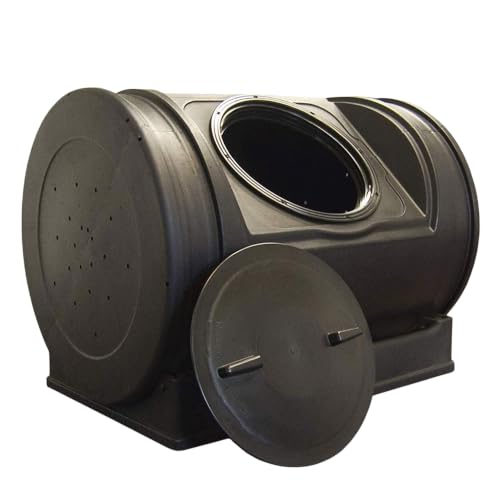
Good Ideas Compost Wizard Jr. Tumbler

aaculpet 45Gal Dual Chamber Compost Tumbler

Hourleey 43 Gallon Dual Chamber Tumbling Composter

VIVOSUN 300 Gallon Outdoor Compost Bin

FCMP Outdoor HOTFROG Half Size Rolling Tumbler

Good Ideas Compost Wizard Dueling Tumbler

JupiterForce 18.5 Gallon Heavy-Duty Tumbling Composter
What Each Pick Brings To The Table
If you’ve been hauling bags of clippings to the curb every week, this F2C bin ends that routine. Holding roughly 80 gallons (around 300 liters), it swallows everything from autumn leaves to melon rinds without asking you to step outside again for weeks. The black PP plastic body is BPA-free and built to handle cold winters, holding internal heat while letting moisture levels self-regulate.
Compared to the smaller tumblers below, this is a stationary setup, so you won’t be spinning a chamber. Instead, deep fins and roughly 80 air vents do the aeration work for you, meaning no shoveling or hand-mixing is needed. A top-loading flip lid locks shut against critters, and a pull-up bottom door makes scooping finished compost genuinely easy.
What Works In Its Favor
- Massive 80-gallon capacity handles weeks of kitchen scraps and yard waste without daily attention.
- BPA-free plastic holds warmth through winter, helping compost finish faster in cold climates.
- Dozens of air vents and deep fins circulate oxygen passively, so you skip the turning chore.
- Bottom exit door lets you scoop finished compost without dismantling the pile from above.
- Locking flip lid keeps raccoons, dogs, and wind out with one-handed operation.
Things To Consider
- Static design means finished compost settles at the base, so you may need to lift the bin to clear residue.
- Larger footprint requires a dedicated corner of the yard rather than a tucked patio spot.
Key Specs
Who It Suits Best
Homeowners with a generous backyard and a household producing a steady stream of food scraps and yard trimmings.
Where Another Pick Suits Better
Patios and small yards without space for a stationary bin will do better with the FCMP Outdoor HOTFROG Half Size Rolling Tumbler.
First-time composters tend to want something that doesn’t ask much, and the Compost Wizard Jr. fits that brief neatly. A single 50-gallon tumbling chamber gives you room to learn the rhythm without overwhelming the patio. Molded handholds double as internal agitators, so a five-turn spin every few days is genuinely enough.
While the F2C bin earlier relies on passive aeration, this tumbler speeds decomposition through rotation. You add scraps, give it a few spins, and the tumbling action pulls oxygen through the mix. The compact footprint is easier to tuck against a fence or garage wall, which matters in suburban lots where every square foot counts.
Positive Points
- Single 50-gallon chamber keeps the process simple, no batching or rotation schedules to track.
- Molded handholds pull double duty as internal agitators, cutting the need for extra tools.
- Tumbling design accelerates decomposition compared to static bins.
- Compact shape suits smaller patios or side-yard spots.
Worth Noting
- Single chamber means you wait for one batch to finish before starting the next.
- Plastic shell can become brittle after several seasons of full sun exposure.
Right Fit For
Beginners who want a low-maintenance tumbling bin with a manageable 50-gallon footprint.
Consider Something Else When
Households generating continuous scrap flow will prefer the dual-chamber aaculpet 45Gal Dual Chamber Compost Tumbler.
Active kitchens produce scraps every day, and waiting weeks for a single batch to finish gets old fast. The aaculpet tumbler solves that by splitting its 45-gallon capacity into two independent chambers, letting one side cure while you fill the other. The BPA-free build adds UV resistance, which matters for sunny patios where plastic slowly degrades.
Unlike the single-chamber Compost Wizard Jr., this setup lets your composting run as a continuous cycle rather than a stop-and-start project. The sealed barrel keeps odors contained, which helps in HOA-controlled neighborhoods where bins sometimes draw complaints. Assembly stays straightforward, so you spend more time composting than wrestling instructions.
Why It Works Well
- Dual-chamber design supports continuous composting with no idle waiting periods.
- UV-resistant BPA-free plastic holds up through seasons of full sun exposure.
- Sealed tumbling barrel limits odor drift, useful near shared property lines.
- Tool-free assembly gets you started within a single afternoon.
Honest Caveats
- 45-gallon total is modest for households producing heavy yard waste volumes.
- Tumbler weight when fully loaded can be tough to spin on uneven ground.
Key Specs
Made For
Households producing a steady daily scrap flow who want a continuous composting cycle in a moderate-size footprint.
Skip It When
Gardeners with room for a much larger stationary bin will find the F2C 80Gal Outdoor Compost Bin more productive per cycle.
HOA rules often dictate what shows up on your patio, and many neighborhoods treat tumbling bins more kindly than open piles. The Hourleey composter tucks into a 27.6 by 25.8 by 36 inch footprint, slim enough to fit beside an AC unit. Sliding doors on each chamber keep contents sealed between turns, which helps if your neighbor’s patio sits within conversational distance.
Compared to the larger aaculpet tumbler above, this model trades a couple of gallons for a slightly more vertical orientation. Aeration holes and deep fins pull oxygen through the mix as you rotate it, breaking down clumps faster than static bins. It’s the kind of composter that disappears into a small space without surrendering the dual-chamber advantage.
Features That Help
- Slim 27.6-inch width fits narrow patio strips and side yards.
- Dual chambers allow one batch to finish while the other fills.
- Sliding doors seal contents between turns, limiting odor and pests.
- Aeration holes paired with deep fins keep oxygen flowing through the mix.
Points To Note
- Plastic components may feel lightweight when you’re spinning a full chamber.
- 43-gallon capacity is on the smaller end for serious garden feeding.
Best Suited To
Apartment dwellers and townhome owners working with HOA restrictions and a tight outdoor footprint.
Not Your Match When
Backyard growers wanting maximum volume will get more compost per cycle from the F2C 80Gal Outdoor Compost Bin.
Most composters arrive at a fixed size, but the VIVOSUN grows with you. It expands to a 300-gallon footprint when fully assembled, which dwarfs the F2C’s 80 gallons and lets you store and ferment serious quantities of yard waste. The HDPE plastic shell resists corrosion and weathering, holding its shape through hot summers and freezing nights.
Unlike tumbling models, this is a static setup designed for passive composting. You set the panels, add your mix, and let microbial activity handle the rest. Gloves come included, which is a nice touch for the first assembly pass. It’s the right call for anyone building long-term soil fertility rather than producing small batches quickly.
What Pays Off
- 300-gallon max capacity handles large seasonal yard cleanups without overflow.
- Expandable design lets you start small and add panels as demand grows.
- HDPE plastic resists corrosion, weathering, and UV damage over multiple seasons.
- Included gloves simplify the initial assembly and ongoing handling.
Trade-Offs
- Static design requires manual turning if you want faster results.
- Expanded footprint demands significant dedicated yard space.
Who Should Grab It
Long-term backyard growers managing seasonal leaf piles, manure, and large volumes of garden debris.
Look Elsewhere When
Gardeners needing fast turnaround on small batches will prefer the tumbling Good Ideas Compost Wizard Dueling Tumbler.
The HOTFROG is essentially FCMP’s original rolling composter scaled down, and for tight yards that smaller shape is the entire point. A 19-gallon chamber gives beginners and apartment gardeners a real composting tool without dominating the patio. Built-in handholds double as mixing bars inside the drum.
Compared to the dual-chamber Hourleey above, this is a single-batch design, so you’ll pause while each load finishes. The trade-off is genuine simplicity: load the drum, close the sliding door, give it a spin every few days, and you’ll have finished compost in weeks. For households producing modest scrap volumes, that cadence is plenty.
Advantages To Know
- Half-size footprint fits comfortably on small patios and balconies.
- Built-in handholds let you rotate the drum without separate tools.
- Sliding door keeps contents sealed between turns.
Small Caveats
- Single-chamber design means waiting for each batch to finish.
- 19-gallon capacity suits light scrap producers, not large households.
Key Specs
Perfect Match For
Small-yard gardeners, townhome residents, and beginners producing modest weekly scrap volumes.
Reach For A Different Pick When
Households wanting continuous composting across two batches will appreciate the dual-chamber Hourleey 43 Gallon Tumbling Composter.
The Dueling Tumbler takes everything the Jr. model does and adds a second chamber plus a feature you don’t see every day: a compost tea collector. Two 25-gallon chambers spin independently, giving you a true continuous cycle. The wheeled base catches up to 5 gallons of excess liquid, which you can pour directly onto plant roots.
Compared to the aaculpet and Hourleey dual-chamber options earlier, this model sacrifices some total capacity for that liquid-collection system. Gardeners who foliar-feed or build living-soil beds tend to value that runoff heavily, since compost tea is a gentle, balanced fertilizer. If you’ve been pouring off leachate as waste, this bin treats it as an asset.
Benefits That Matter
- Dual 25-gallon chambers enable true simultaneous batch composting.
- Compost tea collector captures up to 5 gallons of nutrient-rich liquid.
- Wheeled base lets you reposition the bin around the yard.
Less Ideal Details
- Smaller per-chamber capacity than competing dual tumblers.
- Liquid collector requires periodic emptying to avoid overflow.
Built With In Mind
Garden enthusiasts who want both finished compost and liquid feed from a single setup.
A Better Fit Elsewhere
Backyard growers focused purely on bulk compost volume will get more material from the F2C 80Gal Outdoor Compost Bin.
Balcony gardeners and condo residents often assume composting isn’t realistic for them, and the JupiterForce directly challenges that assumption. At 18.5 gallons, it’s small enough to live beside a patio chair without dominating the space, yet heavy-duty enough that the PP plastic body doesn’t shake loose when you flip it.
Where the FCMP HOTFROG above also targets small yards, this model emphasizes all-season durability and a stable support structure. You can leave it outdoors through temperature swings without worrying about cracking. The sliding door keeps things tidy between turns, and the short 4 to 6 week cycle means you’ll see real compost before the season changes.
Real Benefits
- Compact 18.5-gallon size fits balconies and small patios.
- Stable support structure stays steady when flipping full loads.
- PP plastic shell handles year-round outdoor exposure.
- Short 4 to 6 week compost cycle delivers visible results fast.
A Few Limitations
- Single-chamber design means waiting between batches.
- Smaller capacity suits light scrap producers only.
Whose Shelf It Belongs On
Balcony gardeners and condo residents wanting a compact, weather-resistant composter that delivers fast results.
Swap It Out When
Households producing more weekly scraps than 18.5 gallons can handle will find better throughput with the dual-chamber Hourleey 43 Gallon Tumbling Composter.
How To Pick The Right Outdoor Composter For Your Space
Capacity matters most when sizing a composter. A good rule of thumb is one cubic foot per pound of weekly waste, which means a family of four typically lands in the 40 to 80 gallon range. Solo gardeners or couples can manage comfortably with 18 to 25 gallons, while households producing heavy yard waste need expansion headroom.
Tumbler versus static is the next fork. Tumblers speed up decomposition through regular rotation, but they cap batch size and demand weekly attention. Static bins like the F2C or VIVOSUN models rely on passive aeration through vents and fins, letting microbial activity do the work without intervention. For busy people who forget to turn, passive is forgiving.
Material affects longevity more than performance. BPA-free plastic holds up against weather and resists leaching, while HDPE shells handle UV exposure across multiple seasons. Place the bin in partial shade if possible, since direct sun dries out the mix and slows microbial activity. A nearby water source simplifies moisture management, which is the single biggest variable in decomposition speed.
Dual chambers earn their place for continuous users. Single-chamber bins force you to wait for a batch to finish before adding new scraps, which causes backups. Two independent chambers let one cure while the other fills, eliminating downtime for households producing a steady daily flow.
Key Considerations Across These Picks
Where Shoppers Go Wrong
A common mistake is buying for the yard you wish you had rather than the yard you actually own. Measure your available footprint before falling for high-capacity models, because a 300-gallon VIVOSUN bin does no good wedged into a narrow side strip. Equally common: underestimating scrap volume and outgrowing a small tumbler within months. Aim for slightly more capacity than current needs suggest, since organic waste tends to multiply once composting becomes routine.
What Separates Premium From Basic
Higher-tier composters tend to add either real capacity, true dual-chamber design, or thoughtful extras like compost tea collection. The Good Ideas Dueling Tumbler and VIVOSUN expandable bin each justify their step up through specific use cases rather than raw build quality alone. For most households, mid-tier options hit the sweet spot between price and capability, with the premium tier reserved for gardeners treating compost as a serious soil-building program rather than a side project.
Frequently Asked Questions
How long does it take compost to finish in an outdoor composter?
Most tumblers produce finished compost in 4 to 6 weeks with weekly rotation, while static bins typically take 2 to 6 months depending on aeration, moisture, and material balance.
Do outdoor composters smell bad?
Properly managed compost has an earthy, mild scent rather than a foul odor. Bad smells usually mean too much moisture, not enough brown material, or insufficient turning in tumbler models.
Can composters stay outside year-round?
Yes, BPA-free plastic and HDPE bins handle seasonal temperature swings, though freezing slows decomposition in winter. Many gardeners simply pause active composting in deep cold and resume in spring.
What can and can’t go in an outdoor composter?
Fruit scraps, vegetable peelings, coffee grounds, eggshells, yard trimmings, and shredded paper all compost well. Meat, dairy, oils, and pet waste should stay out to avoid pests and pathogens.
Do I need to turn compost manually?
Static bins with vents and fins require no turning, while tumbling models need a spin every few days for fastest results. Manual turning in static bins speeds decomposition but isn’t strictly required.
Closing Remarks
The right outdoor composter turns kitchen scraps and yard trimmings into a steady supply of rich soil without much fuss. Match the capacity to your real scrap output, choose tumbling if you want speed and static if you want low effort, and you’ll have a tool that quietly improves your garden for years. Start where your space and habits actually are, not where you hope they’ll get.
