

A thin, patchy lawn rarely announces itself, it just shows up one weekend when the kids are running around barefoot. Picking the right perennial ryegrass seeds turns that slow fade into a quick rebound, especially in cooler regions where warm-season grasses go dormant and leave brown gaps from October through April.
Below, you’ll find eight seed options worth a closer look: blends for overseeding, mixes for full sun or partial shade, and a few bags built for heavy foot traffic. Each pick is sized for real residential lawns, and each trade-off is called out plainly so you can match the bag to your yard, not someone else’s.
A Snapshot Of The Selections
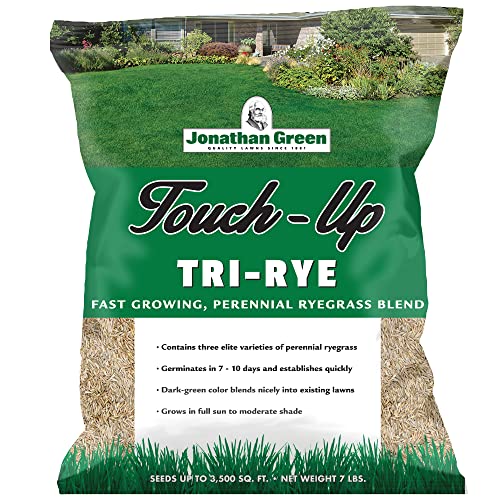
Jonathan Green Touch-Up TRI-RYE Perennial Ryegrass Seed – 7 lb

Jonathan Green Black Beauty Sun & Shade Grass Seed – 50 lb

Jonathan Green Blue Panther Bermudagrass Grass Seed – 4 lb

Jonathan Green Black Beauty Ultra Grass Seed – 25 lb

Jonathan Green Black Beauty Ultra Grass Seed – 7 lb

Pennington Annual Ryegrass, Grass Seeds for Lawn, 10 Lb

GreenView Pure Grass Seed Perennial Ryegrass Blend, 7 lb. Bag

Scotts Kentucky 31 Grass Seed Mix, 20 lbs.
More Details On Our Top Picks
If your cool-season lawn has more bare knees than full coverage, a 100% perennial ryegrass blend like this one targets those thin spots head-on. Jonathan Green packs three turf-type perennial ryegrass varieties in the bag, which gives you a denser, darker fill than a single-variety seed typically delivers.
Garden centers have leaned on this blend for overseeding warm-season lawns in fall, and most homeowners report visible green-up within 7 to 10 days under steady moisture. Compared to the Sun & Shade mix later in this list, the Touch-Up TRI-RYE is narrower in purpose: it’s built to thicken, not to start a yard from scratch.
Strengths Worth Knowing
- Three ryegrass varieties improve color consistency across the patch
- Germinates in roughly 7 to 10 days in cool soil
- Doubles as a winter overseed for dormant Bermuda or zoysia lawns
- Dark-green finish holds up through fall and into early winter
- Works in full sun and moderate shade
Trade-Offs To Weigh
- Not designed for full-lawn seeding on bare soil
- Perennial rye struggles in prolonged heat above 90°F
- A 7 lb bag covers limited square footage, plan accordingly
Who It Suits Best
Homeowners with a mostly established cool-season lawn that needs spot repair in fall or spring.
Reach For A Different Pick When
You live in the South and want a single bag for the whole yard; the Pennington Annual Ryegrass works better as a winter blanket there.
A 50 lb bag is overkill for a townhouse strip but exactly right for a quarter-acre lawn that needs help. The Black Beauty Sun & Shade mix is engineered for the messy reality of most residential lots, where the front yard bakes in direct sun and the side strip stays shaded by a fence line all afternoon.
Jonathan Green’s blend leans on varieties that establish deeper roots than typical ryegrass, which is the kind of detail that pays off during a dry July. If the smaller Touch-Up TRI-RYE is a spot-treatment, this bag is the full prescription for overseeding or repair across a few thousand square feet.
Notable Upsides
- Handles sun and partial shade in the same lawn
- Large 50 lb format covers roughly 5,000 to 7,500 sq ft for overseeding
- Deep-rooted varieties improve drought tolerance over standard rye
Soft Spots Worth Knowing
- Bulky bag is awkward to haul up apartment stairs or to a roof garden
- Heavier investment up front than a 7 lb starter
The Right Fit
Suburban homeowners with a sizeable lawn that swings between full sun and shaded edges.
Look Elsewhere When
You only need to fix a small patch; the Jonathan Green Touch-Up TRI-RYE is a tighter, cheaper fit.
Strictly speaking, Blue Panther is a Bermudagrass, not a ryegrass, so it earns its place on this list as a useful counterweight for southern lawns. Bermudagrass is a warm-season grass, meaning it greens up in late spring, peaks through summer, and browns out in winter, exactly the opposite of perennial rye’s cool-season rhythm.
Jonathan Green formulated this variety for southern states, where it grows aggressively once soil temperatures climb. Compared to traditional Bermudagrass seed, Blue Panther reportedly reduces the need for a winter rye overseed in many yards, which is a real maintenance win if you’ve ever hated the spring transition where rye dies back and Bermuda struggles to fill in.
Everyday Advantages
- Aggressive vertical and lateral rooting for a thick stand
- Built for southern heat and full sun
- Strong wear tolerance for active yards
Points To Note
- Not a perennial ryegrass, so it belongs in different regions
- Goes fully dormant and brown in winter
- Small 4 lb bag fits repair jobs more than full installs
Built With In Mind
Homeowners in the southern U.S. who want a true warm-season lawn rather than a rye overseed every winter.
Swap It Out When
You live up north and want a real perennial ryegrass for cool-season color; the GreenView Pure Grass Seed Perennial Ryegrass Blend is a closer match.
Black Beauty Ultra is the multi-species workhorse of Jonathan Green’s lineup: tall fescues, perennial rye, and Kentucky bluegrass all sharing one bag. That kind of mix is a hedge against weather mood swings, because if one species struggles in a given summer, the others usually fill the visual gaps.
The 25 lb bag is the mid-size sweet spot: enough seed to start a new lawn in a manageable yard, or to overseed a thin existing one. Where the 7 lb version below targets repair work, this 25 lb version is the one most homeowners reach for when starting from bare soil.
What Helps Most
- Three grass species spread risk across heat, cold, and wear
- Dark-green color holds from spring through late fall
- Doubles as a starter seed and an overseed
Some Limits To Know
- Slower establishment than a 100% rye blend
- Needs consistent watering during the first three weeks
Key Product Details
Made For
Homeowners starting a brand-new lawn or rescuing a thin one with a single multi-purpose bag.
Another Choice May Suit
You’re patching small areas only; the Jonathan Green Black Beauty Ultra Grass Seed – 7 lb is sized for tighter projects.
Same multi-species blend as the 25 lb version, just packed into a smaller, easier-to-store bag. This is the format most people grab when a dog has torn up a corner of the yard or a salt pile has killed a strip near the driveway in February.
The mixed-species formula still gives you tall fescue, perennial rye, and Kentucky bluegrass, which means repairs tend to blend into an existing fescue lawn without obvious color patches. If your lawn is already a Black Beauty Ultra stand, this is the matching repair seed; if it’s not, the blend still adapts reasonably well to most cool-season turf.
Where It Helps
- Compact 7 lb bag is easy to store in a garage or shed
- Multi-species blend blends into most cool-season lawns
- Works for both small repairs and full overseeding of tight spaces
Practical Considerations
- Coverage is limited; large yards need the 25 lb sibling
- Germination still depends on steady watering for the first few weeks
Whose Shelf It Belongs On
First-time homeowners with small lots, or anyone who wants a repair bag on hand for unexpected damage.
A Better Fit Elsewhere
You want a 100% rye option for faster color; the Jonathan Green Touch-Up TRI-RYE germinates in roughly 7 to 10 days.
Annual ryegrass is the seasonal workhorse of the southern lawn calendar. Where perennial rye returns year after year, annual rye germinates fast, covers dormant Bermuda or zoysia in a few weeks, then bows out when warm weather returns the following spring.
Pennington’s bag is sized for serious overseeding projects, and the 3 to 7 day germination window is the fastest on this list. For homeowners in the lower South who hate looking at brown grass from November through March, this is the practical, low-commitment path to a green winter lawn.
Everyday Perks
- Visible green-up in 3 to 7 days under good conditions
- Bright winter color over dormant warm-season lawns
- Temporary growth that dies back cleanly in spring
Honest Caveats
- Annual, not perennial, so it won’t return next year on its own
- Doesn’t survive prolonged hard freezes in northern zones
- Spring die-off can leave temporary thin spots in the warm-season lawn
Quick Facts
Best Suited To
Southern homeowners who want a green lawn through winter without a permanent ryegrass commitment.
Where Another Pick Suits Better
You want a permanent cool-season lawn up north; the GreenView Pure Grass Seed Perennial Ryegrass Blend is a true perennial.
GreenView’s blend is uncoated and 99.9% weed-free, which means every pound of bag weight is actual seed rather than clay coating. For a perennial ryegrass lawn that has to stand up to dogs, kids, and weekend soccer games, that wear tolerance is the headline feature.
Once the lawn is established, the blend develops heat, drought, and disease resistance that most lighter ryegrasses don’t, especially in transitional zones where summers push 90°F. Compared to Jonathan Green’s 100% rye Touch-Up TRI-RYE, this blend is more about long-term resilience than quick patch fixes.
Useful Highlights
- Uncoated seed maximizes actual seed per pound
- 99.9% weed-free content reduces competition early on
- Strong tolerance to foot traffic and active play
- Once established, resists heat, drought, and brown patches
A Few Limitations
- Smaller 7 lb bag means more bags for large yards
- Establishment requires patient watering the first few weeks
Feature Snapshot
Who Should Grab It
Active households with kids, pets, or frequent backyard entertaining who need a resilient perennial ryegrass.
Consider Something Else When
You need a large bag for a big property; the Jonathan Green Black Beauty Sun & Shade Grass Seed – 50 lb is the bulk option.
Kentucky 31 tall fescue is one of the oldest workhorse grasses in American lawns, prized for its toughness and lower maintenance needs. Scotts’ take layers a curated blend on top of that classic to push a thicker, greener result than straight K31 alone.
This bag leans toward low-fuss family lawns where you want solid coverage without a tight mowing or watering schedule. Compared to the perennial-rye-heavy blends earlier in this list, the Kentucky 31 backbone handles heat and rough use with a slightly coarser blade texture.
Useful Strengths
- Tall fescue backbone is durable and drought-tolerant
- Curated blend aims for thicker coverage than plain K31
- 20 lb bag covers a meaningful area for new or overseeding projects
Potential Compromises
- Blade texture is coarser than a perennial rye or bluegrass lawn
- Performs best in cooler zones, less ideal in deep South heat
- Slower spring green-up than pure ryegrass
Feature Card
Perfect Match For
Families who want a low-maintenance lawn that handles rough use without daily babysitting.
Not Your Match When
You want a manicured, fine-bladed rye lawn for a showpiece yard; the Jonathan Green Touch-Up TRI-RYE has finer texture.
What Matters Most Before Choosing Perennial Ryegrass Seeds
A bag of grass seed looks generic until you stand in a lawn that’s wrong for the region. Perennial ryegrass is a cool-season grass, meaning it grows most actively when soil temperatures sit between 55°F and 75°F. That’s why it shines across the Northeast, Midwest, Pacific Northwest, and the upper South during fall and spring. Push it into deep-summer southern heat and most perennial rye lawns go dormant or thin out.
Before picking a bag, clarify three things: your climate zone, the sun pattern across your yard, and how much foot traffic the lawn actually absorbs. A shaded backyard in Michigan needs different seed than a sunny side yard in Georgia, and a yard with two golden retrievers needs a wear-tolerant blend, not a fine-bladed show grass.
Match the seed’s purpose to your project. Overseeding a thin lawn calls for a blend that matches what’s already growing. Starting a new lawn from bare soil calls for a multi-species mix with rhizomatous spreaders, meaning grasses that send out underground stems to fill gaps on their own. A patch repair only needs enough seed to cover a few square feet, which is where a 7 lb bag shines.
Timing matters as much as the seed itself. Most cool-season seedings succeed in fall, when warm soil and cool air give ryegrass a long runway before summer stress returns. Spring seedings work too, but you trade some of that runway for faster weed competition. In southern zones, late fall overseeding with annual rye keeps a Bermuda lawn green until spring takeover.
Finally, read the bag’s seed analysis tag. A high percentage of perennial rye in the mix means the lawn will look and behave like rye; a mix heavy on tall fescue or Kentucky bluegrass will lean toward those species’ traits instead. There is no universal right answer, only the right mix for your yard.
Key Considerations Across These Picks
Where Shoppers Go Wrong
The most common mistake is buying a southern Bermuda bag for a northern yard, or a northern rye blend for a southern lawn, and expecting one grass to cover both worlds. Perennial rye and Bermuda grass occupy opposite ends of the climate spectrum, so a mismatched bag usually produces a thin, patchy stand no matter how well you water it.
Another trap is overseeding at the wrong time. Dropping ryegrass seed in mid-July into hot, dry soil wastes the bag. Aim for fall in cool-season zones and late fall in southern zones for the cleanest results.
Where The Extra Money Goes
Premium ryegrass blends cost more because they pack multiple varieties in one bag, use uncoated seed for higher purity, and often include species that establish deeper roots. That translates to better wear tolerance, slower thatch buildup, and stronger color through stress periods. If your lawn sees daily use or sits in tricky soil, the upgrade pays for itself in fewer reseeds. For a small patch in a sheltered yard, a basic blend is plenty.
