

Sowing a wildflower patch is one of the most satisfying gardening projects you can start, but choosing the right perennial blend makes the difference between a thriving meadow and a season of bare soil. Pollinators need continuous blooms, beginners need forgiving species, and homeowners often want color that returns without yearly reseeding. These eight perennial wildflower seed mixes cover everything from small urban beds to one-pound meadow spreads, so you can match your soil, sun, and patience level.
How The Shortlist Stacks Up

Fruivity Wildflower Seeds Bulk 21 Variety Mix

PLANTMEW Wildflower Seeds 4oz 16 Variety Mix

Family Sown Perennial Species Mix 1/4 Pound
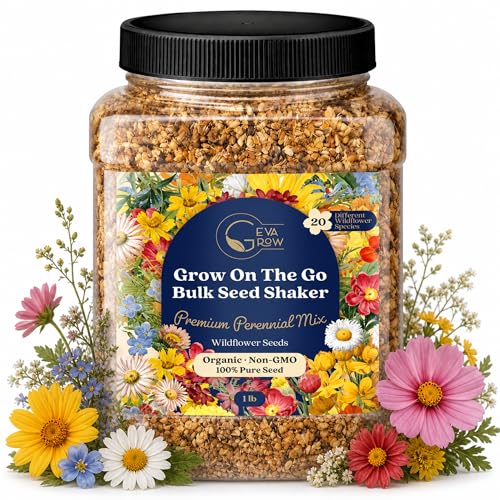
GevaGrow Bulk Perennial Wildflower Seed Shaker 1lb
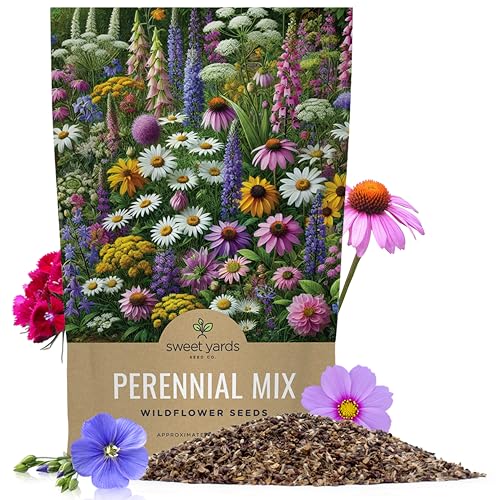
Sweet Yards Perennial Wildflower Seeds 1 Ounce

LUOJIBIE Wildflower Seeds Mix 30 Varieties 3oz

Sweet Yards Partial Shade Wildflower Mix 1 Ounce

Outsidepride Deer Proof Wildflower Seed Mix 1 lb
Small-space gardeners often feel locked out of pollinator projects, but Fruivity’s compact 1.06-ounce packet turns a patio corner or front-yard strip into a rainbow of bloom. The mix blends 21 heirloom varieties (open-pollinated means saved seed breeds true to parent type) across annuals and perennials, so you see quick color the first season and stronger returns afterward. Hummingbirds and butterflies find nectar sources from early summer through fall depending on your region.
For most balconies and modest flower beds, this packet covers the space without leftover seed going to waste. It sits firmly in the category of starter packs, useful for anyone testing whether a wildflower strip fits their maintenance routine.
What Pays Off
- 21 heirloom varieties cover red, orange, yellow, blue, pink, and purple in one packet, so a tiny bed still feels varied.
- Mix of annuals and perennials means quick first-year color plus repeat blooms the following seasons.
- Compact 1.06-ounce size suits balconies, raised beds, and narrow border strips without surplus waste.
- Heirloom genetics (traditional varieties saved for flavor, color, or resilience) tend to be more forgiving in average garden soil.
Things To Consider
- A 1.06-ounce pack is light on seed count, so larger lawns will run out quickly.
- Owners commonly report that germination depends heavily on keeping soil moist during the first two weeks.
- You may find the color mix less curated than blends that name specific pollinator favorites like coneflower or black-eyed Susan.
Right Fit For
Urban gardeners with small beds or containers who want broad color variety without committing to a large bulk purchase.
Consider Something Else When
If you’re covering more than a few hundred square feet, PLANTMEW’s 4-ounce 16-variety mix offers a heavier seed count per dollar.
Where Fruivity’s smaller pack suits tight corners, PLANTMEW’s 4-ounce blend scales up without sacrificing the curated feel. Sixteen heirloom varieties include familiar pollinator favorites like Purple Coneflower (Echinacea), Black-Eyed Susan (Rudbeckia), Blue Flax, and Shasta Daisy. That’s a meaningful upgrade for gardeners who want named species rather than a mystery blend, since each plant offers distinct bloom shape, height, and pollinator value.
The seed count reportedly exceeds 200,000, which generally covers a substantial suburban garden when broadcast properly. For most mid-sized yards, this lands in the sweet spot between starter packs and the one-pound tub options you’ll see later in this list.
Where It Excels
- Heirloom lineup of named pollinator favorites (coneflower, black-eyed Susan, blue flax, Shasta daisy) gives you identifiable species.
- Reported 200,000+ seed count handles mid-sized beds without needing a second packet.
- Open-pollinated stock (plants pollinated naturally by wind or insects) supports bees, butterflies, and birds across a long bloom window.
- 4-ounce size suits either one larger bed or several smaller planting zones.
Worth Noting
- Variety count is lower than some competitors, so the visual palette is less diverse per square foot.
- Owners commonly report that perennial species in this mix may take a full season to establish before heavy blooming.
Who It Suits Best
Suburban gardeners who want identifiable species and enough seed to cover a mid-sized flower bed in one purchase.
Swap It Out When
If monarch support is your priority, LUOJIBIE’s 30-variety blend explicitly includes milkweed, which is critical for monarch caterpillar survival.
Family Sown’s 1/4-pound pouch strikes a useful balance for homeowners who want a one-time sowing that fills out over the years. The blend focuses on hardy perennial species (plants that survive winter and regrow each spring) suited to borders and naturalized meadow strips. With a reported 60,000 seeds and coverage guidance around 400 square feet, this works for a sizable backyard without crossing into one-pound territory.
For most families, the appeal is that perennials reduce the annual reseeding chore. You establish the bed once, then watch it thicken as self-sowing (plants dropping seed that germinates nearby) and root spread take over.
A Few Strong Suits
- Perennial-only focus means the bed strengthens year over year rather than needing top-up reseeding.
- 1/4-pound size covers roughly 400 square feet, a usable size for suburban lots.
- Suited to borders and naturalized (informally planted, mimicking wild patterns) meadow edges where variety matters less than reliability.
Trade Offs
- Perennial species often delay showy blooms until the second year, which can frustrate impatient planters.
- Seed count per dollar trails larger bulk options like the GevaGrow shaker tub below.
Made For
Homeowners establishing a low-maintenance perennial border or a naturalized meadow edge that improves with age.
Look Elsewhere When
If you want immediate first-year color from annuals mixed in, Fruivity’s 21-variety blend adds fast-blooming species to the perennial base.
The GevaGrow shaker tub is built for scale: a one-pound container with a built-in applicator top that lets you broadcast seed across a half-acre or more. The mix includes 20 perennial varieties, which gives you a wider species base than most mid-sized pouches. It’s the right shape for rural properties, school grounds, or community garden plots where hand-broadcasting small packets becomes impractical.
One honest read here is the patience requirement. GevaGrow’s perennials prioritize root development in the first year, which means you may see green growth without showy blooms until the third season. That’s normal for long-lived meadow establishment, but worth setting expectations around.
What Helps Most
- Shaker tub design speeds broadcast sowing (scattering seed evenly by hand) across large areas without measuring or mixing.
- 20 perennial varieties deliver diverse heights, bloom shapes, and color windows.
- One-pound volume covers large meadow installations or multi-zone rural planting.
Honest Caveats
- Perennials in this mix often delay visible blooms until year two or three as roots establish.
- Bulky tub needs dry storage to keep seed viable between seasons.
Best Suited To
Rural landowners, community gardens, or schools establishing a multi-acre meadow where patience for long-term establishment is realistic.
Reach For A Different Pick When
For a one-pound option with deer and drought resistance, Outsidepride’s Deer Proof Mix targets rural properties with browsing pressure.
Sweet Yards’ 1-ounce packet is a clean entry point for anyone new to wildflower sowing. The mix is open-pollinated and non-GMO (meaning plants bred without genetic engineering in a lab), and ships in a resealable zipper pouch that doubles as storage between seasons. Reported at over 15,000 pure live seed (seeds that have been tested and confirmed capable of germinating), it suits starter beds of roughly 100 to 150 square feet depending on sowing density.
For most beginners, the reusable zipper and gift-friendly packaging reduce two common frustrations: stale seed from poor storage, and uncertainty about how much to plant. It’s a measured way to learn the category before committing to a half-pound upgrade.
Where It Helps
- Resealable zipper pouch protects seed viability (ability to germinate) between seasons and keeps moisture out.
- Open-pollinated and non-GMO stock appeals to gardeners avoiding engineered varieties.
- 1-ounce size with 15,000+ seeds fits beginner-scale beds without overspending.
Points To Keep In Mind
- Coverage is modest compared to 4-ounce and 1-pound mixes, so expanding the bed requires repurchasing.
- Variety specifics aren’t itemized in the source data, leaving the species list less transparent than PLANTMEW’s named lineup.
Who Will Love This
First-time wildflower planters, gift-givers, and small-bed gardeners who want storage-friendly packaging and a forgiving seed count.
Not Your Match When
For larger coverage with named species, PLANTMEW’s 4-ounce mix lists the exact pollinator favorites included in the blend.
Monarch populations depend on milkweed (Asclepias) because it’s the only plant monarch caterpillars eat, so any blend that includes it meaningfully supports the migration. LUOJIBIE’s 3-ounce mix covers that base with explicit milkweed inclusion alongside roughly 30 varieties total, plus nectar-rich bloomers for adult butterflies and bees. Over 89,000 seeds land in the middle ground between small starter packs and bulk tubs.
You’ll likely find this mix a strong fit for habitat-focused gardeners who want measurable conservation value, not just color. It’s also a useful bridge pick for those stepping up from Fruivity’s 1-ounce pack but not ready to commit to a one-pound shaker.
Useful Touches
- Explicit milkweed inclusion supports the full monarch life cycle, not just adult nectar feeding.
- 30 varieties produce layered bloom windows that sustain bees and hummingbirds across seasons.
- Open-pollinated and non-GMO seed appeals to habitat gardeners avoiding engineered stock.
Possible Compromises
- 30-variety diversity can produce uneven germination if some species prefer different soil moisture than others.
- Owners commonly report that milkweed seeds benefit from cold stratification (a period of moist cold to break dormancy) for higher germination rates.
Perfect Match For
Habitat gardeners and educators focused on monarch conservation who want a mid-sized mix with named pollinator value.
A Better Fit Elsewhere
For browsing pressure on rural properties, Outsidepride’s Deer Proof Mix prioritizes species deer tend to avoid.
Most wildflower blends assume full sun, leaving shady yards with sparse results. Sweet Yards’ Partial Shade Mix solves that specific problem by combining annual and perennial species selected for lower-light performance. The 1-ounce packet holds over 7,000 open-pollinated seeds and covers approximately 100 square feet, a sensible size for testing shade tolerance before scaling up.
For most north-facing beds or yards shaded by mature trees, this mix fills a niche that the rest of the list leaves open. Compare that to Fruivity’s small pack, which is built for sun-loving color rather than filtered light.
The Practical Payoff
- Specifically formulated for partial-shade conditions where standard mixes underperform.
- Mix of annuals and perennials gives quick first-year color and ongoing returns.
- Open-pollinated seed supports pollinators adapted to woodland-edge habitats.
- Compact 1-ounce size suits small shade beds and trial plantings.
Factors To Consider
- Coverage tops out around 100 square feet, so larger shaded areas need multiple packets.
- Even shade-tolerant wildflowers need at least three to four hours of filtered light to bloom reliably.
Who Should Grab It
Homeowners with tree-shaded yards, north-facing borders, or woodland-edge gardens where sun mixes fail.
Skip It When
If your beds receive full sun for most of the day, LUOJIBIE’s 30-variety mix delivers far more bloom density.
Rural and suburban-edge gardeners know the frustration of watching deer treat a wildflower bed like a salad bar. Outsidepride’s one-pound blend targets that exact problem with species like lupine and foxglove, which deer tend to avoid thanks to bitter foliage or texture. The mix also leans into drought tolerance (the ability to thrive with minimal watering once established), a useful trait for unwatered rural edges and roadside plantings.
Where GevaGrow’s shaker tub focuses on raw volume, Outsidepride adds ecological specificity. For most properties in deer-active regions, “deer-resistant” is shorthand for “you’ll still see flowers in July.”
Notable Upsides
- Deer-resistant species (lupine, foxglove, and similar) protect the bed from heavy browsing.
- Drought-tolerant varieties suit rural properties, meadows, and unwatered edges.
- One-pound volume handles large lots or multiple planting zones in one purchase.
- Annual and perennial mix gives both first-year color and durable root establishment.
Things To Weigh
- Deer-resistant doesn’t mean deer-proof; hungry deer may still sample less-preferred species in lean seasons.
- One-pound bulk requires dry, cool storage between sowings.
Whose Shelf It Belongs On
Homeowners in deer-active regions, rural properties, and roadside plantings where browsing and dry soil are daily realities.
Where A Sibling Pick Shines
For urban deer pressure below moderate browsing, GevaGrow’s shaker tub gives similar volume without the deer-resistant curation.
Picking The Right Mix For Your Growing Conditions
Sunlight hours shape everything. Most wildflower mixes need at least six hours of direct sun to bloom heavily, which is why Sweet Yards’ Partial Shade Mix earns its slot for tree-shaded yards. If your bed sits in full sun all day, every other option on this list outperforms a shade blend.
Species variety versus seed count is the other balancing act. PLANTMEW and LUOJIBIE prioritize named diversity (16 to 30 varieties each), letting you attract specific pollinators like coneflower-visiting bees or milkweed-dependent monarchs. GevaGrow and Outsidepride swing toward volume, which matters for multi-acre projects but trades away the curated species feel.
Coverage size drives the practical choice. A 1-ounce packet covers around 100 to 150 square feet, a 4-ounce pouch handles roughly 400 square feet, and a 1-pound tub or shaker stretches across half an acre or more depending on sowing density.
Hardiness zones (USDA geographic regions that define which plants survive local winter lows) matter for perennial returns. All eight mixes target broad zone compatibility, but local microclimates, soil type, and rainfall patterns influence whether perennials actually come back the second year.
Common Shopping Slip Ups
Wrong Turns To Avoid
Choosing a mix purely by seed count leads to disappointment when germination rates vary wildly between species. A 200,000-seed pack with poorly stored stock underperforms a 15,000-seed packet from a quality supplier. Look for “pure live seed” language when present, since that indicates germination testing.
Ignoring sunlight is the second most common misstep. Planting a full-sun blend under tree canopy produces leggy (tall, weak-stemmed from light-starvation) plants with few blooms. Match the mix to your actual light conditions, not your hoped-for conditions.
What The Higher Tier Buys
Larger bulk packs like GevaGrow’s shaker tub and Outsidepride’s one-pound blend buy you shaker-applicator convenience, broader species counts, and lower cost per square foot. The trade-off is storage: bulk seed needs a cool, dry spot in a sealed container to stay viable across multiple seasons.
Premium picks like LUOJIBIE’s 30-variety blend add ecological specificity, in this case explicit milkweed inclusion for monarch support. Paying slightly more for named species and conservation value makes sense if habitat goals drive your planting.
Frequently Asked Questions
How long do perennial wildflower mixes take to bloom?
Annual varieties in the mix often bloom the first year within 8 to 12 weeks of sowing. Perennial species typically establish roots the first year and produce heavier blooms in year two or three, depending on species and climate.
Can I plant these mixes in spring and fall?
Spring sowing works across most USDA zones once frost danger passes. Fall sowing suits milder climates where seeds experience natural cold stratification (a winter chilling period that breaks seed dormancy) and germinate the following spring. Cooler zones benefit from spring planting to give perennials a full growing season before winter.
Do wildflower mixes need fertilizer?
Most wildflower species thrive in lean soil and actually produce more blooms when soil fertility stays moderate. Excessive nitrogen (the first number on fertilizer labels, promoting leafy growth) encourages foliage over flowers. A light compost top-dressing at sowing is usually enough.
Will these mixes reseed themselves year after year?
Many perennial species self-sow (drop seed that germinates nearby) once established, gradually thickening the bed. Some annual components will return from dropped seed, but expect thinner coverage over time without periodic overseeding (scattering fresh seed over an existing bed) every two to three years.
How do I prepare soil before sowing?
Clear existing vegetation, loosen the top inch or two of soil, and rake smooth. Avoid mulching over freshly sown seed, since mulch blocks the light most wildflower seeds need to germinate. Light watering twice daily for the first two weeks helps until sprouts establish.
Closing Remarks
A wildflower bed rewards planning more than perfection. Match your seed mix to your sunlight, your scale, and the pollinators you most want to support, then give the bed a full season to establish. Eight solid perennial wildflower seed mixes cover nearly every growing condition and project size, so the right starting point is rarely more than a thoughtful read away.
