

Zone 7b sits in that sweet spot where summers stay warm and winters dip just cold enough to keep most classic perennials happy. Hot August afternoons and the occasional hard frost can trip up plants that prefer milder climates, so choosing varieties that shrug off both extremes matters. The picks below handle summer humidity, winter chill, and the in-between stretches without constant babying. Whether you’re refreshing a border, filling a shady corner, or starting a pollinator patch from scratch, there’s something here that fits your soil and your schedule.
The Main Contenders
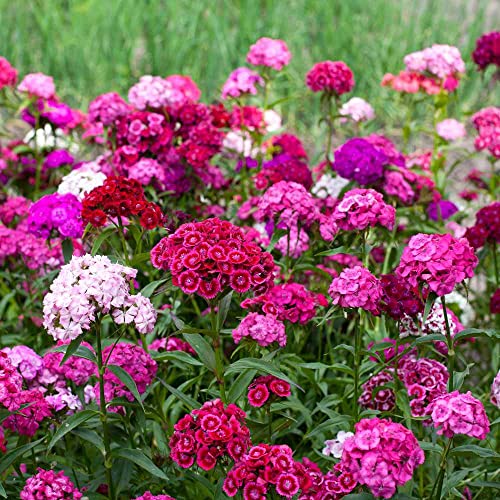
Outsidepride Sweet William Dianthus Seeds – 5000 Pcs.

Family Sown Perennial Species Mix – 2,500 Seeds

Eden Brothers Partial Shade Wildflower Mixed Seeds 1/4 lb

Marde Ross & Company Russell Lupine Seeds Perennial

Purple Blazing Star – 5 Liatris Spicata Bulbs

Proven Winners Double Play Doozie Spirea Shrub

The Three Company Heuchera Coral Bells Shades of Purple

Willard & May Raspberry Sundae Hosta Bulb Root
Sweet William has been a cottage-garden workhorse for centuries, and Outsidepride’s bulk pack keeps that tradition within reach for anyone filling a sizable bed. The Dianthus barbatus mix produces clusters of small, fragrant blooms in reds, pinks, and whites that pull in bees and butterflies through late spring and early summer. For Zone 7b gardeners, the wide climate tolerance means plants establish reliably without fussing over microclimates.
With roughly 5,000 seeds in the packet, you can scatter generously across a pollinator strip or thin out seedlings for a tidier border. The biennial-to-short-lived-perennial habit (meaning the plant completes its life cycle across two years but returns in mild climates) rewards a little patience, since first-year rosettes build roots before the bloom push arrives.
Useful Touches
- Large seed count makes border-scale sowing affordable without skimping on density
- Fragrant blooms draw pollinators into vegetable gardens, supporting overall garden health
- Mix of colors adds visual rhythm to cottage-style plantings without extra planning
- Hardy across a wide zone range, so Zone 7b sits comfortably in the middle of its comfort zone
Things To Consider
- Sweet William often acts as a biennial (completing its lifecycle in two years rather than returning indefinitely), so expect to reseed or replace plants every couple of seasons
- Deadheading (snipping spent flowers) extends bloom but adds a midseason chore you shouldn’t skip
Who It Suits Best
Cottage gardeners and pollinator-focused planters who want fragrant, old-fashioned color and don’t mind reseeding every few years.
A Better Fit Elsewhere
For a one-and-done shrub anchor with longer-lasting structure, the Proven Winners Double Play Doozie Spirea Shrub fills that role with less annual maintenance.
The Family Sown perennial mix trades species precision for raw coverage, and that tradeoff suits gardeners working with a large patch of bare soil. At roughly 5 grams per envelope and around 2,500 seeds, this blend scatters across a meaningful slice of ground rather than a tight border. You get a tapestry of textures and bloom windows rather than a coordinated color scheme, which is exactly the point in a naturalized area.
Compared to the Outsidepride Sweet William pack reviewed above, this mix leans toward variety over a single dominant species. For Zone 7b, the perennial blend is built to return year after year once established, building root systems that handle summer dryness better than first-year seedlings.
Where It Delivers
- Seed volume handles meadow-sized areas, so a single envelope covers meaningful ground
- Mixed species create staggered bloom windows from spring through fall
- Low-maintenance philosophy once plants establish, with minimal watering beyond establishment
- Encourages biodiversity, supporting a wider range of native pollinators than a single-species bed
Trade Offs
- You sacrifice design control, since the mix is what it is and color coordination is left to chance
- Weed pressure during establishment can be heavy, and you’ll need to manage competing growth in year one
- Bloom timing varies by species, so patience matters during the first full season
Made For
Gardeners turning a large sunny patch into a low-input meadow who’d rather support pollinators than maintain a formal border.
Consider Something Else When
For a deliberate, single-color theme in a smaller bed, the Eden Brothers Partial Shade Wildflower Mix gives you more species identity to work with.
Most wildflower mixes assume full sun, which leaves shade gardeners combing nurseries for alternatives. Eden Brothers’ partial shade blend fixes that with a curated species list that thrives with filtered light or limited direct sun. The mix leans on classics like foxglove, coreopsis, and sweet William, each chosen for tolerance rather than just bloom power.
At a quarter pound, this envelope covers a substantial bed and rewards broadcast sowing (scattering seed evenly by hand over a prepared area) in early spring. Zone 7b’s mild winters mean fall sowing also works for gardeners who’d rather prep beds in autumn. The all-perennial composition means plants return year after year, building a layered understory that complements the taller shrubs and trees casting the shade.
Real-World Strengths
- Curated shade tolerance saves the trial-and-error of testing sun-loving species in dim corners
- Generous seed weight covers substantial beds without needing multiple purchases
- Pollinator-friendly species selection attracts bees and butterflies to underused garden areas
- Non-GMO seed stock appeals to gardeners prioritizing seed sourcing transparency
Honest Caveats
- “Partial shade” species can struggle in deep shade under dense canopy, so dense tree-cover sites may disappoint
- Germination rates vary by species within the mix, which means the first year can look sparse before things fill in
Feature Snapshot
Best Suited To
Gardeners with established tree cover or north-facing beds who want color and pollinator activity where most mixes fail.
Reach For A Different Pick When
If your shade is deeper and you want a finished look faster, the Three Company Heuchera Coral Bells arrives as a live plant and skips the germination wait.
Russell lupines solve the back-of-border problem with vertical spires that read from across the yard. Marde Ross & Company packs about 100 seeds, enough for a clustered drift rather than a sweeping mass planting. The pea-like blooms stack along 36 to 48-inch stems in purples, pinks, and blues, giving cottage gardens the architectural lift they often lack.
For Zone 7b, the wide climate tolerance and tolerance for sun to part-shade conditions fit most suburban lots. Sow in fall or early spring, and expect germination in two to four weeks. The taproot (a single deep anchoring root) makes transplanting tricky, so direct sowing in the final spot saves headaches later.
Strengths Worth Knowing
- Vertical bloom shape adds height variation that flat-growing species can’t deliver
- Cool-climate tolerance handles Zone 7b winters without coddling
- Pollinator value is strong, with bees working the dense flower spikes heavily
- American-grown seed supports domestic sourcing for gardeners who track origin
Points To Keep In Mind
- Lupines dislike being moved once established, so plan placement before sowing
- Seed count is modest compared to bulk wildflower mixes, so mass plantings require multiple packets
Quick Facts
The Right Fit
Gardeners wanting vertical drama in cottage or meadow plantings who can commit to a permanent spot before sowing.
Look Elsewhere When
For a similar vertical accent with a different aesthetic, the Purple Blazing Star bulbs from Marde Ross offer fluffy purple spikes with quicker visual payoff.
Liatris spicata, often called blazing star or gayfeather, earns its place in pollinator gardens by feeding bees, butterflies, and hummingbirds with its fluffy purple wands. Marde Ross & Company ships five fresh corms (the bulb-like storage organs from which the plant grows), the largest size available, which speeds the journey from planting to bloom. For Zone 7b, the species handles summer heat and winter chill without complaint.
The growth habit sends up slender grass-like foliage first, then vertical bloom spikes reaching up to 40 inches. Unlike the Russell lupine above, liatris establishes from bulbs rather than tap-rooted seedlings, making it more forgiving if you change your mind about placement in the first season.
Positive Takeaways
- Native plant value supports local pollinator populations already adapted to the species
- Vertical bloom shape with unique fluffy texture differs from typical daisy-style perennials
- Bulbs establish faster than seeds, giving quicker visual results in the first growing season
- Drought tolerance improves once root systems develop, reducing summer watering demands
Soft Spots
- Corms can rot in heavy, poorly drained soil, so amending clay sites matters
- Five bulbs covers a modest cluster, and mass plantings need multiple orders or division over time
Feature Snapshot
Perfect Match For
Native plant enthusiasts and pollinator gardeners who want a vertical accent with strong wildlife value and quicker establishment than seed-grown options.
Swap It Out When
If you want evergreen structure alongside seasonal blooms, the Proven Winners Double Play Doozie Spirea Shrub provides year-round form.
Spirea is a landscape classic, but the Double Play Doozie improves on the familiar formula with continuous blooming and seedless, non-invasive growth. The two-gallon container ships an established plant rather than a bareroot starter, which shortens the wait to meaningful garden presence. Mature size lands around 24 to 36 inches in both height and spread, fitting mid-border placement or foundation groupings.
Compared to the seed-grown options above, this shrub trades patience for instant structure. You skip germination uncertainty and start with foliage that anchors the bed from day one. The deciduous habit (meaning the plant drops its leaves in winter and grows new ones in spring) means seasonal interest shifts through the year, with spring foliage color giving way to summer flowers.
Bright Spots
- Continuous bloom eliminates the bloom-gap problem that plagues many flowering shrubs
- Seedless growth prevents unwanted seedlings, keeping the garden tidy and neighbors happy
- Two-gallon size establishes faster than smaller containers, reducing the awkward juvenile phase
- Cold tolerance through USDA zone 3 includes Zone 7b comfortably in its range
Room For Improvement
- Higher upfront cost than seed packets, reflecting the live-plant investment
- Deciduous nature means winter interest is limited to branch structure rather than foliage or color
Feature Card
Whose Shelf It Belongs On
Homeowners wanting a low-maintenance flowering shrub that delivers structure, color, and pollinator value without reseeding concerns.
Where A Sibling Pick Shines
For pure foliage color in shadier conditions, the Three Company Heuchera Coral Bells offers deeper purples with a smaller footprint.
Heuchera, commonly called coral bells, earns its place in shade gardens through foliage rather than flower power. The Three Company ships a live plant in a two-quart pot with deep purple and maroon leaves that hold color through the growing season. Starting size sits around 10 inches tall by 6 inches wide, but mature plants push toward 18 to 24 inches tall with a 12 to 18-inch spread.
For Zone 7b, heuchera handles summer humidity better than many shade perennials, though it appreciates good drainage to prevent crown rot (fungal decay at the base of the plant where stems meet roots). The compact mounding habit makes it useful as edging, in containers, or massed beneath larger shade companions.
Key Advantages
- Deep purple foliage provides color independent of bloom timing, unlike flower-focused picks
- Compact mature size fits edging and container roles without overwhelming neighbors
- Live-plant shipping skips the germination gamble that seed options require
- Shade tolerance opens up planting areas where sun-loving species struggle
Worth Bearing In Mind
- Starting size means the plant takes a season or two to reach its mature footprint, depending on conditions
- Heuchera crowns (the woody base where stems emerge) can rot in heavy, wet soil without drainage improvement
Who Should Grab It
Shade gardeners wanting foliage-driven color who prefer a finished plant over the uncertainty of seed starting.
Not Your Match When
For a flowering shade perennial with stronger pollinator pull, the Willard & May Raspberry Sundae Hosta delivers bell-shaped blooms on raspberry-red stems.
Raspberry Sundae breaks the hosta mold by pairing variegated green and white foliage with raspberry-red petioles (the small stalks that connect each leaf to the main stem) and flower stalks. The result is a compact shade plant with multi-season interest rather than just leafy texture. Willard & May ships a single premium-size root, sized No. 1 (the top grade in the bulb industry), which establishes reliably in prepared shade beds.
Unlike the heuchera above, this hosta ships as a bulb root rather than a potted plant, so the first season focuses on establishment before the full visual payoff arrives. Developed by Terra Nova nursery, the variety combines classic hosta shade tolerance with unexpected color accents that stand out in dappled light.
Notable Gains
- Red petioles and flower stalks add warm color notes unusual in the mostly green-and-blue hosta world
- Compact size suits small shade pockets where larger hostas would overwhelm
- Pollinator value comes from the bell-shaped summer blooms that attract hummingbirds
- Premium root size grades mean stronger first-year growth than smaller bulb grades
Things To Weigh
- Single-root shipping means mass plantings require multiple orders, since one plant fills limited space
- Bulb roots take a season to reach full visual maturity, so patience during year one matters
Spec Overview
Who Will Love This
Shade gardeners with limited space who want a hosta that breaks out of the typical green-leaf category with a touch of warm color.
Skip It When
For a larger shrub anchor in shade-to-part-shade transitions, the Proven Winners Double Play Doozie Spirea offers bigger structural presence.
Planning a Perennial Bed That Handles Zone 7b’s Mood Swings
Zone 7b gives gardeners a longer growing season than colder zones, but that comes with tradeoffs. Summer humidity stresses plants that would thrive in drier climates, and the occasional late frost can damage tender new growth in spring. Choosing perennials rated for the zone is the obvious starting point, but matching species to your specific site conditions matters just as much.
Start with honest sun mapping. Spend a weekend observing how many hours of direct light each bed actually receives, since “full sun” labels assume six or more hours of unfiltered exposure. A bed that gets morning sun and afternoon shade behaves differently than one in the reverse pattern, and partial-shade mixes like the Eden Brothers blend reviewed above target that in-between reality.
Soil drainage deserves attention next. Many of these perennials, particularly the bulb and corm options like liatris and hosta, dislike sitting in waterlogged soil during winter wet spells. Clay-heavy yards benefit from raised beds, mounded planting, or generous amendment with coarse organic matter. Sandy soils need the opposite treatment, with compost added to improve water retention.
Group plants by water needs as well as visual goals. Drought-tolerant species like liatris and lupine cluster well together, while moister spots suit heuchera and hosta. Mixing water needs in the same bed leads to overwatering some plants to keep others alive, a common frustration that thoughtful grouping solves.
Finally, consider the bloom calendar. A bed that peaks in June and goes quiet by August leaves three months of dull garden. Layer early-spring bulbs, summer-blooming perennials, and late-season interest plants so something always pulls attention. The picks above span that range when combined thoughtfully.
Key Considerations Across These Picks
Pitfalls Shoppers Hit
The most common mistake is buying for full sun when the bed actually gets partial shade, or vice versa. “Perennial” on a label tells you nothing about light needs, so the fine print matters more than the headline. Seed counts also mislead sometimes, since a packet of 2,500 tiny seeds covers less ground than five large bulbs even when the price suggests otherwise.
Another trap is ignoring mature size. A one-gallon shrub looks modest at planting, but a spirea that reaches 36 inches wide needs space from day one rather than cramped quarters that require moving in year three.
Where The Extra Money Goes
Higher-tier options in this category buy you live plants in containers rather than seed packets, skipping the germination gamble and shortening the time to garden presence. Two-gallon shrubs like the Proven Winners spirea cost more because you’re paying for years of nursery growth and the infrastructure to ship an established plant safely.
For seed options, the price difference reflects species selection and sourcing rather than seed count alone. American-grown seeds from established nurseries (Marde Ross & Company, Eden Brothers) carry quality-control investments that bulk commodity seeds skip. The honest read is that spending more often buys reliability, which matters most in Zone 7b where replacing failed plants costs a full growing season.
Frequently Asked Questions
What does USDA Zone 7b actually mean for perennial survival?
Zone 7b means average winter lows between 5 and 10 degrees Fahrenheit. Perennials rated for Zone 7b handle those temperatures reliably and also tolerate the zone’s summer heat, which matters more for survival than cold hardiness alone.
Can I plant these perennials in fall in Zone 7b?
Fall planting works well in Zone 7b for many perennials, particularly bulbs, corms, and seed mixes designed for fall sowing. The mild winters allow root systems to establish before spring growth pushes, often giving plants a head start over spring-planted counterparts.
Do I need to amend my soil before planting perennials?
Most perennials benefit from loosened soil and organic matter worked into the top several inches before planting. Heavy clay benefits most from amendment, while already-loamy soils may only need weeding and basic preparation.
How long until seed-grown perennials actually bloom?
Seed-grown perennials typically bloom in their second full season, though some species like sweet William push blooms in the first year. Bulbs and live plants skip that wait and often show color in the first growing season after planting.
Are these perennials safe for pets and children?
Most of the perennials listed here are not listed as highly toxic, though individual sensitivities vary. Gardeners with curious pets or children should research each species independently and consider fencing new plantings until establishment.
Bottom Line
Zone 7b rewards gardeners who match plants to site conditions rather than chasing catalog photos. The eight picks above cover the major slots: pollinator-friendly mixes, vertical accents, foliage color, flowering shrubs, and shade companions. Start with the conditions you actually have, then pick the plants that solve the gaps in your current beds.
