

A backyard full of weeds, a fence line crawling with ants, or a vegetable patch overrun with aphids can turn a peaceful Saturday into a chore you dread. The right sprayer changes that, turning a long afternoon into a manageable hour. This roundup pulls together eight solid options across cordless, hand-pump, backpack, and powder-duster styles, so you spend less time wrestling with equipment and more time actually treating the problem.
The Shortlist At A Glance

VAXMAY Battery Powered Sprayer 1.35 Gallon (Blue)
SideKing Battery Powered Sprayer 1.35 Gallon

Relime Diatomaceous Earth 4 FT Long Reach Powder Duster

PetraTools EZ1 Battery Powered Sprayer 1 Gallon

Kweetle 1.5Gal Stainless Steel Hand Pump Sprayer
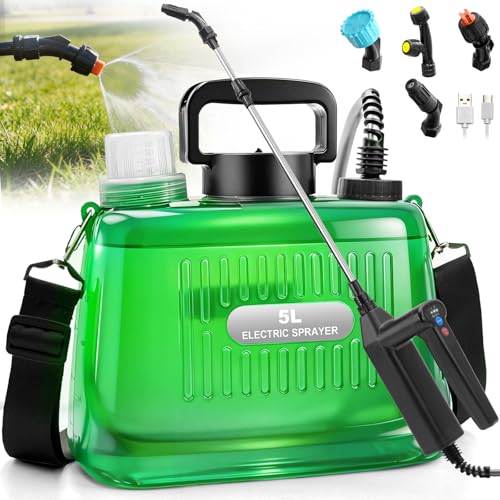
CYBPOK 2 Gallon Battery Powered Garden Sprayer (Green)

VIVOSUN 70oz Pump Sprayer (Pack of 2)

SEESII 5 Gal Backpack Sprayer Battery Powered
A Closer Look At Each Pick
The VAXMAY 1.35-gallon unit lands at the top of this list because it quietly handles the kind of chores that overwhelm first-time owners: spot weed control along a driveway, misting delicate vegetable seedlings, or covering a fence line against crawling insects. The rechargeable handle replaces the repetitive pumping that wears out your wrist after twenty minutes, and the three speed settings let you dial back pressure for tender annuals.
For most suburban lots, the 1.35-gallon tank strikes a workable balance between weight and coverage, meaning fewer refill trips without the fatigue of a full two-gallon load. You get an adjustable shoulder strap that redistributes weight across your back, plus a retractable wand that stores flat against the bottle when you finish the job.
What Earns Its Place
- Three speed settings match spray intensity to the plant or pest at hand, which protects delicate seedlings from blast damage.
- Four mist nozzles broaden use from a fine foliar mist to a targeted stream for cracks and crevices.
- Battery indicator on the handle prevents mid-job shutdowns by showing remaining charge.
- Adjustable shoulder strap makes longer sessions far easier on your back and shoulders.
Worth Bearing In Mind
- Plastic tank construction means you should avoid leaving strong solvents inside for extended storage.
- Runtime depends heavily on selected speed, so heavy use at the highest setting drains the battery faster than expected.
Who It Suits Best
Homeowners stepping into cordless spraying for the first time and wanting a forgiving, multipurpose tool.
Consider Something Else When
The PetraTools EZ1 is a lighter one-gallon alternative for shorter sessions and smaller hands.
SideKing’s 1.35-gallon model shares a similar footprint with the VAXMAY above but pushes harder on reach, which matters when you’re treating the underside of lower hedge branches or spraying along a raised garden bed. The telescopic wand extends far enough that you stay upright while hitting target zones, sparing your knees and your back on repeat yard sessions.
For mid-size yards where you need to cover a perimeter fence plus interior planting beds, the four-nozzle setup gives you pattern flexibility without swapping gear mid-task. A clear battery indicator on the body keeps power levels visible at a glance, so you rarely find yourself walking back to the garage with a half-treated patch.
Practical Advantages
- Telescopic wand extends your working reach without forcing you to crouch or climb.
- Three pressure levels let you match intensity to the pest and the plant.
- Four interchangeable nozzles broaden coverage from mist to jet.
- Visible battery indicator reduces surprise shutdowns on longer jobs.
Points To Keep In Mind
- At full extension, the wand can flex slightly under heavier pressure, so steady aiming takes a small adjustment.
- 1.35 gallons is fine for most lawns but requires mid-job refills on properties over half an acre.
Made For
Homeowners managing mid-size yards who need consistent pressure and good reach without upgrading to a backpack unit.
Look Elsewhere When
You treat more than an acre at a time and want fewer refill breaks; the SEESII backpack handles larger volumes more comfortably.
Powders like diatomaceous earth call for a different tool than liquid sprayers, and the Relime duster fills that gap. A long-reach pump design extends to roughly four feet, which means you can dust the underside of roof eaves or the top of tall baseboards without dragging out a ladder or kneeling on the floor.
For indoor perimeter treatment along baseboards, crawl space entries, and shed foundations, the pump-action airflow pushes powder evenly without the wrist strain of squeezing a bulb duster repeatedly. The continuous delivery keeps coverage consistent across longer runs, which matters when you treat an entire basement rim joist in a single pass.
Bright Spots
- Four-foot reach keeps you at a safe distance from powders that drift easily.
- Pump action requires less grip force than traditional squeeze-bulb dusters.
- Continuous airflow delivers even powder coverage on long baseboard runs.
Trade-Offs
- Powder-only design means you’ll need a separate liquid sprayer for foliar or wet treatments.
- Reservoir size is modest, so expect frequent refills on whole-house perimeter jobs.
Best Suited To
Owners tackling dry-powder pest control in crawl spaces, attics, and along foundation perimeters where reach matters.
Swap It Out When
You mostly treat lawns and foliage with liquid solutions; the CYBPOK 2-gallon sprayer handles those scenarios with far more capacity.
The PetraTools EZ1 trims capacity to one gallon and earns its place by being noticeably lighter in the hand. For quick weekend rounds, spot-treating a few weed outbreaks, or applying foliar feed to a small rose bed, the smaller tank reduces fatigue and speeds up refills because there’s simply less liquid to mix.
Three nozzles cover the common patterns most homeowners actually use, and the battery delivers enough runtime for typical suburban sessions without forcing a mid-task charge. Compared to the larger 1.35-gallon VAXMAY, this unit feels nimbler and easier to maneuver in tight garden rows, though you sacrifice some coverage per fill.
What It Does Well
- Compact one-gallon body reduces arm fatigue during overhead spraying.
- Three nozzles cover the main spray patterns most residential jobs require.
- Lithium-ion battery pushes runtime comfortably through routine sessions.
Honest Caveats
- Smaller tank means more frequent refills on anything beyond a small yard.
- Fewer nozzles than larger competitors limit fine-tuning for specialized tasks.
- Plastic body, like most in this category, requires prompt rinsing after harsh chemicals.
Who Will Love This
Gardeners with small yards, container patios, or anyone who prefers a lighter carry weight over maximum capacity.
Another Choice May Suit
The SideKing 1.35-gallon model is a smarter match if you want more reach and a wider nozzle selection for varied targets.
The Kweetle stands apart in this lineup because every functional surface, including the pump, tank, hose, and rod, is stainless steel, which translates into a tool that shrugs off the harsh chemicals and UV exposure that slowly degrade plastic bodies. A built-in pressure gauge takes the guesswork out of pumping, and a safety valve vents automatically before over-pressurization becomes a concern.
For homeowners who mix concentrated herbicides, fungicides, or caustic cleaning solutions and want a sprayer that lasts multiple seasons, this hand-pump design trades battery convenience for mechanical reliability. The reinforced braided hose resists kinking at the base where most plastic sprayers eventually crack, which is the kind of detail that pays off over the long haul.
Where It Delivers
- Stainless construction tolerates aggressive chemicals that discolor or weaken plastic tanks.
- Pressure gauge removes the trial-and-error of guessing when you’ve pumped enough.
- Safety valve prevents dangerous over-pressurization during extended pumping.
- Reinforced hose resists the kinking and cracking common in cheaper builds.
Things To Weigh Up
- Hand-pump operation demands manual effort before each session, unlike battery models.
- Heavier stainless body makes overhead spraying more tiring than plastic alternatives.
Perfect Match For
Homeowners who mix varied chemicals and want a sprayer that holds up across multiple seasons of repeated use.
Where Another Pick Suits Better
The CYBPOK 2-gallon electric sprayer is a better fit when you prefer push-button convenience over manual pumping.
The CYBPOK steps capacity up to two gallons and pairs that volume with five interchangeable nozzles, the widest pattern selection in this roundup. A 7.4V rechargeable system pushes noticeably stronger pressure than smaller battery units, which translates to better atomization at the nozzle and more uniform coverage on broadleaf weeds or dense shrubbery.
Three pressure modes let you toggle between a gentle mist for seedlings and a focused jet for crevice treatments in a single session, and the telescopic wand reaches under low-hanging branches without forcing you to the ground. Compared to the VAXMAY at 1.35 gallons, this unit trades some portability for fewer refill stops and stronger spray output.
What Helps Most
- Five nozzles handle everything from fine foliar feeding to high-volume weed soaking.
- Three pressure modes adapt spray intensity to the target without swapping tools.
- 7.4V system delivers stronger atomization than lower-voltage competitors.
- Two-gallon tank covers larger areas before you need to refill.
Smaller Limitations
- Two gallons of liquid weighs noticeably more when fully loaded, so the adjustable strap earns its keep.
- Larger footprint takes up more shelf space in a small garage or shed.
Built With In Mind
Homeowners with medium-to-large yards who want versatile spray patterns and enough capacity to finish in fewer trips.
A Better Fit Elsewhere
The PetraTools EZ1 is easier to carry for quick rounds if you mostly do small spot treatments rather than full-yard coverage.
VIVOSUN’s 70oz pump sprayer comes in a two-pack and earns its slot by handling the smaller, indoor-leaning tasks the bigger units ignore: misting houseplants, applying leaf shine, or spot-treating a kitchen ant trail. The clear tank lets you see liquid levels without unscrewing the top, and a side filling port with measuring cup keeps refills tidy.
For apartment dwellers or anyone managing a balcony garden, a hand-pump bottle like this avoids the battery maintenance and storage footprint of cordless units. Upgraded fluororubber seals resist corrosion from diluted cleaning solutions, which matters because these smaller sprayers often see harsher chemicals than outdoor gear.
What Stands Out
- Clear tank design shows liquid level at a glance without opening the bottle.
- Side filling port with measuring cup simplifies refills and prevents spills.
- Fluororubber seals resist corrosion from cleaning solutions better than standard rubber.
- Two-pack format gives you a backup bottle or a dedicated second solution.
Worth Noting
- 70oz capacity requires multiple refills for anything beyond a small patio garden.
- Hand pump operation becomes tedious during extended outdoor sessions.
The Right Fit
Apartment residents, indoor gardeners, and homeowners who need a compact sprayer for plant care and small surface treatments.
Reach For A Different Pick When
You’re covering lawn areas or perimeter fencing; the VAXMAY 1.35-gallon cordless unit is built for those outdoor tasks.
For larger properties where you’d otherwise spend the afternoon mixing and refilling, the SEESII backpack carries five gallons at a time and shoulders that load across your back instead of your arm. Two included 2.0Ah rechargeable batteries let you swap power mid-job without pausing to recharge, which is the difference between finishing a half-acre perimeter and abandoning it for the day.
A one-piece blow-molded tank eliminates the glued seams and bottom joints that crack under repeated chemical exposure, so leaks that ruin shirts and soak batteries become far less of a concern. For homeowners managing multi-acre lots, small farms, or extensive fence lines, this unit replaces several sessions with a single, more efficient trip.
Why It Works Well
- Two included batteries extend runtime far beyond single-battery competitors.
- One-piece molded tank reduces leak risk compared to seam-glued backpack designs.
- Five-gallon capacity covers large properties without constant refilling.
- Backpack harness distributes weight across shoulders and back instead of one arm.
Things To Consider
- Backpack form factor is overkill for yards under a quarter acre.
- Fully loaded weight approaches 45 pounds, so the harness quality matters during long sessions.
- Larger storage footprint requires dedicated shed or garage space when not in use.
Whose Shelf It Belongs On
Property owners with multi-acre lots, small farms, or extensive perimeter fencing who need volume and battery redundancy in one tool.
Not Your Match When
Your yard fits a small suburban lot; the PetraTools EZ1 is a far easier carry for routine suburban jobs.
Matching Sprayer Size To The Job Ahead
Capacity shapes every sprayer decision more than any other spec. A one-gallon tank handles spot treatments and small gardens, while two-gallon units strike the balance most homeowners want. Five-gallon backpacks only earn their weight on properties large enough to justify the load and the storage space.
Pressure matters for atomization, the way liquid breaks into droplets at the nozzle. Higher pressure produces finer mist that coats leaves more evenly but drifts in wind. Lower pressure gives you a coarse stream for targeted application. Three-mode pressure switches let you adapt without swapping tools, which is genuinely useful across varied pest scenarios.
Nozzle variety determines versatility. A basic cone nozzle handles general foliar feeding, while fan nozzles spread wider for ground cover, and jet nozzles penetrate dense growth or crevices. Five-nozzle kits cover nearly every residential scenario, while three-nozzle setups suffice if you stick to one or two pest types.
Build material affects lifespan more than most shoppers expect. Plastic tanks handle most residential chemicals but degrade faster under UV and harsh solvents. Stainless steel costs more and weighs more, yet shrugs off aggressive chemicals and sun exposure across many seasons. For anyone mixing varied solutions, stainless earns its premium over time.
Key Considerations Across These Picks
Pitfalls Shoppers Hit
The most common mistake is buying more capacity than you actually need. A five-gallon backpack sounds appealing until you’re hauling forty-plus pounds across a quarter-acre lot. Start with the smallest tank that handles your typical session, then upgrade only when refill frequency becomes the bottleneck.
Another trap is ignoring nozzle compatibility across sprayers. Each manufacturer uses proprietary threading in many cases, so buying aftermarket nozzles often means frustration. Stock up on the included nozzles first, and check replacement availability before committing.
The Upgrade Payoff
Higher-tier models earn their premium through three upgrades you actually feel. Stainless construction outlasts plastic by years under chemical exposure. Larger batteries with swappable spares eliminate mid-job charging pauses. Pressure gauges and safety valves on hand-pump units remove the guesswork that wears down cheaper builds.
For homeowners spraying more than a few times per season across varied targets, those upgrades pay back in reliability and time saved. For occasional spot treatments on small lots, a simpler cordless unit does the job without the extra cost.
Frequently Asked Questions
What size sprayer do most homeowners actually need? A one-to-two-gallon sprayer handles the majority of suburban yards. Anything larger only makes sense for properties over half an acre or for users treating extensive fence lines and outbuildings.
Can I use the same sprayer for herbicides and insecticides? Cross-contamination can damage desirable plants and reduce pesticide effectiveness. Many experienced owners keep separate sprayers clearly labeled for each chemical category, and rinse thoroughly between solution types.
How long does a battery-powered sprayer typically run? Most cordless units in this category deliver two to three hours of runtime per charge, though actual duration varies with selected pressure mode and how often you trigger the wand. Carrying a backup battery eliminates downtime on longer jobs.
Are powder dusters worth owning alongside a liquid sprayer? For treatments involving diatomaceous earth, boric acid, or other dry formulations, dusters reach places liquids can’t and apply more evenly than improvised methods. If your pest issue involves crawl spaces or foundation perimeters, a duster earns its shelf space.
What maintenance does a sprayer need to last? Rinsing the tank after each use, clearing nozzles to prevent clogs, and storing the unit out of direct sunlight extend the life of any sprayer. Battery models benefit from partial charges during long storage periods rather than full depletion.
Closing Remarks
The right sprayer quietly disappears into your routine, leaving only the results behind: fewer weeds, fewer pests, and a yard that looks the way you intended. Match the tool to the size of your space and the chemicals you’ll actually mix, and the rest tends to fall into place. Any of these eight picks will serve you well if the use case lines up with your property and habits.
